- Company Articles
- Products and Technology
- Product knowledge
- Using Lean Pipe Fixed Clamps with Inner Rotation Aluminum Joints: Compatibility Guide

Using Lean Pipe Fixed Clamps with Inner Rotation Aluminum Joints: Compatibility Guide
Related Product
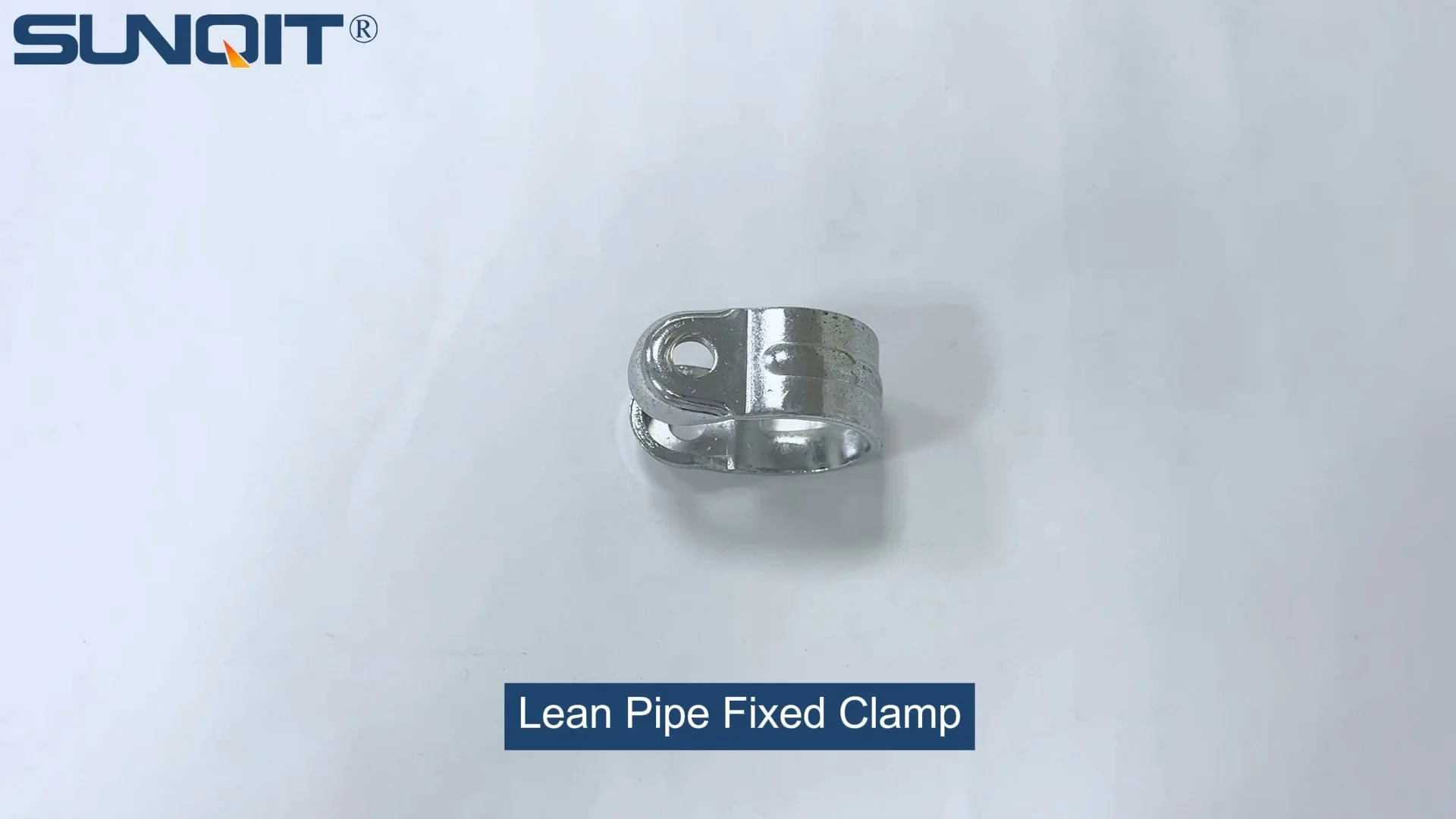
Lean Pipe Fixed Clamp
Lean pipe fixed clamp is used for pipe connector fixing the correct position during workbench flow rack hand trolley assemble work.
Walk into any modern manufacturing facility, warehouse, or assembly line, and you'll likely spot a network of workbenches, flow racks, and material handling systems that seem to hum with efficiency. Behind that seamless workflow often lies a quiet hero: the combination of lean pipe fixed clamps and inner rotatary aluminum joints. These unassuming components are the backbone of flexible, adaptable lean systems, but getting them to work together smoothly isn't just about screwing parts together—it's about compatibility. In this guide, we'll break down how to pair these two essential parts, why their compatibility matters, and how to avoid common pitfalls that can turn a promising workstation setup into a frustrating headache.
1. What Are Lean Pipe Fixed Clamps, Anyway?
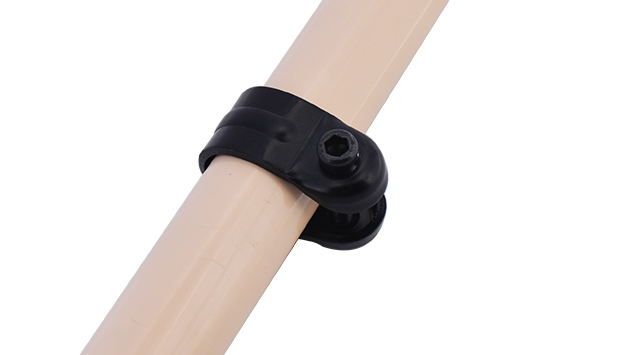
Let's start with the basics. Lean pipe fixed clamps are the unsung workhorses that hold your lean system together—literally. Think of them as the "glue" that secures aluminum lean pipes (or other materials like stainless steel) to joints, brackets, or workbench frames. Unlike adjustable clamps that allow for quick repositioning, fixed clamps are designed for stability: once tightened, they lock the pipe in place, ensuring your structure can handle daily wear and tear, from the weight of tools on a workbench to the constant movement of parts on a flow rack.
Most lean pipe fixed clamps are made from durable materials like aluminum or zinc-plated steel, which resist corrosion and stand up to the oily, dusty environments common in production facilities. They come in various sizes to match different pipe diameters—1.5mm, 2.0mm, even 3.0mm for heavier-duty applications—and often feature rubber or plastic liners to grip the pipe tightly without scratching it. The key here is that their design is straightforward but critical: a well-made fixed clamp distributes pressure evenly around the pipe, preventing slippage that could compromise safety or efficiency.
Pro Tip:
When shopping for lean pipe fixed clamps, check the "clamping range" specified by the manufacturer. This tells you the minimum and maximum pipe diameters the clamp can securely hold. For example, a clamp rated for 28mm–30mm pipes won't work well with a 20mm aluminum lean pipe—it'll either slip or crush the pipe.
2. Inner Rotatary Aluminum Joints: The Flexibility Factor
If lean pipe fixed clamps are about stability, inner rotatary aluminum joints are all about flexibility. These clever connectors do exactly what their name suggests: they allow sections of aluminum lean pipe to rotate internally , giving your lean system the ability to adjust angles, reposition shelves, or adapt to changing workflow needs without disassembling the entire structure. Imagine needing to tilt a workbench shelf slightly to make it easier for operators to reach tools, or adjusting a flow rack's angle to speed up material flow—inner rotatary joints make that possible with a simple twist, no extra tools required.
What sets inner rotatary aluminum joints apart from standard fixed joints is their internal mechanism. Inside each joint, small bearings or a precision-machined sleeve allow the connected pipes to rotate smoothly while maintaining a strong, secure link. They're typically made from lightweight, high-strength aluminum, which keeps the overall system light enough to reconfigure but sturdy enough to support heavy loads. Common designs include 90-degree elbows, T-joints, and even multi-way connectors that let you branch off in multiple directions—all with that signature rotational capability.
But here's the catch: not all inner rotatary joints are created equal. Some are designed for light-duty use, like adjusting a small parts bin on a workbench, while others are built for heavy loads, such as supporting a multi-tier flow rack loaded with automotive components. The key specs to watch for are maximum rotation angle (usually 180 degrees or 360 degrees), load capacity (measured in kg or lbs), and—you guessed it—compatibility with your lean pipe fixed clamps.
3. Why Compatibility Between Clamps and Joints Matters
Picture this: You've ordered a set of aluminum lean pipes, a handful of inner rotatary joints, and a box of lean pipe fixed clamps. You're excited to build a custom workbench for your assembly line, but when you start putting it together, you notice the clamps won't tighten properly around the joints. The pipes wobble, the joint rotates unevenly, and by the end of the day, the whole structure feels shaky. What went wrong? Chances are, it's a compatibility issue.
Compatibility between lean pipe fixed clamps and inner rotatary aluminum joints isn't just about "fitting"—it's about ensuring the two components work together to create a stable, functional system. Mismatched parts can lead to three big problems:
- Slippage and Instability: If the clamp is too loose, the pipe will shift inside the joint, causing shelves to tilt or workbenches to wobble. Too tight, and you might damage the pipe or the joint's internal rotation mechanism.
- Reduced Lifespan: Parts that don't fit properly wear out faster. A clamp that's slightly too small will stretch over time, while a joint with misaligned threading will strip easily, forcing you to replace parts sooner than expected.
- Safety Risks: In the worst cases, incompatible clamps and joints can lead to structural failure. A flow rack that collapses under the weight of materials isn't just a productivity killer—it's a hazard for anyone nearby.
The good news? Compatibility isn't rocket science. It boils down to three key factors: pipe diameter, joint opening size, and material thickness. Let's break those down.
3.1 Pipe Diameter: The Foundation of Fit
The first (and most obvious) compatibility check is pipe diameter. Both your lean pipe fixed clamp and inner rotatary aluminum joint must be designed for the same pipe size. For example, if you're using a 28mm aluminum lean pipe, your clamp should be rated for 28mm pipes, and the joint's opening should also accept 28mm. Mixing a 28mm pipe with a 30mm joint and a 25mm clamp is a recipe for disaster—think of trying to fit a square peg into a round hole, but with more metal shavings.
Most manufacturers label their clamps and joints clearly with the compatible pipe diameter, but it's always worth double-checking. If you're unsure, grab a caliper and measure the outer diameter of your aluminum lean pipe—don't guess! Even a 1mm difference can make or break the fit.
3.2 Joint Opening Size and Clamp Design
Even if the pipe diameter matches, the joint's opening size and the clamp's design need to align. Inner rotatary joints often have a "collar" or "socket" where the pipe inserts, and the lean pipe fixed clamp needs to grip the pipe and fit around this collar. For example, some joints have a flared end that adds 2mm to the overall diameter at the connection point. If your clamp isn't designed to accommodate that extra width, it won't tighten properly, leaving a gap that causes slippage.
Clamp design also plays a role. Some fixed clamps are "split" designs, which open like a C-shape and tighten with a bolt, while others are "hinged" and wrap fully around the pipe. Split clamps are easier to install on existing structures but may not grip as tightly as hinged designs. When paired with inner rotatary joints, hinged clamps often work better because they distribute pressure more evenly, which is crucial for maintaining the joint's rotational smoothness.
3.3 Material Thickness: Don't Overlook the Pipe Wall
Here's a detail that trips up even experienced facility managers: pipe wall thickness. Aluminum lean pipes come in different thicknesses—1.2mm, 1.5mm, 2.0mm—depending on how much weight they need to support. A clamp designed for a thin-walled (1.2mm) pipe might not have enough grip for a thick-walled (2.0mm) pipe, even if the outer diameter is the same. The thicker pipe will take up more space inside the clamp, reducing the clamp's ability to tighten. Conversely, a clamp for thick-walled pipes might crush a thin-walled pipe when tightened, weakening it over time.
Inner rotatary joints also account for wall thickness in their internal design. A joint made for a 1.5mm wall pipe may have a narrower internal sleeve, which could bind up if paired with a 2.0mm wall pipe. Always check the manufacturer's specs for both the clamp and joint to ensure they match your pipe's wall thickness.

4. A Compatibility Checklist: Step-by-Step
Now that you know what to look for, let's put it all together into a simple checklist you can use when selecting lean pipe fixed clamps and inner rotatary aluminum joints. Print this out, keep it in your toolbox, or save it on your phone—you'll thank us later.
- Measure Your Aluminum Lean Pipe: Use a caliper to get the outer diameter (OD) and wall thickness. Write these down: OD = ____mm, Wall Thickness = ____mm.
- Check Clamp Specifications: Look for the clamp's "compatible pipe OD" and "recommended wall thickness." These should match your pipe's measurements exactly.
- Inspect the Inner Rotatary Joint: Check the joint's "pipe acceptance OD" and "max wall thickness." Again, these must align with your pipe's specs.
- Test the Fit (If Possible): If you have sample parts, dry-fit them: insert the pipe into the joint, attach the clamp, and tighten it to hand-tight. The pipe should not wobble, and the joint should rotate smoothly without resistance.
- Verify Load Capacity: Ensure both the clamp and joint can handle the weight your system will carry. A clamp rated for 50kg won't work if your workbench shelf needs to hold 100kg of tools.

5. Compatibility in Action: Real-World Examples
Let's make this tangible with two common scenarios where compatibility between lean pipe fixed clamps and inner rotatary aluminum joints makes all the difference: building a custom workbench and setting up a flow rack.
5.1 Building a Workbench with Adjustable Shelves
Imagine you're setting up a workbench for a small electronics assembly line. The operators need shelves that can tilt slightly to reduce neck strain when reaching for small components. You decide to use aluminum lean pipes for the frame, inner rotatary joints to allow shelf tilting, and lean pipe fixed clamps to secure the shelves at the desired angle.
Here's how compatibility comes into play: You choose 28mm aluminum lean pipes with a 1.5mm wall thickness (sturdy enough for tools but lightweight for adjustability). For the inner rotatary joints, you pick a 90-degree model rated for 28mm OD pipes and 1.5mm wall thickness. For the clamps, you select a zinc-plated steel fixed clamp also rated for 28mm OD and 1.2mm–1.8mm wall thickness (which covers your 1.5mm pipe).
During setup, you dry-fit the parts: the pipe slides into the joint easily, the clamp tightens without slipping, and when you rotate the joint, the shelf tilts smoothly from 0 to 45 degrees. Success! Because all the specs aligned, the workbench is stable, adjustable, and ready for action. If you'd skimped on compatibility—say, using a 30mm joint with your 28mm pipe—the shelf would wobble, and the joint's rotation would feel jerky, leading to operator frustration and potential errors.
5.2 Setting Up a Flow Rack for Fast-Moving Parts
Flow racks are another area where clamp-joint compatibility shines. These racks use gravity to slide parts from the loading end to the picking end, and they often require angled shelves that can be adjusted as part sizes change. Inner rotatary joints let you tweak the angle, while lean pipe fixed clamps keep the shelves locked in place once set.
Suppose you're building a flow rack for automotive parts, which are heavier than electronics components. You opt for 30mm aluminum lean pipes with a 2.0mm wall thickness. For the joints, you choose heavy-duty inner rotatary models rated for 30mm OD pipes and 2.0mm walls, with a load capacity of 150kg per shelf. The clamps are reinforced aluminum models, also 30mm OD and 2.0mm wall compatible, with a locking mechanism to prevent loosening under vibration.
After assembly, you load the rack with 10kg boxes of parts. The shelves stay at the 10-degree angle you set, the joints don't creak or slip, and the clamps hold firm even after weeks of constant use. This is compatibility in action—parts working together to create a system that's both flexible and reliable.
5. Compatibility Table: Lean Pipe Fixed Clamps vs. Inner Rotatary Aluminum Joints
To make things even clearer, here's a table comparing common aluminum lean pipe sizes with compatible clamp and joint models. Note: This is a general guide—always verify with your specific manufacturer's specs!
| Aluminum Lean Pipe Size (OD x Wall Thickness) | Recommended Lean Pipe Fixed Clamp Model | Compatible Inner Rotatary Aluminum Joint Model | Max Load Capacity (Per Joint) | Best For |
|---|---|---|---|---|
| 20mm x 1.2mm | Clamp Model LF-2012 | Joint Model IR-2012 | 50kg | Light-duty workbenches, small parts bins |
| 28mm x 1.5mm | Clamp Model LF-2815 | Joint Model IR-2815 | 100kg | Medium-duty workbenches, flow racks for small parts |
| 30mm x 2.0mm | Clamp Model LF-3020 | Joint Model IR-3020 | 150kg | Heavy-duty flow racks, material handling trolleys |
| 40mm x 2.5mm | Clamp Model LF-4025 | Joint Model IR-4025 | 200kg | Industrial workbenches, large component storage |
6. Troubleshooting Common Compatibility Issues
Even with careful planning, you might run into compatibility snags. Here are the most common problems and how to fix them:
6.1 The Clamp Won't Tighten Properly
Why it happens: Either the clamp is too large for the pipe, the pipe wall is too thin, or the joint's collar is blocking the clamp's grip. For example, a 30mm clamp on a 28mm pipe will never tighten fully—the gap is too big.
Fix: Double-check the clamp's compatible pipe OD. If it's too large, swap it for the correct size. If the pipe wall is too thin, look for a clamp with a smaller "minimum wall thickness" rating or add a rubber shim (sparingly!) to fill the gap (note: shims are a temporary fix—permanent setups should use properly sized parts).
6.2 The Joint Rotates Unevenly or Gets Stuck
Why it happens: The pipe is either too thick for the joint's internal sleeve, or the clamp is overtightened, compressing the joint's rotation mechanism. A pipe with a 2.0mm wall in a joint rated for 1.5mm walls will bind up the internal bearings.
Fix: Verify the joint's max wall thickness. If the pipe is too thick, switch to a joint with a higher wall tolerance. If the clamp is overtightened, loosen it by 1/4 turn—you want it tight enough to prevent slipping, but not so tight that it restricts rotation.
6.3 The Pipe Slips Inside the Clamp/Joint
Why it happens: Mismatched pipe OD, worn clamp liners, or a joint with a smooth inner surface that doesn't grip the pipe.
Fix: replace worn clamps with new ones that have intact rubber liners. If the joint's inner surface is too smooth, look for models with knurled or textured sleeves, which grip the pipe better. And of course, ensure the pipe OD matches the joint and clamp specs.
7. Maintaining Compatibility Over Time
Compatibility isn't a one-and-done check—it's an ongoing process. Even the best-matched clamps and joints can develop issues over time, thanks to wear, vibration, or environmental factors. Here's how to keep them working together like a dream:
- Inspect Regularly: Every month, check clamps for looseness and joints for smooth rotation. Tighten loose clamps (but don't overtighten!) and clean joint surfaces with a dry cloth to remove dust or debris that can cause binding.
- Lubricate Joints: Inner rotatary joints with bearings benefit from occasional lubrication. Use a lightweight machine oil or silicone spray (avoid heavy greases, which attract dust). Follow the manufacturer's guidelines for how often to lubricate—usually every 3–6 months.
- replace Worn Parts: If a clamp's liner is cracked or a joint's rotation feels gritty even after cleaning, replace them. Waiting until they fail can damage other parts of your lean system.
- Avoid Corrosive Environments: If your facility is humid or uses chemicals, opt for stainless steel clamps or aluminum joints with anodized finishes to resist rust, which can seize up joints and weaken clamps.
8. Conclusion: Compatibility = Efficiency
At the end of the day, the compatibility between lean pipe fixed clamps and inner rotatary aluminum joints is about more than just parts—it's about building a lean system that works for your team, not against them. When these two components play well together, you get workbenches that adapt to changing tasks, flow racks that keep parts moving smoothly, and a production line that stays efficient, safe, and ready for whatever comes next.
So the next time you're ordering parts or setting up a new workstation, take a few extra minutes to check those specs. Measure your pipes, compare clamp and joint ratings, and test the fit. Your operators will appreciate the stable, adjustable workspace, your maintenance team will thank you for fewer breakdowns, and your bottom line will benefit from the reduced downtime and longer part lifespan.
Remember: In lean manufacturing, every detail counts. And when it comes to clamps and joints, compatibility is the detail that makes all the difference.