- Company Articles
- Products and Technology
- Product knowledge
- Using Multi-Angle Fixed Aluminum Joints in Consumer Electronics Production

Using Multi-Angle Fixed Aluminum Joints in Consumer Electronics Production
Related Product
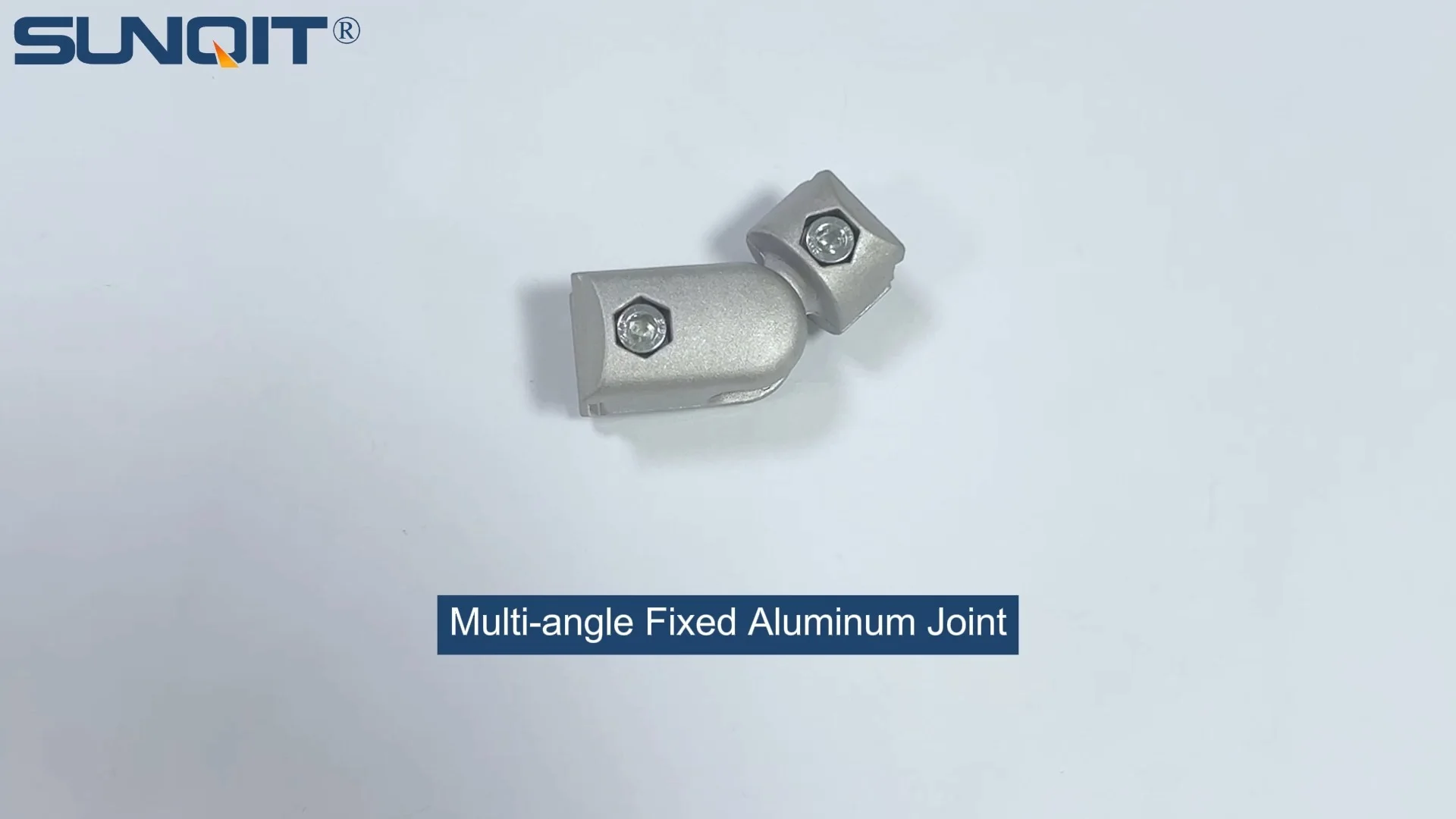
Multi-angle Fixed Aluminum Joint
Aluminum joint pipe connection for two pipe connection and work in mutiple angle.
In the world of consumer electronics, where smartphones, wearables, and smart home devices evolve faster than the blink of an eye, production lines can't afford to be rigid. Imagine a factory floor where every new model launch requires tearing down workbenches, rewelding steel frames, or waiting weeks for custom tooling—this isn't just inefficient; it's a death sentence in an industry where time-to-market is everything. That's where multi-angle fixed aluminum joints come in. These unassuming components are quietly revolutionizing how electronics are made, turning once-static production lines into adaptable, agile ecosystems that keep pace with innovation.
Consumer electronics manufacturing is a unique beast. It demands precision at the micrometer level, where a misaligned component can render a $1,000 smartphone useless. It also requires flexibility—today's assembly line for a budget tablet might need to become tomorrow's line for a foldable display. Add in the need for electrostatic discharge (ESD) protection, lightweight materials to reduce operator fatigue, and cost-efficiency to stay competitive, and you've got a tall order for any production system. Multi-angle fixed aluminum joints, paired with aluminum profiles and accessories, check all these boxes and more. Let's dive into why they're becoming the backbone of modern electronics manufacturing.
What Are Multi-Angle Fixed Aluminum Joints, Anyway?
At their core, multi-angle fixed aluminum joints are the "connectors" that bring aluminum profiles to life. Think of aluminum profiles as the building blocks—long, lightweight tubes or beams with T-slots for easy attachment— and the joints as the puzzle pieces that hold them together. What makes these joints special is their ability to lock profiles at (you guessed it) multiple angles—90 degrees, 45 degrees, 135 degrees, even custom angles—without welding, drilling, or specialized tools. They're typically made from high-grade aluminum alloy, coated to resist corrosion, and designed with internal mechanisms (like set screws or clamping systems) that create a rock-solid hold once tightened.
Unlike traditional steel joints that are heavy and fixed in one position, or plastic joints that lack durability, these aluminum joints strike a balance between strength and adaptability. They're also modular: mix and match a 90-degree crossing joint with a 45-degree reinforce joint, and suddenly you've got a workbench shelf that angles upward to reduce neck strain for operators. Pair them with aluminum profile accessories like end caps, rubber strips, or caster wheels, and you've got a system that's as customizable as it is robust.
Why Consumer Electronics Production Can't Live Without Them
Let's cut to the chase: why should an electronics manufacturer care about a joint? Because in this industry, every second, every square inch of workspace, and every ounce of operator effort counts. Here's how multi-angle fixed aluminum joints deliver:
Flexibility That Keeps Up With Innovation
When Apple or Samsung announces a new phone, their suppliers don't have months to retool. They need to reconfigure workstations, adjust material flow paths, and add new testing stations—yesterday. Multi-angle joints make this possible. For example, a workbench used to assemble phone screens can be reimagined in hours: loosen the joints, adjust the angle of the tool rail from 0 degrees (flat) to 30 degrees (tilted for better visibility), add a side shelf with a 45-degree joint, and you're ready for the new screen size. No welding, no custom fabrication—just a hex key and a few minutes.
Precision for Tiny, Delicate Components
Consumer electronics are getting smaller and more complex. A smartwatch motherboard has components smaller than a grain of rice, and assembling it requires workbenches and material racks that stay perfectly stable. Aluminum's inherent rigidity, combined with the joint's ability to lock profiles without play (slop or movement), ensures that tooling, fixtures, and conveyor rails stay aligned. Even better, the T-slots in aluminum profiles let operators attach ESD-safe mats, LED task lights, or magnifying lenses at exact angles—critical for tasks like soldering microchips or inspecting camera modules.
Lightweight Design = Happier, More Productive Operators
Steel workbenches and racks are sturdy, but they're also heavy. An operator moving a steel turnover trolley loaded with circuit boards might strain their back; a trolley built with aluminum profiles and multi-angle joints weighs 30-50% less, reducing fatigue and injury risk. Lighter workstations also mean easier reconfiguration—two people can move a fully loaded aluminum workbench with casters, whereas steel would require a forklift. This isn't just about comfort; it's about keeping operators focused and productive during long shifts.
ESD Safety Built In
Static electricity is the silent killer of electronics. A single electrostatic discharge can fry a microprocessor, turning a batch of components into scrap. Aluminum is naturally conductive, so when used in workbenches, material racks, or roller tracks, it helps ground static charges, protecting sensitive parts. Multi-angle joints, being aluminum, integrate seamlessly into this ESD-safe system—no need for additional grounding straps or conductive coatings. Compare this to plastic joints, which can insulate static and increase risk, and the choice becomes clear.

From Workbenches to Roller Tracks: Real-World Applications
Multi-angle fixed aluminum joints aren't just theoretical—they're hard at work on factory floors worldwide. Let's look at three key areas where they're making the biggest impact:
1. Custom Workbenches: Where Assembly Meets Comfort
The heart of any electronics assembly line is the workbench. No two operators are the same, and no two tasks require the same setup. A soldering station needs heat-resistant surfaces and tool holders at arm height; an inspection station needs adjustable lighting and magnifiers at eye level. Multi-angle joints let manufacturers build workbenches that adapt to people, not the other way around.
Take, for example, a workbench designed for smartphone final assembly. Using aluminum profiles and multi-angle joints, the base can be set at a standard height (750mm), but the upper shelf—where operators place completed units—can be tilted 15 degrees using a 160-degree fixed joint to reduce neck bending. A side rail, attached with a 90-degree crossing joint, holds ESD-safe bins for screws and SIM card trays. Even the footrest under the bench can be adjusted for height using a 45-degree reinforce joint. When the next phone model comes with a larger battery (requiring more space for tools), simply loosen the joints, reposition the shelf, and tighten—done.
2. Material Racks and Roller Tracks: Keeping Parts Moving Smoothly
Material flow is the lifeblood of electronics production. Parts need to move from storage to assembly to testing without getting damaged, lost, or delayed. Roller tracks—those lines of small wheels that let trays glide across workstations—are critical here, and multi-angle joints are what make them adaptable.
Consider a material rack B (3 row and 3 floor) used to store PCBs. Traditionally, these racks are fixed: each shelf is the same height, and you can't adjust for taller trays or smaller components. With aluminum profiles and multi-angle joints, each shelf height can be tweaked using 90-degree internal rotation joints. Need a shelf for larger motherboards? Raise it by 50mm. Need a lower shelf for tiny camera modules? Lower it. Even better, integrate roller track sections into the rack using roller track connectors and placon mounts. Now, instead of operators bending to lift heavy trays, they can slide them directly onto the assembly line—reducing effort and speeding up flow.
Roller tracks themselves benefit from multi-angle joints, too. A straight roller track might work for most lines, but what if the line needs to curve around a corner? Use a 135-degree aluminum pipe joint inside connection to create a smooth bend, ensuring parts glide without jamming. Or, if the track needs to slope downward to use gravity for flow, adjust the angle with a 30-degree fixed joint. It's this level of customization that keeps production lines from hitting bottlenecks.
3. Lean System Integration: Cutting Waste, Boosting Efficiency
Lean manufacturing isn't just a buzzword in electronics—it's a survival strategy. The goal is to eliminate waste: wasted time, wasted space, wasted effort. Multi-angle fixed aluminum joints are lean by design. They reduce setup waste by allowing quick reconfigurations. They cut inventory waste by letting you repurpose existing racks and workbenches instead of buying new ones. They even reduce transportation waste by making material handling lighter and more efficient.
For example, a lean system focused on "just-in-time" (JIT) production requires parts to arrive at the assembly line exactly when needed. With traditional steel racks, if a supplier delivers parts in larger boxes than expected, you might need a new rack. With aluminum racks and multi-angle joints, you can adjust shelf spacing in minutes to fit the new boxes. No more waiting for a welder or wasting space with oversized racks. This adaptability is why lean consultants now recommend aluminum joint systems as a foundational tool for JIT and 5S (sort, set in order, shine, standardize, sustain) implementations.

How Do They Stack Up Against Traditional Joints? A Comparison
Still on the fence about switching from steel or plastic joints? Let's break down the differences:
| Feature | Traditional Steel Joints | Plastic Snap-Fit Joints | Multi-Angle Fixed Aluminum Joints |
|---|---|---|---|
| Flexibility | Fixed angles; requires welding to adjust | Limited angles; prone to breaking when adjusted | Multiple angles (30°, 45°, 90°, 135°, etc.); tool-free adjustment |
| Weight | Heavy (increases fatigue and transportation costs) | Light, but less durable | Lightweight (30-50% lighter than steel) |
| Durability | High, but prone to rust if uncoated | Low; cracks under heavy loads | High; corrosion-resistant, withstands 50,000+ adjustments |
| ESD Safety | Requires additional grounding | Insulates static (risk of damage) | Naturally conductive (grounds static) |
| Installation Time | Hours (welding, drilling) | Minutes, but weak hold | Minutes (hand-tightened with hex key) |
| Cost Over Time | High (initial + rework costs) | Low upfront, but frequent replacement | Moderate upfront, low long-term (reusable, durable) |
Case Study: How XYZ Electronics Cut Changeover Time by 70% with Aluminum Joints
XYZ Electronics, a mid-sized contract manufacturer, was struggling to keep up with demand for smartwatch components. Their production line for fitness trackers used steel workbenches and fixed steel roller tracks. When a new client requested a larger tracker with a bigger battery, the team faced a problem: the existing workbenches were too low, and the roller tracks couldn't accommodate the larger trays. Retooling would take 3 weeks and cost $50,000—time and money they didn't have.
They decided to switch to aluminum profiles and multi-angle fixed aluminum joints. Here's what happened:
- Workbench Reconfiguration: Using 90° internal rotation joints and aluminum profiles, the team adjusted the height of 12 workstations from 700mm to 800mm in 8 hours (vs. 2 weeks for steel rework).
- Roller Track Upgrade: They replaced steel tracks with aluminum roller tracks, using 135° outside connection joints to add a curved section that routed parts around a new testing station. The new tracks, with plastic roller track guide rails (yellow for visibility), reduced jams by 40%.
- Material Rack Overhaul: Old steel racks were replaced with adjustable aluminum racks using 30° fixed joints, allowing shelves to tilt slightly for easier part access. Operators reported 25% faster pick times.
Result? XYZ launched the new tracker line 2 weeks early, saved $35,000 in retooling costs, and now reconfigures lines for new models in 1-2 days instead of weeks. "We used to dread product changes," said the plant manager. "Now, we look forward to them—we know our aluminum system can handle anything."

Accessorizing for Success: Beyond the Joints
Multi-angle fixed aluminum joints are powerful on their own, but they're even better when paired with the right accessories. Here are a few must-haves for electronics production:
Aluminum Profile Accessories
End caps (like 4040 aluminum profile end caps) protect operators from sharp edges on profiles. T-slot rubber seal covers fill gaps in T-slots, preventing dust buildup and reducing noise. Aluminum profile rubber strips add grip to workbench surfaces, keeping tools from sliding.
Casters and Wheels
Flat swivel castor wheels with brakes turn static workbenches into mobile stations, perfect for moving tools between lines. Heavy-duty split foot seats add stability when casters aren't needed, keeping workbenches anchored during precision tasks.
Roller Track Extras
Swivel roller balls (1 inch or 0.5 inch) let operators slide trays in any direction on workbench surfaces, ideal for feeding parts to assembly. Roller track placon mount brackets secure tracks to aluminum profiles, ensuring they stay aligned even under heavy loads.
Best Practices for Implementation
Ready to switch to multi-angle fixed aluminum joints? Keep these tips in mind:
- Start with a Layout Plan: Map out your workflow first. Where do parts enter? Where do they exit? This will help you design workbenches and roller tracks that minimize operator movement.
- Over-Engineer for Weight (Slightly): Even if your current parts are light, future parts might be heavier. Choose joints rated for 1.5x your expected load to avoid failure.
- Train Teams on Adjustment: Show operators how to loosen/tighten joints safely. A little training goes a long way in preventing stripped threads or loose connections.
- Label Joint Positions: Use tape or markers to note "standard" angles (e.g., "15° for soldering") so reconfigurations are consistent across shifts.
- Inspect Regularly: Check joints monthly for tightness, especially on roller tracks or mobile workbenches that vibrate during use.
The Future: Smarter Joints for Smarter Factories
As electronics manufacturing moves toward Industry 4.0—think IoT-connected machines, AI-driven quality control, and digital twins—multi-angle fixed aluminum joints are evolving too. Some suppliers are experimenting with "smart joints" embedded with sensors that monitor tightness or temperature, alerting maintenance teams before a failure. Others are exploring conductive joints with built-in ESD monitoring, providing real-time data on static levels.
Sustainability is also a growing focus. Aluminum is 100% recyclable, and joints are designed to be reused across multiple production lines, reducing waste. As manufacturers aim for carbon neutrality, the low energy required to produce and reconfigure aluminum systems (vs. steel) will make them even more appealing.
Conclusion: Adapt or Fall Behind
Consumer electronics wait for no one. In an industry where innovation is measured in months, production lines need to be as adaptable as the products they build. Multi-angle fixed aluminum joints, paired with aluminum profiles, roller tracks, and lean system principles, offer the flexibility, precision, and durability electronics manufacturers need to thrive.
They're not just tools—they're enablers. Enablers of faster launches, happier operators, safer workspaces, and bottom-line savings. So the next time you unbox a new smartphone or smartwatch, take a moment to appreciate the unseen heroes: the aluminum joints that helped build it, one adjustable angle at a time.