- Company Articles
- Products and Technology
- Product knowledge
- Using T-Slot Rubber Seal Covers on Turnover Carts: Reducing Noise and Preventing Part Damage

Using T-Slot Rubber Seal Covers on Turnover Carts: Reducing Noise and Preventing Part Damage
Related Product
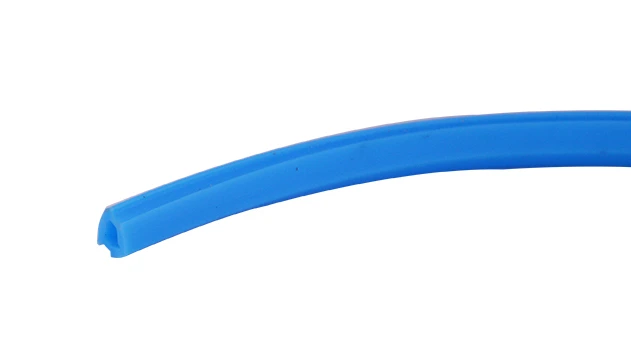
T-slot Rubber Seal Cover
The rubber T-slot seal cover prevents dust and debris buildup, covers wires in the T-slot channel, and adds an extra layer of protection to applications. It rolls into the T-slot, making it easy to assemble.
How a small accessory is transforming factory floors, one quiet, scratch-free trolley at a time
It's 8:15 AM on the production floor, and Maria is already rubbing her temples. The morning rush is in full swing, but the constant clatter of metal against metal is making it hard to focus. Down the line, Juan is wheeling a turnover trolley stacked with circuit boards—again—and as it hits a uneven spot, a board slides off the edge, skidding across the aluminum profile surface. "Great," he mutters, picking it up to find a hairline scratch. "That's the third one this week."
Sound familiar? If you've spent any time in manufacturing, warehousing, or assembly, you know the drill: turnover trolleys and racks are the workhorses of the operation, but they come with two persistent headaches—noise that wears on workers and part damage that eats into profits. What if there was a simple fix that didn't require replacing entire carts or overhauling your workflow? Enter T-Slot Rubber Seal Covers: a (but mighty) aluminum profile accessory that's quietly revolutionizing how teams handle materials.
The Hidden Cost of a Noisy Factory Floor
Let's start with the noise. Turnover trolleys—those essential tools we rely on to move parts from station to station—are often built with aluminum profiles, which are lightweight, durable, and perfect for lean system setups. But here's the catch: when metal parts, bins, or even the trolley itself vibrates against those hard aluminum edges, the result is a symphony of clang , rattle , and screech . Over eight hours, that noise doesn't just annoy—it drains.
"We measured the decibel level near our assembly line last year, and it was consistently around 85 dB during peak hours," says Raj, a plant manager at a electronics manufacturer. "That's like standing next to a busy city street all day. By 3 PM, my team was fatigued, mistakes went up, and no one looked forward to their shifts. We tried earplugs, but they muffled communication—hardly ideal for a collaborative workspace."
And it's not just about comfort. OSHA sets noise exposure limits for a reason: prolonged exposure to 85 dB or higher can lead to hearing loss, and even lower levels can increase stress hormones like cortisol, which impacts focus and decision-making. For a lean system aiming to eliminate waste—including wasted time from errors or slowdowns—uncontrolled noise is a silent (or not-so-silent) enemy.
When Parts Take a Beating: The Damage Dilemma
Now, the second problem: part damage. Imagine loading delicate components—say, plastic casings or polished metal parts—onto a turnover trolley. As you push it, the trolley hits a bump, and the parts shift. Without any cushioning, they scrape against the aluminum profile edges or collide with each other. What starts as a tiny scratch can render a part unusable, especially in industries like automotive or aerospace where precision matters.
Lisa, a quality control supervisor, recalls a particularly costly week: "We had a batch of 500 plastic panels for dashboard assemblies. The team loaded them onto a trolley without any edge protection, and by the time they reached the next station, 12% had scratches deep enough to fail inspection. That's 60 panels wasted—material, labor, and time down the drain. We had to rush-order replacements, which delayed the entire production run."
Even if parts aren't completely ruined, minor damage often means rework. A scratch might need buffing, a dent might require reshaping—all tasks that add steps to your process and pull workers away from value-adding activities. In lean terms, that's "muda" (waste) in its purest form. And when you multiply those small losses across dozens of trolleys and hundreds of daily trips, the numbers add up fast.
Quick Fact: A 2023 survey by the Manufacturing Productivity Council found that 41% of manufacturers cite "material handling damage" as a top source of avoidable waste, costing an average of 3-5% of annual material budgets. For a mid-sized facility, that could mean $50,000 to $200,000 in unnecessary expenses each year.

T-Slot Rubber Seal Covers: The Simple Solution You've Been Missing
So, how do T-Slot Rubber Seal Covers fix these issues? Let's break it down. These covers are flexible, durable strips designed to fit snugly into the T-slots of aluminum profiles—the same slots used to attach shelves, bins, or handles to your turnover trolley and rack. Made from industrial-grade rubber, they act as a buffer between hard surfaces and the parts you're moving. Think of them as a protective "hug" for your trolley's edges.
First, noise reduction. When parts or bins hit the trolley, the rubber absorbs the impact instead of letting it bounce off metal. That means the clang becomes a soft thud , and the constant rattle of loose items turns into a muted hum. Raj's team installed seal covers on 15 trolleys and remeasured: "Noise dropped to 72 dB—like a normal conversation level. Workers stopped wearing earplugs, communication improved, and by the end of the month, our error rate was down 18%."
Then, part protection. The rubber creates a non-abrasive surface that cushions parts as they shift. Delicate plastic, painted metal, even glass components glide gently instead of scraping. Lisa's dashboard panel incident? "We added seal covers to all our material trolleys, and within two weeks, scratch-related rejections dropped to 1.5%," she says. "That's a 90% improvement. The operators even noticed—they started commenting on how 'smoother' the parts felt when loading and unloading."

Beyond Noise and Damage: The Ripple Effects of a Small Upgrade
What surprised many teams is how T-Slot Rubber Seal Covers impact more than just noise and part quality. Let's talk about worker satisfaction. When the floor is quieter, conversations flow easier, and people don't leave their shifts with ringing ears. "Our turnover rate was 22% last year," Raj notes. "Six months after installing the covers, it's down to 15%. People actually say they enjoy coming to work more—imagine that!"
There's also the lean system alignment. Lean manufacturing is all about continuous improvement—finding small, incremental changes that add up to big results. Seal covers fit that philosophy perfectly: they're affordable (usually under $5 per linear foot), easy to install, and require no training to use. You don't need to redesign your turnover trolley and rack setup or buy new caster wheels (though pairing them with high-quality casters can amplify the benefits). It's a low-risk, high-reward upgrade that aligns with the "kaizen" (continuous improvement) mindset.
And let's not forget maintenance. Aluminum profiles are tough, but constant friction from parts or tools can wear down the T-slots over time, leading to loose connections or wobbly shelves. Rubber seal covers act as a barrier, protecting the slots from scratches and debris. "We used to replace a few profile sections every quarter because the T-slots were getting bent or clogged," says Mike, a maintenance tech. "Now, with the covers, we haven't needed to replace any in eight months. That's time and money saved right there."
Installing T-Slot Rubber Seal Covers: It's Easier Than You Think
You might be thinking, "This sounds great, but does it require a professional installer?" The short answer: no. T-Slot Rubber Seal Covers are designed for DIY installation, even if you're not a handyman. Here's how it works:
- Measure Your T-Slots: Most aluminum profiles have standard slot sizes (e.g., 6mm, 8mm). Check the specs of your trolley's profiles to ensure you get the right cover width.
- Clean the Slots: Wipe out any dust, grease, or debris with a dry cloth—you want a clean surface for the cover to adhere to.
- Peel and Press: Most seal covers come with an adhesive backing. Simply peel off the protective strip and press the cover into the T-slot, starting at one end and smoothing it along the length to avoid bubbles.
- Trim Excess: Use scissors or a utility knife to cut the cover to fit the profile length. Done!
"I had my team install 20 trolleys in an afternoon," Raj laughs. "The hardest part was deciding which color to pick—we went with gray to match our factory aesthetic, but they come in yellow, black, and even blue if you want to color-code zones."
| Metric | Before T-Slot Rubber Seal Covers | After T-Slot Rubber Seal Covers |
|---|---|---|
| Noise Level (dB) | 82-87 dB (busy street-level) | 68-73 dB (normal conversation-level) |
| Weekly Part Damage Incidents | 15-20 scratched/dented parts | 2-3 minor scuffs (no rejects) |
| Worker Reported Fatigue (1-10 scale) | 7.2 (high fatigue) | 4.1 (moderate, manageable) |
| Profile Maintenance Frequency | Quarterly replacements/repairs | Annual inspection (no replacements needed) |
The Verdict: A Small Accessory with Big Returns
At the end of the day, T-Slot Rubber Seal Covers aren't just about reducing noise or preventing scratches. They're about respecting your team's well-being, protecting your bottom line, and staying true to the lean system principles that make your operation efficient. When Maria's team installed them on their turnover trolleys last spring, the change was immediate.
"The first week, I didn't even realize how much the noise had been bothering me until it was gone," she says. "Now, Juan doesn't panic when he hits a bump with the circuit boards, and I can walk through the floor without shouting to be heard. It's the little things, right? A quieter, calmer space where parts stay intact and people feel valued—that's the real win."
So, if your factory floor sounds like a construction zone, or if you're tired of writing off damaged parts as "just part of the process," consider this: sometimes the best solutions aren't the flashy ones. They're the ones that fit seamlessly into your existing workflow, solve multiple problems at once, and let your team focus on what they do best—creating quality products, efficiently.
Ready to turn down the noise and protect your parts? Start with T-Slot Rubber Seal Covers—your team (and your bottom line) will thank you.