- Company Articles
- Products and Technology
- Application Cases
- Using Three Way Lean Pipe Joint Chrome in Lean Kaizen Projects: Success Stories

Using Three Way Lean Pipe Joint Chrome in Lean Kaizen Projects: Success Stories
Related Product
Three Way Lean Pipe Joint Chrome
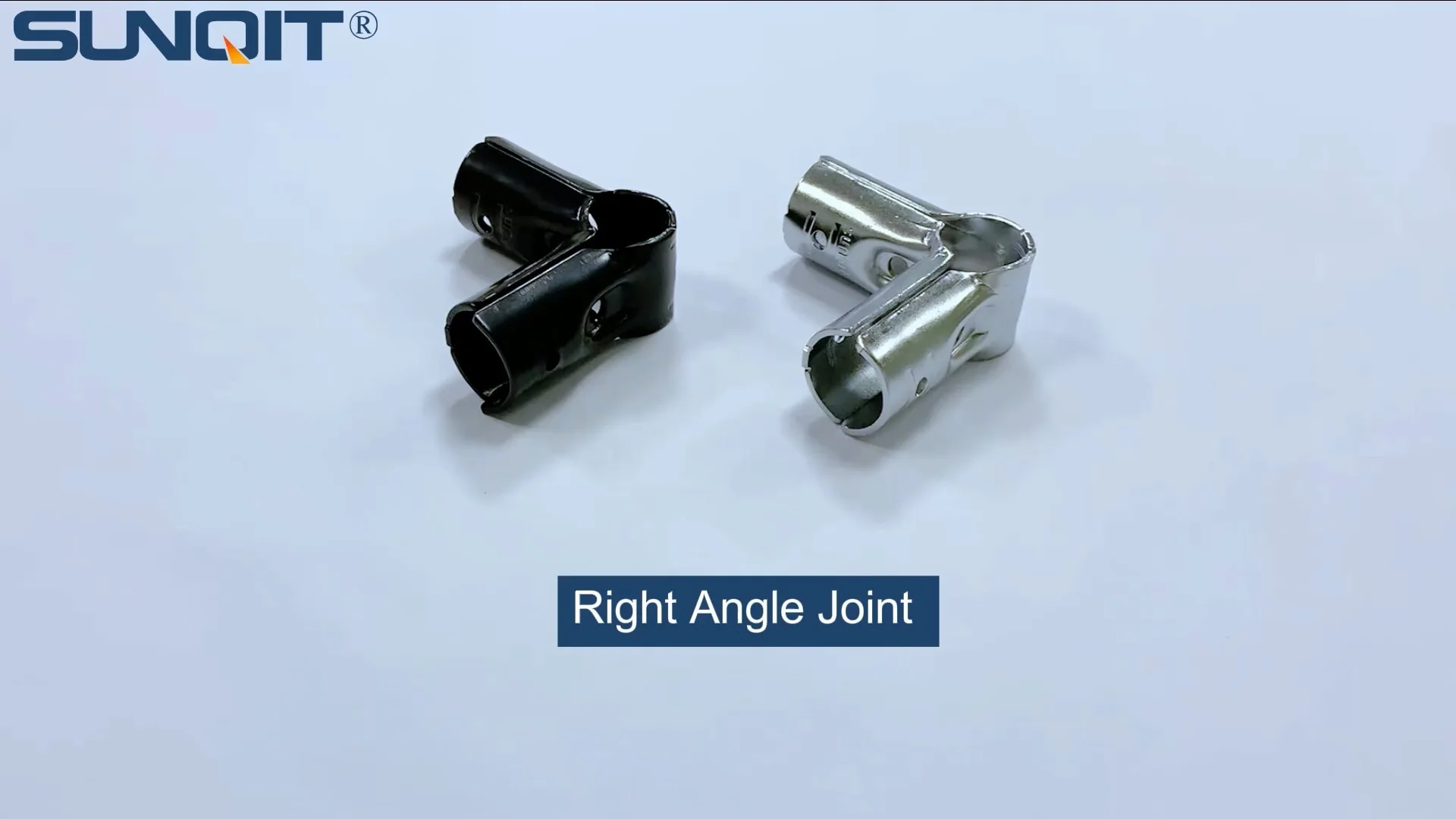
Three way lean pipe joint for 3 pcs 28MM lean pipe connection in straight angle, which used widely in workbench, flow rack, hand trolley frame connection.
In the world of manufacturing and operations, the phrase "continuous improvement" isn't just a buzzword—it's the lifeblood of staying competitive. Lean Kaizen, the practice of making small, incremental changes to eliminate waste and boost efficiency, thrives on attention to detail. While grand strategies and high-tech automation often steal the spotlight, some of the most impactful improvements come from the unlikeliest places: the humble components that hold systems together. Today, we're diving into one such unsung hero: the Three Way Lean Pipe Joint Chrome. This unassuming connector has quietly transformed workflows, reduced waste, and empowered teams across industries to build lean systems that adapt, grow, and deliver results. Let's explore how this small but mighty component has written success stories in factories, warehouses, and workshops around the globe.
The Backbone of Lean Systems: What is a Three Way Lean Pipe Joint Chrome?
Before we jump into the success stories, let's get to know the star of the show. A Three Way Lean Pipe Joint Chrome is a specialized connector designed to assemble lean pipes—hollow tubes used to build custom workstations, flow racks, material handlers, and other structures critical to lean operations. What makes this joint stand out? Its chrome plating, for starters: not only does it resist rust and corrosion (a must in busy, sometimes damp industrial environments), but it also adds a smooth, durable finish that stands up to daily wear and tear. But the real magic is in its design: as the name suggests, it allows three lean pipes to connect at a single point, branching out in three directions. This versatility means teams can build everything from simple L-shaped workbenches to complex multi-level flow racks without welding, drilling, or specialized tools—just a wrench to tighten the joint.
Think of it as the LEGO brick of lean manufacturing: lightweight, reusable, and infinitely configurable. Need to adjust a workstation's height? Loosen the joint, reposition the pipe, and retighten. Launching a new product line that requires a wider flow rack? Disassemble the old structure, add more pipes and three-way joints, and rebuild in hours. This flexibility is why the Three Way Lean Pipe Joint Chrome has become a cornerstone of lean systems, proving that sometimes, the smallest components enable the biggest transformations.
Success Story 1: Precision Circuit Co. – Streamlining ESD Workstations for Electronics Assembly
The Problem: Rigid Workstations Stifling Innovation
Precision Circuit Co., a mid-sized manufacturer of printed circuit boards (PCBs) for consumer electronics, was hitting a wall. Their assembly line relied on fixed ESD workstations—static-safe tables designed to protect sensitive components from electrostatic discharge. But with new smartphone and tablet models launching every quarter, the workstations couldn't keep up. "We'd design a new PCB, and suddenly the workstation shelves were too short, or the tool holders were in the wrong place," recalls Maria Gonzalez, the plant's Lean Coordinator. "We'd have to bring in contractors to cut and weld new metal frames, which took weeks and cost a fortune. By the time we finished, the next product revision was already in the works."
The inefficiency didn't stop there. The static-safe flow racks feeding components to the workstations were equally rigid. Different PCB sizes required different bin configurations, but the racks couldn't adjust—leading to cluttered workspaces, missed deadlines, and even a 12% defect rate from components being jostled or exposed to static during manual handling.
The Solution: Modular ESD Workstations with Three Way Lean Pipe Joint Chrome
Maria's team turned to lean principles, starting with a simple question: "What if we could build workstations that change as fast as our products do?" The answer lay in lean pipes and Three Way Lean Pipe Joint Chrome. They partnered with a local supplier to source 28mm lean pipes (coated in static-dissipative material) and chrome-plated three-way joints. The goal? Build modular ESD workstations and flow racks that could be reconfigured in hours, not weeks.
The three-way joints were a game-changer. "We could attach pipes horizontally for shelves, vertically for legs, and diagonally for bracing—all from a single joint," Maria explains. For the ESD workstations, this meant adjustable-height tables (via telescoping pipes and three-way joints), removable tool holders, and even built-in static-safe bins that clipped onto pipe arms. The flow racks, too, got an upgrade: using roller tracks and three-way joints, they built multi-level structures where bins slid smoothly to assembly stations. When a new PCB model came in, the team simply loosened the joints, repositioned the pipes, and added or removed shelves—no contractors, no welding, no downtime.
The Results: Faster Turnaround, Fewer Defects, Happier Teams
The impact was immediate. Setup time for new product lines dropped from 3 weeks to 2 days—a 90% reduction. The defect rate plummeted to 3% as components stayed secure in the adjustable flow racks, and static discharge incidents became rare thanks to the ESD-compatible materials. But the biggest win? Team morale. "Our assemblers went from feeling frustrated by the tools they had to excited about designing their own workspaces," Maria says. "One team even added a small shelf for their coffee mugs using spare pipes and a three-way joint—small, but it made them feel ownership. And when people care about their space, they care about the work."

Success Story 2: AutoParts Hub – Eliminating Material Handling Waste with Flow Racks
The Problem: Bottlenecks in the Automotive Supply Chain
AutoParts Hub, a supplier of brake components to major car manufacturers, was struggling with a classic lean enemy: waste in material handling. Their 50,000-square-foot facility stored thousands of parts—from brake pads to calipers—in bulk bins. To get parts to the assembly line, workers had to push heavy carts from the warehouse to the production floor, often making multiple trips per hour. "We had guys walking 8-10 miles a day just moving parts," says Raj Patel, the plant manager. "By the afternoon, they were exhausted, and mistakes started happening: wrong parts delivered, bins left in walkways, delays in getting components to the line. Our on-time delivery rate to customers was hovering at 82%, and we were losing contracts because of it."
Raj's team tried temporary fixes—adding more carts, hiring extra handlers—but nothing stuck. The root problem was clear: there was no continuous flow between storage and assembly. Parts sat idle in bins, then were manually transported, creating delays and fatigue.
The Solution: Gravity-Fed Flow Racks with Three Way Lean Pipe Joint Chrome
Inspired by a lean workshop he attended, Raj decided to implement flow racks—structures that use gravity to feed parts directly to assembly stations. But he needed a system that could handle AutoParts Hub's mix of heavy (up to 50 lbs) and small (2-3 lbs) components. Enter lean pipes and Three Way Lean Pipe Joint Chrome. "We chose chrome joints because our warehouse can get humid in the summer, and we needed something that wouldn't rust," Raj explains. "And the three-way design let us build multi-level racks—top shelves for bulk storage, lower shelves for active picking—all feeding into the line."
The team installed 12-foot-long flow racks along the assembly line, angled slightly downward to let bins glide via roller tracks. Three Way Lean Pipe Joint Chrome connected the vertical supports, horizontal rails, and diagonal braces, creating sturdy, 5-level structures. Each level was labeled by part number, and bins were color-coded for quick identification. At the end of each flow rack, a lean pipe workbench (also built with three-way joints) served as the assembly point, with tools and fasteners stored on adjustable shelves above.
The Results: From Chaos to Continuous Flow
The transformation was dramatic. Material delivery time from warehouse to assembly dropped from 25 minutes to 8 minutes—a 68% reduction. Workers no longer pushed carts; instead, they monitored the flow racks, refilling bins from bulk storage only when needed. Labor hours spent on material handling fell by 40%, freeing up staff to focus on quality checks. Most importantly, the on-time delivery rate shot up to 97%, and Raj estimates the system paid for itself in 8 months through saved labor costs and retained contracts.
By the Numbers: Flow Rack Impact at AutoParts Hub
| Metric | Before (2022) | After (2023) | Improvement |
|---|---|---|---|
| Material Delivery Time per Batch | 25 minutes | 8 minutes | 68% faster |
| Daily Labor Hours for Material Handling | 45 hours | 27 hours | 40% reduction |
| On-Time Delivery Rate to Customers | 82% | 97% | 15% increase |
| Worker Fatigue Complaints (per month) | 12 | 2 | 83% decrease |

Success Story 3: SwiftLogistics Warehouse – Cutting Picking Errors with Lean Pipe Workbenches
The Problem: Chaos in E-Commerce Fulfillment
SwiftLogistics, a regional warehouse handling e-commerce orders for clothing and accessories, was drowning in picking errors. With 10,000+ daily orders during peak seasons, their workers were struggling to keep up. "Our pickers were running around with paper lists, grabbing items from bins, and then bringing them to a central packing bench," says Lisa Chen, the warehouse operations manager. "The problem was the packing bench—it was a single, cluttered table where 6-8 people tried to pack orders at once. Tools, tape, shipping labels, and half-packed boxes were everywhere. We were seeing a 5% error rate—wrong sizes, missing items—and customers were furious."
Lisa knew the bench was the bottleneck. It was too small, not organized, and didn't support the team's need to process orders quickly. "We tried adding more tables, but they were flimsy and took up too much space. We needed something that could grow with us, keep each packer's station organized, and connect seamlessly to our picking system."
The Solution: Custom Lean Pipe Workbenches with Integrated Flow Racks
Lisa's team turned to lean pipe workbenches, built with—you guessed it—Three Way Lean Pipe Joint Chrome. They designed individual workstations for each packer, using lean pipes for the frame and chrome three-way joints to add shelves, tool hooks, and even small flow racks for incoming orders. "Each bench is 4 feet wide, with a main packing surface, a shelf above for shipping labels and tape guns, and a flow rack below for incoming bins from pickers," Lisa explains. "The flow rack uses roller tracks, so when a picker drops off a bin, it slides to the packer—no more walking bins across the warehouse."
The three-way joints made customization easy. Taller packers got higher shelves; left-handed workers had tool hooks on the left side. One packer even requested a small bin for "problem orders" (items that needed extra inspection) attached via a three-way joint. "We built 12 benches in a week, and each packer helped design their own space," Lisa says. "Ownership matters—if someone designed their bench, they're not going to let it get messy."
The Results: Fewer Errors, Faster Orders, Happier Customers
The impact was immediate. The picking error rate dropped from 5% to 1.2%—a 76% improvement. Order processing time per unit fell by 25%, as packers no longer wasted time searching for tools or sorting through cluttered bins. The warehouse also saved space: the modular benches were arranged in a U-shape, creating a "packing pod" that reduced walking distance by 40%. "During Black Friday last year, we processed 15,000 orders in a day with zero delays and only 18 errors," Lisa. "Our customer satisfaction scores hit 98%, and we've been able to take on 3 new e-commerce clients because of the efficiency gains."
Why Small Components Drive Big Lean Wins
The stories of Precision Circuit Co., AutoParts Hub, and SwiftLogistics share a common thread: the Three Way Lean Pipe Joint Chrome didn't just solve a problem—it enabled a mindset shift. By providing teams with flexible, durable tools to build and adapt their own systems, it empowered them to take ownership of continuous improvement. Lean Kaizen isn't about top-down mandates; it's about giving frontline workers the ability to say, "I can make this better," and then providing the components to do it.
So, what makes this joint so effective? It starts with quality: chrome plating ensures durability in tough environments, while the three-way design offers unmatched versatility. But more than that, it's accessible. Any worker with a wrench can assemble, disassemble, and reconfigure a lean structure—no specialized skills required. This accessibility breaks down the barrier between "idea" and "implementation," turning small improvements into a daily habit.
Conclusion: The Power of the "Invisible" Lean Tool
In the end, the Three Way Lean Pipe Joint Chrome is a reminder that lean success isn't about grand gestures. It's about the nuts and bolts—literally—of building systems that work for people, not against them. Whether it's streamlining ESD workstations in an electronics plant, eliminating material handling waste in automotive supply, or cutting picking errors in a warehouse, this small joint has proven that even the most unassuming components can write big success stories.
So, the next time you walk through a factory or warehouse, take a closer look at the workbenches, flow racks, and material handlers. Chances are, you'll spot a Three Way Lean Pipe Joint Chrome holding it all together—quietly, reliably, and tirelessly driving the continuous improvement that makes lean kaizen more than a philosophy… but a way of life.