- Company Articles
- Products and Technology
- Product knowledge
- Using Three Way Lean Pipe Joint for Material Racks: Stability & Flexibility

Using Three Way Lean Pipe Joint for Material Racks: Stability & Flexibility
Related Product
Three Way Lean Pipe Joint
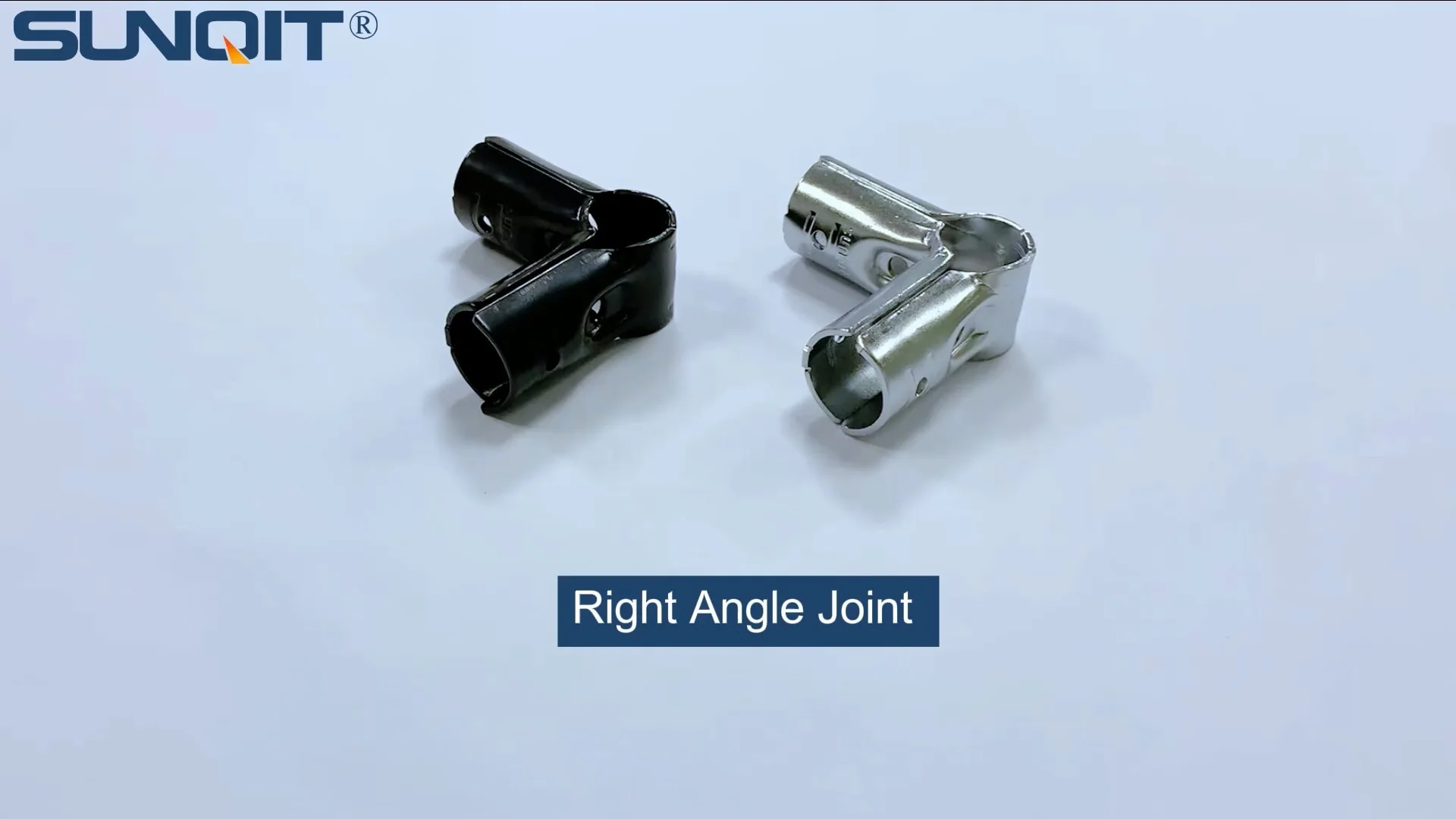
Three way lean pipe joint for 3 pcs 28MM lean pipe connection in straight angle, which used widely in workbench, flow rack, hand trolley frame connection.
Introduction: The Unsung Hero of Manufacturing Efficiency
Walk into any thriving manufacturing facility, and you'll notice a silent force keeping operations running smoothly: material racks. These structures—whether holding raw materials, work-in-progress, or finished goods—are the backbone of workflow efficiency. But here's the thing: not all material racks are created equal. The difference between a rack that bends under pressure and one that adapts to your team's needs often comes down to a tiny yet mighty component: the joints that hold it all together.
In the world of lean manufacturing, two qualities reign supreme: stability and flexibility. Stability ensures that even the heaviest loads stay secure, preventing accidents and downtime. Flexibility allows teams to reconfigure racks on the fly, adapting to new products, seasonal demands, or layout changes without overhauling entire systems. Enter the three way lean pipe joint—a unassuming yet revolutionary piece that marries these two qualities seamlessly. Let's dive into how this small component is transforming material racks from static structures into dynamic tools that grow with your business.
What Are Three Way Lean Pipe Joints, Anyway?
Before we explore their impact, let's get to know the star of the show. Three way lean pipe joints are specialized connectors designed to join three lean pipes (or tubes) at a single point, typically forming a T-shape or Y-shape. Think of them as the "knees" and "elbows" of your material rack—they're where the structure gains its strength and ability to branch out.
These joints are engineered with precision, often made from durable materials like steel, stainless steel (a nod to the stainless steel pipe series ), or lightweight aluminum (perfect for aluminum lean pipe setups). Their design is deceptively simple: a central hub with three openings, each sized to grip lean pipes tightly. Some feature threaded bolts or locking mechanisms to ensure a snug fit, while others use friction or compression to hold pipes in place. No matter the style, their core job remains the same: to create strong, reliable connections that don't require welding or complex tools.
But why "three way"? Unlike two way joints (which connect two pipes in a straight line or L-shape) or four way joints (which add a fourth branch), three way joints strike a unique balance. They allow racks to expand vertically and horizontally without overcomplicating the structure, making them ideal for material racks that need to maximize storage space while staying nimble.

Stability: The Foundation of Safe, Reliable Material Racks
Imagine loading a rack with heavy components—say, automotive parts or industrial tools—and feeling the structure wobble. Not only is that a safety hazard, but it also erodes trust in your workflow. Stability isn't just a nice-to-have; it's non-negotiable. Three way lean pipe joints excel here, and here's why:
1. Load Distribution That Prevents Weak Points
When you connect three pipes at a single joint, the weight of the load is distributed across all three branches, rather than on one. For example, in a typical material rack with vertical uprights and horizontal shelves, a three way joint at the corner where a shelf meets two uprights will spread the shelf's weight evenly down both uprights. This prevents stress from building up in one area, reducing the risk of bending or collapse. It's like having three friends lifting a heavy box instead of two—everyone shares the burden, and no one gets overwhelmed.
2. Rigidity Without Rigidity
Stability doesn't mean being stiff. Three way joints are designed to lock pipes in place firmly, but they also allow for controlled rigidity. Unlike welded joints, which are fixed and prone to cracking under stress, these mechanical joints can absorb minor shocks (like when a worker places a bin on the shelf) without compromising the structure. This is especially important in busy facilities where racks are accessed dozens of times a day.
3. Compatibility with Heavy-Duty Applications
Whether you're building a lean pipe workbench (where operators stand for hours, relying on a steady surface) or a tall material rack storing bulk items, three way joints rise to the occasion. Many are rated to handle hundreds of pounds per connection, and when paired with thick-walled lean pipes (like 2.0mm pe coated lean pipe or stainless steel options), they create a structure that can withstand daily wear and tear. Some manufacturers even test their joints under extreme loads to ensure they meet industrial standards—so you can trust that "stability" isn't just a marketing buzzword.

Flexibility: Adapting to the Rhythm of Modern Manufacturing
Manufacturing isn't static. One month, you're producing small electronic components; the next, you're scaling up to larger assemblies. Your material racks need to keep pace. This is where three way lean pipe joints truly shine—they're built for change.
1. Modularity That Lets You "Remix" Your Racks
Traditional welded racks are like concrete—once they're built, changing their shape means breaking them down and starting over. Three way joints? They're more like building blocks. Need to add a shelf? Loosen the bolts, insert a new pipe, and tighten. Want to shorten a rack to fit a new machine? Simply disconnect the joint, remove the excess pipe, and reconnect. This modularity is a game-changer for facilities practicing lean manufacturing, where waste reduction (including time wasted on retooling) is a priority.
2. Perfect for Dynamic Systems Like Flow Racks
Take flow racks , for example. These racks use gravity to move materials from the back to the front, ensuring first-in, first-out (FIFO) inventory management. To work effectively, flow racks need adjustable angles, varying shelf heights, and the ability to add or remove lanes as product sizes change. Three way joints make this easy. By repositioning joints, you can tweak the slope of roller tracks (hello, roller track and accessories !) or add dividers to separate SKUs—all without calling in a contractor.
3. Fast Assembly, Minimal Downtime
Time is money, and every minute your team spends building or reconfiguring racks is time not spent on production. Three way joints cut assembly time dramatically. Most can be installed with basic tools—think Allen wrenches or hex keys—and require no specialized training. A small team can assemble a full material rack in hours, not days. And when it's time to reconfigure? Even faster. This speed is a lifesaver during peak seasons or when launching a new product line, where every second counts.

Installation & Assembly: No Welding, No Headaches
You might be thinking, "This sounds great, but is it hard to set up?" The short answer: no. Three way lean pipe joints are designed with the end user in mind—even if you're not a structural engineer.
Here's a quick breakdown of the process: First, gather your materials: lean pipes (steel, aluminum, or pe-coated), three way joints, and any accessories like lean pipe and accessories (e.g., end caps to prevent snags, or casters for mobile racks). Next, measure and cut the pipes to your desired lengths (many suppliers offer pre-cut options to save time). Then, insert each pipe into the joint's openings. Depending on the joint type, you'll either tighten a bolt to clamp the pipe in place or twist a locking collar to secure it. That's it—no welding, no drilling, no messy adhesives.
What about alignment? Most three way joints have built-in guides or marks to ensure pipes are straight, so your rack won't end up lopsided. And if you make a mistake? Just loosen the joint, adjust the pipe, and retighten. It's that forgiving. This simplicity means your maintenance team or even floor operators can handle assembly, freeing up engineers for more complex tasks.
Case Study: How Three Way Joints Transformed a Electronics Factory's Workflow
The Challenge:
A mid-sized electronics manufacturer was struggling with outdated material racks. Their old welded steel racks were heavy, hard to move, and couldn't be adjusted to fit new circuit board sizes. Workers were wasting time searching for parts, and the rigid structure meant they often had to stack items precariously, leading to occasional spills and delays.
The Solution:
The factory switched to a lean pipe system using three way joints and aluminum profile pipes (chosen for their lightweight yet durable properties). They reconfigured their material racks into a mix of static storage and flow racks, using three way joints to add adjustable shelves and gravity-fed lanes for circuit boards.
The Results:
- 30% faster picking time: Workers no longer had to bend or reach awkwardly—shelves were adjusted to ergonomic heights using three way joints.
- 50% reduction in reconfiguration time: When a new circuit board size was introduced, the team reconfigured the flow rack in under an hour (down from 8 hours with the old welded racks).
- Zero accidents: The stable, secure joints eliminated wobbling, reducing the risk of falling parts.
"We used to dread product changes because of the racking," said the factory manager. "Now, with three way joints, we can adapt in minutes. It's like night and day."
How Do Three Way Joints Compare to Other Joint Types?
To truly appreciate three way joints, it helps to see how they stack up against other common joint types. Let's break it down:
| Joint Type | Stability | Flexibility | Best For | Complexity |
|---|---|---|---|---|
| Two Way (Straight/L-shape) | High (for straight lines) | Low (limited branching) | Simple shelves, straight conveyor rails | Low |
| Three Way (T/Y-shape) | Very High (balanced load distribution) | High (modular branching) | Material racks, flow racks, workbenches | Low-Medium |
| Four Way (Cross-shape) | Medium (more connections = potential weak points) | Very High (maximum branching) | Complex storage systems, multi-level racks | Medium-High |
| Welded Joints | Very High (permanent bond) | Very Low (no reconfiguration) | Fixed, heavy-duty structures (rarely used in lean setups) | High (requires skilled labor) |
As the table shows, three way joints hit the sweet spot. They offer stability that rivals welded joints but with the flexibility to adapt—all without the complexity of four way joints. For material racks, which need to be both sturdy and adaptable, this makes them the clear choice.
Maintenance & Longevity: Keeping Your Racks in Top Shape
Like any tool, three way lean pipe joints need a little care to last. Fortunately, maintenance is minimal. Here's how to ensure they stand the test of time:
- Check for looseness: Over time, vibrations from daily use can cause joints to loosen slightly. A quick monthly inspection with a wrench to tighten bolts will keep them secure.
- Clean regularly: Dust, oil, and debris can build up in joint openings, making it harder to adjust pipes. Wipe joints with a damp cloth or brush to keep them clean.
- Choose the right material: For humid or corrosive environments (like food processing or chemical plants), opt for stainless steel joints or aluminum lean pipe to prevent rust.
- replace worn parts: If a joint's locking mechanism starts to slip, or if a pipe shows signs of bending, replace them promptly. Most suppliers offer affordable replacement joints, so you won't have to replace the entire rack.
With proper care, three way lean pipe joints can last 5-10 years or more—far longer than flimsy plastic connectors or poorly welded joints. This longevity makes them a cost-effective investment, as you won't be replacing racks every few years.
Choosing the Right Supplier: Why Quality Matters
Not all three way lean pipe joints are created equal. To get the stability and flexibility you need, you'll want to partner with a reliable lean pipe supplier (or lean system supplier ). Here's what to look for:
- Material quality: Ask about the joint's material thickness and coating. Thicker steel or high-grade aluminum will hold up better under load.
- Testing standards: Reputable suppliers test their joints for load capacity, durability, and corrosion resistance. Don't hesitate to ask for test reports.
- Range of options: Look for suppliers that offer multiple joint types (three way, two way, etc.) and compatible accessories (pipes, casters, shelves) to simplify ordering.
- Customer support: A good supplier will help you design your rack, answer technical questions, and offer fast shipping for replacement parts.
Remember, skimping on joint quality might save you a few dollars upfront, but it could lead to unstable racks, frequent replacements, or even safety issues down the line. It's worth investing in joints that meet industrial standards—your team and your bottom line will thank you.
Conclusion: Three Way Joints—Small Part, Big Impact
Material racks might not get the same attention as high-tech machinery or cutting-edge software, but they're the unsung heroes of efficient manufacturing. And at the heart of every great material rack lies a simple yet powerful component: the three way lean pipe joint.
These unassuming connectors bring together the best of both worlds: the stability to hold heavy loads safely and the flexibility to adapt to changing needs. They reduce downtime, improve workflow, and empower teams to take control of their space. Whether you're building a flow rack for just-in-time production, a lean pipe workbench for assembly, or a dynamic storage system for ever-changing inventory, three way joints are the key to unlocking efficiency.
So, the next time you look at your material racks, think about the joints holding them together. Are they holding you back, or helping you move forward? If it's the former, it might be time to make the switch to three way lean pipe joints. Your future self—with its stable, flexible, and efficient workspace—will be glad you did.