- Company Articles
- Products and Technology
- Solution
- Using Two Way Aluminum Pipe Joints to Create Custom Flow Racks in Warehouses

Using Two Way Aluminum Pipe Joints to Create Custom Flow Racks in Warehouses
Related Product
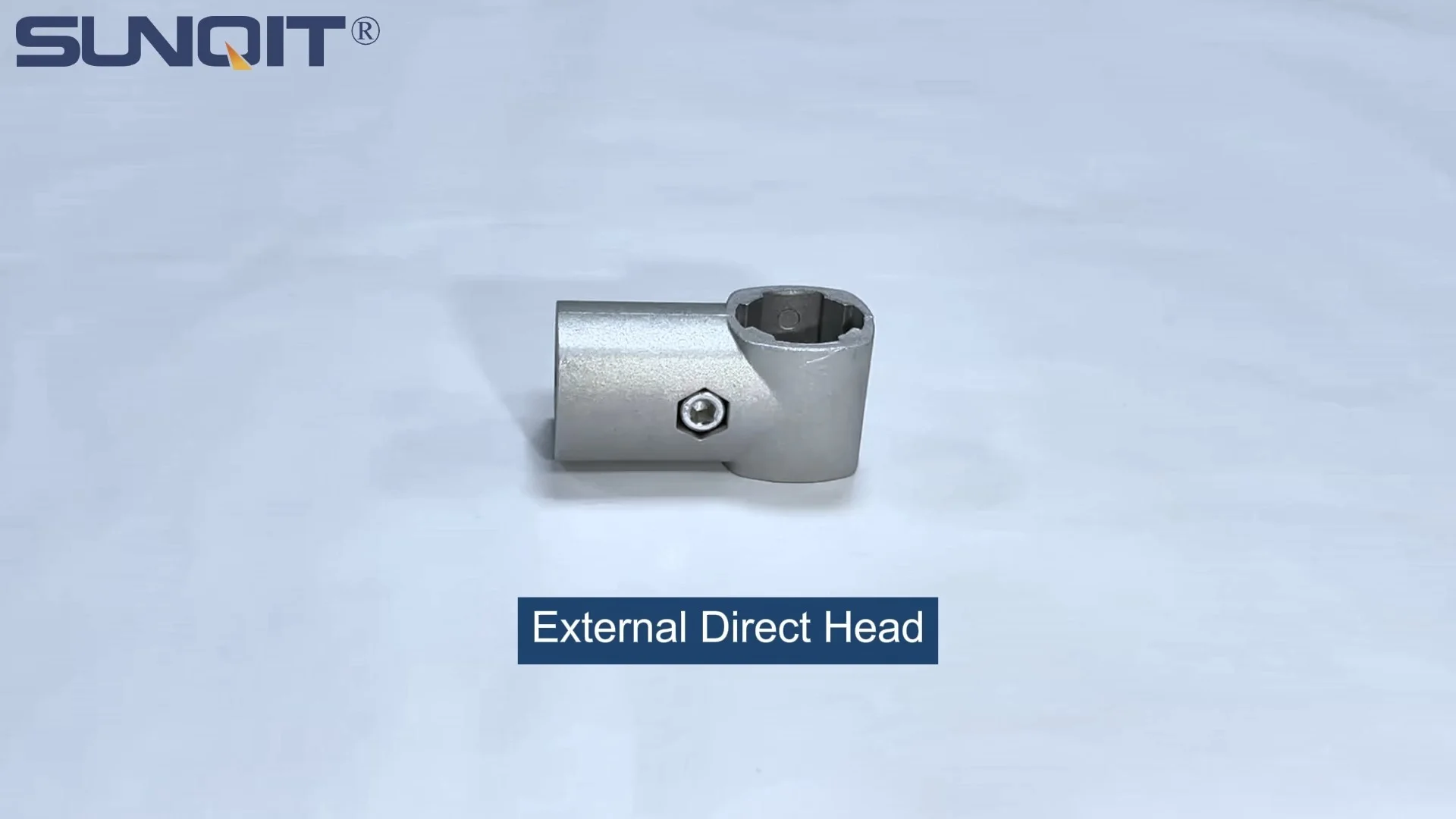
Two Way Aluminum Pipe Joint
Aluminum 2 way pipe joint for 28mm aluminum pipe connection in 2 direction.
The Warehouse Storage Struggle: When One-Size-Fits-All Falls Short
Walk into any busy warehouse, and you'll quickly notice the heartbeat of the operation: storage. From pallets stacked to the ceiling to bins brimming with parts, how a warehouse organizes its materials directly impacts everything from worker productivity to order fulfillment speed. But here's the problem many facility managers face: most off-the-shelf storage solutions are designed with "average" in mind. They assume your inventory sizes are standard, your workflow is linear, and your space constraints fit a generic blueprint. Spoiler alert: no two warehouses are the same.
Maybe your team handles small electronic components one week and bulky machinery parts the next. Or perhaps your picking process requires materials to flow from left to right during morning shifts and right to left in the afternoon to accommodate staffing changes. Rigid, pre-built racks and shelves can't keep up with that kind of flexibility. They end up wasting space, slowing down workers who have to navigate awkward layouts, and even increasing the risk of errors when materials are forced into ill-fitting storage. Over time, these inefficiencies add up—costing you time, money, and the ability to adapt to new challenges.
So, what's the alternative? Enter custom flow racks—storage systems designed to fit your unique needs. And at the heart of building these adaptable workhorses? A small but mighty component: the two way aluminum pipe joint. In this article, we'll dive into how these unassuming connectors are revolutionizing warehouse storage, making it easier than ever to build flow racks that grow, change, and evolve with your operation. We'll cover everything from why aluminum is the material of choice to step-by-step assembly tips, real-world success stories, and how integrating components like roller track and aluminum profile accessories can take your workflow to the next level. Let's get started.
Why Custom Flow Racks? The Case for Lean, Adaptable Storage
Before we jump into the nuts and bolts of two way aluminum pipe joints, let's talk about why custom flow racks matter in the first place. At their core, these systems are rooted in lean system principles—the idea of minimizing waste (whether it's time, space, or effort) while maximizing value. Traditional static racks might store materials, but they often create waste in hidden ways: unused vertical space, materials that are hard to reach, or layouts that force workers to take extra steps during picking.
Flow racks, by contrast, are all about movement. They use gravity or gentle inclines to feed materials forward as items are picked, ensuring that the next part is always within easy reach. This "first in, first out" (FIFO) design reduces the risk of expired or obsolete inventory, a common headache in fast-paced industries like manufacturing or e-commerce. But when flow racks are custom , they become even more powerful. You can adjust shelf heights to fit your tallest (or shortest) items, add dividers for small parts, or even integrate roller track to speed up material flow between workstations. Suddenly, your storage isn't just a place to hold things—it's an active part of your workflow, working with your team instead of against them.
Another key benefit? Scalability. As your business grows, so does your inventory. Pre-built racks often require you to buy entirely new units when you run out of space, which is both costly and time-consuming. Custom flow racks built with modular components, though? They grow with you. Need an extra shelf? Add a few more aluminum pipes and joints. Expanding to a new aisle? Dismantle a section and rebuild it elsewhere. This flexibility isn't just convenient—it's a game-changer for businesses that need to stay agile in a competitive market.
Two Way Aluminum Pipe Joints: The Unsung Heroes of Modular Design
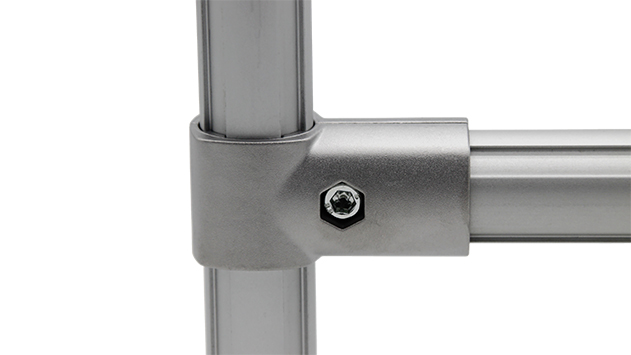
If custom flow racks are the solution, then two way aluminum pipe joints are the building blocks that make them possible. Let's break down what these components are and why they're so effective. A two way aluminum pipe joint is exactly what it sounds like: a connector designed to join two pieces of aluminum pipe at a fixed angle (usually 90 degrees, though some models offer adjustability). But don't let their simplicity fool you—these joints are engineered for strength, precision, and ease of use.
First, the material: aluminum. Unlike steel, which is heavy and prone to rust, aluminum is lightweight yet surprisingly durable. It resists corrosion, making it ideal for warehouses with varying humidity levels or exposure to liquids (think food processing or automotive facilities). Its light weight also makes assembly a breeze—no need for heavy machinery or teams of workers to hoist components into place. A single employee can carry, position, and connect aluminum pipes and joints, cutting down on installation time and labor costs.
But the real magic is in the design of the joints themselves. Most two way aluminum pipe joints feature a sleek, low-profile shape with internal threading or clamping mechanisms that grip the aluminum pipe tightly. This ensures a secure connection that can support heavy loads—we're talking hundreds of pounds of inventory—without wobbling or shifting. Some models even include rubberized gaskets or locking levers to dampen vibrations, which is crucial for protecting fragile items like electronics or glassware.
What sets two way joints apart from other connectors (like three-way or four-way joints) is their focus on simplicity. They're the "utility players" of the modular world—versatile enough to form the backbone of your flow rack while leaving room to add more complex components later. Need to add a crossbar for extra support? Pair a two way joint with a three-way joint. Want to attach a roller track to the front of a shelf? Use a two way joint to anchor the track to the rack's vertical pipes. The possibilities are nearly endless, and it all starts with these unassuming connectors.

Building Your Custom Flow Rack: A Step-by-Step Guide
Now that we understand why two way aluminum pipe joints are essential, let's walk through how to use them to build a custom flow rack. We'll keep this practical—no engineering degree required. Just a few basic tools, some aluminum pipes, joints, and a clear vision of what you need.
Step 1: Plan Your Layout
Before you start assembling, take time to map out your flow rack. Ask yourself: What items will it hold? How much weight do you need to support per shelf? What height and depth will work best for your space? Sketching a rough design on paper or using a simple CAD tool can help you visualize the final product and avoid mistakes later. Don't forget to measure your warehouse space—you don't want to build a rack that's too tall for the ceiling or too wide for the aisle!
Pro tip: Consider ergonomics. Shelves should be at a height that allows workers to reach items without bending or stretching excessively. For most adults, this means keeping frequently accessed items between knee and shoulder height. You might also want to angle the shelves slightly downward (1-3 degrees) to let gravity feed materials forward—this is where roller track comes in handy, as we'll discuss later.
Step 2: Gather Your Materials
Once your design is set, it's time to gather components. For a basic flow rack, you'll need:
- Aluminum pipes (choose diameter based on load capacity—most warehouses use 1.5" or 2" pipes)
- Two way aluminum pipe joints (quantity depends on your design; count the number of vertical-to-horizontal connections)
- End caps (to cover exposed pipe ends and prevent snags)
- Aluminum profile accessories (like brackets or clips for attaching roller track)
- Rubber mallet (for gently securing joints without damaging aluminum)
- Tape measure and level (to ensure everything is straight and even)
If you're adding roller track, you'll also need track guides, connectors, and possibly side rails to keep items from sliding off. Most suppliers offer starter kits that include these accessories, which can save you time and ensure compatibility.
Step 3: Assemble the Frame
Start with the vertical supports—these are the "legs" of your rack. Cut your aluminum pipes to the desired height (using a pipe cutter or hacksaw), then attach two way joints to the top and bottom of each vertical pipe. Next, connect horizontal pipes to the joints to form the frame. For stability, we recommend building the frame on the ground first, then lifting it into place (or building it in sections if it's too large to move). As you connect pipes to joints, use a rubber mallet to tap them into place—this ensures a snug fit without stripping threads or damaging the aluminum.
Once the frame is assembled, use a level to check that it's straight. A wobbly frame will lead to unstable shelves, so take the time to adjust here. If needed, add diagonal braces (using three-way joints) for extra support, especially if your rack will hold heavy items.
Step 4: Add Shelves and Roller Track
With the frame secure, it's time to add shelves. Cut horizontal pipes to the desired depth and attach them to the vertical frame using two way joints. For flow racks, these shelves will serve as the base for your roller track. Install the track by clipping it to the shelf pipes using aluminum profile accessories—most tracks snap into place or secure with small screws. Make sure the track is angled slightly downward (remember that 1-3 degrees we mentioned earlier) to encourage materials to flow forward as items are picked.
Finally, add end stops to the front of each shelf to prevent items from sliding off completely. You can use simple plastic or metal stops, or get creative with custom solutions—some warehouses use rubber bumpers to cushion delicate items.
Step 5: Test and Adjust
Before loading your new flow rack with inventory, give it a test run. Place a few sample items on the roller track and see how they flow—do they move too quickly, risking damage, or too slowly, requiring workers to push them? Adjust the angle of the track if needed. Check all joints for tightness, and give the rack a gentle shake to ensure it's stable. If everything looks good, you're ready to stock up!

Traditional vs. Custom Flow Racks: A Side-by-Side Comparison
Still on the fence about whether custom flow racks with two way aluminum joints are right for you? Let's put them head-to-head with traditional storage solutions in the table below. You'll see why more warehouses are making the switch.
| Feature | Traditional Steel Flow Racks | Custom Aluminum Flow Racks (Two Way Joints) |
|---|---|---|
| Flexibility | Fixed design; cannot be reconfigured without welding or heavy tools. | Modular; easy to disassemble, expand, or reconfigure with basic tools. |
| Weight | Heavy (500+ lbs for a single unit); requires machinery to move. | Lightweight (100-200 lbs for a similar unit); movable by hand. |
| Durability | Prone to rust and corrosion in humid environments. | Aluminum resists rust; ideal for wet or high-moisture settings. |
| Assembly Time | 4-6 hours for a small rack (requires 2+ workers). | 1-2 hours for the same rack (assembled by 1 worker). |
| Cost Over Time | High; requires replacement when layout changes. | Lower; modular components can be reused or repurposed. |
| Compatibility with Accessories | Limited; often requires custom welding for roller track or shelves. | Wide range of aluminum profile accessories available (clips, brackets, etc.). |
Taking It Further: Integrating Roller Track and Workbench Systems
So far, we've focused on the basics of building a custom flow rack with two way aluminum joints, but the modularity of these systems means you can take functionality to the next level by integrating additional components. One of the most popular upgrades is adding roller track, which transforms a static shelf into a dynamic conveyor system for materials. Roller track consists of small, free-spinning wheels mounted on a track, allowing items to glide forward with minimal effort. When paired with a slightly angled shelf, gravity does the work, ensuring that the next item is always ready for picking—no more reaching to the back of a bin or shuffling items around.
Installing roller track is surprisingly simple, thanks to aluminum profile accessories. Most tracks come with pre-drilled holes or clips that attach directly to the aluminum pipes of your flow rack. For example, you can use L-brackets to mount the track to the horizontal shelf pipes, or T-slot connectors to secure it to vertical supports. Some roller track systems even include adjustable guides, letting you customize the width to fit different item sizes—perfect for warehouses that handle a mix of small boxes and large parts.
Another great integration? Workbenches. Many warehouses position workbenches at the end of flow racks, creating a seamless "pick-and-assemble" station. By using the same two way aluminum joints and pipes, you can build a workbench that matches the height and style of your flow rack, ensuring a cohesive look and ergonomic workflow. Add a laminate top for durability, and you've got a space where workers can pick parts from the rack, assemble products, and then place finished items on a separate roller track to send to shipping. It's a small change that eliminates unnecessary movement and keeps your team focused on the task at hand.
Real-World Success: How One Warehouse Boosted Efficiency by 30%
Let's put all this theory into practice with a real example. Take ABC Manufacturing, a mid-sized automotive parts supplier in Ohio. Before switching to custom flow racks, their warehouse was struggling with slow order fulfillment and frequent errors. Their old steel racks were fixed in place, making it hard to adapt to seasonal inventory spikes. Workers spent hours each day walking back and forth between shelves, and picking errors were common because parts were often misplaced in ill-fitting bins.
ABC's facility manager, Maria, decided to invest in custom flow racks built with two way aluminum pipe joints, aluminum pipes, and roller track. Here's what happened next: First, the team disassembled the old steel racks (which were sold for scrap, offsetting some of the new investment). Then, they built 12 custom flow racks tailored to their most common part sizes—taller racks for long shafts, shorter ones for small bolts and washers, and angled racks with roller track for high-turnover items like gaskets and hoses.
The results were striking. Within the first month, picking time decreased by 25% because workers no longer had to bend, stretch, or search for parts—everything rolled forward to them. Picking errors dropped by 40%, saving the company thousands in return and rework costs. And when ABC landed a new client with larger parts, they simply added a few extra aluminum pipes and joints to expand their existing racks, avoiding the need to buy new storage units. Maria estimates the new system paid for itself in under a year, and the team now refers to their flow racks as "the best decision we've made for the warehouse."
Maintenance and Longevity: Keeping Your Flow Racks in Top Shape
Like any equipment, custom flow racks require a little maintenance to stay in peak condition—but compared to traditional steel racks, the upkeep is minimal. Here are a few tips to ensure your aluminum system lasts for years:
- Inspect joints regularly: Over time, joints can loosen slightly from vibration or heavy use. Tighten them with a rubber mallet or hex key (if using threaded joints) every few months.
- Clean aluminum surfaces: Wipe down pipes and joints with a damp cloth to remove dust and debris. For stubborn grime, use a mild detergent—avoid harsh chemicals that can damage the aluminum finish.
- replace worn roller track: If wheels start sticking, replace the track section or individual wheels. Most suppliers sell replacement parts, so you don't need to rebuild the entire rack.
- Check for dents: Aluminum is durable, but heavy impacts can dent pipes. Minor dents are usually cosmetic, but deep ones can weaken the structure—replace damaged pipes promptly.
One of the biggest advantages of aluminum is its resistance to corrosion, but if your warehouse deals with harsh chemicals or extreme humidity, consider applying a clear protective coating to pipes and joints. It's a small step that can extend the life of your system even further.
Conclusion: Your Warehouse Deserves Storage That Works for You
At the end of the day, a warehouse is only as efficient as its storage system. Rigid, one-size-fits-all racks might seem like a safe bet, but they're holding you back—limiting your flexibility, slowing down your team, and costing you money in hidden waste. Custom flow racks built with two way aluminum pipe joints, aluminum pipes, and roller track are more than just storage—they're a tool for growth. They adapt to your needs, grow with your business, and turn your warehouse into a well-oiled machine where every square foot and every second counts.
Whether you're a small startup or a large distribution center, the modularity and durability of aluminum-based systems make them a smart investment. And with components like aluminum profile accessories and roller track, the possibilities are endless—you're not just building racks; you're building a workflow that works for you.
So, what are you waiting for? Take a look at your current storage setup. Is it holding you back? If the answer is yes, it might be time to embrace the flexibility of two way aluminum pipe joints and custom flow racks. Your team, your bottom line, and your future self will thank you.