- Company Articles
- Products and Technology
- Product knowledge
- Using Two Way Lean Pipe Joint to Build Custom Material Handling Carts

Using Two Way Lean Pipe Joint to Build Custom Material Handling Carts
Related Product
Two Way Lean Pipe Joint
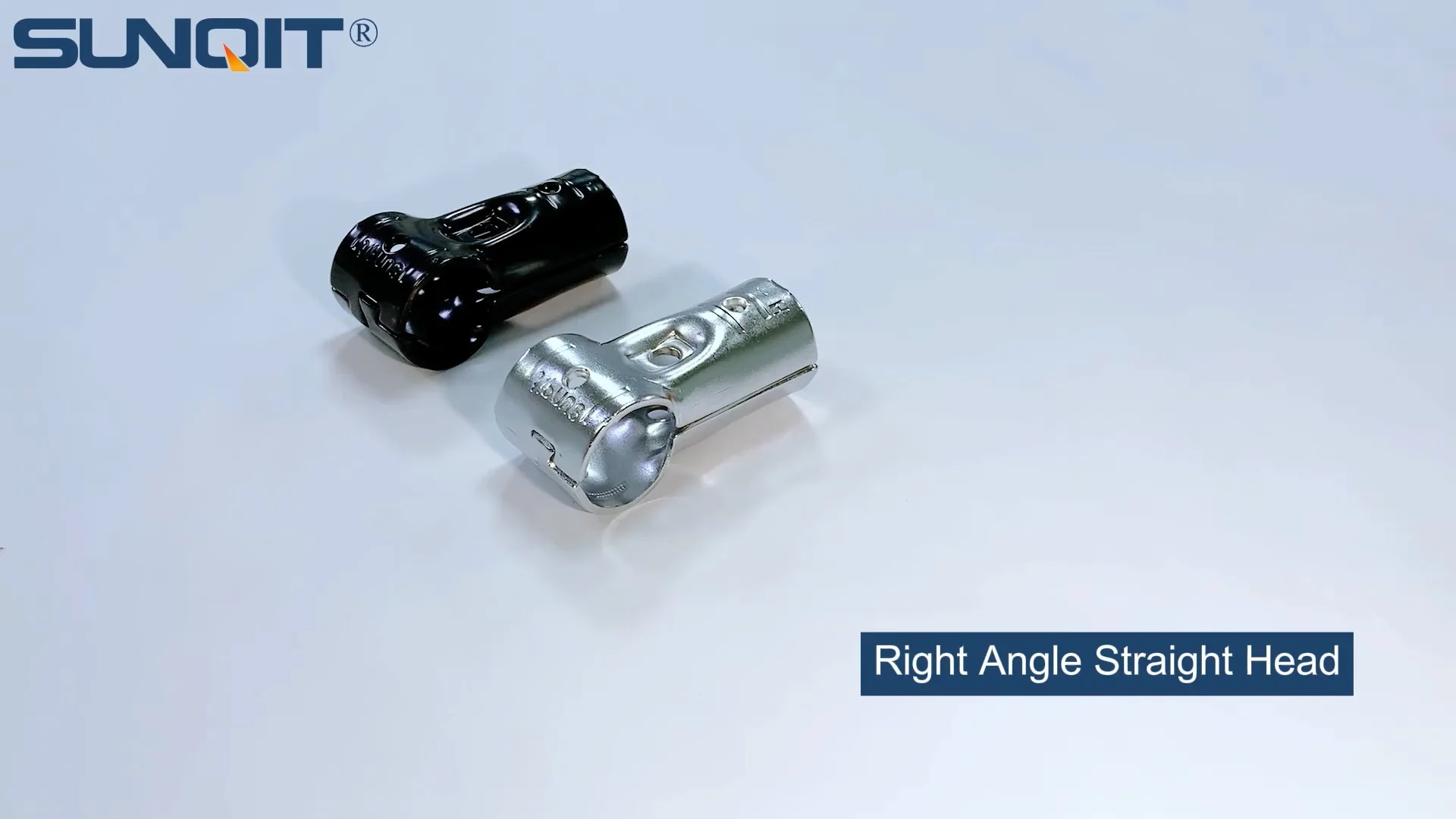
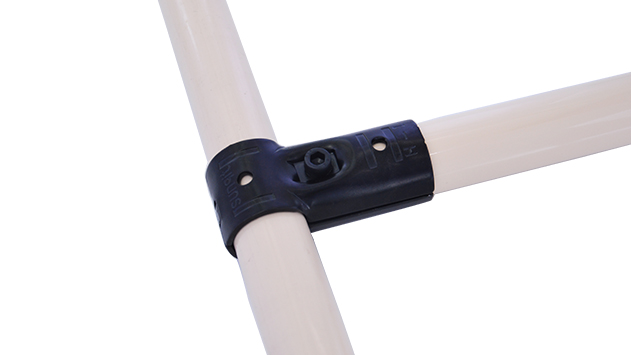
Two way lean pipe joint for 2 pcs 28MM lean pipe connection in straight angle, which used widely in workbench, flow rack, hand trolley frame connection.
Why Material Handling Matters—And Why One-Size-Fits-All Carts Fall Short
Walk into any busy production facility, warehouse, or assembly line, and you'll quickly notice a silent workhorse keeping operations moving: material handling carts. These unassuming tools ferry everything from circuit boards and automotive parts to bakery trays and medical supplies, bridging the gap between storage, workstations, and shipping. But here's the problem: most off-the-shelf carts are designed with "average" needs in mind. They're too tall for some workers, too short for others. Their shelves are fixed, so bulky items don't fit, and tiny parts slide off. worse, they're often made of rigid metal or plastic—great for durability, but impossible to modify when your workflow changes.
Take Maria, a line supervisor at a mid-sized electronics manufacturer I worked with last year. Her team spent 20 minutes every morning just wrestling with carts. "We needed to move small circuit boards from the storage room to the soldering stations," she told me. "The carts we had were deep, so the back rows were always hard to reach. And they didn't lock—twice last month, a cart rolled into a workbench and damaged $500 worth of components." By the time they added labels, bungee cords to hold parts, and makeshift risers, the carts were Frankensteinian messes that still didn't work right.
That's where lean pipe systems come in. If you're not familiar, lean pipe (sometimes called "flexible pipe" or "production pipe") is a simple but genius concept: lightweight, coated steel pipes and modular joints that let you build custom structures—including carts—tailored to your exact needs. And at the heart of that system? The two way lean pipe joint. This small but mighty connector is what turns a pile of pipes into a functional, flexible cart that grows with your business. Let's dive into how it works, why it's a game-changer, and how you can build your own cart from scratch.
Lean Pipe 101: The Backbone of Flexible Workspaces
First, let's get clear on what lean pipe is. Traditional lean pipe is typically made of steel with a plastic coating (often PE, or polyethylene) that's smooth, easy to clean, and resistant to scratches and corrosion. It comes in standard diameters (usually 28mm) and thicknesses—1.0mm, 1.2mm, 1.5mm, or 2.0mm—so you can choose the right strength for your load. For example, a cart carrying 50kg might use 1.5mm pipe, while one hauling 150kg would need 2.0mm.
But what makes lean pipe truly revolutionary is its modularity. Instead of welding or bolting pipes together (which requires tools, time, and permanence), you use joints—small, often zinc-plated connectors that clamp onto the pipes. Tighten a screw, and the joint grips the pipe securely; loosen it, and you can reposition, add, or remove pipes in minutes. This flexibility aligns perfectly with lean manufacturing principles: eliminate waste, adapt quickly, and empower workers to improve their own workflows.
And among all the joints available—three-way, four-way, swivel, fixed—the two way lean pipe joint is the most versatile. As the name suggests, it connects two pipes, but here's the kicker: it's adjustable. Want a 90° angle for a vertical frame? Done. Need a 45° slope for a shelf that lets parts slide forward (like a mini flow rack)? Just rotate the joint. It's like building with construction toys for grown-ups—only these "toys" can support hundreds of pounds and keep your production line running smoothly.
Meet the Star: Two Way Lean Pipe Joint Explained
Let's zoom in on the two way lean pipe joint. At first glance, it looks simple: two cylindrical sleeves (the "ports") connected by a central hub, with a setscrew on each port. Slide a pipe into each sleeve, tighten the setscrews, and boom—you've got a connection. But its simplicity is its strength. Unlike fixed-angle joints (which lock at 90° or 180°), the two way joint's ports rotate 360°, so you can set any angle you need. Need a shelf tilted at 15° to prevent small parts from sitting idle? Tilt the joint. Building a handle that curves up and out for easy gripping? Bend the pipes and lock the joint in place.
Most two way joints are made of die-cast zinc or aluminum, which balances strength and lightweight. The setscrews are usually hex-head, so you only need a hex key (Allen wrench) to tighten them—no power tools required. And because the pipe coating is soft enough to grip but tough enough to resist damage, the joint holds firm even with repeated adjustments. I've seen joints that have been loosened, repositioned, and retightened dozens of times still hold like new after years of use.
Another perk? Compatibility. Two way lean pipe joints work with all standard lean pipe sizes, whether you're using 1.2mm PE coated lean pipe for lightweight tasks or 2.0mm stainless steel pipe for food-grade environments. They also pair well with other accessories: add a caster wheel to the bottom of a vertical pipe, a lean pipe workbench top to a horizontal frame, or even roller track for sliding shelves. It's a building block that plays well with others.
Pro Tip: When choosing two way joints, look for ones with rubberized setscrew tips. They grip the pipe better than metal tips and reduce the risk of damaging the PE coating—important if you plan to reconfigure your cart later.

Building Your Cart: A Step-by-Step Guide
Ready to stop struggling with clunky carts and build something that works for your team? Let's walk through building a basic custom material handling cart using two way lean pipe joints. We'll keep it simple, but I'll also share how to tweak it for your unique needs.
Step 1: Plan Your Cart (Measure Twice, Cut Once)
Start by asking: What will this cart carry? How heavy is the load? Who will use it? Measure the height of your shortest worker (to avoid stooping) and the tallest item you need to store (to ensure shelves are spaced right). For Maria's electronics team, the answers were: "Circuit boards (max weight 30kg)," "Workers between 5'2" and 6'0"," and "Tallest item: 12" tall component boxes." So we aimed for a cart height of 36" (easy to reach), with two shelves spaced 18" apart.
Sketch your design on paper or use a free tool like Google Drawings. Include: frame height/width/depth, number of shelves, caster placement, and any extras (like a handle or tool hooks). For a basic cart, you'll need a rectangular frame (four vertical pipes, four horizontal pipes for the top, four for the bottom), shelves (horizontal pipes across the vertical frame), and casters.
Step 2: Gather Your Materials
Here's what you'll need for a standard 36" tall x 30" wide x 24" deep cart (adjust quantities based on your design):
| Item | Quantity | Purpose |
|---|---|---|
| Two Way Lean Pipe Joint | 16 | Connect vertical pipes to horizontal frame pipes; connect shelf supports to vertical pipes |
| 1.5mm PE Coated Lean Pipe | 8 pieces (4x 36" for verticals, 4x 30" for top/bottom width, 4x 24" for top/bottom depth, 4x 24" for shelf supports) | Main frame and shelf structure |
| Caster Wheel with Brake | 4 | Mobility; brakes prevent rolling |
| Lean Pipe Workbench Top (30"x24") | 2 | Shelf surfaces (plywood, MDF, or pre-cut lean pipe workbench tops) |
| Hex Key Set | 1 | Tightening setscrews |
| Pipe Cutter or Hacksaw | 1 | Cutting pipes to length (if not pre-cut) |
| Sandpaper (120-grit) | 1 sheet | Smoothing cut pipe edges |
Step 3: Build the Frame
Start with the bottom frame: Take four 24" pipes (depth) and four 30" pipes (width). Use four two way joints to connect them into a rectangle: attach a joint to each end of the 30" pipes, then slide the 24" pipes into the joint ports. Tighten the setscrews just enough to hold the shape—you'll fully tighten later. Repeat for the top frame (same dimensions).
Next, connect the vertical pipes: Take the four 36" vertical pipes and attach a two way joint to the bottom of each. Stand the vertical pipes at the corners of the bottom frame, sliding the frame's joint ports onto the vertical pipes. Tighten the setscrews to lock the verticals in place. Then lift the top frame onto the vertical pipes and secure with another set of two way joints at the top. Now you have a rectangular cube—your cart's skeleton.
Step 4: Add Shelves and Casters
Shelves: Decide how high you want your shelves (we did 18" from the bottom and 18" from the top for Maria's team). Slide two way joints onto the vertical pipes at those heights, then attach 24" shelf support pipes between them (parallel to the depth pipes). Once the supports are in place, lay the lean pipe workbench tops on top and secure them with pipe clamps (or just let them rest—they won't slide if the supports are tight).
Casters: Flip the cart upside down. Attach a caster to each corner of the bottom frame using the mounting plate (most casters come with pre-drilled holes that align with the frame pipes). Tighten the bolts, then flip the cart right-side up. Test the wheels—they should roll smoothly, and the brakes should lock firmly.
Step 5: Tweak and Test
Now's the time to adjust. Is the handle too low? Loosen the top frame joints and raise the vertical pipes. Are parts sliding off the shelves? Tilt the shelf supports by rotating the two way joints to create a 5° slope (like a mini flow rack). Need to carry tools? Add a small hook by attaching a two way joint to the handle and looping a metal hook through one port. Once it's perfect, fully tighten all setscrews—snug, but not so tight you strip the threads.

Why This Cart Will Change Your Workflow (Spoiler: It's All About Flexibility)
So, what makes this cart better than the off-the-shelf version? Let's count the ways:
1. It Grows With Your Needs
Last month, Maria's team started making larger circuit boards—18" tall instead of 12". Instead of buying a new cart, they simply loosened the shelf joints, moved the supports up 6", and tightened them. Total time: 10 minutes. "We would've had to throw out the old cart before," she said. "Now we just adapt."
2. It's Ergonomic (Goodbye, Aches and Pains)
By building the cart to match your workers' heights, you reduce bending, reaching, and straining. A study by the Occupational Safety and Health Administration (OSHA) found that adjustable work surfaces reduce musculoskeletal injuries by 25%—and that includes carts. For Maria's shortest worker (5'2"), the bottom shelf sits at waist height, so she doesn't have to crouch. For her tallest worker (6'0"), the top shelf is at chest height, so he doesn't hunch.
3. It's Safe (No More Runaway Carts)
Locking caster wheels prevent the cart from rolling during loading/unloading—critical in busy spaces. And because the lean pipe coating is smooth and non-slip, parts stay put without bungee cords or tape. Maria's team hasn't had a single "cart crash" since switching.
4. It's Cost-Effective (No More Wasting Money on "Almost Right" Carts)
Off-the-shelf carts cost $150–$300 each. A custom lean pipe cart? The materials for Maria's cart (pipes, joints, casters, workbench tops) totaled $120. And because you can reuse the pipes and joints if you redesign the cart later, the long-term cost is even lower. "We built three carts for the price of two old ones," Maria told me. "And we'll never need to replace them—we'll just rebuild them."
Beyond Carts: Your Lean Pipe System Can Do More
Once you start building with two way lean pipe joints, you'll wonder why you ever used rigid furniture. These systems aren't just for carts—they're the foundation of a fully customizable workspace. Here are a few ways to expand:
Lean Pipe Workbenches
Build a workbench with adjustable height (using two way joints to raise/lower the legs) and add shelves, tool hooks, or even a pegboard. Use ESD lean pipe and ESD casters if you work with electronics—static control is built right in.
Flow Racks
Create gravity-fed flow racks by tilting shelves with two way joints, so parts slide forward as the front ones are used. Pair with roller track for super-smooth movement—perfect for assembly lines where workers need quick access to components.
Turnover Trolleys
Need to move bulk items like pallets or large boxes? Build a trolley with taller vertical pipes, reinforced with cross-braces (using two way joints at 45° angles for strength). Add heavy-duty caster wheels (rated for 500+ lbs) and you've got a custom solution for even the biggest loads.
The best part? All these systems use the same two way lean pipe joints and pipes, so you can mix and match components. That shelf you removed from your cart? Turn it into a side table for your lean pipe workbench. Those extra vertical pipes? Build a small flow rack for your desk.
Final Thoughts: Lean Isn't Just a Tool—It's a Mindset
At its core, lean manufacturing is about continuous improvement: observing what's broken, fixing it, and repeating. Custom material handling carts built with two way lean pipe joints embody that mindset. They're not just tools—they're a way to empower your team to solve their own problems. When workers can adjust a cart's height, add a shelf, or reangle a surface to make their jobs easier, they feel valued. And when they feel valued, they're more engaged, more productive, and more likely to spot other ways to improve your workflow.
So, what will you build first? A cart for your assembly line? A workbench for your lab? Whatever it is, start small. Grab a few two way lean pipe joints, some 1.5mm PE coated lean pipe, and a hex key. Build something simple, test it, tweak it, and see how it transforms your day. I bet you'll be hooked—and wondering how you ever lived with those one-size-fits-all carts.