- Company Articles
- Products and Technology
- Application Cases
- Vertical Lean Pipe Joint Chrome Applications in Automotive Manufacturing: Case Studies

Vertical Lean Pipe Joint Chrome Applications in Automotive Manufacturing: Case Studies
Related Product
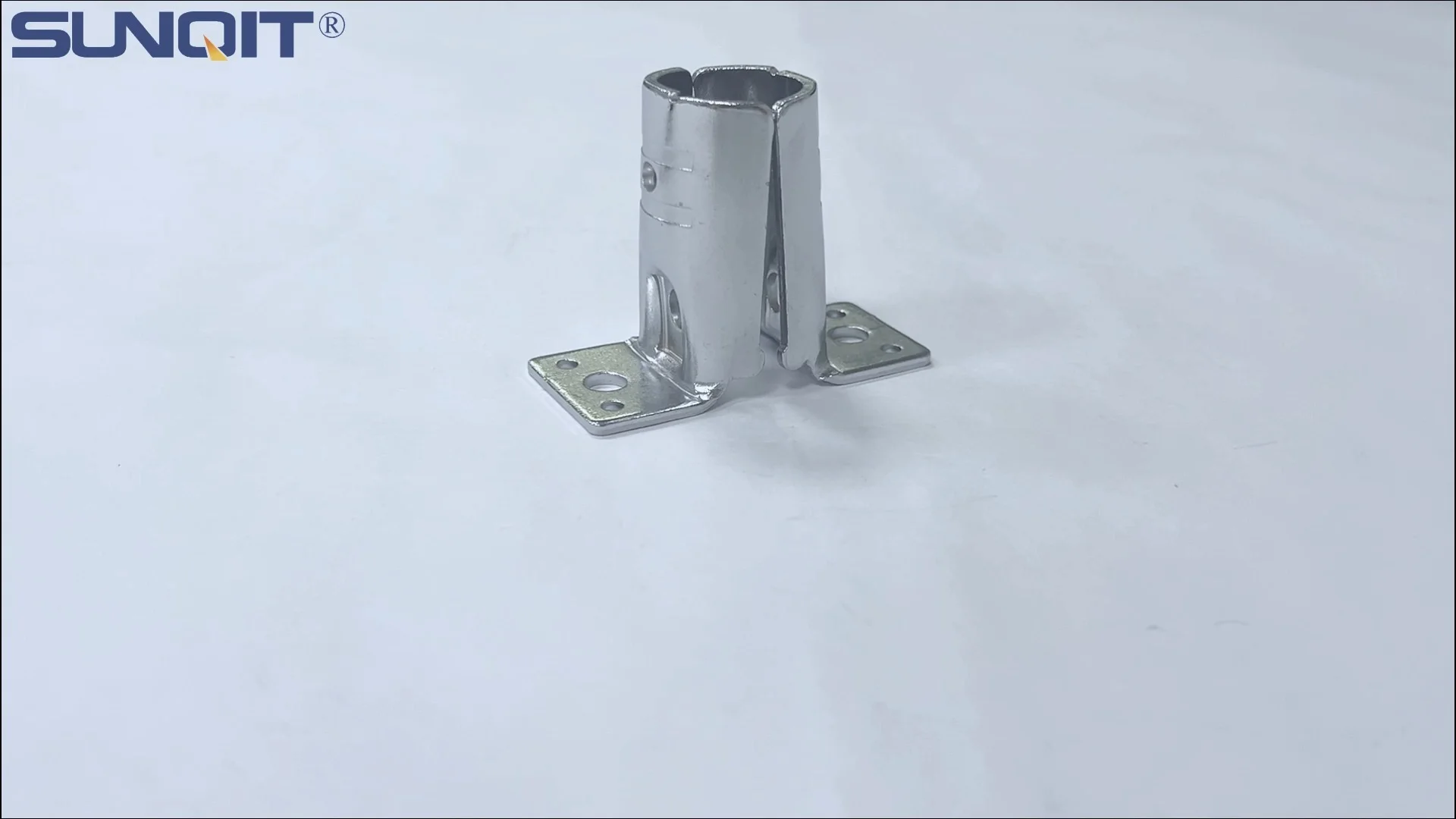
Vertical Lean Pipe Joint Chrome
Vertical lean pipe joint is used for 28mm lean pipe fixed on ground and keep it stable.
The automotive manufacturing industry stands at the crossroads of tradition and innovation. As consumer demands shift toward electric vehicles, smarter technology, and faster production cycles, factories worldwide are racing to adapt. Yet, amid the push for cutting-edge robotics and AI-driven systems, one truth remains constant: the foundation of efficient manufacturing lies in the basics—how workspaces are organized, how materials flow, and how workers interact with their tools. This is where lean manufacturing principles take center stage, and at the heart of many lean solutions lies a humble but powerful component: the vertical lean pipe joint chrome. In this article, we'll explore how this unassuming part is transforming automotive production floors through real-world case studies, focusing on its applications in lean pipe workbenches, flow racks, and conveyor systems.
The Role of Lean Systems in Modern Automotive Manufacturing
Lean manufacturing, born from the Toyota Production System, is all about eliminating waste—whether it's time, movement, or materials—while maximizing value. In automotive plants, where thousands of parts come together to build a single vehicle, inefficiencies can cascade into costly delays. Traditional fixed structures like rigid workbenches, static shelving, and inflexible conveyors often become bottlenecks, especially as manufacturers pivot to produce multiple models (e.g., gas, hybrid, electric) on the same line.
This is where modular lean systems shine. Built from components like lean pipes, joints, and accessories, these systems are designed to be reconfigurable, durable, and cost-effective. Among these components, the vertical lean pipe joint chrome stands out for its versatility. Chrome-plated for corrosion resistance, engineered for stability, and designed for quick assembly, it's the unsung hero that turns simple pipes into powerful tools for productivity. Let's dive into what makes this joint so essential.
Understanding Vertical Lean Pipe Joint Chrome
At first glance, a vertical lean pipe joint chrome might look like just another metal connector. But its design is a masterclass in functional simplicity. Unlike generic pipe fittings, this joint is specifically engineered for vertical load-bearing applications—think supporting shelves, workbench legs, or conveyor frames. Its chrome plating isn't just for aesthetics; it adds a layer of protection against the oils, coolants, and humidity common in automotive factories, ensuring longevity even in harsh environments.
What truly sets it apart, though, is its flexibility. Most models feature a 360-degree swivel base or adjustable locking mechanisms, allowing workers to tighten or loosen connections by hand (no special tools needed). This means a team can reconfigure a workbench or rack in minutes, not hours, adapting to new production needs on the fly. For automotive plants juggling multiple vehicle models or seasonal demand spikes, this agility is game-changing.

Case Study 1: Ergonomic Lean Pipe Workbenches at a Transmission Assembly Plant
Background: The Challenge of Ergonomics in Precision Assembly
A mid-sized automotive supplier in Michigan specializes in manufacturing transmissions for electric vehicles (EVs). Their facility produces over 500 transmissions daily, with workers assembling small, intricate components like gears, bearings, and sensors. For years, the plant relied on fixed wooden workbenches, built to a "one-size-fits-all" height of 36 inches. While this worked for some tasks, it created problems for others: shorter workers strained to reach overhead tools, taller workers hunched over to handle parts, and both groups reported frequent shoulder, neck, and back pain.
By 2023, the plant's HR department flagged a 25% increase in ergonomic incidents over two years, leading to lost workdays and rising workers' compensation claims. Worse, the fixed benches couldn't adapt to the plant's new reality: as EV transmission designs evolved, workers needed to assemble different models (with varying component sizes) on the same line. Reconfiguring the old workbenches required sawing, drilling, and hours of downtime—time the plant couldn't afford.
Solution: Adjustable Lean Pipe Workbenches with Vertical Lean Pipe Joint Chrome
The plant's operations team turned to a lean systems supplier, who recommended replacing the fixed benches with custom lean pipe workbenches. The key component? Vertical lean pipe joint chrome. Here's how it worked:
- Height Adjustability: The vertical joints allowed the workbench legs to be extended or shortened in 2-inch increments, from 30 inches to 42 inches. Workers could adjust their benches to elbow height—ideal for precision tasks—using a simple hex key.
- Quick Reconfiguration: When switching between transmission models, teams could reposition shelves, tool holders, and part bins by loosening the vertical joints, moving the pipes, and retightening. A setup that once took 4 hours now took 20 minutes.
- Stability Under Load: The chrome-plated joints provided a secure connection, even when the workbenches held heavy tools (up to 300 lbs). This was critical, as workers often placed torque wrenches and assembly jigs on the surfaces.
Results: Happier Workers, Faster Production
Six months after installation, the results were clear. The plant tracked metrics like ergonomic incident rates, setup time for new models, and worker satisfaction. Here's how they stacked up:
| Metric | Before (Fixed Workbenches) | After (Lean Pipe Workbenches with Vertical Joints) | Improvement |
|---|---|---|---|
| Ergonomic Incidents/Month | 12 | 4 | 67% reduction |
| Setup Time for New Models | 4 hours | 20 minutes | 92% faster |
| Worker Satisfaction Score (1-10) | 5.2 | 8.7 | 3.5-point increase |
"I used to go home with a stiff neck every night," said Maria, an assembly line worker with 8 years of experience. "Now I adjust my bench to my height, and it's like night and day. I can focus on my work instead of my back." The plant manager, James, echoed this: "We didn't just fix a problem—we built a system that grows with us. When we launch our next transmission model, we won't miss a beat."

Case Study 2: Flow Racks for Parts Storage at a Distribution Center
Background: The Struggle with Material Flow
A major automotive OEM operates a 500,000-square-foot parts distribution center in Texas, supplying components to 12 assembly plants across the southern U.S. The center stores everything from small screws to medium-sized brackets, and its biggest challenge? Getting the right parts to the right assembly line quickly. For years, it relied on traditional pallet racks and static shelving. Workers had to walk aisles, reach up to high shelves, or bend down to low bins—leading to slow retrieval times and frequent errors.
By 2022, the center was falling behind: order fulfillment times averaged 18 minutes per part, and 10% of orders had picking errors (e.g., wrong bracket size, missing washers). With assembly plants pushing for just-in-time (JIT) delivery, the distribution team needed a solution that would speed up material flow without expanding the facility.
Solution: Gravity-Fed Flow Racks with Vertical Lean Pipe Joint Chrome
The team partnered with a lean system supplier to design flow racks—structures where parts "flow" from the back (loading side) to the front (picking side) via gravity, ensuring first-in, first-out (FIFO) inventory management. The backbone of these racks? Vertical lean pipe joint chrome. Here's why:
- Stability for Incline Design: Flow racks require shelves to be angled slightly (5-10 degrees) to let parts glide forward. The vertical joints anchored the rack frames, preventing wobbling even when shelves were fully loaded with heavy parts (e.g., 20-lb brackets).
- Adjustable Shelf Angles: Different parts (e.g., plastic clips vs. metal brackets) need different inclines to flow properly. The vertical joints allowed workers to tweak shelf angles by loosening bolts, tilting the frame, and retightening—no welding required.
- Space Efficiency: The joint's compact design meant the racks could be built to fit tight aisles, doubling storage density compared to traditional shelving. This was critical in a facility already at 90% capacity.
Results: Faster, More Accurate Picking
After a three-month pilot in the "fast-moving parts" section (which handled 60% of daily orders), the distribution center rolled out the flow racks across the facility. The impact was immediate:
| Metric | Before (Traditional Shelving) | After (Flow Racks with Vertical Joints) | Improvement |
|---|---|---|---|
| Average Order Fulfillment Time | 18 minutes | 7 minutes | 61% faster |
| Picking Error Rate | 10% | 3% | 70% reduction |
| Storage Density (Parts per Square Foot) | 12 parts | 24 parts | 100% increase |
"We used to have workers running back and forth, hunting for parts," said Carlos, the distribution center supervisor. "Now, parts come to them. The flow racks with those vertical joints? They're like a conveyor belt for our shelves. And when we get a new part, we just adjust the angle—no need to build a whole new rack."
Case Study 3: Conveyor System Support for Mixed-Model Production
Background: Adapting to Model Diversity
A leading automaker in Tennessee produces three vehicle models on a single assembly line: a compact sedan, a hybrid SUV, and an electric pickup truck. Each model has different body shapes, weights, and component requirements, which means the assembly line must constantly adapt. The problem? Its conveyor system was fixed—welded steel frames that couldn't be repositioned without shutting down production for days. When the automaker announced plans to add a fourth model (a luxury EV crossover), the line faced a crisis: reconfiguring the conveyors would require a two-week shutdown, costing an estimated $2 million in lost production.
Solution: Modular Conveyor Supports with Vertical Lean Pipe Joint Chrome
The engineering team proposed a bold solution: replace the fixed steel frames with modular supports built from lean pipes and vertical lean pipe joint chrome. The goal was to create a system that could be disassembled, reconfigured, and reassembled in hours, not weeks. Here's how the vertical joints made this possible:
- Tool-Free Assembly: The vertical joints connected the support pipes without welding. Workers used only a torque wrench to tighten them, allowing quick disassembly when reconfiguring.
- Load-Bearing Strength: The chrome-plated joints supported the weight of the conveyor belt and vehicles (up to 500 lbs per section), ensuring stability during operation.
- Flexible Routing: The joints allowed the conveyor supports to be angled, curved, or elevated to fit the new crossover's assembly path. For example, a 90-degree turn in the line was achieved by connecting vertical joints at the corners, no custom fabrication needed.
Results: Minimal Downtime, Maximum Adaptability
In January 2024, the automaker shut down the line for just 48 hours to install the new modular supports. When production resumed, the line was ready for the crossover model—and any future models. The results exceeded expectations:
| Metric | Original Plan (Fixed Steel Frames) | Actual Result (Modular Supports with Vertical Joints) | Improvement |
|---|---|---|---|
| Shutdown Duration | 14 days | 2 days | 86% reduction |
| Reconfiguration Cost | $2 million (lost production + labor) | $150,000 (labor + materials) | 92% cost savings |
| Time to Add Future Models | 1-2 weeks | 1-2 days | 85% faster |
"We thought we'd have to choose between quality and speed," said Raj, the plant's production engineer. "But the vertical lean pipe joint chrome gave us both. We can now launch a new model in days, not months, and the line runs just as smoothly as before."
Beyond the Case Studies: Why Vertical Lean Pipe Joint Chrome Matters
The three case studies above highlight just a fraction of the vertical lean pipe joint chrome's potential. In automotive manufacturing, its applications are limited only by imagination. For example:
- ESD Workstations: In electronics assembly areas (e.g., wiring harness production), the joint can anchor ESD-safe workbenches, ensuring static electricity is grounded—a critical feature for protecting sensitive components.
- Turnover Trolleys: Factories use trolleys to move parts between stations. Vertical joints connect the trolley frames, making them sturdy enough to carry heavy loads while remaining lightweight for workers to push.
- Quality Inspection Stations: Adjustable racks built with the joints can hold inspection tools (e.g., cameras, gauges) at optimal heights, reducing eye strain for quality control teams.
What ties all these applications together is the joint's core value: it turns "fixed" into "flexible." In an industry where change is the only constant, that flexibility isn't just a nice-to-have—it's a competitive advantage.
Conclusion: Building the Future of Manufacturing, One Joint at a Time
As automotive manufacturing hurtles toward an electrified, automated future, it's easy to overlook the basics. But the case studies we've explored—from ergonomic workbenches to agile conveyors—prove that even small components like the vertical lean pipe joint chrome can drive big results. By prioritizing reconfigurable, worker-centric systems, manufacturers aren't just improving efficiency; they're building factories that can adapt, grow, and thrive in an uncertain world.
So the next time you walk through an automotive plant, take a closer look at the workbenches, racks, and conveyors. Chances are, you'll spot the unassuming vertical lean pipe joint chrome holding it all together—quietly, reliably, and ready for whatever the future brings.