- Company Articles
- Products and Technology
- Application Cases
- Vertical Lean Pipe Joint Chrome in 3C Assembly Lines: Application Guide

Vertical Lean Pipe Joint Chrome in 3C Assembly Lines: Application Guide
Related Product
Vertical Lean Pipe Joint Chrome
Vertical lean pipe joint is used for 28mm lean pipe fixed on ground and keep it stable.
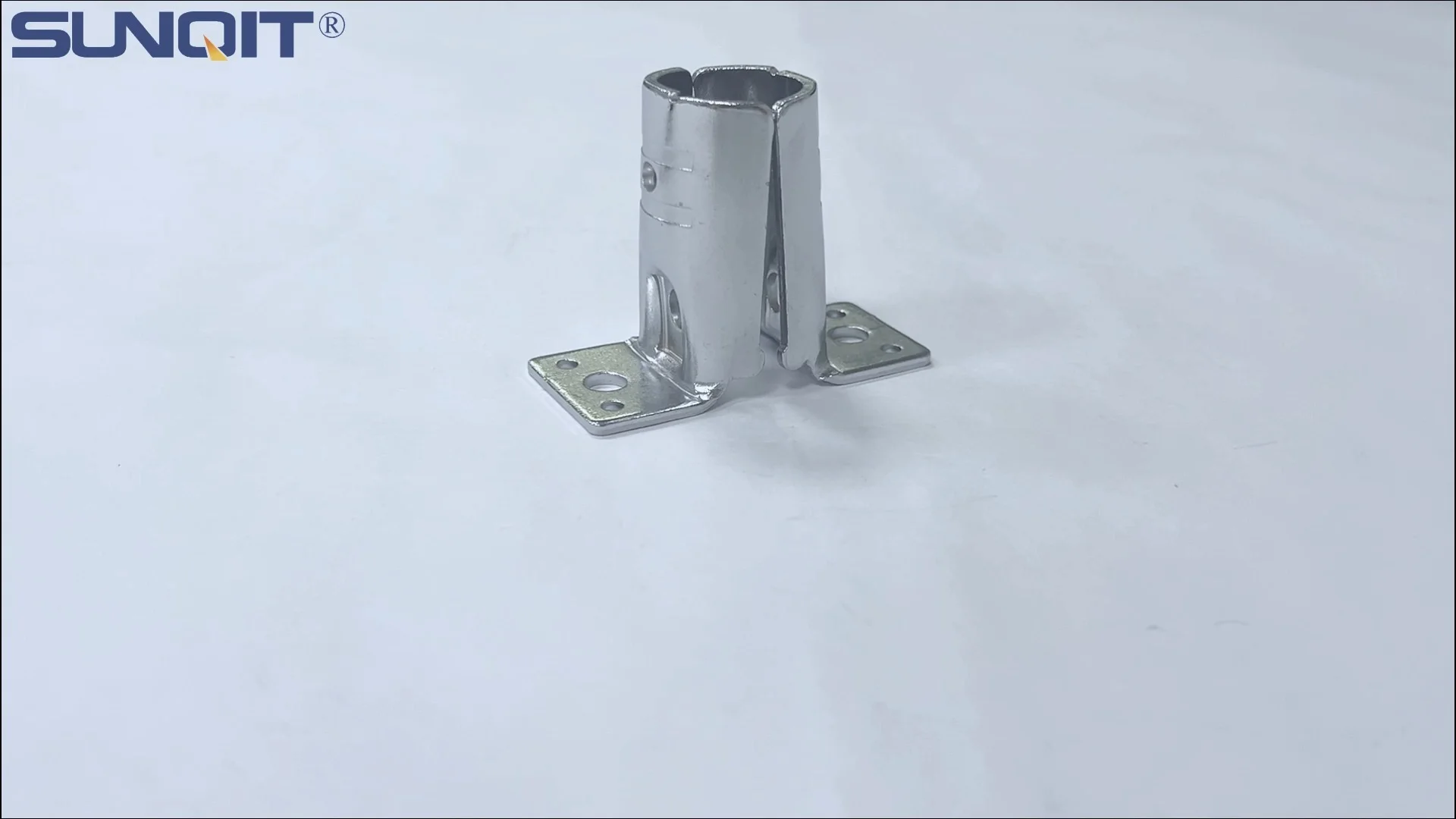
Step into any modern 3C (computers, communications, consumer electronics) assembly line, and you'll notice a silent rhythm driving productivity. Tiny microchips glide across workbenches, smartphone casings stack neatly on racks, and circuit boards move seamlessly from station to station. But behind this harmony lies a critical truth: the assembly line's efficiency hinges on the strength and flexibility of its foundational components. Among these unsung heroes, the
Vertical Lean Pipe Joint Chrome
stands out—a small but mighty connector that transforms ordinary lean pipes into robust, adaptable structures. In this guide, we'll explore how this unassuming joint becomes the backbone of 3C manufacturing, supporting everything from
lean pipe workbenches
to
flow racks
,
esd workstations
, and
roller tracks
. Whether you're a plant manager aiming to cut downtime or an engineer designing the next generation of assembly systems, understanding the vertical lean pipe joint chrome's role could be the key to unlocking smoother operations and higher yields.
What Is a Vertical Lean Pipe Joint Chrome?
At first glance, a vertical lean pipe joint chrome might look like just another metal connector. But dig deeper, and you'll find a precision-engineered component designed to solve two of manufacturing's biggest headaches: stability and adaptability. Let's break it down.
Lean pipes—often made of steel, aluminum, or stainless steel—are the building blocks of modular manufacturing systems. They're lightweight, easy to cut, and infinitely configurable, making them ideal for custom workbenches, racks, and material handling setups. The vertical lean pipe joint chrome is the "glue" that holds these pipes together in vertical orientations, providing a secure anchor for horizontal shelves, vertical supports, or angled brackets.
What sets the chrome-plated version apart? Chrome plating isn't just for shine—it's a protective barrier. The process involves electroplating a thin layer of chromium onto the joint's steel base, creating a surface that resists corrosion, scratches, and wear. In 3C plants, where humidity, oils, and constant handling are part of daily life, this durability isn't a luxury; it's a necessity. Imagine a joint rusting after a few months of exposure to factory moisture, weakening the entire structure. With chrome plating, that risk plummets, extending the joint's lifespan from months to years.
But the vertical lean pipe joint chrome isn't just tough—it's versatile. Its design typically includes adjustable set screws that grip the lean pipe tightly, allowing for tool-free installation and reconfiguration. Need to raise a shelf by 10cm to accommodate taller component bins? Loosen the screws, slide the joint, retighten, and you're done. No welding, no drilling, no downtime. This flexibility is why it's become a staple in 3C assembly, where product lines change frequently, and adaptability can make or break a manufacturer's competitiveness.
Key Features: Why Chrome-Plated Vertical Joints Stand Out
To truly appreciate the vertical lean pipe joint chrome, let's compare it to traditional steel or plastic joints. The table below highlights its most critical features and how they translate to real-world benefits in 3C assembly lines:
| Feature | Traditional Steel/Plastic Joints | Vertical Lean Pipe Joint Chrome | Impact on 3C Assembly |
|---|---|---|---|
| Corrosion Resistance | Prone to rust in humid environments; plastic degrades with oil exposure. | Chrome plating creates a barrier against moisture, oils, and chemicals. | Reduces joint replacements by 70-80% in high-humidity 3C plants. |
| Load Capacity | Typically supports 50-100kg per joint; plastic may warp under heavy loads. | Tested to support 150-200kg vertically, with reinforced threading for stability. | Enables heavier component storage on flow racks without sagging. |
| ESD Compatibility | Plastic joints can generate static; unplated steel may lack consistent grounding. | Chrome plating enhances conductivity, supporting ESD-safe workbench setups. | Reduces electrostatic discharge risks for sensitive microchips. |
| Reconfigurability | Steel joints may seize after repeated adjustments; plastic strips easily. | Smooth chrome surface and precision screws allow tool-free, repeated adjustments. | Cuts reconfiguration time for new product lines from days to hours. |
| Durability | Steel joints scratch easily; plastic cracks under impact. | Chrome plating resists scratches and dents from daily wear and tear. | Withstands accidental bumps from carts or tools common in busy 3C lines. |
Beyond these features, the vertical lean pipe joint chrome's "vertical orientation" design is purposeful. Unlike multi-angle joints that prioritize flexibility in all directions, vertical joints are engineered to provide maximum stability when supporting vertical loads. This makes them ideal for structures like workbench legs, flow rack uprights, and roller track supports—all critical in 3C assembly, where even a minor wobble can disrupt precision work.

Why 3C Assembly Lines Can't Afford to Ignore This Joint
3C manufacturing is a high-stakes industry. Products are small, delicate, and often high-value; a single error—like a dropped circuit board or a static-damaged chip—can erase profits. Meanwhile, consumer demand for new devices means assembly lines must reconfigure constantly to produce the latest smartphone model or smartwatch. In this environment, the vertical lean pipe joint chrome isn't just a component—it's a strategic asset. Here's why:
1. Precision Matters in Microelectronics.
3C assembly involves handling components smaller than a grain of rice. A
lean pipe workbench
that shifts or vibrates can throw off an operator's precision, leading to misaligned solder joints or damaged parts. The vertical lean pipe joint chrome's tight grip on pipes minimizes movement, creating a stable work surface where even the smallest tasks can be performed with confidence.
2. ESD Risks Are Non-Negotiable.
Electrostatic discharge (ESD) is the silent killer of 3C manufacturing. A static charge as low as 50 volts can destroy a microchip, and with components getting smaller (think 5nm semiconductors), the risk only grows.
ESD workstations
rely on grounded systems to channel static away from sensitive parts. The vertical lean pipe joint chrome, with its conductive chrome plating, ensures a continuous ground path from the workbench surface to the floor—no gaps, no static buildup, no costly failures.
3. Material Flow Can't Afford Bottlenecks.
In 3C plants, materials move fast.
Flow racks
stockpiling battery packs,
roller tracks
transporting screens, and
lean pipe workbenches
holding tools—all depend on consistent alignment. A warped flow rack or sagging roller track due to weak joints creates bottlenecks, forcing operators to stop and fix jams. The vertical lean pipe joint chrome's high load capacity and corrosion resistance keep these structures straight and true, ensuring materials flow as smoothly as the production schedule demands.
4. Reconfiguration Is a Competitive Edge.
When a new smartphone model launches, assembly lines must adapt quickly. Traditional welded structures take days to modify; modular lean systems with vertical joints can be reconfigured in hours. Swap out a shelf, adjust a workbench height, or extend a roller track—all without calling in welders or halting production. For 3C manufacturers racing to meet launch deadlines, this agility is priceless.

Applications: How Vertical Lean Pipe Joint Chrome Powers 3C Assembly
To understand the vertical lean pipe joint chrome's real-world impact, let's dive into its most common applications in 3C assembly lines. From workstations to material handling, these joints turn lean pipes into tailored solutions that meet the industry's unique demands.
1. Lean Pipe Workbenches: The Heart of Operator Productivity
Walk through any 3C assembly area, and
lean pipe workbenches
are everywhere. They're where operators solder components, test circuit boards, and assemble final products. But not all workbenches are created equal—and the difference often lies in their joints.
A typical 3C workbench needs to support tools, magnifying lamps, ESD mats, and sometimes even small testing equipment. Add in the operator's movements—leaning, reaching, occasionally bumping the structure—and stability becomes critical. The vertical lean pipe joint chrome shines here. By anchoring the workbench's vertical legs to horizontal frames, these joints distribute weight evenly, preventing wobbling or tipping.
Consider a smartphone assembly workbench: the surface must stay level to ensure precise alignment of the screen and chassis. A traditional plastic joint might loosen over time, causing one corner to dip. The result? Misaligned screens, rework, and wasted time. With vertical lean pipe joint chrome, the set screws maintain their grip, and the chrome plating resists wear from repeated adjustments (like raising the bench for a taller operator).
Ergonomics also play a role. 3C operators spend 8+ hours at their workbenches; adjustable heights reduce fatigue and injury risks. The vertical joint's tool-free adjustment makes it easy to tweak the bench height by 5-10cm, ensuring a comfortable fit for every team member. No more "one size fits all" workstations—just personalized setups that keep operators focused and productive.
2. Flow Racks: Keeping Components Accessible and Organized
In 3C manufacturing, time spent searching for components is time wasted. That's where
flow racks
come in—tilted shelves that use gravity to feed bins of screws, resistors, or connectors to the front as they empty. But for flow racks to work, their vertical supports must be rock-solid. Enter the vertical lean pipe joint chrome.
A standard flow rack might have 3-5 levels, each holding 10-15 bins of components. Multiply that by the weight of plastic bins and metal parts, and the vertical supports are under constant strain. Traditional steel joints, prone to rust in humid factories, can weaken over time, causing shelves to tilt or sag. This isn't just a nuisance—an uneven shelf disrupts the gravity flow, leaving bins stuck halfway and operators digging to reach the last few parts.
The vertical lean pipe joint chrome solves this with its corrosion-resistant plating and high load capacity. Chrome plating ensures the joints withstand the moisture and oils common in 3C plants, while reinforced threading prevents stripping under heavy loads. The result? Flow racks that stay aligned for years, keeping components within arm's reach and production moving at full speed.
One electronics manufacturer in Guangdong recently upgraded 20 flow racks to use vertical lean pipe joint chrome. Within three months, they reported a 40% reduction in time spent unjamming bins and a 15% increase in operator satisfaction—proof that even small component upgrades can drive big efficiency gains.
3. ESD Workstations: Protecting Sensitive Electronics
For 3C manufacturers, ESD damage isn't just a risk—it's a daily reality. A single static spark can destroy a $100 microchip, turning a batch of smartphones into scrap. That's why
ESD workstations
are non-negotiable in areas handling semiconductors, PCBs, or display panels. And at the core of these workstations? The vertical lean pipe joint chrome.
ESD workstations rely on a grounded system: the workbench surface, tools, and even the operator's wrist strap must connect to a ground to dissipate static. Traditional joints, especially plastic ones, can break this ground path, creating "hot spots" where static builds up. The vertical lean pipe joint chrome, with its conductive chrome plating, ensures continuity in the grounding circuit. From the workbench legs to the shelf supports, every part of the structure stays grounded, channeling static safely away from sensitive components.
But ESD protection isn't just about conductivity—it's about consistency. Over time, some joints corrode or loosen, creating gaps in the ground path. The vertical lean pipe joint chrome's durability minimizes this risk. Its chrome plating resists corrosion, and the adjustable set screws allow for periodic retightening without damaging the joint. For a 3C plant producing 50,000 smartphones daily, this reliability translates to fewer ESD-related defects and higher first-pass yields.
4. Roller Tracks: The Highways of Material Flow
If flow racks are the storage centers of 3C assembly,
roller tracks
are the highways. These tracks—lined with small wheels or rollers—transport everything from circuit board trays to finished products between stations. But for roller tracks to work, they must be perfectly level. Even a slight dip or bump can jam a tray, halting production. Here, the vertical lean pipe joint chrome becomes the track's "guardrail," keeping it straight and stable.
Roller tracks are often mounted on vertical supports made from lean pipes. Each support is anchored to the floor or a base frame using vertical joints, which must bear the track's weight plus the constant vibration of moving trays. A weak joint here isn't just a problem for the track—it can ripple through the entire line. Imagine a roller track feeding a soldering station that suddenly sags: trays pile up, the soldering operator runs out of materials, and the line grinds to a halt.
The vertical lean pipe joint chrome's robust design prevents this scenario. Its high load capacity (up to 200kg per joint) ensures supports don't bend, while the chrome plating resists the wear and tear of constant vibration. Even in high-traffic areas—like between PCB assembly and testing stations—these joints keep the roller track aligned, so materials arrive exactly when and where they're needed.
One laptop manufacturer in Shanghai recently expanded its roller track system using vertical lean pipe joint chrome. They reported zero track-related downtime in the first six months, compared to 2-3 incidents monthly with their old steel joints. For a line producing 1,000 laptops daily, those saved hours added up to over 500 extra units shipped per month.
Benefits Beyond the Basics: Why Chrome-Plated Vertical Joints Are Worth the Investment
By now, it's clear the vertical lean pipe joint chrome is more than just a connector—it's an investment in your assembly line's performance. But what specific returns can 3C manufacturers expect? Let's break down the benefits:
Lower Maintenance Costs.
Traditional joints need frequent replacement due to corrosion, wear, or loosening. The vertical lean pipe joint chrome's chrome plating and durable steel construction cut replacement rates by 70-80%. Fewer replacements mean less downtime, lower part costs, and fewer hours spent on repairs. For a mid-sized 3C plant, this can translate to $10,000-$20,000 in annual savings.
Higher Operator Satisfaction.
A wobbly workbench or jammed flow rack isn't just inefficient—it's frustrating. Operators spend less time fixing equipment and more time adding value when their tools and materials are stable and accessible. In surveys, plants using vertical lean pipe joint chrome report 20-30% higher operator satisfaction scores, which correlates with lower turnover and higher productivity.
Better Quality Control.
Stability and ESD protection directly impact product quality. A stable workbench reduces assembly errors; a grounded ESD workstation cuts ESD damage; aligned roller tracks minimize component scratches. Together, these improvements can boost first-pass yields by 3-5%—a game-changer for high-volume 3C manufacturing.
Long-Term Flexibility.
3C markets evolve fast, and assembly lines must evolve with them. The vertical lean pipe joint chrome's tool-free adjustability makes reconfiguration quick and easy. Need to add a shelf for new tools? Adjust a workbench height for taller operators? Extend a roller track to a new station? With vertical joints, these changes take hours, not days—keeping your plant agile enough to seize new opportunities.
Installation Best Practices: Getting the Most from Your Vertical Lean Pipe Joint Chrome
Even the best components underperform without proper installation. Here's how to ensure your vertical lean pipe joint chrome delivers maximum value:
1. Prep the Pipes First.
Before installing the joint, clean the lean pipe ends thoroughly. Dirt, oil, or rust can weaken the connection, leading to loosening over time. Use a wire brush or sandpaper to remove debris, then wipe with a dry cloth. For ESD applications, ensure the pipe itself is conductive (e.g., steel or aluminum) to maintain the ground path.
2. Tighten Set Screws Evenly.
Most vertical lean pipe joints use 2-4 set screws to grip the pipe. Tighten them in a crisscross pattern (like tightening lug nuts on a car) to ensure even pressure. Avoid over-tightening—you want a snug fit, not one that strips the threads or deforms the pipe. A torque wrench can help: aim for 15-20 Nm (depending on pipe diameter) for optimal grip.
3. Check Vertical Alignment.
Use a spirit level to ensure the joint (and thus the pipe) is perfectly vertical. A leaning joint creates uneven weight distribution, increasing stress on the structure. For tall setups (e.g., flow racks over 1.8m), add diagonal bracing using angled joints to stability.
4. Test Load Capacity Before Full Deployment.
After installation, test the structure with a weight slightly above its intended load (e.g., stack 120% of the expected bin weight on a flow rack). Let it sit for 24 hours, then check for sagging or loosening. This "stress test" catches weak points before they cause issues in production.
5. Label Joint Positions for Reconfiguration.
For lines that reconfigure often, mark joint positions on the pipes with a permanent marker. This speeds up adjustments—no more measuring from scratch when you need to reset a workbench height or shelf position.
Maintenance Tips: Extending Your Joints' Lifespan
The vertical lean pipe joint chrome is durable, but it's not indestructible. With proper care, it can last 5-7 years (or more) in 3C environments. Here's how to maximize its lifespan:
Weekly Inspections.
Walk the line weekly and check joints for looseness. Give each joint a gentle wiggle—if it moves, retighten the set screws. Also, look for signs of corrosion (rare with chrome plating, but possible in extremely humid areas) or scratches that expose the underlying steel.
Monthly Cleaning.
Wipe joints with a dry microfiber cloth to remove dust and grime. For oil or grease buildup, use a mild, non-corrosive cleaner (avoid harsh solvents that can damage the chrome plating). Dry thoroughly after cleaning to prevent moisture buildup.
Quarterly Lubrication.
Apply a small amount of anti-corrosion lubricant (e.g., silicone spray) to the set screws to prevent seizing. This makes adjustments easier and protects threads from rust.
replace Damaged Joints Promptly.
If a joint is bent, cracked, or heavily corroded, replace it immediately. A single weak joint can compromise an entire structure, leading to bigger failures down the line.
Real-World Impact: A 3C Assembly Case Study
Let's put these insights into context with a real example. A leading Chinese 3C manufacturer specializing in smart home devices (think smart speakers, security cameras) was struggling with two recurring issues: frequent workbench reconfigurations for new product lines and high ESD-related defects on their PCB assembly line.
The Problem:
Their existing setup used plastic lean pipe joints on workbenches and flow racks. These joints loosened quickly, requiring monthly retightening, and their non-conductive material created ESD hot spots. The result? 5-6 hours of monthly downtime for reconfigurations, a 4% ESD defect rate, and operator complaints about unstable work surfaces.
The Solution:
The plant replaced all plastic joints with vertical lean pipe joint chrome on 20 workbenches, 10 flow racks, and their main PCB roller track system. They also upgraded to ESD-compliant lean pipes and workbench surfaces, ensuring full grounding through the chrome joints.
The Results (After 6 Months):
-
Downtime:
Reconfiguration time dropped from 5-6 hours monthly to 1-2 hours, as joints adjusted easily without stripping.
-
ESD Defects:
Defect rate fell from 4% to 1.2%, saving an estimated $30,000 in scrap and rework.
-
Operator Satisfaction:
Survey scores rose by 25%, with comments like "workbench feels solid" and "no more jamming bins" leading the feedback.
-
Maintenance Costs:
Joint replacements dropped from 15-20 per month to 2-3, cutting repair costs by $8,000 annually.
For this manufacturer, the vertical lean pipe joint chrome wasn't just a component upgrade—it was a catalyst for operational excellence.
Conclusion: The Vertical Lean Pipe Joint Chrome—Small Part, Big Impact
In the fast-paced world of 3C manufacturing, success hinges on the details. The vertical lean pipe joint chrome may be small, but its impact is undeniable. By providing stability, flexibility, and ESD protection, it transforms lean pipes into the adaptable, durable structures that power modern assembly lines. From
lean pipe workbenches
to
flow racks
,
esd workstations
, and
roller tracks
, this unassuming joint ensures your line runs smoother, safer, and more efficiently.
For 3C manufacturers facing tight deadlines, high quality standards, and ever-changing product lines, the vertical lean pipe joint chrome isn't just a part—it's a partner in productivity. It reduces costs, boosts quality, and empowers your team to focus on what matters: building the next generation of consumer electronics. So the next time you walk your assembly line, take a closer look at those vertical joints. They might just be the key to unlocking your plant's full potential.