- Company Articles
- Products and Technology
- Product knowledge
- Vertical Lean Pipe Joint Chrome in Automotive Parts Racks: Stability Benefits

Vertical Lean Pipe Joint Chrome in Automotive Parts Racks: Stability Benefits
Related Product
Vertical Lean Pipe Joint Chrome
Vertical lean pipe joint is used for 28mm lean pipe fixed on ground and keep it stable.
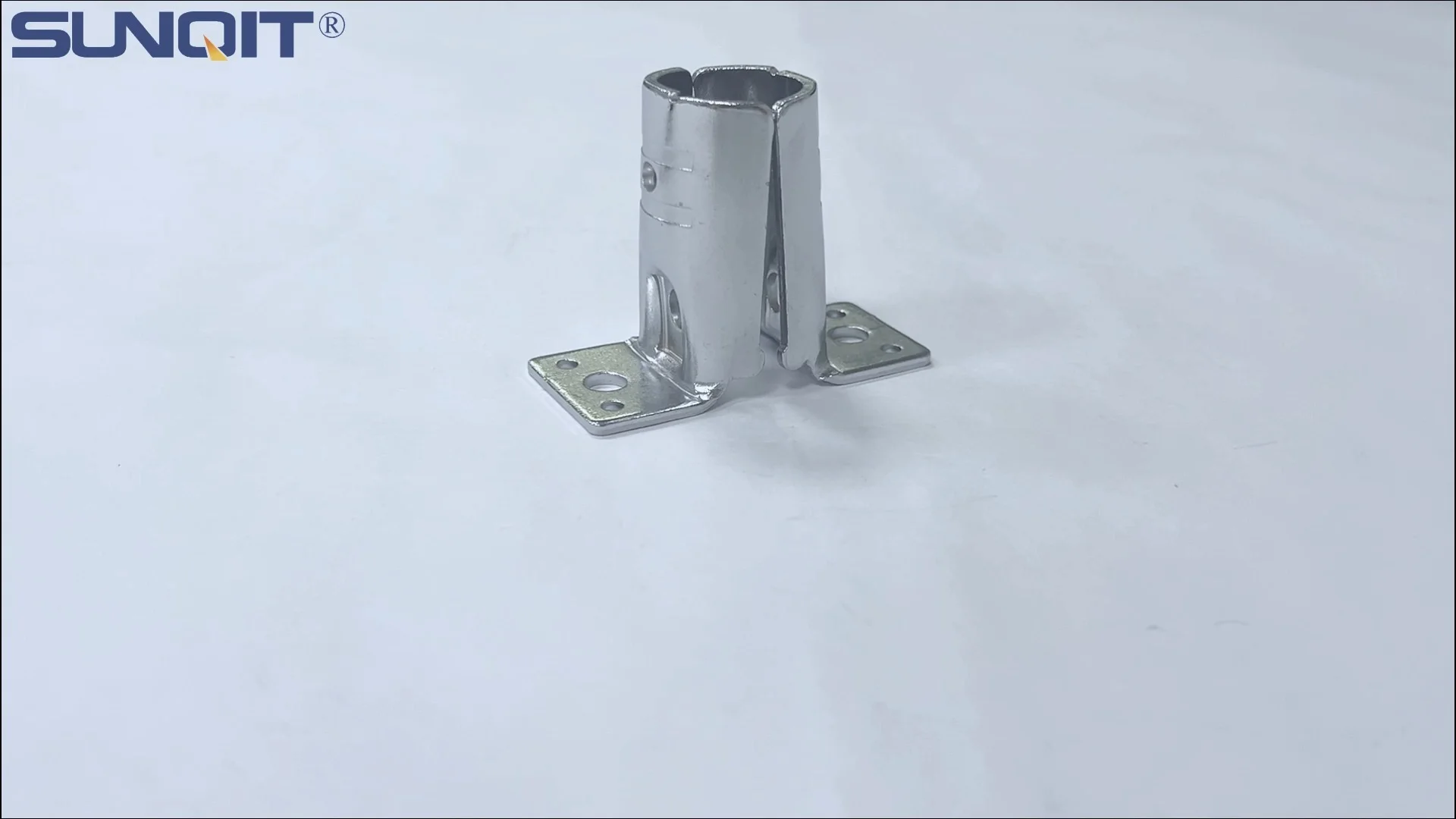
In the fast-paced world of automotive manufacturing, every second counts. From the moment raw materials arrive on the factory floor to the final assembly of a vehicle, efficiency and precision are the backbone of success. Yet, one often overlooked aspect that can make or break this workflow is the storage and organization of parts. Imagine a scenario where a critical component rolls off a wobbly rack, causing delays in production, or a worker struggles to retrieve a small part from a disorganized shelf—these are not just minor inconveniences. They translate to lost time, increased labor costs, and even compromised product quality. This is where the right storage solutions, particularly those built with stability in mind, become indispensable. Among the unsung heroes of lean manufacturing in automotive settings is the vertical lean pipe joint chrome —a small but mighty component that transforms ordinary parts racks into robust, reliable systems that stand up to the demands of daily factory life.
The Role of Lean Systems in Automotive Parts Management
Before diving into the specifics of vertical lean pipe joints, it's essential to understand the broader context of lean systems in automotive manufacturing. Lean manufacturing, at its core, is about eliminating waste—whether that's wasted time, materials, or effort. In parts management, this means creating storage solutions that are not only space-efficient but also intuitive, durable, and adaptable. A well-designed lean system ensures that parts are easily accessible, correctly labeled, and stored in a way that minimizes movement (a key source of waste in factories). This is where lean pipe workbench and flow rack systems come into play. These structures, built from modular components, allow manufacturers to customize storage based on part size, weight, and usage frequency. However, the stability of these systems hinges on one critical element: the joints that hold everything together. A weak joint can turn a well-designed rack into a safety hazard, while a strong, reliable joint ensures that the system remains sturdy, even under constant use.
Understanding Vertical Lean Pipe Joint Chrome: More Than Just a Connector
At first glance, a vertical lean pipe joint might seem like a simple piece of hardware. But in reality, it's a precision-engineered component designed to address the unique challenges of automotive parts storage. Made from high-quality steel and coated with a layer of chrome, these joints are built to withstand heavy loads, resist corrosion, and maintain their structural integrity over time. The "vertical" designation refers to their orientation, which allows them to connect lean pipes (hollow tubes used in modular systems) at 90-degree angles, forming the vertical supports of racks, workbenches, and trolleys. The chrome plating isn't just for aesthetics, either—it adds a protective barrier against rust and wear, making the joints ideal for use in humid factory environments where moisture or oil might otherwise degrade uncoated metal.
What sets vertical lean pipe joint chrome apart from other connectors is its design. Unlike plastic joints, which can crack under heavy loads, or unplated steel joints, which are prone to rust, chrome-plated steel joints offer a balance of strength and durability. They feature a threaded interior that securely grips the lean pipe, ensuring a tight, wobble-free connection. Many models also include reinforcement ribs or flanges that distribute weight evenly across the joint, reducing stress points and extending the life of the entire rack system. For automotive manufacturers, this means racks that can hold everything from small screws and washers to heavier components like brake calipers or alternators without bending or collapsing.

Stability Benefits: Why Chrome-Plated Vertical Joints Matter in Automotive Racks
In automotive parts storage, stability isn't just a nice-to-have—it's a necessity. Factories are dynamic environments: forklifts move through aisles, workers load and unload parts, and vibrations from machinery can shake racks throughout the day. A stable rack system must withstand all of this without shifting, tilting, or failing. Here's how vertical lean pipe joint chrome delivers on that promise:
1. Secure, Wobble-Free Connections
One of the biggest advantages of vertical lean pipe joint chrome is its ability to create tight, secure connections between pipes. The threaded design ensures that pipes are held firmly in place, even when subjected to sudden movements (like a worker pulling a heavy part from a shelf). Unlike friction-fit joints, which can loosen over time, chrome-plated steel joints maintain their grip, preventing racks from developing "play" or wobble. This is especially important for flow rack systems, where parts slide down inclined tracks—any instability in the rack can cause parts to jam or fall off, disrupting the flow of production.
2. Resistance to Corrosion and Wear
Automotive factories are not gentle environments. Oil, coolant, and cleaning agents are common, and many parts are stored in areas with high humidity (such as near washing stations). Uncoated steel joints would quickly rust under these conditions, weakening the connection and compromising stability. Chrome plating acts as a barrier, preventing moisture and chemicals from reaching the underlying steel. This resistance to corrosion means that vertical lean pipe joint chrome joints have a longer lifespan than their unplated counterparts, reducing the need for frequent replacements and lowering maintenance costs. For a lean pipe supplier working with automotive clients, this durability is a key selling point—factories can invest in a rack system once and rely on it for years, rather than constantly repairing or replacing corroded components.
3. Even Load Distribution
In parts racks, uneven weight distribution is a recipe for instability. A rack might handle a few heavy parts placed in the center, but if those parts are shifted to the edges, the joints could buckle. Vertical lean pipe joint chrome addresses this with its reinforced design. The joints are engineered to distribute weight evenly across the entire structure, ensuring that even if parts are loaded asymmetrically, the stress is spread out rather than concentrated on a single connection. This is particularly important for flow rack systems, where parts are constantly moving and shifting position. With chrome-plated vertical joints, manufacturers can trust that their racks will remain stable, regardless of how parts are loaded or unloaded.
4. Compatibility with Modular Systems
Flexibility is another cornerstone of lean manufacturing. Automotive production lines frequently reconfigure to accommodate new models or part designs, and storage systems need to adapt quickly. Vertical lean pipe joint chrome joints are fully compatible with other lean pipe components, including aluminum pipes, rollers, and accessories. This modularity allows factories to adjust rack heights, add shelves, or repurpose structures without having to replace entire systems. For example, a lean pipe workbench used for assembling small electronics can be reconfigured into a parts rack by adding vertical supports with chrome joints, then attaching flow rails for larger components. This adaptability not only saves time and money but also ensures that the system remains stable through each reconfiguration—no more worrying about whether a modified rack will hold up under load.

Real-World Impact: How Vertical Lean Pipe Joint Chrome Transforms Automotive Factories
To truly appreciate the value of vertical lean pipe joint chrome, consider the experience of a mid-sized automotive parts manufacturer in Michigan. Prior to upgrading their storage systems, the factory relied on wooden shelves and plastic-jointed racks to store small components like bolts, nuts, and gaskets. Workers frequently complained about parts falling off wobbly shelves, and the plastic joints would crack under the weight of heavier items, leading to monthly replacements. The factory's maintenance team spent hours each week repairing racks, and production delays were common as workers searched for misplaced parts.
In 2023, the manufacturer partnered with a lean pipe supplier to install new flow rack systems built with vertical lean pipe joint chrome. The transformation was immediate. The chrome-plated joints created stable, rigid racks that didn't wobble, even when workers pulled parts from the front. The corrosion-resistant coating meant that racks near the factory's washing stations no longer rusted, reducing maintenance time by 70%. Most importantly, the new system cut down on part retrieval time by 30%—workers could quickly locate and access parts without worrying about shelves collapsing. Within six months, the factory reported a 15% increase in assembly line efficiency and a 25% reduction in part damage, directly attributable to the stability of the new rack systems.
Another example comes from a European automotive plant that produces electric vehicle batteries. These batteries require careful handling, as even minor damage can compromise their performance. The plant previously used aluminum profile racks with plastic joints, but the joints would loosen over time, causing the racks to tilt and putting the batteries at risk. After switching to vertical lean pipe joint chrome, the racks remained stable for over two years, with zero incidents of battery damage. The plant manager noted, "The chrome joints are the unsung heroes here. They're small, but they make all the difference in keeping our most critical components safe and accessible."
Comparing Vertical Lean Pipe Joint Chrome to Other Joint Types
Not all joints are created equal. To understand why vertical lean pipe joint chrome stands out, it's helpful to compare it to other common joint types used in automotive storage systems:
| Joint Type | Stability Rating (1-5) | Durability | Corrosion Resistance | Load Capacity (Max kg) | Best For |
|---|---|---|---|---|---|
| Vertical Lean Pipe Joint Chrome | 5 | High (5-7 years) | Excellent (chrome plating) | 800-1000 | Heavy parts, humid environments, flow racks |
| Plastic Lean Pipe Joint | 2 | Low (1-2 years) | Good (resistant to moisture) | 200-300 | Light parts, temporary setups |
| Unplated Steel Joint | 4 | Medium (2-3 years) | Poor (prone to rust) | 600-800 | Dry environments, low-moisture areas |
| Aluminum Joint | 3 | Medium (3-4 years) | Good (naturally resistant to corrosion) | 400-500 | Lightweight systems, cleanrooms |
As the table shows, vertical lean pipe joint chrome outperforms other joint types in stability, durability, and load capacity—key factors for automotive parts storage. While aluminum joints offer corrosion resistance, they can't match the load capacity of chrome-plated steel, making them unsuitable for heavy parts. Plastic joints, meanwhile, are cheap but lack the strength needed for long-term use. For automotive manufacturers prioritizing stability and reliability, there's no substitute for vertical lean pipe joint chrome.
Choosing the Right Lean Pipe Supplier: A Critical Decision
The quality of vertical lean pipe joint chrome depends largely on the supplier. Not all lean pipe supplier companies adhere to the same standards, and choosing a subpar supplier can result in joints that fail prematurely or lack the stability needed for automotive use. So, what should manufacturers look for when selecting a supplier? First, check for certifications: reputable suppliers will have ISO 9001 certification, ensuring that their manufacturing processes meet international quality standards. Second, inquire about material sourcing—high-quality steel and thick chrome plating are essential for durability. Third, ask for test reports: a reliable supplier should provide data on load capacity, corrosion resistance, and fatigue testing (how well the joints hold up under repeated stress). Finally, consider customization options: automotive factories have unique needs, and a supplier that can tailor joints to specific rack designs or load requirements will be a valuable partner in the long run.
It's also worth looking for suppliers with experience in the automotive industry. These suppliers understand the unique challenges of factory environments—vibration, moisture, heavy loads—and design their joints accordingly. They may also offer additional support, such as on-site installation guidance or maintenance training, which can help factories get the most out of their lean pipe systems.
Integration with Aluminum Profiles: Combining Strength and Lightweight Design
While vertical lean pipe joint chrome is often paired with steel pipes, it also works seamlessly with aluminum profile systems—a combination that offers the best of both worlds: the strength of chrome-plated steel joints and the lightweight flexibility of aluminum. Aluminum profiles are ideal for racks that need to be moved or reconfigured frequently, as they're lighter than steel but still strong enough to hold medium-weight parts. When combined with vertical lean pipe joint chrome, the result is a system that's both stable and adaptable. For example, a parts trolley built with aluminum pipes and chrome joints is easy to maneuver (thanks to the aluminum's light weight) but remains sturdy enough to carry heavy components like starter motors. This versatility makes the combination popular in automotive plants where agility and stability are equally important.
Aluminum profiles also offer aesthetic benefits, with a clean, modern look that fits well in high-tech automotive facilities. The chrome joints complement the aluminum, creating a cohesive, professional appearance that reflects positively on the factory's commitment to quality. Additionally, aluminum is naturally resistant to corrosion, so when paired with chrome-plated joints, the entire system becomes nearly maintenance-free—perfect for busy factories where time is too valuable to spend on upkeep.
Maintenance Tips: Keeping Vertical Lean Pipe Joint Chrome in Top Shape
While vertical lean pipe joint chrome is designed for durability, a little maintenance goes a long way in extending its lifespan. Here are some simple tips for keeping these joints (and the racks they support) in top shape: First, inspect joints regularly for looseness. Over time, vibrations from factory machinery can cause threads to wear, leading to wobbly connections. Tightening the joints with a wrench every few months prevents this. Second, clean the chrome plating periodically with a mild detergent and soft cloth. This removes oil, grease, and dirt that can trap moisture and eventually lead to corrosion. Avoid abrasive cleaners, as they can scratch the chrome and compromise the protective layer. Third, check for signs of damage, such as cracks or bent flanges. If a joint is damaged, replace it immediately—even a small flaw can weaken the entire rack system. Finally, lubricate moving parts (if applicable) with a dry lubricant to prevent friction and wear. By following these steps, factories can ensure that their vertical lean pipe joint chrome joints remain stable and reliable for years to come.
Conclusion: Stability as the Foundation of Lean Manufacturing
In the world of automotive manufacturing, where precision and efficiency are paramount, the stability of parts storage systems cannot be overstated. Vertical lean pipe joint chrome may be a small component, but it plays a critical role in ensuring that racks, workbenches, and flow systems remain sturdy, reliable, and adaptable. From its corrosion-resistant chrome plating to its reinforced, weight-distributing design, this joint type addresses the unique challenges of factory environments, making it an essential tool for lean manufacturing. Whether paired with steel pipes, aluminum profile , or integrated into flow rack or lean pipe workbench systems, vertical lean pipe joint chrome delivers the stability that automotive manufacturers need to keep their production lines running smoothly, safely, and efficiently.
As automotive factories continue to evolve—adopting new technologies, increasing production speeds, and prioritizing worker safety—the demand for reliable storage solutions will only grow. In this context, vertical lean pipe joint chrome stands out as a simple yet powerful innovation that transforms ordinary racks into systems that support the entire manufacturing process. It's a reminder that in lean manufacturing, even the smallest components can have the biggest impact.