- Company Articles
- Products and Technology
- Application Cases
- Vertical Lean Pipe Joint Chrome in Consumer Electronics Manufacturing: Use Cases

Vertical Lean Pipe Joint Chrome in Consumer Electronics Manufacturing: Use Cases
Related Product
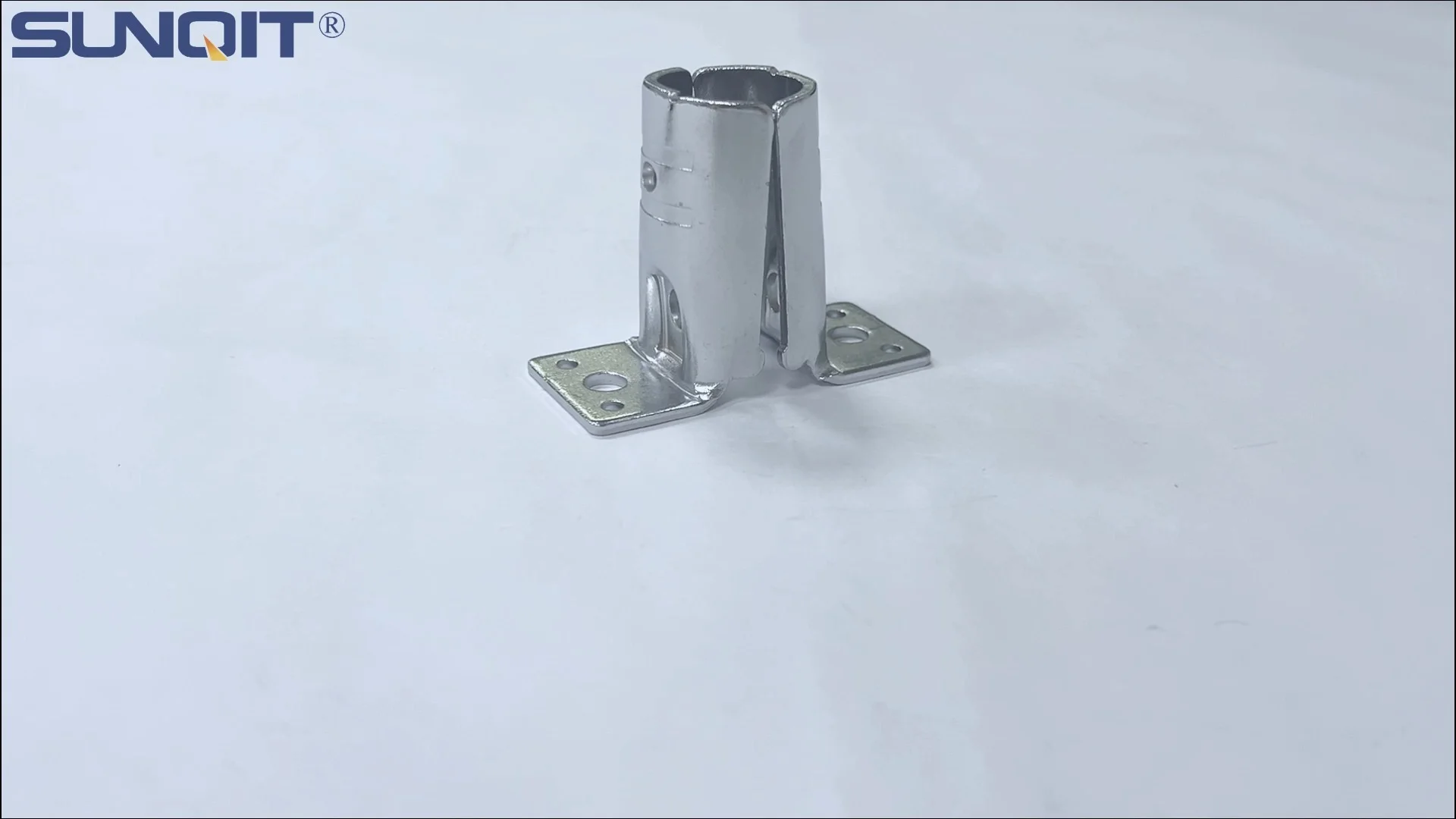
Vertical Lean Pipe Joint Chrome
Vertical lean pipe joint is used for 28mm lean pipe fixed on ground and keep it stable.
The Pulse of Consumer Electronics Manufacturing: Where Speed Meets Precision
Walk into any consumer electronics factory today, and you'll feel it immediately—the hum of a system where every second counts. Phones, laptops, smartwatches, and tablets fly off assembly lines at a pace that would have seemed impossible a decade ago. But behind that speed lies a hidden challenge: how do you keep up with ever-shorter product cycles, shrinking component sizes, and the relentless demand for customization—all while slashing waste and keeping costs in check? It's a balancing act that leaves many manufacturers teetering on the edge of inefficiency.
Here's the thing: consumer electronics don't just need to be made fast—they need to be made smart. A single misstep in material flow, a clunky workstation, or a rigid assembly line can throw off timelines, hike up defect rates, or force teams to waste precious hours navigating disorganized spaces. And in an industry where a new smartphone model can render last year's production setup obsolete overnight, flexibility isn't just a nice-to-have—it's survival.
This is where lean manufacturing steps in, not as a buzzword, but as a lifeline. At its core, lean is about stripping away the unnecessary, streamlining processes, and building systems that adapt as quickly as the market does. And in the heart of these lean systems? Something surprisingly simple yet profoundly impactful: lean pipe systems. More specifically, components like the vertical lean pipe joint chrome—a small but mighty piece that's quietly revolutionizing how electronics factories are built, reconfigured, and optimized.
Lean Manufacturing: More Than a Philosophy—A Factory Floor Revolution
Let's cut through the jargon: lean manufacturing isn't about "Kaizen" posters on the wall or holding endless meetings about waste. It's about looking at your factory floor and asking, "What's actually adding value here?" For consumer electronics, that value is measured in precision (no one wants a smartphone with a loose charging port), speed (getting the latest gadget to shelves before the competition), and adaptability (switching from making wireless earbuds to smart home sensors without a complete overhaul).
Traditional manufacturing setups often fall short here. Welded steel workbenches, fixed conveyor belts, and rigid storage racks are like concrete shoes in a race—they're sturdy, but they slow you down. When a new product comes in with different dimensions, or a component size changes, you're stuck disassembling and rebuilding from scratch. That's time, money, and frustration wasted.
Lean systems flip this script. They're built on modularity—the idea that every part of your factory should be as easy to rearrange as Lego blocks. And lean pipes are the Lego bricks of this analogy. Typically made from aluminum, steel, or plastic-coated materials, these pipes are lightweight, strong, and designed to connect with specialized joints. They form the skeleton of workbenches, flow racks, conveyor supports, and more—all without a single weld.
But a skeleton is only as good as its joints. Which brings us to the star of the show: the vertical lean pipe joint chrome. This unassuming component is the reason lean pipe systems can go from a workbench for assembling circuit boards to a material rack for storing batteries in a matter of hours. It's the glue that holds the flexibility of lean manufacturing together—literally and figuratively.

Lean Pipe Systems: The Backbone of Modern Lean Factories
Before we dive into the vertical joint itself, let's get a lay of the land with lean pipe systems. Imagine walking through a state-of-the-art electronics plant. The assembly lines aren't chaotic tangles of machinery—they're sleek, organized, and surprisingly… quiet. Workers move with purpose, parts glide smoothly from one station to the next, and every inch of space feels intentional. Chances are, lean pipes are behind that order.
Lean pipes come in various materials, each suited to different needs. Stainless steel pipes handle heavy loads and resist corrosion, making them ideal for cleanrooms. Aluminum lean pipes are lightweight and perfect for applications where mobility matters, like turnover trolleys. PE-coated lean pipes add a layer of protection, preventing scratches on delicate components. But regardless of the pipe material, the joints are what make the system tick.
Joints are the connectors that turn individual pipes into functional structures. They come in angles (45°, 90°, 135°), fixed or rotating designs, and materials ranging from plastic to metal. And among these, the vertical lean pipe joint chrome stands out for a few key reasons: its durability, its chrome plating, and its vertical orientation, which makes it indispensable for building upward—critical in factories where floor space is gold.
Chrome plating isn't just for shine (though it does look sharp on the factory floor). It adds a hard, corrosion-resistant layer that stands up to the oils, coolants, and occasional spills common in electronics manufacturing. In a space where even a tiny rust flake could contaminate a circuit board, that resistance is non-negotiable. Plus, chrome makes the joints easy to clean—wipe them down, and they're ready for the next shift.
But the real genius of the vertical lean pipe joint chrome is in its design. Unlike generic pipe fittings, these joints are engineered specifically for lean systems. They clamp onto pipes with precision, creating a tight, wobble-free connection that can support the weight of tools, components, and even fully loaded workbenches. And because they're vertical, they excel at building upward—think multi-tiered flow racks, overhead storage, or stacked workstations that free up floor space for other operations.

Vertical Lean Pipe Joint Chrome: Unpacking Its Role and Advantages
Let's get up close with the vertical lean pipe joint chrome. Picture a small, cylindrical component with a threaded bolt through the center, a flanged base, and a chrome finish that catches the light. At first glance, it might seem simple, but every detail is intentional.
Design That Delivers: The vertical orientation means this joint is built to connect pipes that stand upright—think the legs of a workbench, the posts of a flow rack, or the supports of a conveyor frame. Its internal threading and clamping mechanism allow for tool-free adjustments (or with just a hex key, at most). Twist the bolt, loosen the clamp, reposition the pipe, and retighten—that's it. No welding, no drilling, no waiting for a maintenance crew.
Durability by Design: Chrome plating isn't just about looks. It's a hard, wear-resistant layer that protects the underlying metal (usually steel or aluminum) from scratches, rust, and chemical damage. In electronics factories, where workers are constantly moving parts and tools, this durability ensures the joint won't degrade over time. Even after hundreds of reconfigurations, the clamp stays tight, and the finish stays intact.
Load Capacity You Can Trust: Don't let its size fool you. A high-quality vertical lean pipe joint chrome can support hundreds of pounds. That's crucial when you're building a workbench loaded with soldering irons, magnifying lamps, and ESD mats, or a flow rack stacked with boxes of microchips. Engineers test these joints rigorously—you won't find them bending or slipping under normal factory conditions.
Compatibility Across the Board: The best part? These joints play well with others. They're designed to fit standard lean pipe sizes (often 28mm or 30mm in diameter), so you can mix and match with other lean components—horizontal joints, rotating connectors, caster wheels, you name it. This compatibility is what makes lean systems so versatile. One set of pipes and joints can become a workstation today, a material trolley tomorrow, and a storage rack next week.
Sustainability in Action: In an industry under pressure to reduce waste, lean pipe systems (and their joints) are eco-friendly champions. Unlike welded structures, which end up in landfills when they're no longer needed, these joints and pipes are reusable. When a factory upgrades its layout, the vertical joints can be unscrewed, cleaned, and used again in a new configuration. It's manufacturing with a conscience—and a lower carbon footprint.
Use Case 1: Streamlining Assembly Lines with Lean Pipe Workbenches
Let's step into a real-world scenario: a mid-sized electronics factory that assembles smart home devices—think thermostats, security cameras, and smart speakers. A few years ago, their assembly line looked like most others: heavy wooden workbenches with fixed shelves, cluttered with tools, and barely enough space for workers to maneuver. When a new smart speaker model came in with a taller design, they had a problem: the existing workbenches were too low, forcing workers to hunch over, slowing them down and increasing the risk of errors.
The solution? Lean pipe workbenches built with vertical lean pipe joint chrome. Here's how it played out:
Day 1: Assessment and Planning The factory team measured the new speaker's dimensions and mapped out the ideal workstation height (38 inches, up from the previous 32 inches). They ordered aluminum lean pipes (lightweight but strong), vertical chrome joints, and a few accessories: ESD mats, tool hooks, and adjustable shelves.
Day 2: Assembly (No Welding Required) Two workers spent the morning assembling the new workbenches. They cut the aluminum pipes to length, used the vertical chrome joints to connect the legs (four vertical pipes per bench), and added horizontal crossbars for stability. The joints made height adjustments a breeze—they simply loosened the clamps, slid the pipes up to 38 inches, and tightened them. By lunch, the basic frame was done.
Day 3: Customization and Launch They added shelves using horizontal joints, mounted tool hooks on the side, and laid down ESD mats to protect the sensitive circuit boards. By the end of the day, the first assembly line was up and running with the new workbenches. Workers immediately noticed the difference: no more hunching, tools within easy reach, and more space to lay out components.
The Results: Within a month, the factory saw a 15% increase in units assembled per hour. Defect rates dropped by 8% because workers were more comfortable and less fatigued. And when the next product—a smaller smart sensor—came in three months later? They didn't need new workbenches. They just loosened the vertical joints, lowered the height to 30 inches, and swapped out the shelves for smaller ones. Total reconfiguration time: 2 hours per line.
This is the power of lean pipe workbenches with vertical chrome joints. They turn static workspaces into dynamic tools that adapt to your products—not the other way around.
Use Case 2: Optimizing Material Flow with Flow Racks
Material flow is the lifeblood of any electronics factory. Parts need to move from storage to assembly stations quickly, without getting lost, damaged, or delayed. Traditional storage racks—static, deep, and often overstuffed—are a common bottleneck. Workers waste time digging through bins, parts get jostled, and inventory checks become a headache.
Enter flow racks: inclined shelves with roller tracks that let parts "flow" forward as the front bin is emptied. They're like a gravity-fed buffet for factory workers—parts are always at the front, easy to grab, and impossible to miss. And vertical lean pipe joint chrome is what makes these racks both sturdy and customizable.
Take a factory that produces printed circuit boards (PCBs) for laptops. They use hundreds of small components: resistors, capacitors, diodes—each in different sizes and quantities. Their old storage system was a maze of plastic bins stacked on fixed metal shelves. Workers spent 10-15 minutes per hour just searching for the right component. Inventory counts took hours, and expired parts were often discovered too late, leading to production delays.
They switched to lean pipe flow racks, built with vertical chrome joints, and the transformation was dramatic:
Modular Design for Small Parts: The flow racks were built with vertical chrome joints as the main supports, with horizontal pipes running between them to hold the roller tracks. Since PCBs require small, lightweight components, the team used 1-inch swivel roller balls (another key accessory) on the tracks, allowing bins to glide smoothly. The vertical joints ensured the racks stood straight and stable, even when fully loaded with bins.
Customizable Tiers and Angles: Not all components are the same. Resistors come in tiny bins, while capacitors might need larger ones. Using vertical joints, the team adjusted the height between tiers—shorter for small bins, taller for larger ones. They also tilted some tracks slightly steeper to help heavier bins flow better. No special tools, no cutting—just loosening and repositioning the joints.
Integration with Assembly Lines: The flow racks were placed right next to the PCB assembly workbenches (also built with lean pipes). This "point-of-use" storage cut component retrieval time to 1-2 minutes per hour. Workers could see all bins at a glance, and since the first bin in a row emptied, the next one slid forward automatically—no more reaching to the back of the shelf.
The Results: Component retrieval time dropped by 85%, freeing up workers to focus on actual assembly. Inventory checks became a 15-minute daily task instead of a 2-hour weekly chore. And expired parts? Almost eliminated, since bins were rotated first-in, first-out (FIFO) effortlessly. The factory estimates the flow racks, with their vertical chrome joints, saved them over 200 labor hours per month—time that went straight to increasing production.
Use Case 3: Enhancing Conveyor Systems for Delicate Component Transport
Conveyors are the arteries of electronics manufacturing, moving PCBs, screens, and assembled components from one station to the next. But traditional conveyors are often rigid, with fixed speeds and paths. When a product changes—say, a new smartphone with a curved screen that needs a gentler touch—you're stuck with a conveyor that either moves too fast, too rough, or in the wrong direction.
Lean pipe systems, supported by vertical chrome joints, are changing this. They allow factories to build custom conveyor supports that are as flexible as the conveyors themselves. Whether you need a straight line, a 90° turn, or a gentle incline, lean pipes and joints make it possible—without the cost of custom steel fabrication.
Consider a factory that assembles wireless earbuds. These tiny devices have delicate components: small batteries, thin wiring, and sensitive microphones. Their old conveyor system was a basic belt conveyor with a fixed metal frame. The problem? The belt moved at a constant speed, and the rigid frame made it hard to add side guides or adjust the height for different assembly steps. Components would sometimes slide off, getting scratched or damaged, and rework rates were high.
They replaced the fixed frame with a lean pipe structure using vertical chrome joints, and here's how it improved:
Adjustable Height and Angle: The vertical chrome joints supported the conveyor frame, allowing workers to raise or lower the belt by a few inches to match the height of adjacent workstations. For example, when moving earbuds from soldering to testing, the conveyor was tilted slightly upward to slow the movement, giving workers more time to inspect each unit.
Add-On Guides and Guards: Using horizontal joints connected to the vertical supports, they added plastic roller track guide rails (yellow, for visibility) along the sides of the conveyor. These guides kept the earbud cases from sliding off, reducing damage by 90%. They also added small stop brackets (using 90° lean pipe joints) at key stations, pausing the conveyor briefly so workers could load/unload components without rushing.
Easy Expansion for New Lines: When the factory launched a premium earbud model with a charging case, they needed a second conveyor line. Instead of buying a whole new system, they used extra vertical chrome joints and pipes to build a parallel frame next to the existing one. The new conveyor was up and running in a day, saving tens of thousands of dollars in equipment costs.
The Results: Component damage dropped by 92%, rework time fell by 40%, and the factory was able to launch the new premium line three weeks ahead of schedule. The maintenance team also loved it—when a roller track needed replacing, they just unclamped the old one from the vertical joints and snapped a new one in place. No welding, no downtime.
Traditional vs. Lean: A Side-by-Side Comparison
Still on the fence about whether vertical lean pipe joint chrome and lean systems are worth the investment? Let's put them head-to-head with traditional manufacturing setups in a few key areas:
| Metric | Traditional Manufacturing Setups | Lean Pipe Systems with Vertical Chrome Joints |
|---|---|---|
| Initial Setup Time | 2-3 days (welding, drilling, custom fabrication) | 4-6 hours (tool-free assembly with joints) |
| Cost Over 5 Years | High: Fixed structures, need replacement for new products | Low: Reusable components, reconfigurable for multiple products |
| Flexibility | Very low: Welded joints, fixed dimensions | Very high: Reconfigurable in minutes, adapts to new products |
| Durability | High, but hard to repair (welds break, rust spreads) | High, and easy to repair (replace single joints/pipes as needed) |
| Space Efficiency | Low: Fixed layouts waste vertical and floor space | High: Build upward with vertical joints, free floor space |
| Worker Ergonomics | Poor: Fixed heights cause strain and fatigue | Excellent: Adjustable heights reduce injuries and boost comfort |
The Future of Manufacturing: Where Vertical Joints Meet Industry 4.0
Consumer electronics manufacturing isn't slowing down—and neither are lean systems. As Industry 4.0 (the smart factory revolution) takes hold, factories are adding sensors, IoT devices, and AI-driven analytics to optimize production. And lean pipe systems, with their modularity, are the perfect foundation for this tech.
Imagine a lean pipe workbench equipped with smart sensors that track how often tools are used, or a flow rack with RFID tags that automatically update inventory when bins are removed. These innovations need flexible, adaptable structures to mount on—and vertical lean pipe joint chrome makes that possible. You can add a sensor mount today, a barcode scanner tomorrow, and reposition them next week when your process changes.
Sustainability is another growing trend. Factories are under pressure to reduce waste, and lean systems align perfectly here. Vertical chrome joints are reusable for decades, and aluminum lean pipes are 100% recyclable. When a factory upgrades, instead of sending old workbenches to the landfill, they can disassemble the pipes and joints, repaint them, and use them for a new project. It's manufacturing with a smaller footprint—and a clearer conscience.
The Unsung Hero of the Factory Floor
In the fast-paced world of consumer electronics manufacturing, success comes down to the details. It's the difference between a workbench that bends under pressure and one that adapts. Between a storage rack that wastes time and one that saves it. Between a factory that struggles to keep up and one that leads the pack.
The vertical lean pipe joint chrome may not be the most glamorous piece of equipment on the factory floor, but it's one of the most critical. It's the reason lean pipe systems can transform from workbenches to flow racks to conveyor supports. It's the key to flexibility, durability, and efficiency in an industry that demands all three.
So the next time you pick up a smartphone, a laptop, or a wireless earbud, take a moment to appreciate the unseen work that went into making it. Behind that sleek device is a factory floor full of innovation—and chances are, there's a vertical lean pipe joint chrome holding it all together.