- Company Articles
- Products and Technology
- Product knowledge
- Vertical Lean Pipe Joint Chrome in Logistics: Enhancing Warehouse Efficiency

Vertical Lean Pipe Joint Chrome in Logistics: Enhancing Warehouse Efficiency
Related Product
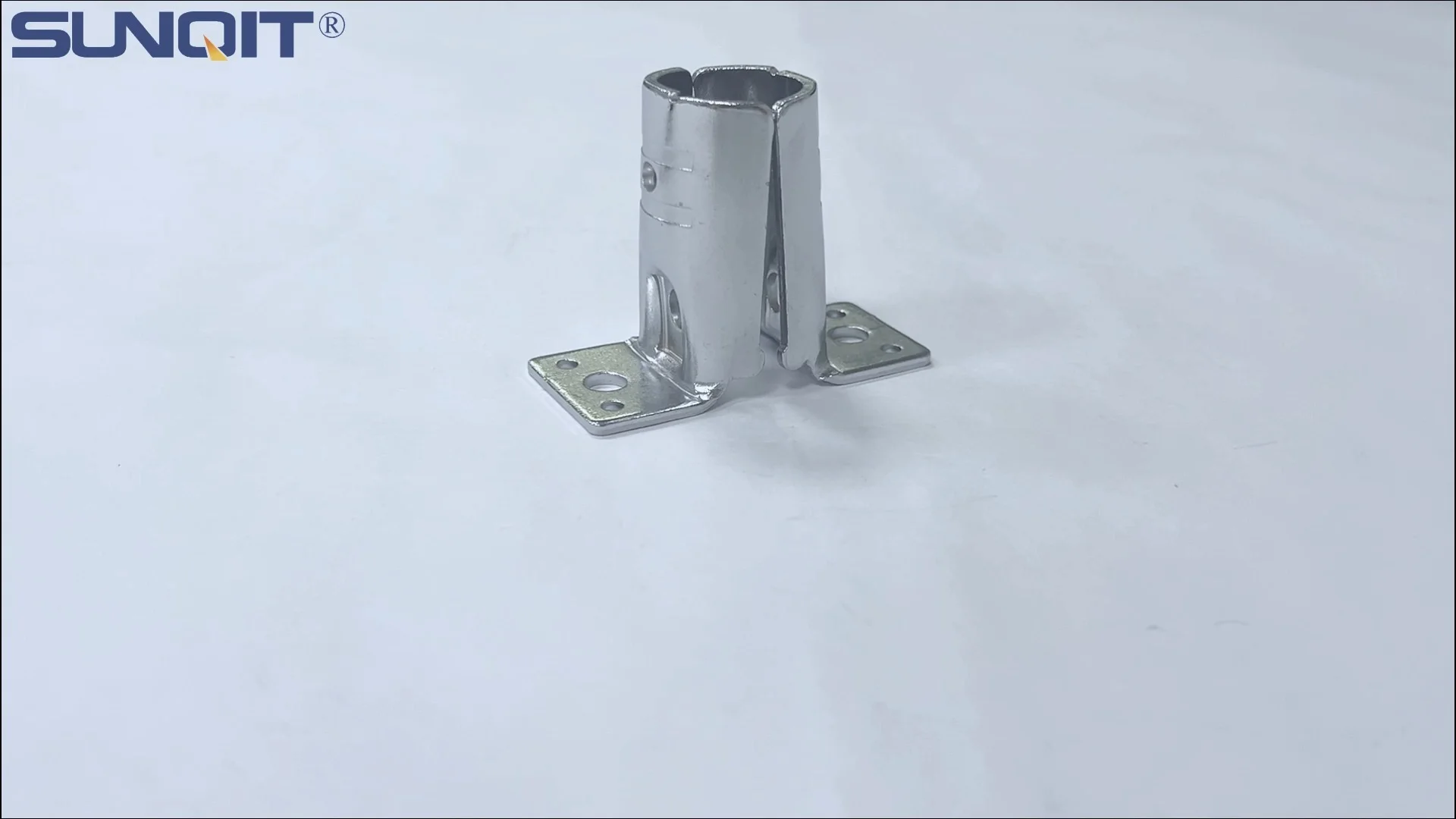
Vertical Lean Pipe Joint Chrome
Vertical lean pipe joint is used for 28mm lean pipe fixed on ground and keep it stable.
Introduction: The Heartbeat of Modern Warehouses
Walk into any thriving warehouse today, and you'll feel it immediately—the hum of purposeful activity. Pallets glide smoothly along roller tracks, employees assemble products at ergonomic workbenches, and every square foot of space is maximized to keep operations flowing like a well-tuned symphony. In this fast-paced world, efficiency isn't just a buzzword; it's the lifeblood that keeps businesses competitive. Yet, behind this seamless rhythm lies a truth often overlooked: the most impactful warehouse transformations rarely start with grand overhauls. More often, they begin with small, unassuming components that quietly redefine how work gets done. One such component, quietly revolutionizing logistics operations, is the vertical lean pipe joint chrome.
Warehouses today face a unique set of challenges: rising customer expectations for faster delivery, shrinking profit margins, and the constant pressure to do more with less space. Traditional fixed structures—rigid shelving, one-size-fits-all workstations, and inflexible material handling systems—often become bottlenecks. They resist change, slow down workflows, and leave teams struggling to adapt to shifting product demands or seasonal spikes. This is where lean systems step in, and at the heart of these systems lies the humble yet powerful vertical lean pipe joint chrome. A small, chrome-plated connector that bridges pipes, supports structures, and turns static warehouses into dynamic, adaptable hubs of productivity.
Understanding Lean Systems: More Than Just a Buzzword
Before diving into the specifics of vertical lean pipe joints, it's essential to grasp the philosophy that underpins their design: lean systems. Born from the Toyota Production System in the mid-20th century, lean isn't just a methodology—it's a mindset centered on eliminating waste, streamlining flow, and continuous improvement. In logistics, a lean system transforms warehouses from cluttered storage spaces into agile ecosystems where every action adds value, and every resource is used intentionally.
At its core, a lean system asks: How can we make work easier, faster, and more satisfying for our teams while delivering more value to customers? This translates to tangible goals: reducing unnecessary movement (whether of people or products), minimizing downtime, optimizing space, and ensuring that materials arrive exactly where they're needed, exactly when they're needed. For warehouse managers, the payoff is clear: lower operational costs, higher throughput, and a workforce that feels empowered rather than frustrated by their tools.
But lean systems don't materialize out of thin air. They rely on modular, flexible components that grow and adapt with the business. Enter lean pipe systems—interconnected networks of pipes, joints, and accessories that can be reconfigured in hours, not weeks. And among these components, the vertical lean pipe joint chrome stands out as a linchpin, enabling the kind of versatility that makes lean principles actionable.

The Unsung Hero: What Is a Vertical Lean Pipe Joint Chrome?
To the untrained eye, a vertical lean pipe joint chrome might look like little more than a metal connector. But for those in the know—warehouse managers, operations supervisors, and lean coordinators—it's a Swiss Army knife of functionality. Let's break it down: made from high-grade steel, this joint is precision-engineered to connect lean pipes (hollow tubes used in modular structures) at vertical angles, providing stability while allowing for rotational movement. The chrome plating isn't just for show; it adds a layer of corrosion resistance, ensuring the joint holds up in dusty, humid, or even mildly wet warehouse environments. It also reduces friction, making adjustments smoother and extending the joint's lifespan.
What truly sets the vertical lean pipe joint chrome apart is its balance of strength and flexibility. Unlike fixed joints, which lock pipes into rigid positions, this joint allows for controlled rotation—up to 180 degrees in some models—without compromising stability. This means a workbench can be tilted for better ergonomics, a flow rack can be adjusted to accommodate taller boxes, or a roller track can be angled to speed up material flow. And with a load capacity ranging from 50kg to 200kg (depending on the model), it's tough enough to support everything from lightweight electronics components to heavy automotive parts.
Consider this: a traditional warehouse might use welded steel shelves that take days to install and can never be modified. If the business expands or product sizes change, those shelves become obsolete, requiring expensive replacements. With vertical lean pipe joints, a flow rack can be disassembled, reconfigured, and reassembled in a morning, using the same pipes and joints. It's this adaptability that turns warehouses into living, breathing systems that evolve with the business.

Integration in Action: How Vertical Lean Pipe Joints Elevate Key Warehouse Components
A vertical lean pipe joint chrome rarely works alone. Its true power shines when paired with other lean components, turning individual parts into a cohesive, high-performing system. Let's explore how it integrates with four critical warehouse elements: flow racks, workbenches, roller tracks, and caster wheels.
Flow Racks: Keeping Products Moving
Flow racks are the backbone of first-in, first-out (FIFO) inventory management, allowing products to glide from the back (where they're stocked) to the front (where they're picked) via gravity. But a flow rack is only as effective as its structure. Vertical lean pipe joints provide the adjustable framework that makes flow racks versatile. For example, in a food distribution warehouse, seasonal items like holiday snacks might require taller shelves in Q4. With vertical joints, workers can loosen a few bolts, adjust the angle of the rack's side frames, and reposition the roller tracks—all without tools or downtime. The chrome finish ensures that even in cold storage environments (where condensation is common), the joints won't rust or seize up, keeping the flow of products uninterrupted.
Workbenches: Where Precision Meets Comfort
Workbenches are where the rubber meets the road in assembly and picking operations. An uncomfortable or poorly designed workbench leads to fatigue, errors, and even injuries. Vertical lean pipe joints transform workbenches from static tables into customizable workstations. Imagine an electronics assembly line where workers alternate between sitting and standing. With vertical joints, the bench height can be adjusted in minutes, ensuring each employee works at a comfortable level. The joint's rotational capability also allows for tilting the work surface—ideal for tasks like soldering or labeling, where a slight incline reduces neck strain. Paired with an ESD workbench top (to prevent static damage to sensitive components), this setup becomes a haven of productivity.
Roller Tracks: Smoothing the Path for Materials
Roller tracks are the arteries of a warehouse, carrying materials from receiving to shipping with minimal effort. But misaligned tracks cause jams, slowdowns, and damaged goods. Vertical lean pipe joints act as the alignment tool that keeps roller tracks running smoothly. By connecting the track's frame to the warehouse's main structure, the joints ensure the track remains level and straight, even under heavy loads. In a pharmaceutical warehouse, where delicate vials must be transported without shaking, this precision is critical. Workers can use the joint's rotational feature to fine-tune the track's angle, ensuring vials glide at a steady, controlled speed—fast enough to meet deadlines, slow enough to prevent breakage.
Caster Wheels: Mobility Without Compromise
Mobility is key in dynamic warehouses, where workstations and storage units need to shift to accommodate changing workflows. Caster wheels make this possible, but a wobbly trolley or a stuck wheel can bring operations to a halt. Vertical lean pipe joints provide the stable base that allows caster-equipped units to move smoothly. For instance, a picking trolley used in e-commerce fulfillment centers often carries heavy bins of orders. The vertical joints connect the trolley's frame to its legs, distributing weight evenly across the casters and preventing tipping. When the trolley needs to be reconfigured (e.g., adding a second shelf for overflow orders), the joints allow for quick adjustments, ensuring the trolley remains balanced and mobile.
Case Study: From Chaos to Clarity in a Mid-Sized E-Commerce Warehouse
To truly understand the impact of vertical lean pipe joint chrome, let's step into the shoes of a mid-sized e-commerce warehouse in Chicago. Before adopting lean systems, the warehouse struggled with three major issues: inefficient picking routes, wasted space, and high employee turnover due to ergonomic strain. Orders were processed at a rate of 45 per hour, and picking errors hovered around 8%—numbers that left the business struggling to keep up with competitors.
The turning point came when the operations manager decided to invest in a lean system, with vertical lean pipe joints as the foundation. The first step was reconfiguring the flow racks. Previously, fixed shelving forced pickers to walk back and forth between aisles, wasting precious time. By installing flow racks with vertical joints, the team created dedicated "pick zones" where products flowed to the front of the rack, reducing walking time by 30%. The joints allowed the racks to be adjusted to fit different box sizes—from small jewelry boxes to large electronics packages—eliminating gaps that had previously wasted space.
Next, the workbenches were overhauled.,.,.,.? 40%, 25%.
Finally, the roller tracks connecting the picking zones to the shipping area were upgraded.,., 20%,.( 1,000 ),.
,: 45 65 , 2%, 35%.? 60% .:"——."
The Tangible Benefits: Why Invest in Vertical Lean Pipe Joint Chrome?
For warehouse leaders considering lean systems, the question often boils down to ROI. Do the benefits of vertical lean pipe joints justify the upfront investment? The answer, based on countless case studies and industry data, is a resounding yes. Here's why:
| Benefit | Traditional Fixed Systems | Lean Systems with Vertical Lean Pipe Joint Chrome | Impact |
|---|---|---|---|
| Space Utilization | Static layout; 60-70% of space used effectively | Adjustable layouts; 85-95% of space used effectively | 30%+ increase in storage capacity without expanding the warehouse |
| Throughput Speed | 40-50 orders/hour (avg.) | 60-75 orders/hour (avg.) | 25-50% faster order processing, reducing delivery times |
| Reconfiguration Time | Days to weeks (requires contractors/welding) | Hours (can be done in-house by 2-3 employees) | 90% reduction in downtime during layout changes |
| Maintenance Costs | High (rust, welding repairs, replacement parts) | Low (chrome resists corrosion; modular parts easy to replace) | 40-60% lower annual maintenance expenses |
| Employee Productivity | Variable (ergonomic strain leads to fatigue) | Consistently high (adjustable workspaces reduce fatigue) | 15-20% increase in tasks completed per employee per shift |
Beyond the numbers, there's a human element too. Warehouses with lean systems report higher employee engagement because workers feel empowered to shape their environment. When a picker can adjust their workbench height to avoid back pain, or a team can reconfigure a flow rack to speed up their workflow, morale soars. This, in turn, reduces absenteeism and turnover—two major cost drivers in logistics.
Durability is another key factor. Chrome-plated vertical joints can last 5-10 years in harsh warehouse conditions, outperforming plastic or unplated steel alternatives that degrade within 2-3 years. And because they're modular, damaged joints can be swapped out in minutes, avoiding the need to replace entire structures.
Choosing the Right Vertical Lean Pipe Joint Chrome: What to Look For
Not all vertical lean pipe joints are created equal. To maximize ROI, warehouse managers should consider these factors when selecting a supplier:
- Load Capacity: Match the joint's capacity to your typical product weights. A 50kg joint might work for cosmetics, but automotive parts may require 150kg+.
- Chrome Quality: Look for joints with thick, uniform chrome plating (at least 0.01mm) to ensure corrosion resistance.
- Rotation Range: Determine if you need fixed (0°), limited rotation (90°), or full rotation (180°) based on your workflows.
- Compatibility: Ensure the joint fits standard lean pipe sizes (28mm, 30mm, or 40mm) and works with your existing accessories (rollers, casters, etc.).
- Supplier Support: Opt for suppliers who offer technical guidance, installation training, and quick replacement parts.
Remember: the cheapest joint isn't always the best. A slightly higher upfront cost for a durable, high-quality joint will pay off in lower maintenance and longer lifespan.
Conclusion: The Future of Warehouses Is Flexible
In a world where customer demands change overnight and supply chains face constant disruption, the ability to adapt isn't just an advantage—it's a necessity. Vertical lean pipe joint chrome embodies this adaptability, proving that even the smallest components can drive transformative change. It's not just about connecting pipes; it's about connecting people, processes, and products in a way that makes work easier, faster, and more fulfilling.
For warehouse managers ready to embrace lean systems, the message is clear: start small, think big. Invest in components that grow with your business, that empower your team, and that turn inefficiency into opportunity. The vertical lean pipe joint chrome isn't just a tool—it's a catalyst for a warehouse that doesn't just keep up with the times, but leads the way.
As the Chicago e-commerce warehouse discovered, sometimes the most powerful innovations are the ones you can hold in your hand. And in the race for warehouse efficiency, that's a game-changer.