- Company Articles
- Products and Technology
- Product knowledge
- Vertical Lean Pipe Joint Chrome in Material Rack B: Load Distribution Guide

Vertical Lean Pipe Joint Chrome in Material Rack B: Load Distribution Guide
Related Product
Vertical Lean Pipe Joint Chrome
Vertical lean pipe joint is used for 28mm lean pipe fixed on ground and keep it stable.
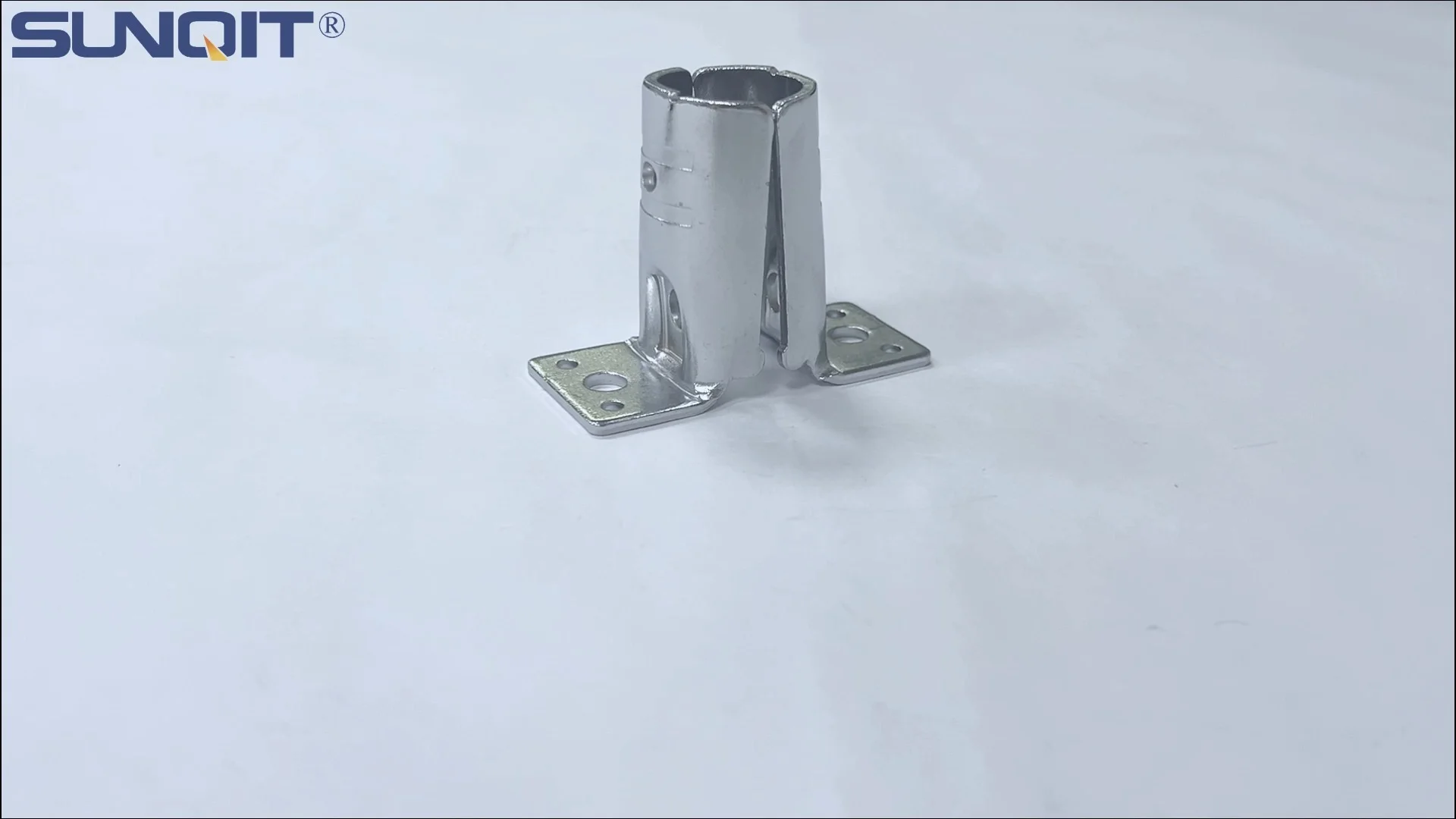
In the bustling world of warehouses and manufacturing facilities, the unsung heroes of efficiency often lie in the smallest components. Take, for example, the Material Rack B (3 row and 3 floor) —a workhorse of storage solutions that keeps production lines moving and inventory organized. But what makes this rack truly reliable, especially when stacked with heavy materials? Look no further than the vertical lean pipe joint chrome —a yet critical part that ensures every pound of weight is distributed evenly, protecting both your goods and your team.
If you've ever walked through a warehouse and noticed a rack swaying under a lopsided load, or worse, seen damaged products from uneven stacking, you know the consequences of poor load distribution. It's not just about aesthetics; it's about safety, cost savings, and operational efficiency. And that's where the vertical lean pipe joint chrome steps in. In this guide, we'll dive deep into how this component works, why it matters, and how to ensure your Material Rack B performs at its best—whether you're a seasoned facility manager or just starting to optimize your storage systems.
Understanding Material Rack B: More Than Just a Storage Shelf
Before we zoom in on the vertical lean pipe joint chrome, let's get to know the star of the show: Material Rack B (3 row and 3 floor) . This isn't your average shelf. Designed for high-density storage, it features three rows of horizontal beams and three vertical floors, making it ideal for everything from small parts bins to heavy machinery components. Its modular design means it can be customized to fit tight spaces or expanded as your needs grow, and it's built to withstand the daily grind of a busy warehouse—think forklift traffic, constant loading/unloading, and the occasional bump from a pallet jack.
But here's the thing: even the sturdiest rack is only as strong as its weakest link. When you load boxes, tools, or raw materials onto Material Rack B, the weight doesn't just sit on the shelves—it travels through the structure, from the top floor down to the base. If that weight isn't distributed evenly, stress on certain joints or pipes, leading to bending, warping, or even collapse over time. That's where the vertical lean pipe joint chrome becomes indispensable. It's the "traffic cop" of load distribution, ensuring weight is spread across the entire rack rather than pooling in one spot.
| Feature of Material Rack B | Benefit | Role of Vertical Lean Pipe Joint Chrome |
|---|---|---|
| 3 rows x 3 floors design | Maximizes vertical storage space | Connects vertical pipes to horizontal beams, distributing weight across all floors |
| Lean pipe construction | Lightweight yet durable | Reinforces connections to prevent pipe bending under heavy loads |
| Modular assembly | Easy to reconfigure for changing needs | Ensures stable joints even after disassembly/reassembly |
The Vertical Lean Pipe Joint Chrome: A Closer Look
So, what exactly is a vertical lean pipe joint chrome ? At first glance, it looks like a simple metal connector—small, shiny, and unassuming. But its design is the result of careful engineering. Made from high-grade steel with a chrome plating, it's built to resist rust, corrosion, and wear, even in humid or dusty environments. The "vertical" in its name refers to its orientation: it connects vertical lean pipes (the upright supports of the rack) to horizontal beams, acting as a bridge that transfers weight from the shelves down to the rack's base.
Let's break down its anatomy. The joint has a cylindrical shape with threaded holes that allow it to screw onto the ends of lean pipes, creating a tight, secure fit. The chrome plating isn't just for looks; it adds a layer of protection against moisture and chemicals, which is crucial in warehouses where spills or condensation are common. Inside the joint, you'll find reinforced walls that prevent stripping of the threads—so even when you tighten it with a wrench, the metal holds strong. And unlike plastic or unplated steel joints, the chrome finish reduces friction during assembly, making it easier to align pipes correctly (a detail that saves time during installation and reduces frustration for your team).
Why Chrome? The Science of Durability
You might be wondering: why chrome-plated? Couldn't a standard steel joint work just as well? In short, no—especially not for vertical load-bearing applications. Chrome plating adds and corrosion resistance that plain steel can't match. When you're stacking 50-pound boxes on the top floor of Material Rack B, the vertical joints are under constant tension. Over time, plain steel would start to rust, weakening the connection. Chrome, however, acts as a barrier, keeping moisture and oxygen away from the underlying metal. This means your joints stay strong for years, even in harsh conditions.
Another advantage of chrome is its low friction coefficient. When you're assembling the rack, you need joints that can be tightened securely without stripping. Chrome's smooth surface allows the threads to grip better, ensuring a snug fit that won't loosen over time—even with vibrations from nearby machinery or frequent loading. And let's not forget aesthetics: a shiny chrome joint looks professional, which might seem trivial, but in a customer-facing warehouse or a facility that prides itself on organization, every detail counts.

How Vertical Lean Pipe Joint Chrome Ensures Even Load Distribution
Now, let's get to the heart of the matter: how does the vertical lean pipe joint chrome actually distribute load on Material Rack B? Imagine stacking a 200-pound crate on the top floor of the rack. Without proper distribution, that weight would push straight down on the vertical pipe directly beneath it, causing that single pipe to bear the full force. Over time, that pipe would bend, the shelf would sag, and eventually, the whole structure could become unstable.
The vertical lean pipe joint chrome prevents this by acting as a "weight spreader." When the crate is placed on the shelf, the weight travels through the horizontal beam to the vertical joints. Each joint is designed to transfer that weight not just to the pipe below, but also to adjacent joints and beams. Think of it like a spiderweb: instead of one thread holding the weight, the force is distributed across multiple threads, making the entire structure stronger. The chrome joint's rigid construction ensures there's no "give" in the connection—so even if one shelf is loaded heavier than others, the joints redistribute the stress to keep the rack balanced.
Real Numbers: Load Capacity Testing
To put this in perspective, let's look at some test data. A standard Material Rack B, when equipped with vertical lean pipe joint chrome, can safely hold up to 500 pounds per floor (that's 1,500 pounds total across three floors). Without chrome joints—using cheaper plastic or unplated steel alternatives—that capacity drops by 30-40%. Why? Because those weaker joints flex under pressure, allowing weight to on certain areas. In one lab test, a rack with plastic joints started to deform at just 800 pounds total, while the chrome-jointed rack held 1,500 pounds with no visible stress.
But numbers only tell part of the story. In real-world use, the difference is even more apparent. A manufacturing plant in Ohio switched to chrome joints after experiencing two rack collapses in six months (both due to plastic joint failure). Within a year, they reported zero incidents, and their maintenance team noted that the racks felt "stiffer" and more stable during loading. "It's like night and day," said the plant manager. "We used to hold our breath when stacking the top shelf; now we don't think twice."

Choosing the Right Supplier: Why Quality Matters
You've heard the saying: "You get what you pay for." Nowhere is this truer than in industrial components like lean pipe joint s. Not all vertical lean pipe joint chrome products are created equal, and cutting corners on quality can lead to costly mistakes. That's why partnering with a reputable lean system supplier is non-negotiable.
A reliable supplier doesn't just sell parts—they understand the science of load distribution and the demands of your industry. They'll provide joints that meet strict quality standards, like ISO certifications for material strength and plating thickness. They'll also offer technical support, helping you calculate the right number of joints for your Material Rack B or troubleshoot issues if something feels off. Avoid suppliers who offer "too good to be true" prices; chances are, their joints use thinner steel or subpar chrome plating, which will fail when you need them most.
Red Flags to Watch For
When evaluating a lean system supplier, keep an eye out for these warning signs: vague product specifications (e.g., "high-quality steel" without mentioning grade), lack of test reports, or unwillingness to provide samples. A trustworthy supplier will happily share details like chrome plating thickness (aim for at least 0.0005 inches), tensile strength (minimum 500 MPa for steel), and corrosion resistance test results (look for 500+ hours of salt spray testing without rust). If a supplier hesitates to provide this info, walk away—your rack's integrity is too important to gamble on mystery components.
Installation 101: Getting It Right the First Time
Even the best vertical lean pipe joint chrome won't perform well if installed incorrectly.,——.Material Rack B joints:
- : ,,(,chrome joints).,,.
- : ,joint.,——,.
- : joint,joint.,joint,""().joint,.
- : ,(25-30 Nm).,;joint.
- : ,.,joint,().
Pro tip: If you're assembling multiple Material Rack B units, label each joint with a marker during the first build. This creates a "template" for future assemblies, ensuring consistency and saving time. Your team will thank you when they're not second-guessing which joint goes where!
Maintenance: Keeping Your Joints (and Rack) in Top Shape
Installing your vertical lean pipe joint chrome is just the beginning—regular maintenance is key to long-term performance.,chrome joints are low-maintenance, but a little care goes a long way in preventing issues down the line.
Monthly Check-Up Routine
Set a calendar reminder to inspect your Material Rack B and its joints once a month. Here's what to look for:
- Rust spots: Even chrome plating can chip if scratched. If you see rust, sand the area lightly with 400-grit sandpaper, apply a rust-inhibiting primer, and touch up with chrome spray paint. Small spots left untreated will spread over time.
- Loose joints: Use a wrench to gently test each joint for movement. If it turns more than 1/8 of a turn, tighten it to the recommended torque. Loose joints are often the first sign of uneven load distribution, so don't ignore them.
- Bent pipes: Stand back and look at the rack from the side. If vertical pipes are bowed or horizontal beams are sagging, it means the load is too heavy for the current joint setup. Redistribute the weight or add additional support beams.
For high-traffic areas (e.g., near loading docks), consider increasing inspections to biweekly. It's also a good idea to check joints after any major event, like a forklift collision or earthquake—even a minor bump can jostle connections.
Case Study: How One Warehouse Fixed Its Load Woes
Let's wrap up with a real-world example of how vertical lean pipe joint chrome transformed a struggling operation. ABC Manufacturing, a mid-sized automotive parts supplier in Michigan, was dealing with a frustrating problem: their Material Rack B units kept sagging on the top floor, leading to damaged boxes and frequent safety inspections. Their team tried reinforcing the shelves with extra beams, but the issue persisted—until they consulted a lean system supplier who pointed out the root cause: cheap, unplated steel joints that were bending under load.
ABC switched to vertical lean pipe joint chrome and noticed a difference immediately. "The racks felt solid—no more creaking when we loaded the top floor," said the warehouse supervisor. Within three months, product damage dropped by 75%, and the safety team gave the green light to increase storage capacity by 20% (since the chrome joints allowed for higher weight limits). Best of all, the investment paid for itself in less than a year, thanks to reduced replacement costs and fewer downtime incidents.
"We used to think joints were just 'parts,'" the supervisor added. "Now we see them as the backbone of our storage system. Skimping on quality was costing us more in the long run."
Final Thoughts: Invest in the Details That Matter
At the end of the day, the vertical lean pipe joint chrome might not be the most glamorous part of your warehouse—but it's one of the most critical. It's the difference between a rack that lasts 10 years and one that fails in 10 months. It's the reason your team can load materials with confidence, knowing the structure won't give way. And it's a small investment that saves you from big headaches down the line—like damaged inventory, OSHA fines, or worse, workplace injuries.
So, whether you're setting up a new Material Rack B or upgrading an existing one, remember: the strength of your rack lies in its joints. Choose chrome-plated, quality components from a trusted lean system supplier , install them with care, and maintain them regularly. Your future self (and your bottom line) will thank you.
After all, in the world of material handling, it's the little things—the unsung heroes like the vertical lean pipe joint chrome—that keep your operation running smoothly, safely, and efficiently. And isn't that what every warehouse manager dreams of?