- Company Articles
- Products and Technology
- Application Cases
- Vertical Lean Pipe Joint Chrome in Mechanical Manufacturing: Durability Case Studies

Vertical Lean Pipe Joint Chrome in Mechanical Manufacturing: Durability Case Studies
Related Product
Vertical Lean Pipe Joint Chrome
Vertical lean pipe joint is used for 28mm lean pipe fixed on ground and keep it stable.
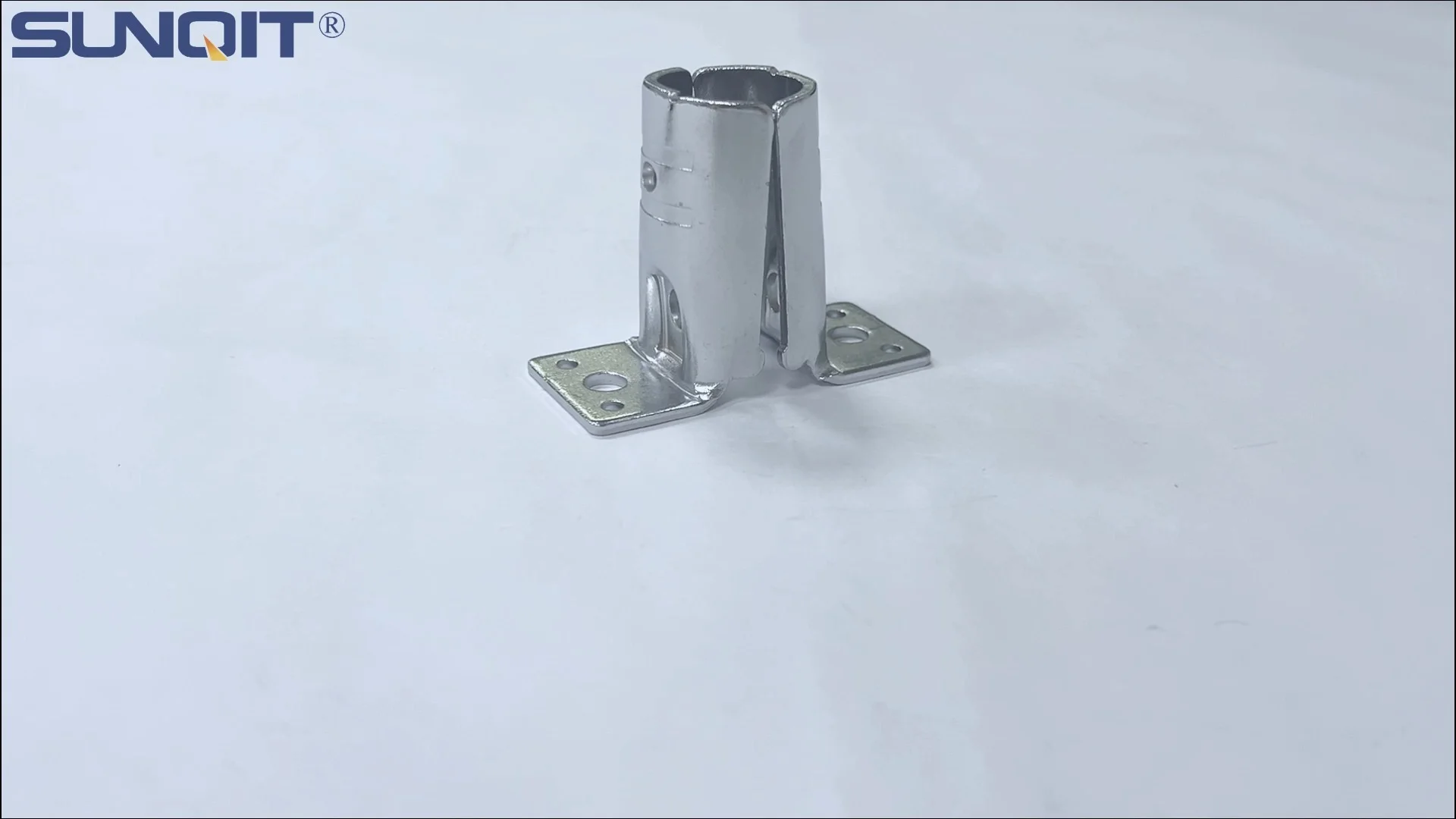
The Backbone of Lean Systems: Why Every Joint Matters
In the fast-paced world of mechanical manufacturing, where efficiency is king and downtime is the enemy, the smallest components often hold the biggest impact. Imagine a production line where a single loose joint on a workbench brings an entire assembly process to a halt. Or a flow rack that sags under the weight of materials because its connecting parts couldn't withstand daily use. These scenarios aren't just hypothetical—they're the silent productivity killers that keep plant managers up at night. That's where lean systems come in, designed to streamline operations, eliminate waste, and keep things moving. But even the most well-designed lean system is only as strong as its weakest link. Today, we're shining a spotlight on one such link that's quietly revolutionizing durability in factories worldwide: the vertical lean pipe joint chrome.
For years, manufacturers have grappled with the trade-off between flexibility and sturdiness. Lean systems thrive on adaptability—being able to reconfigure workbenches, adjust flow racks, or modify conveyors as production needs change. But that flexibility often came with a cost: joints that loosened over time, corroded in harsh environments, or simply couldn't handle the repetitive stress of daily operations. Enter the vertical lean pipe joint chrome, a yet mighty component that's changing the game. As a key offering from leading lean pipe suppliers, this joint isn't just a piece of hardware; it's a solution to the age-old problem of "good enough" durability.
In this article, we'll dive into what makes the vertical lean pipe joint chrome stand out, explore real-world case studies from automotive, electronics, and logistics sectors, and explain why it's becoming the go-to choice for manufacturers who refuse to compromise on reliability. Whether you're a plant engineer tired of constant repairs, a procurement manager looking to cut long-term costs, or a lean system supplier aiming to deliver better value to clients, this deep dive will show you why this small but critical component deserves a spot in your next project.
What Is a Vertical Lean Pipe Joint Chrome? Breaking Down the Basics
Before we jump into the case studies, let's get clear on what exactly a vertical lean pipe joint chrome is—and why it's different from the joints you might already be using. At its core, a lean pipe joint is the connector that holds together the aluminum or steel pipes in lean systems, forming structures like workbenches, flow racks, and material trolleys. The "vertical" designation means it's designed to secure pipes in a vertical orientation, though many models offer rotational flexibility for multi-angle setups. The "chrome" part? That's the secret sauce: a protective plating that adds a layer of durability and resistance to wear and tear.
Traditional lean pipe joints are often made of plastic or unplated steel. While plastic joints are lightweight and cheap, they lack the strength to handle heavy loads over time, especially in high-temperature or chemical-exposed environments. Unplated steel joints, on the other hand, are stronger but prone to rust and corrosion—bad news for factories with high humidity or frequent cleaning protocols. The vertical lean pipe joint chrome addresses both issues head-on. Its base material is high-grade steel, ensuring it can support the weight of tools, materials, and even heavy machinery parts. Then, it's coated with a thick layer of chrome through an electroplating process, which not only gives it a sleek, professional finish but also creates a barrier against moisture, chemicals, and abrasion.
But durability isn't the only trick up its sleeve. What truly sets this joint apart is its design. Unlike fixed joints that require tools to adjust, the vertical lean pipe joint chrome often features a user-friendly, tool-free tightening mechanism. This means workers can reconfigure a workbench or flow rack in minutes, not hours, without sacrificing stability. The chrome plating also reduces friction, making adjustments smoother and preventing the joint from seizing up over time—a common frustration with cheaper alternatives. For lean pipe and accessories suppliers, this combination of strength, flexibility, and low maintenance is a win-win: it solves customer pain points while reducing the need for replacement parts.
To put it simply, the vertical lean pipe joint chrome is the kind of component that makes you wonder, "Why didn't we think of this sooner?" It takes the best aspects of traditional joints—flexibility and ease of use—and pairs them with industrial-grade durability. Now, let's see how this translates to real results on the factory floor.

Case Study 1: Automotive Assembly Lines – Taming the Heat and Humidity
The Problem: Joint Failure in a High-Stress Environment
Let's start with a scenario familiar to many in manufacturing: a mid-sized automotive parts supplier in the Midwest. Their production floor was a hive of activity, with assembly lines churning out engine components around the clock. The plant relied heavily on custom workbenches—each outfitted with tools, torque wrenches, and bins for small parts—where workers spent 8–10 hours a day tightening bolts, inspecting components, and moving parts along the line.
The problem? The workbenches were built using standard plastic-coated lean pipe joints. At first, they worked fine. But within 6–8 months, plant manager Maria Gonzalez started noticing issues. "The joints would loosen up, especially on the benches near the welding stations," she recalls. "The heat from the welders, combined with the constant vibration from workers using power tools, was wreaking havoc. We'd tighten them, but a week later, they'd be loose again. Then, in the summer, when humidity spiked, some joints even started to rust where the plastic coating had worn off. It got to the point where we had a maintenance crew spending 2 hours every morning just retightening joints and replacing the worst ones. That's 10 hours a week—time we couldn't afford to lose."
The consequences weren't just about downtime. Loose joints led to wobbly workbenches, which made precision tasks harder. "Workers were complaining about hand fatigue from trying to steady tools on unstable surfaces," Gonzalez adds. "We even had a few near-misses where small parts bins slid off the benches because the shelves had sagged. Safety is non-negotiable, so we knew we needed a better solution."
The Solution: Switching to Vertical Lean Pipe Joint Chrome
After researching options, Gonzalez connected with a local lean pipe supplier who recommended upgrading to vertical lean pipe joint chrome. Skeptical at first—"We'd tried 'heavy-duty' joints before, and they still failed"—she agreed to a trial. The supplier replaced the joints on 5 critical workbenches, focusing on those near the welding stations and high-traffic areas.
The difference was immediate. "Within the first month, we noticed the benches felt sturdier," Gonzalez says. "Workers stopped mentioning the wobbling. The maintenance crew? They went from spending 2 hours a morning on joints to 15 minutes—just a quick check, no retightening needed." But the real test came during the summer months, when humidity and heat peaked. ",,," .",,.,,."
The Results: 2 Years Later
Fast forward to today, and the automotive plant has replaced all 42 of its assembly workbenches with vertical lean pipe joint chrome. The results speak for themselves:
- Maintenance Time Reduced by 90%: What used to take 10 hours a week now takes less than 1 hour.
- Joint Replacement Costs Cut by 75%: In the first year, they replaced 0 joints—compared to 20+ with the old plastic-coated ones.
- Worker Satisfaction Up: A follow-up survey showed a 30% improvement in reports of "stable work surfaces" and reduced hand fatigue.
- Zero Safety Incidents: No more parts sliding off sagging shelves, thanks to the joints' consistent grip.
"The best part? We haven't had to replace a single vertical lean pipe joint chrome in two years," Gonzalez says. "They're still as tight as the day we installed them. For a plant that runs 24/7, that kind of reliability is priceless. It's not just about saving money on parts—it's about peace of mind."

Case Study 2: Electronics Manufacturing – Precision and Corrosion Resistance in Clean Rooms
The Problem: Contamination and Wear in Sensitive Environments
Now, let's shift gears to the electronics industry, where precision and cleanliness are paramount. A California-based manufacturer of smartphone components specializes in producing microchips and circuit boards—parts so small that a single speck of dust can ruin a batch. Their clean rooms are meticulously controlled, with strict protocols for humidity, temperature, and air quality. To move components between stations, they use flow racks—tilted shelves lined with roller track and accessories that allow PCBs to glide smoothly from one workstation to the next.
The challenge? The flow racks were originally built using standard aluminum lean pipe joints. While aluminum is lightweight and resistant to rust, the joints weren't holding up to the daily grind. "We have 12 flow racks in the main clean room, each handling hundreds of PCBs a day," explains Raj Patel, the facility's operations director. "The racks are reconfigured every few months to accommodate new board sizes, so we're constantly adjusting the height of the shelves. Over time, the threads on the aluminum joints would wear down, making it hard to get a tight fit. We'd end up with shelves that weren't perfectly level, which caused PCBs to get stuck or slide too quickly—both disasters for delicate components."
Adding to the problem was the clean room's cleaning regimen. "We use alcohol-based wipes to sanitize surfaces daily, and the chemicals were starting to degrade the aluminum joints' finish," Patel notes. "Small flakes would chip off, and while we have HEPA filters, we were worried about contamination. Even worse, when joints wore out, replacing them meant shutting down a section of the clean room—a process that takes 4 hours of prep and cleanup, plus the downtime. It was costing us $10,000+ per replacement, not to mention the risk of production delays."
The Solution: Vertical Lean Pipe Joint Chrome for Longevity and Cleanliness
After consulting with a lean system supplier, Patel's team decided to test vertical lean pipe joint chrome on two of their busiest flow racks. The decision wasn't just about durability—chrome's smooth, non-porous surface also offered better resistance to chemicals, a key factor in the clean room.
"The first thing we noticed was how easy they were to adjust," Patel says. "The chrome plating makes the threads smoother, so when we reconfigure the shelves, the joints tighten evenly without binding. And even after 5+ adjustments, the threads still feel like new—no wear, no stripping." The chemical resistance was another win: "We've been wiping them down with alcohol for over a year, and there's no sign of degradation. The surface stays smooth, no flakes, no contamination risk."
The Results: 18 Months of Flawless Performance
Eighteen months later, the two test flow racks have become the gold standard. The facility has since upgraded all 12 flow racks, and the results are impressive:
- Zero Contamination Incidents: No more flakes from degraded joints, reducing the risk of defective PCBs.
- Shelf Adjustments Made 3x Faster: What took 2 hours per rack now takes 40 minutes, thanks to smooth-threaded joints.
- Replacement Costs Eliminated: Not a single joint has needed replacement, saving an estimated $60,000+ in downtime and parts.
- PCB Jams Reduced by 80%: Level shelves mean smoother flow, cutting down on stuck components.
"For us, the vertical lean pipe joint chrome isn't just a part—it's a quality control tool," Patel says. "When you're dealing with components that cost hundreds of dollars each, you can't afford to cut corners on the systems that move them. This joint has paid for itself ten times over."
Case Study 3: Logistics and Distribution – Heavy Loads and Constant Motion
The Problem: Conveyor System Failures in a Busy Warehouse
Our final case study takes us to a large logistics hub on the East Coast, where a third-party logistics (3PL) provider handles shipping and receiving for major retailers. Their warehouse operates 24/7, with conveyor systems moving packages—some weighing up to 50 lbs—from sorting stations to loading docks. The conveyors are the lifeline of the operation; any breakdown means packages pile up, delivery deadlines are missed, and customers get upset.
The issue? The conveyor's support structures, which held up the roller track and accessories, were built using a mix of steel and plastic lean pipe joints. "Conveyors are all about motion—constant vibration as packages roll over the tracks, and the weight of the packages themselves pulling down on the supports," explains Jamal Williams, the warehouse's maintenance supervisor. "We were having problems with the vertical joints that held the main support pipes. They'd start to creak after a few months, and eventually, the bolts would loosen. A few times, the supports sagged so much that the roller track misaligned, causing packages to jam. Last year, we had a major breakdown during peak season—Black Friday week—that took 4 hours to fix. The cost in missed deliveries and overtime was astronomical."
Williams and his team tried reinforcing the joints with extra clamps, but it was a band-aid solution. "The extra clamps added weight and made it harder to access the conveyor for maintenance," he says. "We needed something that could handle the constant stress without adding complexity."
The Solution: Upgrading Conveyor Supports with Vertical Lean Pipe Joint Chrome
After researching heavy-duty options, Williams' team partnered with a lean pipe supplier that specialized in conveyor components. The supplier recommended vertical lean pipe joint chrome for the conveyor support structures, citing their high load-bearing capacity and resistance to vibration-induced loosening.
"We were skeptical at first—these conveyors run non-stop, and the weight adds up," Williams admits. "But the supplier sent us test data: their vertical chrome joints could handle 300+ lbs of static load and resist loosening under continuous vibration. We decided to upgrade a 50-foot section of conveyor that had been the biggest troublemaker."
The installation was done during a planned maintenance window, and the difference was noticeable within days. "The creaking stopped immediately," Williams says. "Even when we ran the conveyor at full capacity—back-to-back heavy packages—the supports felt solid. No more sagging, no more jams from misaligned tracks."
The Results: 1 Year of Uninterrupted Operation
A year later, the 3PL has upgraded 80% of its conveyor supports to vertical lean pipe joint chrome. The impact has been transformative:
- Zero Conveyor Breakdowns: No more unscheduled downtime due to joint failure.
- Maintenance Costs Cut by 60%: Fewer repairs mean less spending on parts and overtime.
- Increased Throughput: With fewer jams, the conveyor can run at full speed consistently, handling 15% more packages per hour.
- Extended Lifespan: The supplier estimates the supports will now last 5–7 years, compared to 2–3 with the old joints.
"Peak season used to be a nightmare—we'd cross our fingers and hope the conveyors held up," Williams says. "This year, we didn't have a single issue. The vertical lean pipe joint chrome gave us the reliability we needed to scale up without the stress. For a 24/7 operation, that's everything."
How Does It Compare? A Look at Joint Durability Across Materials
By now, you're probably wondering: Is the vertical lean pipe joint chrome really that much better than other options? To answer that, let's compare it to three common alternatives: standard plastic-coated joints, unplated steel joints, and aluminum joints. The table below breaks down key factors like material, durability, maintenance needs, and ideal applications—based on data from lean pipe suppliers and industry tests.
| Joint Type | Base Material | Coating/Finish | Typical Lifespan (Industrial Use) | Resistance to Corrosion | Resistance to Vibration Loosening | Best For |
|---|---|---|---|---|---|---|
| Standard Plastic-Coated | Low-carbon steel | PVC/plastic | 6–12 months | Poor (coating wears off, steel rusts) | Low (loosens after 1–2 months of vibration) | Light-duty, low-humidity environments (e.g., office storage) |
| Unplated Steel | Mild steel | None | 12–18 months | Very poor (rusts quickly in humid/chemical environments) | Medium (tightens well but prone to corrosion-related weakening) | Indoor, dry areas with minimal moisture (e.g., non-food warehouses) |
| Aluminum | Aluminum alloy | Anodized (some models) | 18–24 months | Good (resists rust, but anodization can wear off with frequent adjustment) | Medium (threads wear with repeated tightening/loosening) | Light to medium loads, clean environments (e.g., electronics assembly) |
| Vertical Lean Pipe Joint Chrome | High-carbon steel | Chrome plating (0.001–0.003 inches thick) | 5+ years | Excellent (chrome barrier resists moisture, chemicals, and rust) | High (chrome plating reduces friction; threads stay tight under vibration) | Heavy loads, high vibration, humid/chemical environments (e.g., automotive, logistics, clean rooms) |
As the table shows, the vertical lean pipe joint chrome outperforms alternatives in nearly every category that matters for industrial use. Its high-carbon steel core provides strength, while the chrome plating adds a protective layer that stands up to corrosion, vibration, and wear. For manufacturers who need their lean systems to last—and perform—this isn't just an upgrade; it's a long-term investment.
Why Lean Pipe Suppliers Are Prioritizing Chrome-Plated Joints
It's not just manufacturers who are singing the praises of vertical lean pipe joint chrome—lean pipe suppliers are also seeing the demand surge. "Five years ago, chrome-plated joints made up maybe 10% of our lean pipe and accessories sales," says Mike Chen, product manager at a leading lean system supplier. "Today, it's over 40%. Customers are tired of replacing joints every year, and they're willing to invest a little more upfront for durability."
For suppliers, the shift to chrome-plated joints is about more than just meeting demand—it's about building trust. "When a customer buys a lean system, they expect it to last," Chen explains. "If the joints fail, they blame the supplier, even if we warned them about using the right components for their environment. By vertical lean pipe joint chrome for high-stress applications, we're not just selling a product—we're selling peace of mind. And that leads to repeat business and referrals."
Chen also notes that the chrome-plating process has improved in recent years, making the joints more affordable. "Advances in electroplating technology mean we can produce high-quality chrome joints at a lower cost than we could a decade ago," he says. "That makes it easier for small and medium manufacturers to justify the upgrade. It's no longer a 'luxury' component—it's a smart business decision."
Conclusion: The Small Joint That Delivers Big Results
In the world of mechanical manufacturing, it's easy to get caught up in the latest high-tech machinery, AI-driven analytics, or automated robots. But as we've seen in these case studies, success often hinges on the unsung heroes—the components that work behind the scenes to keep things stable, secure, and moving. The vertical lean pipe joint chrome is one such hero.
From automotive assembly lines taming heat and humidity to electronics clean rooms demanding precision and corrosion resistance, to logistics hubs handling heavy loads and constant motion, this joint has proven its mettle. It's not just about durability—it's about reducing stress for plant managers, improving safety for workers, and delivering ROI that goes far beyond the initial cost.
So, if you're tired of replacing joints, dealing with downtime, or compromising on safety, it might be time to talk to your lean pipe supplier about vertical lean pipe joint chrome. As Maria Gonzalez from the automotive plant put it: "It's the kind of upgrade that makes you wonder how you ever managed without it. Sometimes, the smallest changes make the biggest difference."
In the end, lean manufacturing is about eliminating waste—waste of time, waste of money, waste of resources. And there's no bigger waste than a lean system held back by weak joints. The vertical lean pipe joint chrome isn't just a solution to that waste; it's a testament to the power of innovation in even the most basic components. Here's to stronger systems, smoother operations, and joints that last as long as your ambition.