- Company Articles
- Products and Technology
- Solution
- Vertical Lean Pipe Joint Chrome in Smart Factories: Automation Integration

Vertical Lean Pipe Joint Chrome in Smart Factories: Automation Integration
Related Product
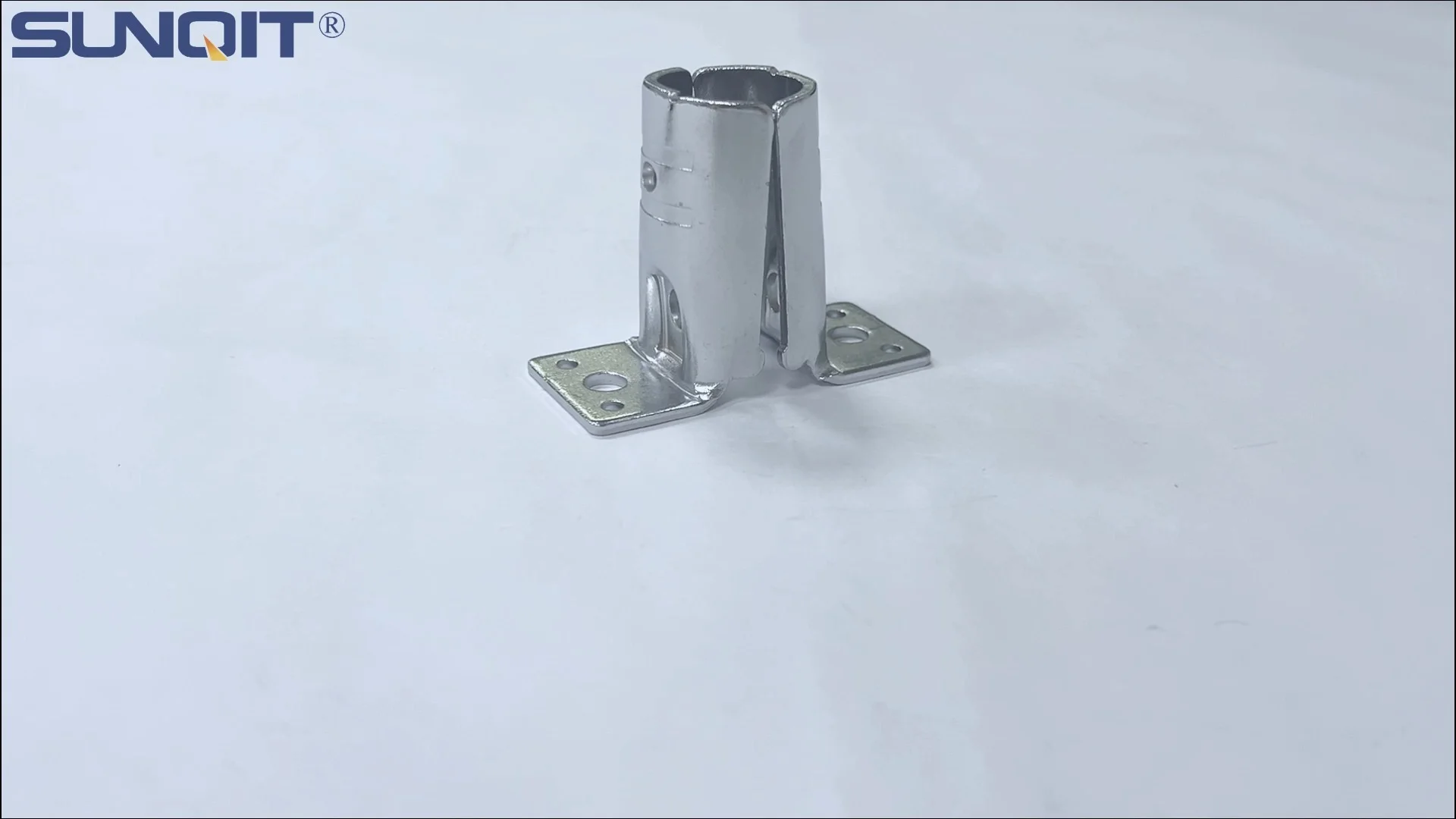
Vertical Lean Pipe Joint Chrome
Vertical lean pipe joint is used for 28mm lean pipe fixed on ground and keep it stable.
In the fast-paced world of manufacturing, the term "smart factory" has evolved from a buzzword to a necessity. Today's production facilities aren't just about machines and assembly lines—they're about agility, efficiency, and the seamless integration of human workers with automation. At the heart of this transformation lies the lean system , a philosophy that prioritizes waste reduction, flexibility, and continuous improvement. But even the most advanced lean strategies rely on tangible, physical components to bring them to life. Enter the unsung hero of modular manufacturing: the Vertical Lean Pipe Joint Chrome . This unassuming yet critical part is redefining how factories build, adapt, and automate their workflows, working hand-in-hand with components like aluminum profiles , workbenches , and conveyors to create systems that are as dynamic as the industries they serve.
The Evolution of Lean Systems: From Rigidity to Flexibility
Not long ago, factory floors were static landscapes. Production lines were built with fixed steel structures, welded together to serve a single purpose. If a product design changed or demand shifted, reconfiguring these lines meant days—even weeks—of demolition, welding, and reinstallation. The cost in time and labor was staggering, and many manufacturers found themselves stuck in a cycle of inefficiency, unable to keep up with market demands. Then came the lean revolution. Born from the Toyota Production System, lean manufacturing emphasized eliminating waste (or "muda") and creating value through streamlined processes. But early lean systems still faced a challenge: the physical infrastructure supporting them was often just as rigid as the old ways.
The breakthrough came with modular components—pipes, joints, and profiles that could be assembled, disassembled, and reassembled without specialized tools or permanent modifications. Among these components, lean pipes (also called "lean tubes") emerged as a game-changer. Made from materials like steel or aluminum, these lightweight yet durable tubes could be connected using joints to form everything from workbenches to material racks. But it was the introduction of specialized joints, like the Vertical Lean Pipe Joint Chrome, that truly unlocked their potential. Unlike basic plastic or uncoated steel joints, the chrome-plated vertical joint offered superior strength, corrosion resistance, and precision—qualities that made it ideal for high-demand smart factory environments.
Vertical Lean Pipe Joint Chrome: The Backbone of Modular Manufacturing
At first glance, a Vertical Lean Pipe Joint Chrome might seem like a simple piece of hardware. It's a small, cylindrical component with threaded ends or clamping mechanisms designed to connect lean pipes at vertical angles. But its simplicity is deceptive. Let's break down what makes this joint so essential. First, the chrome plating: unlike uncoated steel, which can rust or corrode in humid factory settings, chrome provides a smooth, durable finish that resists wear, chemicals, and moisture. This longevity means fewer replacements and less maintenance, a critical factor in 24/7 production environments where downtime is costly.
Then there's the design. Vertical joints are engineered to create stable, load-bearing connections between pipes. Whether supporting a heavy workbench top or a multi-tiered material rack, these joints distribute weight evenly, preventing wobbling or collapse. Many models feature internal locking mechanisms or set screws that allow for (fine adjustments) during assembly, ensuring that structures are level and aligned—precision that's vital when integrating with automated systems like conveyors or robotic arms, which rely on consistent positioning to function accurately.
Perhaps most importantly, the Vertical Lean Pipe Joint Chrome is modular by nature. It doesn't require welding, drilling, or adhesives. A worker with basic training can assemble a structure using just a hex key or wrench, connecting pipes vertically, horizontally, or at angles to create custom configurations. Need to add a shelf to a workbench? Simply attach a vertical joint to the existing frame and add a new pipe. Want to reposition a material rack to feed parts to a new conveyor line? Disassemble the joints, move the pipes, and rebuild. This flexibility is the cornerstone of smart manufacturing, where adaptability can mean the difference between meeting a tight deadline and falling behind.

Building the Smart Workbench: Where Vertical Joints Meet Ergonomics and Automation
The workbench is the heart of any production cell—the place where human workers and machines collaborate to assemble, inspect, or package products. In a smart factory, a workbench can't just be a flat surface; it needs to accommodate tools, sensors, monitors, and even collaborative robots (cobots). This is where the Vertical Lean Pipe Joint Chrome shines. By combining chrome-plated vertical joints with aluminum profiles (lightweight, rigid extrusions with T-slots for easy accessory mounting), manufacturers can build workbenches that are both ergonomic and automation-ready.
Consider a typical electronics assembly workbench. Using vertical joints, the frame can be adjusted to the optimal height for workers, reducing strain and fatigue. Aluminum profiles form the tabletop support, while T-slot accessories like tool holders, cable management clips, and monitor arms can be slid into place without drilling. Beneath the bench, vertical joints connect shelves for storing components, and casters (another modular component) allow the entire unit to be moved if the production layout changes. But the real magic happens when automation is added. A cobot arm, mounted to the bench using—you guessed it—vertical joints and aluminum profiles, can work alongside a human operator, handling repetitive tasks like screw-driving or part placement. Sensors mounted on the bench frame (secured with profile brackets) detect when parts are loaded, triggering the cobot to spring into action. If the product design changes, the workbench can be reconfigured in hours, not days: adjust the height, reposition the cobot mount, add a new tool holder—all using the same vertical joints and profiles.
This modularity also extends to specialized environments, like ESD (Electrostatic Discharge) workbenches used in electronics manufacturing. Vertical Lean Pipe Joint Chrome, when paired with conductive lean pipes and aluminum profiles, helps dissipate static electricity, protecting sensitive components from damage. Unlike fixed ESD workbenches, which are expensive to replace, modular versions can be upgraded with new conductive materials or accessories as needs evolve, extending their lifespan and reducing waste.

Aluminum Profiles: The Perfect Partner for Vertical Joints
While Vertical Lean Pipe Joint Chrome excels at connecting lean pipes, many smart factories are now combining these joints with aluminum profiles to create hybrid systems that offer the best of both worlds. Aluminum profiles—extruded pieces with standardized cross-sections (like 2020, 3030, or 4040)—are prized for their strength-to-weight ratio, precision, and versatility. Their T-slot design allows for quick attachment of accessories, from brackets to panels, without drilling. When paired with vertical chrome joints, aluminum profiles become the building blocks of everything from machine guards to automated guided vehicle (AGV) tracks.
Take, for example, a material handling system. A manufacturer might use aluminum profiles to build the frame of a conveyor track, ensuring straight, level alignment. Vertical Lean Pipe Joint Chrome can then connect lean pipes to the profile frame, creating side rails to guide products along the conveyor or support structures for sensors that detect jams or misaligned items. The combination of aluminum's rigidity and the joint's flexibility means the conveyor can be extended, shortened, or rerouted with minimal effort. If a new production line is added, the same profiles and joints can be repurposed, reducing the need to purchase new materials.
Aluminum profiles also shine in cleanroom environments, where corrosion resistance and easy cleaning are essential. Unlike steel, aluminum doesn't rust, and its smooth surface can be wiped down to maintain sterility—critical in industries like pharmaceuticals or medical device manufacturing. When connected with chrome-plated vertical joints (which also resist corrosion), these profiles create systems that meet strict hygiene standards while remaining adaptable to changing production needs.
Conveyors and Flow: Automating Material Movement with Modular Components
In any smart factory, the flow of materials is just as important as the assembly process itself. Parts need to move from storage to assembly, then to inspection, and finally to shipping—seamlessly, efficiently, and with minimal human intervention. This is where conveyors come in, and modular conveyors built with Vertical Lean Pipe Joint Chrome and aluminum profiles are transforming how these systems are designed and deployed.
Traditional conveyors are often large, fixed installations that require professional installation and are difficult to modify. Modular conveyors, by contrast, are built using lightweight aluminum profiles for the frame and lean pipes (connected with vertical chrome joints) for the support structure. Roller tracks, belt modules, or even ball transfers can be mounted to this frame, creating a conveyor system that's tailored to the specific needs of the production line. For example, a small electronics manufacturer might use a gravity-fed roller conveyor (built with vertical joints and aluminum profiles) to move PCBs between workstations. If demand increases, they can quickly add sections to the conveyor using the same joints and profiles, extending its length without disrupting existing operations.
Automated conveyors take this a step further. By integrating motors, sensors, and programmable logic controllers (PLCs) into the modular frame, manufacturers can create systems that start and stop based on part presence, sort items by size or weight, or even interface with AGVs. The Vertical Lean Pipe Joint Chrome plays a key role here, providing stable mounting points for sensors and motor brackets. Since the joints allow for precise alignment, sensors can be positioned to detect parts with millimetric accuracy, ensuring smooth handoff between conveyor sections or to robotic pickers.
One of the biggest advantages of modular conveyors is their scalability. A startup might begin with a single 10-foot conveyor section, built with a handful of vertical joints and aluminum profiles. As the company grows, they can add more sections, curves, or even elevation changes (using vertical joints to create supports) to build a full-factory material handling network. This "grow-as-you-go" approach reduces upfront costs and allows manufacturers to invest in infrastructure only when needed.
Real-World Impact: How Vertical Lean Pipe Joint Chrome Transforms Production Lines
To understand the real impact of Vertical Lean Pipe Joint Chrome, let's look at a case study: a mid-sized automotive parts manufacturer facing the challenge of producing multiple part variants for different car models. Before adopting modular lean systems, the company maintained separate production lines for each variant, each with fixed steel workbenches and conveyors. When a new part design was introduced, the line for that variant would be shut down for a week while workers welded new structures and reinstalled equipment. This led to frequent delays and high costs.
The solution? A complete overhaul using lean pipes, Vertical Lean Pipe Joint Chrome, aluminum profiles, and modular workbenches. The company replaced fixed steel frames with hybrid structures: aluminum profiles formed the base of the workbenches and conveyor frames, while lean pipes connected with vertical chrome joints created adjustable shelves, tool rails, and part holders. The results were dramatic. Now, when a new part variant is introduced, workers can reconfigure the line in hours by disassembling and reassembling the vertical joints—no welding required. Conveyor sections are swapped out using quick-connect brackets, and workbench heights are adjusted to accommodate new tools. Downtime was reduced by 80%, and the company saved over $200,000 in annual reconfiguration costs. Perhaps most importantly, employee morale improved: workers no longer dreaded line changes and instead took pride in customizing their workspaces for efficiency.
Another example comes from the consumer electronics industry, where a manufacturer of smart home devices needed to increase production flexibility to meet seasonal demand spikes. Using Vertical Lean Pipe Joint Chrome, they built a modular assembly line with adjustable workbenches and a gravity conveyor system. During peak seasons, they added extra workbench stations by connecting new lean pipes to existing vertical joints, expanding capacity by 30% in a single day. When demand slowed, these stations were disassembled, and the components were repurposed to build material racks for inventory storage. This ability to "right-size" the production line in real time helped the company avoid overcapacity costs during slow periods while meeting tight deadlines during peaks.
The Benefits of Modular Lean Systems: Beyond Flexibility
While flexibility is the most obvious benefit of using Vertical Lean Pipe Joint Chrome and modular components, the advantages go deeper. Let's explore a few key ones:
- Cost Savings: Modular components are reusable, meaning manufacturers don't have to buy new materials every time they reconfigure a line. Chrome-plated vertical joints and aluminum profiles are durable, with lifespans of 10+ years, reducing replacement costs. Additionally, the labor savings from faster reconfigurations and easier maintenance add up quickly.
- Sustainability: By reusing components, factories reduce waste. Aluminum profiles are 100% recyclable, and lean pipes can be recycled or repurposed at the end of their life. This aligns with the growing focus on ESG (Environmental, Social, Governance) goals in manufacturing.
- Safety: Vertical Lean Pipe Joint Chrome, with its secure locking mechanisms and corrosion-resistant finish, creates stable structures that reduce the risk of collapses or accidents. Modular workbenches can be adjusted to ergonomic heights, reducing worker strain and injuries. Aluminum profiles, being lightweight, are easier to handle than steel, lowering the risk of lifting injuries during assembly.
- Scalability: Startups and small manufacturers can begin with a basic modular setup and expand incrementally as they grow. Large enterprises can use modular components to test new production processes on a small scale before rolling them out factory-wide, minimizing risk.
A Comparison: Traditional vs. Modular Lean Workbenches
To highlight the differences between old and new approaches, let's compare a traditional welded steel workbench with a modular workbench built using Vertical Lean Pipe Joint Chrome and aluminum profiles:
| Feature | Traditional Welded Steel Workbench | Modular Lean Workbench (Vertical Joints + Aluminum Profiles) |
|---|---|---|
| Assembly Time | 8–12 hours (requires welding, painting) | 1–2 hours (no welding; tools: hex key, wrench) |
| Reconfigurability | Minimal (requires cutting/welding to modify) | High (disassemble/reassemble joints in hours) |
| Weight | Heavy (500+ lbs; difficult to move) | Lightweight (150–300 lbs; can add casters for mobility) |
| Cost Over 5 Years | High (replacement cost if needs change; maintenance for rust) | Low (reusable components; minimal maintenance) |
| Automation Integration | Difficult (fixed structure limits sensor/robot mounting) | Easy (T-slots in aluminum profiles; adjustable joints for precise alignment) |
| Ergonomics | Fixed height (one-size-fits-all; may cause worker strain) | Adjustable height (using vertical joints; customizable for workers of different sizes) |
The Future of Smart Factories: Where Vertical Joints Meet IoT and AI
As smart factories continue to evolve, the role of components like Vertical Lean Pipe Joint Chrome is expanding beyond basic structural support. The next frontier? Integration with the Internet of Things (IoT) and artificial intelligence (AI). Imagine vertical joints embedded with tiny sensors that monitor tension or vibration, alerting maintenance teams when a connection loosens before it fails. Or AI-driven design tools that, based on production data, recommend optimal configurations for workbenches and conveyors, generating 3D models that workers can assemble using vertical joints and aluminum profiles in minutes.
Sustainability is also driving innovation. Manufacturers are developing vertical joints and aluminum profiles made from recycled materials, reducing their carbon footprint. Some are even exploring "circular" lean systems, where components are returned to suppliers for refurbishment and reuse at the end of their lifecycle, further cutting waste.
Another trend is the rise of "digital twins"—virtual replicas of physical production lines. Using 3D modeling software, engineers can test new configurations using virtual Vertical Lean Pipe Joints and aluminum profiles, simulating how changes will impact workflow before any physical assembly begins. This reduces trial-and-error and speeds up the deployment of new processes.
Conclusion: The Vertical Joint as a Catalyst for Change
In the grand scheme of smart manufacturing, the Vertical Lean Pipe Joint Chrome may seem small, but its impact is profound. It's a symbol of the shift from rigidity to flexibility, from waste to efficiency, and from isolation to integration. By enabling modular, adaptable systems that work with aluminum profiles , workbenches , and conveyors , this humble joint is helping factories around the world become more responsive, sustainable, and human-centered. It's not just about building better production lines—it's about building factories that can evolve with the needs of their workers, their customers, and the planet.
As we look to the future, one thing is clear: the smart factories of tomorrow will rely even more on modular components like the Vertical Lean Pipe Joint Chrome. Whether integrating with AI, IoT, or new sustainable materials, these joints will continue to be the quiet backbone of lean systems, proving that sometimes the smallest parts are the ones that hold the biggest potential for change. For manufacturers ready to embrace flexibility, the message is simple: start with the joint, and build from there.