- Company Articles
- Products and Technology
- Product knowledge
- Vertical Lean Pipe Joint Chrome vs. Plastic Joints: Load Capacity Comparison

Vertical Lean Pipe Joint Chrome vs. Plastic Joints: Load Capacity Comparison
Related Product
Vertical Lean Pipe Joint Chrome
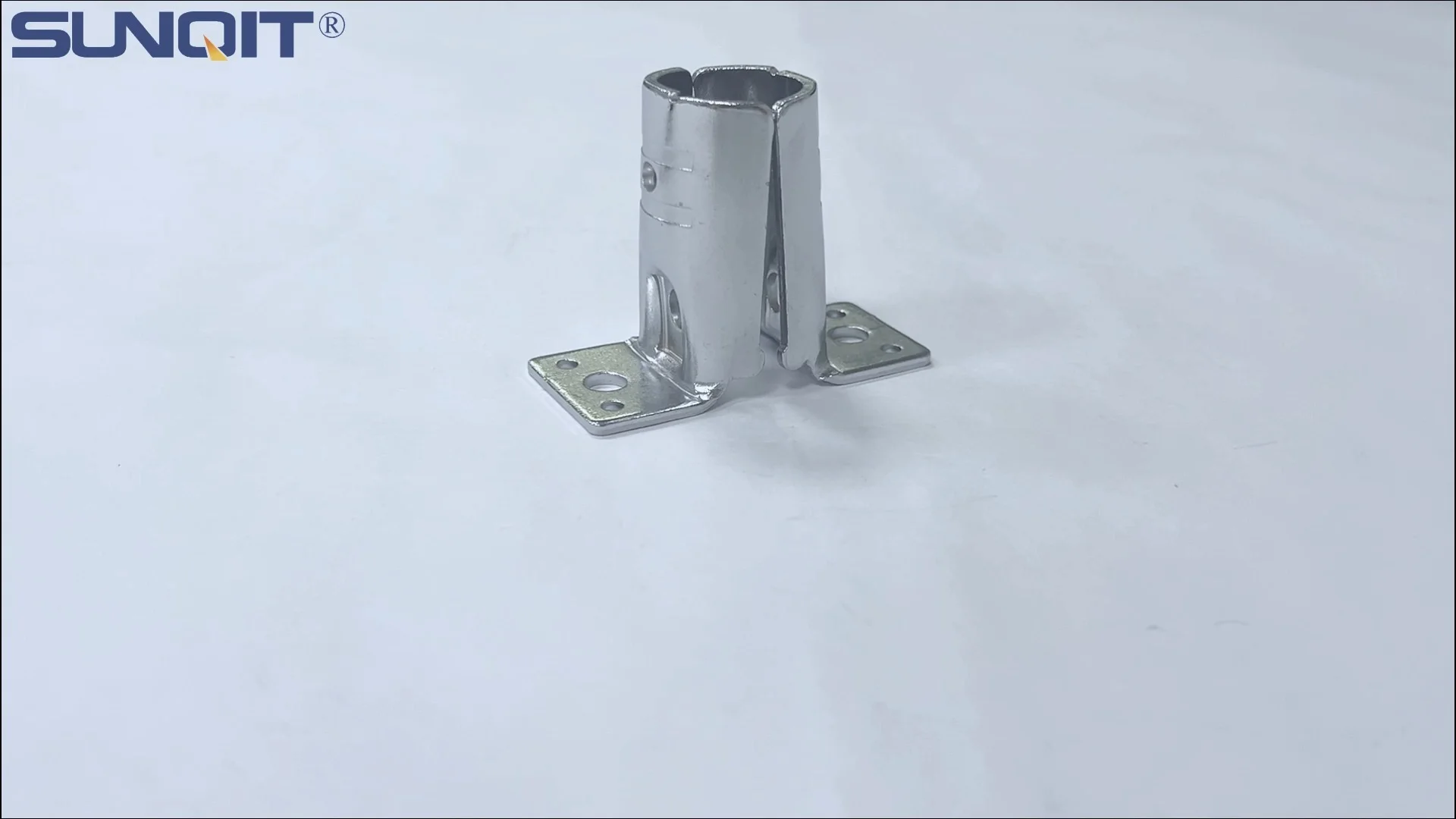
Vertical lean pipe joint is used for 28mm lean pipe fixed on ground and keep it stable.
Walk into any modern manufacturing facility, warehouse, or assembly plant, and you'll likely spot a network of lean pipe structures—workbenches, material racks, flow racks, and turnover trolleys—that keep operations running like a well-oiled machine. These structures, built from interconnected lean pipes and joints, are the backbone of lean systems, designed to maximize efficiency, minimize waste, and adapt to evolving production needs. But here's the thing: the strength of any lean pipe structure depends almost entirely on one small but critical component: the joints. Whether you're building a lightweight material trolley or a heavy-duty workbench, choosing the right joint can mean the difference between a structure that stands the test of time and one that wobbles, bends, or even collapses under pressure.
In this article, we're diving deep into two of the most common joint types in lean pipe systems: vertical lean pipe joint chrome and plastic joints. We'll explore their design, material composition, and—most importantly—how they stack up when it comes to load capacity. By the end, you'll have a clear understanding of which joint is right for your specific application, whether you're outfitting a small workshop or scaling up a large-scale production line. Let's start by breaking down what makes these joints tick, and why load capacity isn't just a technical specification—it's a cornerstone of workplace safety, productivity, and long-term cost savings.
Understanding Lean Pipe Joints: The Unsung Heroes of Lean Systems
Before we compare vertical lean pipe joint chrome and plastic joints, let's take a step back and appreciate why joints matter so much in lean pipe systems. Lean pipes—typically made of steel, aluminum, or plastic—are hollow tubes that form the framework of structures like workbenches, flow racks, and conveyor systems. But on their own, pipes are just straight lines; it's the joints that connect them, allowing for the creation of angles, corners, and stable frameworks. Think of joints as the "glue" that holds the entire system together, transferring weight, absorbing vibrations, and maintaining structural integrity.
Joints come in all shapes and sizes, each designed for specific applications. Some are fixed, locking pipes into a rigid angle (like 90° or 45°), while others are swivel or rotating, allowing for adjustable structures. The vertical lean pipe joint chrome, as the name suggests, is a type of fixed joint designed to connect vertical lean pipes to horizontal or diagonal pipes, often used in workbenches and material racks where vertical support is critical. Plastic joints, on the other hand, are typically made from polymers like nylon or polypropylene and are favored for their lightweight design and cost-effectiveness.
But here's the critical question: when you're building a structure that needs to support heavy loads—say, a workbench holding 500 pounds of tools and components, or a flow rack loaded with automotive parts—how do these joints perform? Load capacity isn't just about how much weight a joint can "hold" in a lab test; it's about real-world durability, consistency, and safety. A joint that fails under load can lead to damaged equipment, production delays, or even workplace injuries. That's why choosing between vertical lean pipe joint chrome and plastic joints isn't just a matter of cost—it's a decision that impacts your team's daily work and your company's bottom line.
Vertical Lean Pipe Joint Chrome: Strength and Durability Defined
Let's start with the heavyweight contender: vertical lean pipe joint chrome. If you've ever seen a rugged workbench in a automotive repair shop or a material rack in a steel mill, chances are it's held together with chrome-plated steel joints. These joints are built for one primary purpose: to withstand heavy loads and harsh environments without bending or breaking.
So, what makes vertical lean pipe joint chrome so strong? Let's break it down by material and design. First, the base material is typically high-grade steel—often carbon steel or alloy steel—known for its tensile strength and rigidity. Then, it's coated with a layer of chromium through electroplating, a process that bonds chromium molecules to the steel surface. This chrome plating serves two key functions: it enhances corrosion resistance (critical in factories where moisture, oils, or chemicals are present) and adds a smooth, wear-resistant finish that reduces friction during installation and use.
The design of vertical lean pipe joint chrome is equally important. Most chrome joints feature a multi-point connection system, with two or more sleeves that slide over the ends of lean pipes and are secured with set screws or bolts. The sleeves are often reinforced with ribbing or thickened walls at stress points, like where the vertical pipe meets the horizontal pipe. Some designs even include internal threading or locking mechanisms that create a tight, vibration-resistant bond between pipes. This attention to detail means that when you torque down the set screws, the joint doesn't just "grip" the pipe—it forms a unified structure where the load is distributed evenly across the entire connection.
To put this in perspective, let's talk numbers. While load capacity can vary by manufacturer and joint size, most vertical lean pipe joint chrome models are rated to support between 500 and 1,500 pounds per joint in shear strength (the force that tries to slide the joint apart) and 800 to 2,000 pounds in compressive strength (the force that tries to crush the joint). For context, a standard workbench with four vertical legs—each using a chrome joint—could theoretically support up to 6,000 pounds (if each joint handles 1,500 pounds). Of course, real-world capacity is lower due to factors like pipe diameter and installation quality, but it's clear these joints are built for heavy lifting.
Another advantage of chrome-plated steel joints is their resistance to environmental stressors. Unlike plastic, steel doesn't warp in high temperatures (chrome-plated joints can handle temperatures up to 300°F or more), and it's impervious to most industrial chemicals, oils, and solvents. This makes them ideal for use in manufacturing plants, automotive facilities, or warehouses where conditions are less than pristine. Even in humid environments, the chrome plating prevents rust and corrosion, ensuring the joint maintains its strength over time.

Plastic Joints: Lightweight, Cost-Effective, but Limited by Material
Now, let's turn to plastic joints—the underdog in the load capacity battle, but a popular choice for many lean system applications. Plastic joints are often made from polymers like nylon, polypropylene, or polycarbonate, chosen for their lightweight nature, low cost, and versatility. If you've ever assembled a DIY shelving unit at home, you're probably familiar with plastic joints—they're easy to snap together, require no special tools, and come in a range of colors to match your workspace.
In industrial settings, plastic joints are commonly used in lightweight lean pipe structures, such as temporary workbenches, mobile trolleys for small parts, or flow racks for electronics components. Their appeal lies in their affordability: plastic joints typically cost 30% to 50% less than chrome-plated steel joints, making them a budget-friendly option for startups or facilities with low-load requirements. They're also non-conductive, which is a plus in electronics manufacturing where static electricity can damage sensitive components. And because they're lightweight, they're easier to transport and install—no need for heavy tools or lifting equipment.
But when it comes to load capacity, plastic joints have clear limitations. Let's start with material properties. While modern plastics are stronger than ever, they simply can't match the tensile strength of steel. Nylon, for example, has a tensile strength of around 10,000 to 15,000 psi, compared to carbon steel's 60,000 to 80,000 psi. This means plastic joints are more prone to deformation under heavy loads. Over time, the constant stress of supporting weight can cause the plastic to "creep"—a gradual deformation that weakens the joint and reduces its load capacity.
Design also plays a role here. Most plastic joints use a friction-fit or snap-lock design, where the joint sleeves are slightly smaller than the lean pipe, creating a tight grip when the pipe is inserted. While this works for light loads, it's less secure than the bolted or threaded connections of chrome joints. Under heavy weight or vibration, plastic joints can loosen, leading to wobbling structures or even collapse. Some plastic joints include metal inserts (like brass or steel) to reinforce the connection points, but this adds cost and reduces the weight advantage.
So, what's the typical load capacity of a plastic joint? Most industrial-grade plastic joints are rated for 100 to 300 pounds per joint in shear strength and 150 to 400 pounds in compressive strength. That's significantly lower than chrome joints. For example, a workbench with four plastic joints might only support 400 to 1,200 pounds total—fine for light tools or small parts, but risky for heavy machinery or bulk materials.
Environmental factors also take a toll on plastic joints. Unlike chrome-plated steel, plastic is sensitive to temperature extremes. High heat (above 150°F) can cause plastic to soften and lose strength, while cold temperatures can make it brittle and prone to cracking. Chemical exposure is another issue: oils, solvents, and even some cleaning agents can degrade plastic over time, leading to premature failure. In humid environments, plastic can absorb moisture, which weakens the material and promotes mold growth in some cases.

Load Capacity Showdown: Chrome vs. Plastic Joints (With Data)
To truly understand how vertical lean pipe joint chrome and plastic joints compare, let's put them head-to-head in a load capacity showdown. We'll look at key metrics like maximum load, durability under stress, and real-world performance, with data from industry tests and case studies.
| Performance Metric | Vertical Lean Pipe Joint Chrome | Plastic Joints (Nylon/Polypropylene) |
|---|---|---|
| Shear Load Capacity (per joint) | 500–1,500 lbs | 100–300 lbs |
| Compressive Load Capacity (per joint) | 800–2,000 lbs | 150–400 lbs |
| Maximum Operating Temperature | Up to 300°F | Up to 150°F (varies by plastic type) |
| Corrosion Resistance | High (chrome plating prevents rust) | Medium (resistant to some chemicals, but not all) |
| Expected Lifespan (in industrial use) | 10–15 years | 3–5 years (with regular use) |
| Cost (per joint, average) | $15–$30 | $5–$15 |
The table above tells a clear story: when it comes to raw strength and durability, vertical lean pipe joint chrome outperforms plastic joints by a wide margin. But numbers alone don't tell the whole story—let's look at real-world scenarios where this difference matters.
Take, for example, a manufacturing facility that uses workbenches to assemble heavy machinery parts. Each workbench holds tools, a torque wrench (weighing 15 lbs), a parts bin (50 lbs), and a component (200 lbs)—total weight per workbench: around 265 lbs. If the workbench has four legs, each joint needs to support about 66 lbs. In this case, plastic joints (rated for 100–300 lbs) would work—at first. But over time, the constant stress of daily use, combined with occasional impacts (like dropping a tool), could cause the plastic joints to creep. After a year or two, the workbench might start to wobble, requiring frequent tightening or replacement of joints. In contrast, a chrome joint would handle this load with ease, requiring minimal maintenance over a decade.
Now, imagine a heavier load: a material rack in a warehouse storing metal sheets, each weighing 100 lbs, with 10 sheets per shelf and 3 shelves. Total weight: 3,000 lbs, supported by 4 vertical posts (8 joints total). Each joint would need to support 375 lbs. Here, plastic joints (max 300 lbs) would fail immediately—likely during loading—risking injury and damage. Chrome joints (min 500 lbs) would handle this load comfortably, with room to spare for additional weight.
Another critical factor is temperature. In a food processing plant where workbenches are near ovens or steam cleaners, temperatures can reach 200°F. Plastic joints would soften and lose strength, leading to structural failure. Chrome joints, with their 300°F tolerance, would remain stable.
Beyond Load Capacity: Other Factors to Consider
While load capacity is the star of the show, there are other factors to weigh when choosing between vertical lean pipe joint chrome and plastic joints. Let's explore a few that might influence your decision, depending on your workspace and needs.
Installation and Adjustability: Plastic joints are often praised for their ease of installation. Most snap onto lean pipes without tools, and some feature quick-release levers for easy reconfiguration. This is a big plus if you need to frequently rearrange your workspace—say, for seasonal production changes. Chrome joints, on the other hand, require tools (like hex keys or wrenches) to tighten set screws, and once installed, they're harder to adjust without loosening the entire structure. That said, the tight, bolted connection of chrome joints means they're less likely to loosen over time, reducing the need for constant readjustment.
Weight of the Structure: If you're building a mobile trolley that needs to be pushed around the factory floor, the weight of the joints adds up. Plastic joints are lightweight—typically 2 to 4 ounces each—while chrome joints can weigh 8 to 12 ounces each. For a trolley with 10 joints, that's a difference of 5 to 10 pounds, which can make a big difference in maneuverability. However, if the trolley is carrying heavy loads, the added weight of chrome joints is a small price to pay for stability.
Static Electricity and Conductivity: In industries like electronics manufacturing or pharmaceutical production, static electricity is a major concern. Plastic joints are non-conductive, meaning they won't transfer static charges to sensitive components. Chrome joints, being metal, are conductive, so they may require additional grounding measures (like anti-static mats or grounding wires) to prevent static damage. This isn't a dealbreaker, but it's an extra step to consider.
Long-Term Cost vs. Short-Term Savings: Plastic joints are cheaper upfront, but they have a shorter lifespan—3 to 5 years in industrial use, compared to 10 to 15 years for chrome joints. If you factor in replacement costs and downtime from joint failures, chrome joints often end up being more cost-effective over time. For example, a set of 10 plastic joints costs $50 initially but needs replacement every 4 years ($12.50/year). A set of 10 chrome joints costs $150 but lasts 12 years ($12.50/year)—the same annual cost, but with no downtime from failures. In high-load environments, the savings are even greater, as plastic joint failures can lead to damaged products or worker injuries.
Real-World Applications: When to Choose Chrome vs. Plastic
To bring this all together, let's look at specific scenarios where vertical lean pipe joint chrome or plastic joints are the better choice. By matching the joint type to your application, you can ensure safety, efficiency, and cost-effectiveness.
Choose Vertical Lean Pipe Joint Chrome When:
- You're building heavy-duty structures: Workbenches for automotive assembly, material racks for steel parts, or conveyor systems for large components all require the strength of chrome joints. For example, an automotive plant's engine assembly workbench, which holds engines weighing 300+ lbs, needs joints that can handle constant stress without deforming.
- Your environment is harsh: Factories with high temperatures, moisture, or exposure to chemicals (like oil refineries or metalworking shops) benefit from chrome's corrosion and heat resistance. A food processing facility using steam cleaning would see plastic joints degrade quickly, but chrome joints would hold up.
- Longevity is key: If you want a structure that lasts 10+ years with minimal maintenance—like a permanent material storage rack in a warehouse—chrome joints are the way to go. They'll withstand daily use, vibrations, and occasional impacts without losing strength.
Choose Plastic Joints When:
- Loads are light and temporary: Temporary workbenches for trade shows, mobile trolleys for office supplies, or flow racks for small electronics (like circuit boards) are perfect for plastic joints. A startup's prototype workshop, where structures are rearranged monthly, can save money with plastic joints.
- Non-conductivity is required: Electronics manufacturing cleanrooms, where static electricity can ruin microchips, need non-conductive joints. Plastic joints eliminate the risk of static transfer, making them a safe choice.
- Budget is a top priority: If you're a small business with limited funds and low-load needs—like a boutique workshop making custom furniture—plastic joints offer a affordable way to build basic lean structures without breaking the bank.
One company that learned this lesson the hard way is a mid-sized electronics manufacturer we worked with a few years back. They initially used plastic joints for their circuit board assembly workbenches to save costs. For the first six months, everything worked fine. But as production ramped up, they added more tools and components to each workbench, pushing the load past the plastic joints' limits. One day, a workbench collapsed, damaging $10,000 worth of circuit boards and causing a 4-hour production delay. After switching to vertical lean pipe joint chrome, they haven't had a single joint failure in three years—and the upfront cost was offset by the savings from avoided downtime and damaged goods.
Maintaining Your Joints: Tips for Longevity
No matter which joint type you choose, proper maintenance is key to maximizing load capacity and lifespan. Here are some simple tips to keep your lean pipe joints in top shape:
For Chrome Joints:
- Check set screws regularly: Vibrations from machinery or daily use can loosen set screws over time. Tighten them with a hex key every 3–6 months to ensure a secure connection.
- Clean and lubricate: Wipe down chrome joints with a damp cloth to remove dirt and oils, which can trap moisture and cause pitting. For moving parts (like swivel joints), apply a light machine oil to reduce friction.
- Inspect for corrosion: While chrome resists rust, scratches or chips in the plating can lead to corrosion. Touch up damaged areas with chrome spray paint to prevent further deterioration.
For Plastic Joints:
- Avoid over-tightening: Plastic can crack if set screws are tightened too much. Use a torque wrench to apply the manufacturer-recommended torque (usually 10–15 in-lbs).
- Keep away from heat sources: Don't place plastic-jointed structures near ovens, heaters, or direct sunlight, as high temperatures can cause warping.
- replace worn joints promptly: If you notice cracks, deformation, or looseness, replace the joint immediately. Delaying replacement increases the risk of collapse.
Conclusion: Choosing the Right Joint for Your Lean System
At the end of the day, the choice between vertical lean pipe joint chrome and plastic joints comes down to one question: what do you need your lean pipe structure to do? If it's to support heavy loads, withstand harsh conditions, and last for years, chrome joints are the clear winner. They offer unmatched strength, durability, and peace of mind, even with a higher upfront cost. On the other hand, if you're building lightweight, temporary structures on a tight budget, plastic joints provide a practical, affordable solution—just be mindful of their load limits and lifespan.
But perhaps the most important takeaway is this: joints are the foundation of your lean system. Cutting corners on joint quality can lead to costly failures, downtime, or worse. By investing in the right joints for your needs, you're not just building a structure—you're building a safer, more efficient workspace where your team can focus on what matters: producing great products.
So, the next time you're planning a lean pipe project, take a moment to consider the joints. Ask yourself: What's the maximum load this structure will need to support? What's the environment like? How long do I need it to last? The answers will guide you to the right choice—whether it's the rugged reliability of vertical lean pipe joint chrome or the lightweight convenience of plastic joints. Either way, you'll be one step closer to a lean system that works as hard as your team does.