- Company Articles
- Products and Technology
- Product knowledge
- Vertical Lean Pipe Joint Chrome vs. Stainless Steel: Cost-Effectiveness Analysis

Vertical Lean Pipe Joint Chrome vs. Stainless Steel: Cost-Effectiveness Analysis
Related Product
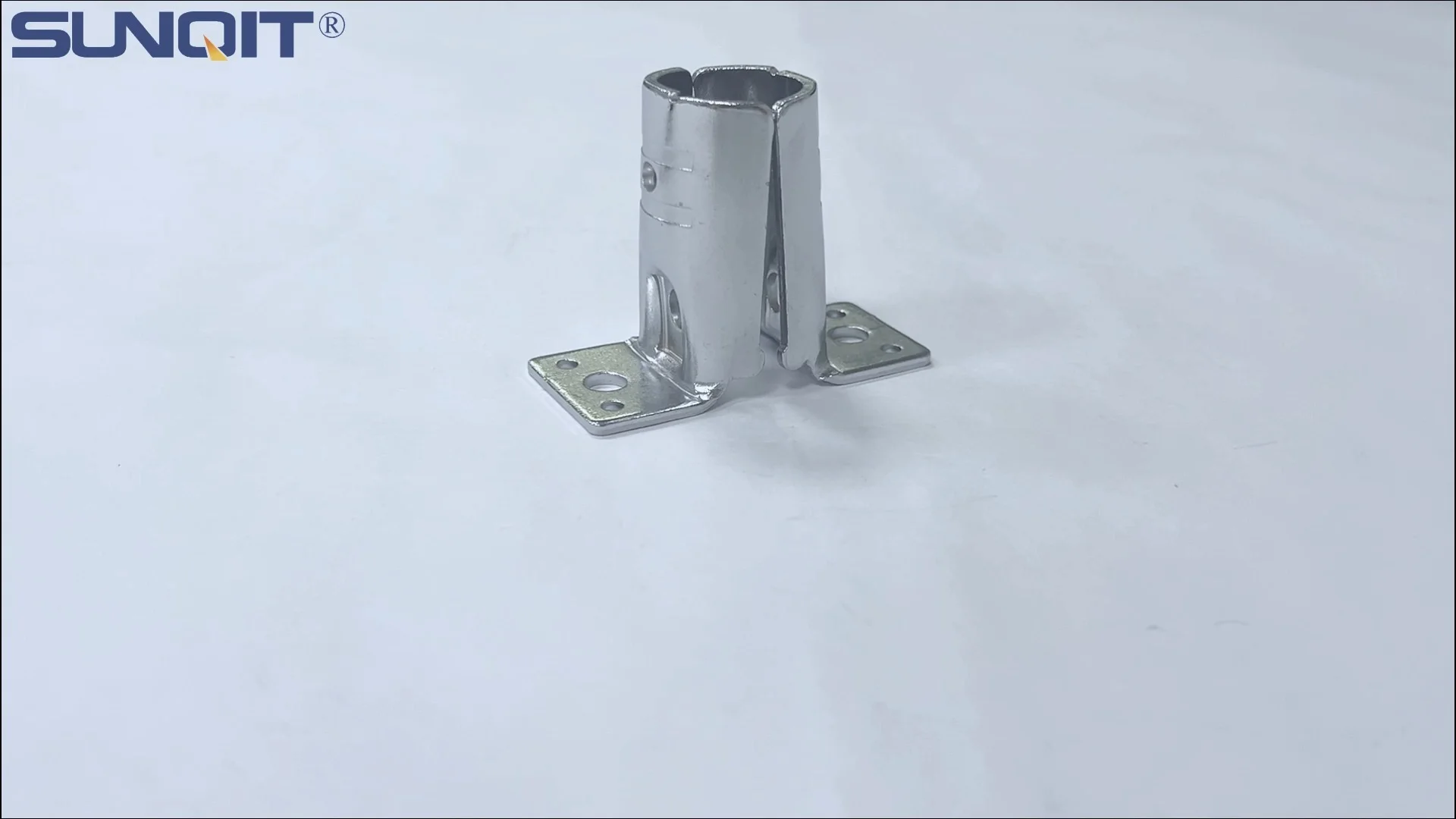
Vertical Lean Pipe Joint Chrome
Vertical lean pipe joint is used for 28mm lean pipe fixed on ground and keep it stable.
Introduction: The Backbone of Lean Systems
In the world of manufacturing and production assembly, where efficiency is king, lean systems have become the gold standard for streamlining operations. At the heart of these systems lies the humble yet critical component: the vertical lean pipe joint. These unassuming connectors are the glue that holds together lean pipe workbenches, flow racks, and turnover trolleys, ensuring that every part of the production line moves in harmony. But when it comes to choosing between vertical lean pipe joint chrome and stainless steel options, the decision isn't just about picking a part—it's about investing in long-term cost-effectiveness, durability, and reliability.
For plant managers, warehouse supervisors, and small business owners alike, the choice between chrome and stainless steel joints often boils down to one question: "Which option gives me the best value for my money?" It's a deceptively simple question with layers of complexity. Upfront costs, maintenance needs, environmental factors, and lifespan all play a role in determining true cost-effectiveness. In this article, we'll break down the differences between these two materials, explore their real-world performance, and help you decide which vertical lean pipe joint is the smarter investment for your operation.
Understanding Vertical Lean Pipe Joints: More Than Just a Connector
Before diving into the chrome vs. stainless steel debate, let's take a moment to appreciate why vertical lean pipe joints matter. These components are designed to connect lean pipes (often aluminum, steel, or coated steel) at vertical angles, providing structural support for everything from lightweight workbenches to heavy-duty material racks. A poorly chosen joint can lead to wobbly workstations, frequent breakdowns, and even safety hazards—all of which chip away at the efficiency lean systems aim to create.
Vertical lean pipe joints are part of a larger ecosystem of lean pipe and accessories, working alongside casters, roller tracks, and end caps to build flexible, customizable workspaces. Whether you're assembling a lean pipe workbench for electronics production or a flow rack for automotive parts, the joints you choose will directly impact how well that system performs over time. Now, let's zoom in on the two most popular materials for these joints: chrome-plated steel and stainless steel.

Chrome-Plated Vertical Lean Pipe Joints: The Budget-Friendly Contender
Chrome-plated vertical lean pipe joints are a staple in many workshops and manufacturing facilities, and for good reason. These joints start as steel cores, which are then coated with a thin layer of chromium through an electroplating process. The result is a shiny, corrosion-resistant surface that's both aesthetically pleasing and functional—at least, initially.
One of the biggest draws of chrome joints is their upfront affordability. Compared to stainless steel, chrome-plated options are often 20-30% cheaper, making them an attractive choice for small businesses or startups working with tight budgets. For operations that don't face extreme environmental conditions—think dry warehouses or indoor assembly lines with controlled temperatures—chrome joints can perform reliably for several years, especially with basic maintenance like regular cleaning to prevent dust buildup.
However, chrome plating has its limitations. The chromium layer is thin, typically only a few micrometers thick, which means it's prone to chipping or scratching if exposed to heavy impacts or abrasive materials. Once the plating is damaged, the underlying steel core becomes vulnerable to rust and corrosion, especially in humid or dusty environments. For example, a chrome joint in a food processing plant with high moisture levels might start showing signs of rust within 12-18 months, requiring replacement. In such cases, the "budget-friendly" upfront cost can quickly turn into a recurring expense.

Stainless Steel Vertical Lean Pipe Joints: The Durability Powerhouse
Stainless steel vertical lean pipe joints, on the other hand, are built for the long haul. Made from alloys containing at least 10.5% chromium, these joints are inherently resistant to corrosion, thanks to a passive oxide layer that forms on the surface when exposed to oxygen. Unlike chrome plating, this layer self-heals: if the surface is scratched, the chromium in the alloy reacts with oxygen to re-form the protective barrier, preventing rust from taking hold.
The upfront cost of stainless steel joints is higher—often 30-50% more than chrome-plated alternatives. But this initial investment buys something invaluable: peace of mind. In environments where moisture, chemicals, or temperature fluctuations are common—such as pharmaceutical labs, coastal manufacturing facilities, or outdoor warehouses—stainless steel joints can last 5-10 years or more with minimal maintenance. Even in harsh conditions, like a automotive workshop where oil and grease are constant companions, stainless steel holds up far better than chrome, reducing the need for frequent replacements.
Another advantage of stainless steel is its strength. The alloy's composition makes it more resistant to bending or warping under heavy loads, which is critical for vertical joints supporting weighty workbenches or loaded material racks. A stainless steel joint can handle higher weight capacities without deforming, ensuring the structural integrity of the entire lean system over time.
Head-to-Head Comparison: Chrome vs. Stainless Steel
To better understand the cost-effectiveness of these two materials, let's break down their key attributes side by side:
| Attribute | Vertical Lean Pipe Joint Chrome | Vertical Lean Pipe Joint Stainless Steel |
|---|---|---|
| Material Composition | Steel core with thin chromium plating | Alloy (10.5%+ chromium, nickel, and other metals) |
| Upfront Cost | Lower (20-30% cheaper than stainless steel) | Higher (30-50% more expensive than chrome) |
| Corrosion Resistance | Moderate (only if plating is intact); vulnerable to rust if scratched | High (self-healing oxide layer; resistant to moisture, chemicals, and salt) |
| Maintenance Needs | Regular cleaning; occasional re-plating if damaged | Minimal (occasional wiping to remove debris) |
| Expected Lifespan (Average Conditions) | 2-4 years | 5-10+ years |
| Expected Lifespan (Harsh Conditions) | 6-18 months | 3-7+ years |
| Ideal Environments | Dry, indoor spaces with low humidity and minimal abrasion | Humid, coastal, or chemical-exposed areas; heavy-use production lines |
| Total Cost of Ownership (5-Year Period) | Higher (due to replacement costs every 2-4 years) | Lower (one-time purchase with minimal upkeep) |
Total Cost of Ownership: Looking Beyond the Price Tag
When evaluating cost-effectiveness, upfront price is just the tip of the iceberg. The total cost of ownership (TCO) includes not only the initial purchase price but also maintenance, replacement, and downtime costs over the product's lifespan. Let's crunch the numbers for a hypothetical scenario to illustrate this:
Imagine a small manufacturing plant that needs 100 vertical lean pipe joints for its production line. Chrome-plated joints cost $5 each, while stainless steel joints cost $8 each. At first glance, chrome seems cheaper: $500 vs. $800 upfront. But let's factor in lifespan and replacement costs.
In a moderately humid environment, the chrome joints might need replacement every 3 years, while the stainless steel joints last 7 years. Over a 10-year period, the plant would need to buy chrome joints 4 times (years 0, 3, 6, 9) for a total cost of $500 x 4 = $2,000. The stainless steel joints, bought once at year 0, would cost $800 total. Even if we add minimal maintenance costs for stainless steel ($50 over 10 years) and higher maintenance for chrome ($200 over 10 years for cleaning and minor repairs), the TCO for chrome is $2,200 vs. $850 for stainless steel. That's a 61% savings with stainless steel over a decade.
But the savings don't stop there. Every time joints are replaced, production lines may need to shut down temporarily, leading to lost productivity. If a 4-hour shutdown costs $500 in labor and lost output, replacing chrome joints 4 times adds $2,000 in downtime costs—pushing the total chrome TCO to $4,200, compared to $850 for stainless steel. Suddenly, the "cheaper" option becomes far more expensive in the long run.
Real-World Case Studies: Lessons from the Field
Case Study 1: Coastal Manufacturing Plant Switches to Stainless Steel
A automotive parts manufacturer in Miami, Florida, was struggling with frequent replacements of chrome-plated vertical lean pipe joints. The coastal humidity was causing the chrome plating to chip and rust within 18 months, leading to wobbly workbenches and safety concerns. Each replacement cycle cost $3,000 in parts and 8 hours of downtime. After switching to stainless steel joints, the plant saw zero replacements in 5 years. The initial investment of $5,000 for stainless steel joints saved them $15,000 in replacement costs and $20,000 in downtime over that period.
Case Study 2: Small Workshop Opts for Chrome—With Caveats
A family-owned woodworking shop in Arizona, operating in a dry, indoor environment, chose chrome-plated joints to keep costs low. With minimal humidity and light usage (assembling small furniture pieces), their chrome joints lasted 4 years before needing replacement. The shop owner noted, "We don't have the budget for stainless steel right now, and since our workspace is climate-controlled, chrome works fine for us. We just plan for replacements every 3-4 years and set aside a small fund for it." For this low-intensity, controlled environment, chrome proved to be a practical, cost-effective choice.
Key Considerations for Your Decision
When choosing between vertical lean pipe joint chrome and stainless steel, ask yourself these questions to guide your decision:
1. What's your environment like? If your facility is humid, dusty, or exposed to chemicals, stainless steel is worth the investment. In dry, indoor spaces with light usage, chrome may suffice.
2. What's your budget timeline? If you need to minimize upfront costs and can plan for regular replacements, chrome might work. If you're looking for long-term savings and stability, stainless steel is the better bet.
3. What's the load capacity? For heavy-duty applications (e.g., supporting loaded material racks), stainless steel's superior strength reduces the risk of joint failure.
4. How much downtime can you afford? Frequent replacements mean more downtime. If your operation can't afford disruptions, stainless steel's longer lifespan will save you headaches.
Conclusion: Investing in Long-Term Value
Vertical lean pipe joints may seem like small components, but their impact on your lean system's performance and cost-effectiveness is huge. While chrome-plated joints offer lower upfront costs, they often become more expensive over time due to frequent replacements and maintenance, especially in harsh environments. Stainless steel joints, despite their higher initial price, deliver superior durability, lower maintenance, and longer lifespans—making them the more cost-effective choice for most operations in the long run.
At the end of the day, the decision should align with your specific needs, environment, and budget. For many businesses, especially those in manufacturing, warehousing, or production assembly, the investment in stainless steel vertical lean pipe joints pays off through reduced downtime, fewer replacements, and a more reliable lean system. After all, in the world of lean manufacturing, efficiency isn't just about speed—it's about building a system that stands the test of time.