- Company Articles
- Products and Technology
- Product knowledge
- Vertical Lean Pipe Joint Compatibility with Standard Lean Pipe Sizes

Vertical Lean Pipe Joint Compatibility with Standard Lean Pipe Sizes
Related Product
Vertical Lean Pipe Joint
Vertical lean pipe joint is used for 28mm lean pipe fixed on ground and keep it stable.
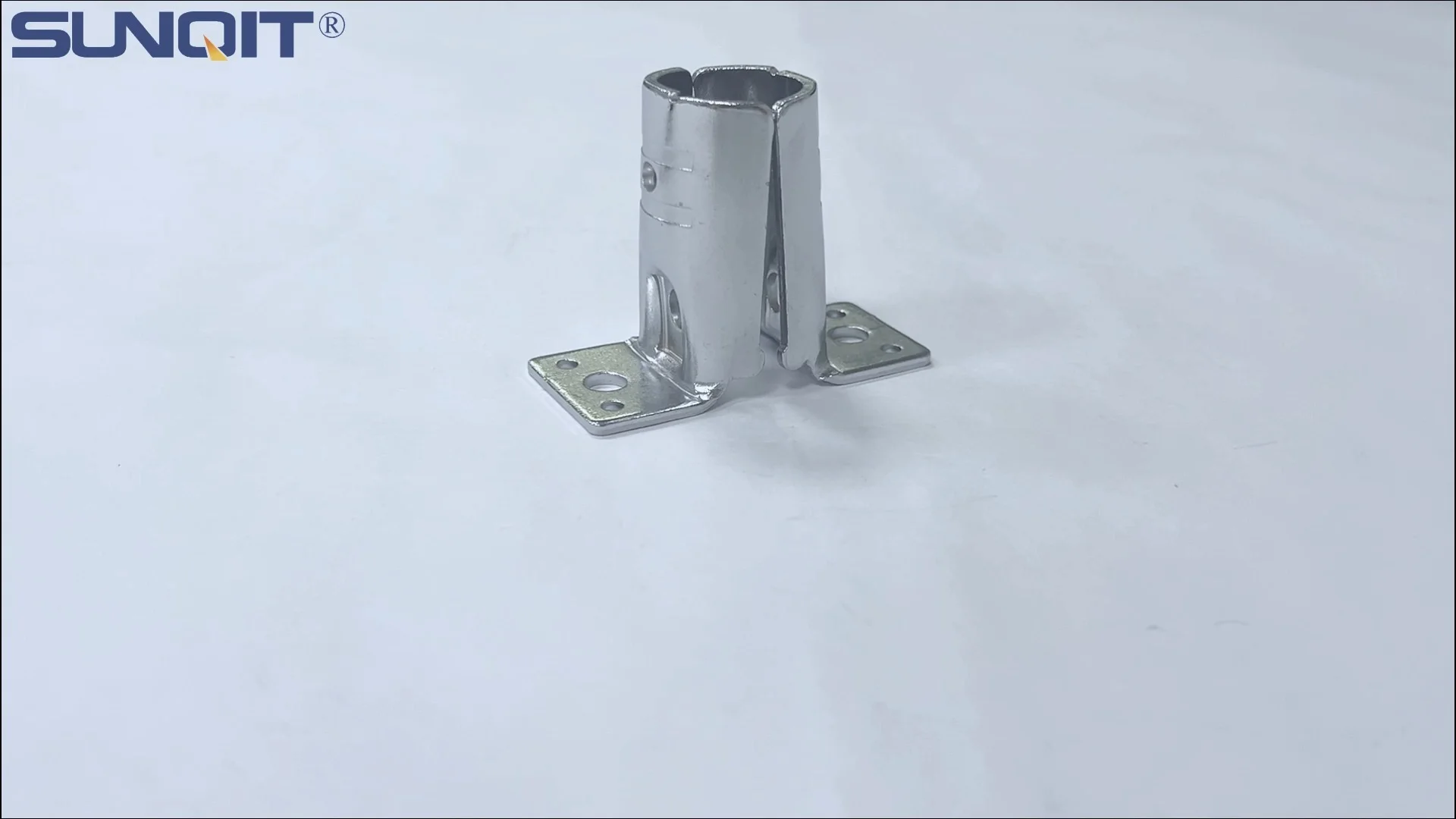
Introduction: The Backbone of Lean Systems
In the world of manufacturing and industrial workflow, lean system have become synonymous with efficiency, flexibility, and waste reduction. At the core of these systems lies a modular framework built from simple yet versatile components—pipes, joints, and accessories—that can be assembled, disassembled, and reconfigured to adapt to evolving production needs. Among these components, vertical lean pipe joints stand out as critical connectors, enabling the creation of vertical structures like workbenches, material racks, and turnover trolleys. But for these structures to be stable, functional, and long-lasting, compatibility between vertical joints and standard lean pipe sizes is non-negotiable. In this article, we'll dive deep into the world of vertical lean pipe joints, explore the standard sizes of lean pipes, and uncover the key factors that determine their compatibility—essential knowledge for anyone building or maintaining a lean system.
Understanding Vertical Lean Pipe Joints: More Than Just Connectors
Before we explore compatibility, let's first understand what vertical lean pipe joints are and why they matter. Simply put, these joints are mechanical components designed to connect lean pipes at vertical angles—typically 90 degrees, though some offer flexibility for other orientations. Think of them as the "elbows" and "T-joints" of the lean system world, but engineered to handle vertical loads, lateral stress, and the dynamic demands of industrial environments.
Vertical lean pipe joints come in a variety of designs, each tailored to specific applications. Some are fixed, providing rigid connections for heavy-duty structures, while others—like the internal rotatary aluminum joint —offer limited rotation, allowing for minor adjustments during assembly. Materials also vary: chrome-plated steel joints for durability, aluminum for lightweight applications, and plastic for cost-sensitive or non-conductive setups. For example, a vertical lean pipe joint chrome might be used in a warehouse material rack, where corrosion resistance and strength are priorities, while an aluminum joint could be preferred for a mobile workstation that needs to stay lightweight.
But perhaps the most important feature of any vertical joint is its ability to grip the pipe securely. This is typically achieved through clamping mechanisms, set screws, or friction-fit designs. A well-designed joint will distribute stress evenly across the pipe's surface, preventing cracks or slippage even under repeated use. As we'll see later, this grip is heavily influenced by how well the joint's dimensions match the pipe's size.

Standard Lean Pipe Sizes: Dimensions That Define Compatibility
Lean pipes—often called "lean tubes"—are the building blocks of any lean system, and their sizes are standardized to ensure interoperability across manufacturers. The most critical dimension here is the outer diameter (OD), as this directly dictates which joints can fit. Let's break down the most common standard sizes and materials, as they form the foundation of compatibility with vertical joints.
1. PE Coated Lean Pipe: The Workhorse of Lean Systems
PE coated lean pipe (polyethylene-coated steel pipe) is the most widely used type in lean systems, prized for its affordability, durability, and ease of use. Its standard outer diameter is 28mm (about 1.1 inches), though some manufacturers offer 30mm variants for heavier loads. The wall thickness of PE coated pipes typically ranges from 0.8mm to 2.0mm, with 1.2mm and 1.5mm being the most common. Thicker walls mean higher load capacity—for example, a 2.0mm PE coated pipe can support more weight than a 0.8mm one, making it ideal for material racks or workbenches with heavy tools.
2. Aluminum Lean Pipe: Lightweight and Versatile
Aluminum lean pipe has grown in popularity thanks to its lightweight nature and resistance to corrosion. Unlike PE coated pipes, aluminum pipes often feature T-slot profiles, which allow for easy attachment of accessories like shelves, brackets, and guide rails. Standard aluminum pipe sizes vary more than PE coated ones, with 30mm, 40mm, and 45mm outer diameters being common. Wall thicknesses range from 1.0mm to 3.0mm, with 1.5mm and 2.0mm being typical for general-purpose use. Aluminum pipes are often paired with aluminum joints (like the internal rotary aluminum joint) to maintain a lightweight, rust-resistant system—perfect for cleanrooms or assembly lines where mobility is key.
3. Stainless Steel Pipe Series: Hygiene and Durability
For environments where cleanliness is critical—such as food processing, pharmaceuticals, or medical device manufacturing—the stainless steel pipe series is the go-to choice. These pipes are resistant to rust, chemicals, and bacteria, making them easy to sanitize. Standard sizes for stainless steel lean pipes mirror PE coated pipes in many cases (28mm OD), with wall thicknesses from 1.0mm to 2.0mm. However, their smooth, non-porous surface means joints must be designed to grip tightly without damaging the metal—a task often handled by stainless steel-specific joints with rubberized clamping surfaces.
4. Aluminum Profile: Beyond Round Pipes
While not technically "pipes," aluminum extrusion profile (often called "aluminum profiles") are worth mentioning here, as they're frequently used alongside lean pipes in modern systems. These are rectangular or square in cross-section, with T-slots along their length for attaching accessories. Common profiles include 2020, 3030, and 4040 (referring to their width and height in mm). While they use different joints than round pipes (e.g., angle codes or T-slot connectors), their standardized sizes ensure compatibility with a wide range of accessories, making them a versatile addition to any lean setup.

Compatibility Factors: Why Size (and More) Matters
Now that we understand the standard sizes and materials of lean pipes, let's explore what makes a vertical lean pipe joint compatible with a given pipe. At first glance, it might seem like a simple matter of "does the pipe fit into the joint?" but in reality, compatibility depends on several key factors:
1. Outer Diameter (OD) Match
The most fundamental compatibility check is whether the pipe's outer diameter matches the joint's inner diameter (ID). For example, a vertical joint designed for 28mm PE coated pipe will have an ID of approximately 28mm, allowing it to snugly fit the pipe. If you try to use a 30mm aluminum pipe with this joint, the pipe will be too large, and you'll either struggle to insert it or risk cracking the joint. Conversely, a 25mm pipe in a 28mm joint will be loose, leading to instability and potential safety hazards.
Manufacturers typically specify the compatible pipe OD for each joint. For instance, a vertical lean pipe joint might list "28mm OD pipes" as its intended use, while an aluminum joint could be labeled for "30mm aluminum profile." Always check this specification first—never assume a joint will fit based on visual inspection alone.
2. Wall Thickness Tolerance
Even if the outer diameters match, the pipe's wall thickness can affect compatibility. A pipe with a thicker wall will have a smaller inner diameter, but more importantly, it will be stiffer and less prone to deformation. This can impact how well the joint's clamping mechanism works. For example, a joint with set screws might grip a 1.5mm wall pipe more securely than a 0.8mm wall pipe, as the thicker metal provides more material for the screws to bite into. Conversely, a friction-fit joint designed for thin-walled pipes might not clamp tightly enough on a thick-walled pipe, leading to slippage.
Tolerances also play a role here. Pipes and joints are manufactured with slight variations in size (e.g., a "28mm" pipe might actually measure 27.8mm or 28.2mm). A high-quality joint will account for these tolerances with a flexible clamping design, ensuring a snug fit across the pipe's thickness range.
3. Material Interaction
Compatibility isn't just about size—it's also about how the joint and pipe materials interact. For example, using a steel joint with an aluminum pipe can lead to galvanic corrosion, where the two metals react in the presence of moisture, causing rust and weakening the connection. To avoid this, manufacturers often coat steel joints with zinc or chrome, or recommend using aluminum joints with aluminum pipes. Similarly, plastic joints might degrade when exposed to harsh chemicals, so they're best paired with PE coated pipes in non-aggressive environments.
The stainless steel pipe series is a good example of material-specific compatibility. Stainless steel is resistant to corrosion, but it can still react with certain metals. For this reason, stainless steel pipes are often paired with stainless steel joints or plastic-coated steel joints to prevent galvanic corrosion in wet or humid settings.
4. Load Capacity Alignment
Even if a joint fits a pipe perfectly, it won't be compatible if its load capacity doesn't match the application's needs. A small plastic joint designed for 0.8mm PE coated pipe might work for a light-duty shelf, but it will fail under the weight of a 3-row material rack. Always check the joint's maximum load rating (typically listed in kg) and ensure it exceeds the expected weight of the structure and its contents. For example, a material rack B (3 row and 3 floor) —which might hold hundreds of kilograms of parts—would require heavy-duty vertical joints rated for at least 150-200kg per connection.

Practical Compatibility Guide: Vertical Joints and Pipe Sizes
To make compatibility easier to visualize, let's look at a practical guide to common vertical lean pipe joints and their compatible pipe sizes. The table below highlights some popular joints, their materials, and the pipes they're designed to work with:
| Joint Name | Material | Compatible Pipe OD (mm) | Wall Thickness Range (mm) | Max Load Capacity (kg) | Best For |
|---|---|---|---|---|---|
| Vertical Lean Pipe Joint Chrome | Chrome-plated steel | 28 | 1.0–2.0 | 180 | Heavy-duty material racks, warehouse shelving |
| Internal Rotary Aluminum Joint | Aluminum alloy | 30 | 1.2–1.5 | 120 | Mobile workstations, adjustable assembly lines |
| 90° Aluminum Pipe Joint Inside Connection | Aluminum alloy | 40 | 1.5–2.0 | 200 | Industrial workbenches, large-scale production lines |
| Plastic Vertical Joint (Economy) | ABS plastic | 28 | 0.8–1.2 | 50 | Light-duty shelves, small parts storage |
| Stainless Steel Vertical Joint | 304 Stainless Steel | 28 | 1.0–2.0 | 150 | Food processing, medical device manufacturing |
As you can see, each joint is engineered for a specific pipe size and application. For example, the internal rotary aluminum joint is designed for 30mm aluminum pipes with 1.2–1.5mm walls, making it ideal for mobile setups where adjustability is key. Meanwhile, the stainless steel vertical joint pairs with 28mm stainless steel pipes, ensuring hygiene and durability in sensitive environments.
It's also worth noting that some manufacturers offer "universal" joints designed to fit multiple pipe sizes, often through interchangeable inserts. While these can be convenient, they're generally less secure than dedicated joints, so use them only for light-duty applications where flexibility is more important than strength.
Real-World Applications: Compatibility in Action
To better understand how compatibility plays out in real settings, let's walk through a few common scenarios where vertical lean pipe joints and pipes work together:
Scenario 1: Building a Workbench E (Single Deck—Without Caster)
A workbench E (single deck-without caster) is a basic, stationary workstation used for assembly or inspection. To build this, you might use 28mm PE coated lean pipe (1.5mm wall) for the frame, paired with vertical lean pipe joints chrome for the corners. The joints' 28mm ID fits the pipe perfectly, and their 180kg load capacity easily supports the workbench top and tools. The chrome plating resists scratches from daily use, ensuring the workbench stays sturdy for years.
Scenario 2: Assembling a Material Rack B (3 Row and 3 Floor)
A material rack B (3 row and 3 floor) needs to hold heavy parts, so durability is critical. Here, 30mm aluminum lean pipe (2.0mm wall) is chosen for its strength-to-weight ratio, paired with 90° aluminum pipe joints inside connection. These joints are designed for 40mm OD pipes, but wait—30mm pipe won't fit! In this case, the assembler made a mistake, leading to loose connections and a wobbly rack. The solution? Switching to 30mm-specific aluminum joints ensures a tight fit, and the joints' 200kg load capacity handles the rack's weight with ease.
Scenario 3: Creating a Cleanroom Workstation
In a pharmaceutical cleanroom, hygiene is paramount, so stainless steel pipe series (28mm OD, 1.5mm wall) is used. To avoid corrosion, stainless steel vertical joints are paired with the pipes. The joints' smooth, crevice-free design prevents bacterial buildup, and their friction-fit clamping ensures a secure connection without damaging the stainless steel surface. The result is a workstation that meets strict while remaining sturdy and adaptable.
Tips for Ensuring Compatibility: Avoiding Common Mistakes
Even with standardized sizes, compatibility issues can arise. Here are some tips to ensure your vertical lean pipe joints and pipes work together seamlessly:
- Stick to One Manufacturer (When Possible): Different brands might have slight variations in pipe OD or joint ID, even for "standard" sizes. Using a single lean pipe supplier for both pipes and joints reduces the risk of mismatches.
- Test Fit Before Assembly: Always test a joint with a pipe sample before full assembly. If it's too tight or too loose, swap it out—don't force it.
- Check Material Compatibility Charts: Most suppliers provide charts showing which joint materials work with which pipe materials (e.g., aluminum joints with aluminum pipes, stainless steel with stainless steel).
- Overengineer for Load: When in doubt, choose a joint with a higher load capacity than you think you need. It's better to have extra strength than to risk failure.
- Inspect Regularly: Over time, joints can loosen or pipes can wear. Periodically check connections and tighten set screws or replace worn joints to maintain compatibility.
Conclusion: Compatibility—The Key to Lean System Success
Vertical lean pipe joints and standard lean pipe sizes might seem like small details in the grand scheme of a lean system, but their compatibility is the foundation of a safe, efficient, and adaptable workspace. From the PE coated lean pipe of a basic workbench to the stainless steel pipe series of a cleanroom rack, every component relies on a precise fit between joint and pipe.
By understanding the standard sizes, materials, and compatibility factors outlined in this article, you can avoid costly mistakes, ensure your structures are built to last, and keep your lean system running smoothly. Whether you're a seasoned plant manager or a small business owner setting up your first assembly line, remember: when it comes to vertical lean pipe joints and pipes, compatibility isn't just a technicality—it's the key to unlocking the full potential of your lean system.