- Company Articles
- Products and Technology
- Product knowledge
- Vertical Lean Pipe Joints for Electronic Component Racks: Anti-Static Considerations

Vertical Lean Pipe Joints for Electronic Component Racks: Anti-Static Considerations
Related Product
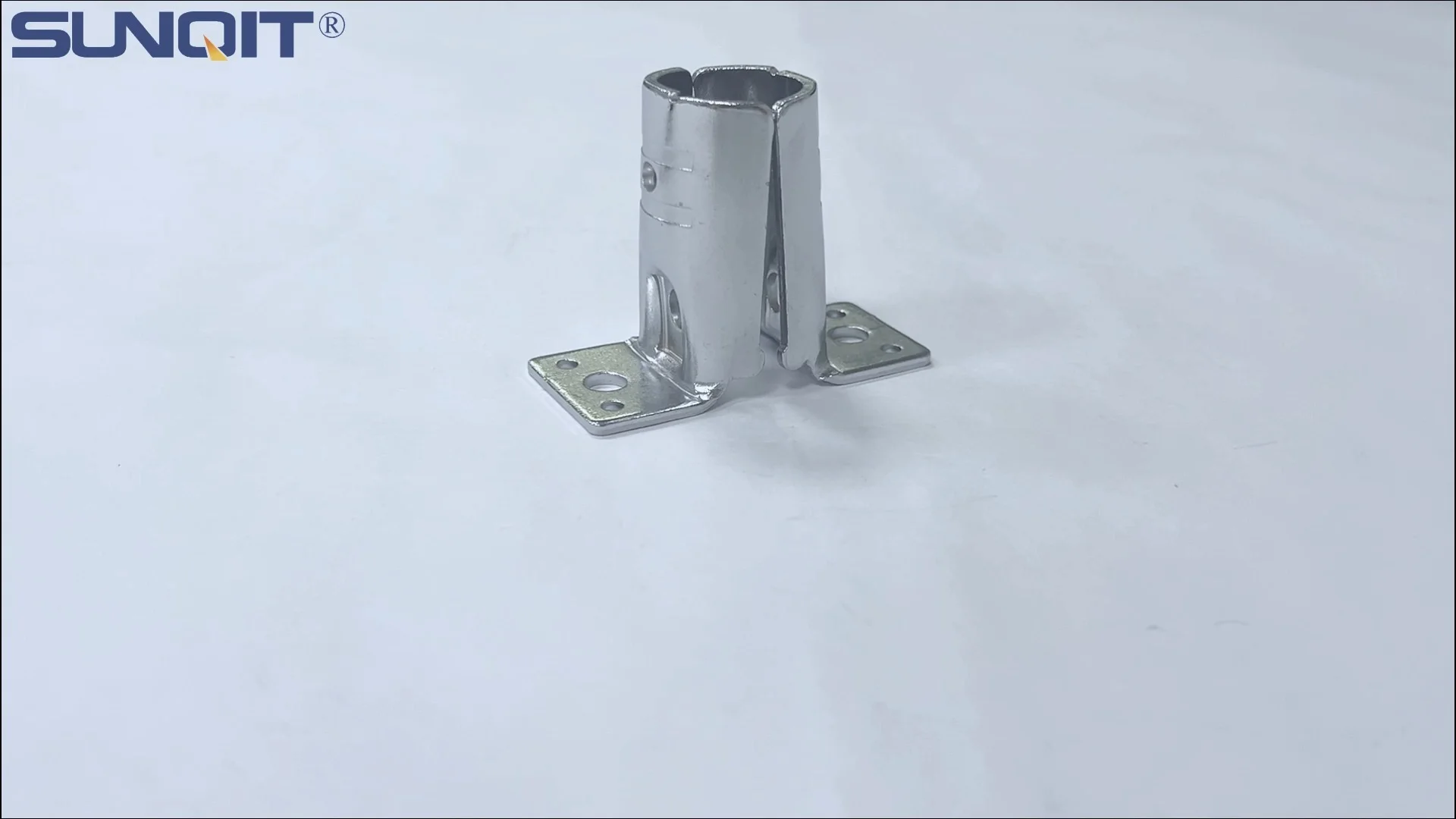
Vertical Lean Pipe Joint
Vertical lean pipe joint is used for 28mm lean pipe fixed on ground and keep it stable.
Walk into any electronics manufacturing facility, and you'll notice a quiet hero working behind the scenes: the humble component rack. These structures hold everything from tiny resistors to sensitive microchips, keeping production lines moving and components organized. But here's the thing—those racks aren't just metal and pipes. They're frontline soldiers in the battle against electrostatic discharge (ESD), a silent threat that can ruin thousands of dollars' worth of components in an instant. And at the heart of these racks? Vertical lean pipe joints. These unassuming connectors play a critical role in maintaining structural integrity and anti-static safety. Let's dive into why they matter, how they work, and what to consider when building or upgrading electronic component racks.
Understanding ESD: The Invisible Enemy in Electronics
First, let's talk about why ESD is such a big deal. Electrostatic discharge happens when two objects with different electrical charges come into contact, releasing a sudden flow of electricity. You've probably felt it yourself—zapping a doorknob after shuffling across a carpet. That zap is around 3,000 volts, but did you know a component like a microprocessor can be damaged by as little as 250 volts? Worse, some damage is "latent," meaning the component might work initially but fail later, causing product recalls or reliability issues.
In electronic manufacturing, ESD can come from anywhere: friction between components sliding on a rack, a technician's clothing, even the air itself. That's why every surface, tool, and piece of equipment in an ESD-protected area (EPA) needs to be designed to either prevent static buildup or safely dissipate it. And that's where component racks step in. They're not just storage—they're part of the ESD control system.
The Role of Racks in Component Safety: More Than Just Storage
Component racks are the backbone of organized production. They keep parts accessible, reduce clutter, and streamline workflows. But in an EPA, their job goes further. A well-designed rack should:
1. Prevent static buildup: Materials and design should minimize friction (a major static generator) between components and the rack.
2. Dissipate static charge: If static does build up, the rack should conduct it safely to the ground, not let it transfer to components.
3. Maintain structural stability: Wobbly racks mean moving parts, which mean more friction, more static, and higher risk of component damage or falls.
This is where vertical lean pipe joints enter the picture. These joints connect the horizontal and vertical pipes of the rack, holding everything together. A loose or poorly designed joint can create gaps where components catch, increasing friction. A non-conductive joint can block the path to ground, trapping static charge. And a weak joint can compromise the entire rack's stability, turning a simple storage solution into a safety hazard.

Vertical Lean Pipe Joints: Design and Anti-Static Functionality
Vertical lean pipe joints are the unsung heroes of rack construction. They come in various designs—fixed, rotating, internal, or external—but their core job is to connect vertical pipes (the "backbone" of the rack) to horizontal pipes (the shelves or rails where components rest). Let's break down why their design matters for ESD:
Material Choice: Traditional lean pipe joints were often made of plastic or non-conductive metals, which are cheap but terrible for ESD. Today, many joints are made with conductive materials like nickel-plated steel or aluminum. These materials ensure the joint itself doesn't act as an insulator. For example, a vertical lean pipe joint with a chrome finish (like the "180° fixed lean pipe joint chrome" in many supplier catalogs) offers better conductivity than a plain plastic joint, helping to channel static charge away from components.
Tightness and Fit: A loose joint is a static generator. When pipes wiggle, components on the rack shift, rubbing against each other or the rails. This friction creates static. High-quality vertical joints have precise threading or clamping mechanisms that hold pipes firmly in place. Look for joints with locking nuts or set screws that prevent loosening over time—even after repeated loading and unloading of components.
Compatibility with Lean Pipes: Joints don't work alone; they depend on the pipes they connect. Most modern racks use aluminum lean pipe, which is lightweight, strong, and conductive. Aluminum lean pipe pairs perfectly with conductive vertical joints because both materials allow static charge to flow through the rack and into the ground via grounding straps. If you mix a conductive joint with a non-conductive pipe (like a standard PE-coated lean pipe), you're creating a "break" in the ESD path—static can't dissipate, and components are at risk.

Materials Matter: Comparing Lean Pipe Options for ESD Safety
Not all lean pipes are created equal, and the pipe material directly impacts how well the rack handles ESD. Let's compare three common options: traditional PE-coated lean pipe, stainless steel pipe, and aluminum lean pipe. A quick table will help visualize the differences:
| Material | ESD Dissipation | Weight | Durability | Best For |
|---|---|---|---|---|
| PE-Coated Lean Pipe | Poor (insulating plastic coating traps charge) | Medium | Good (resistant to corrosion, but coating can chip) | Non-ESD environments (e.g., warehouse storage for non-electronic goods) |
| Stainless Steel Pipe | Fair (conductive, but heavy and rigid) | Heavy | Excellent (resists rust and wear) | Heavy-duty applications, but overkill for most electronics racks |
| Aluminum Lean Pipe | Excellent (high conductivity, forms continuous ESD path) | Lightweight | Very Good (resists corrosion, easy to clean) | Electronic component racks, ESD workstations, and mobile trolleys |
Aluminum lean pipe stands out here for ESD safety. Its conductivity ensures that any static charge on the rack or components flows through the pipes, into the vertical joints, and down to the ground (via grounding cables attached to the rack legs). Plus, it's lightweight, making racks easier to move (if needed) and reducing strain on vertical joints. For electronic components, aluminum lean pipe is often the gold standard.

Beyond Joints: Other Anti-Static Components to Consider
Vertical lean pipe joints are critical, but they're just one part of the anti-static puzzle. Let's look at other components that work with joints to keep racks safe:
Roller Tracks: Reducing Friction, Reducing Static
Many component racks use roller tracks to let components slide smoothly from one shelf to another. But standard plastic rollers can generate static as components glide over them. Instead, opt for roller track with ESD-safe wheels. For example, "40 steel roller track black ESD wheel" or "38 aluminum roller track black esd with side guide" (common options from suppliers) are designed to dissipate charge. These wheels are made with conductive materials that prevent static buildup as components move, working alongside vertical joints to maintain a continuous ESD path.
Caster Wheels: Mobility Without Isolation
Mobile racks (like turnover trolleys) need caster wheels, but regular plastic or rubber casters can isolate the rack from the ground, blocking static dissipation. Instead, use conductive caster wheel options. Look for casters with metal wheels or conductive rubber tires that maintain a ground connection even as the rack moves. Pair these with "caster install base" plates that bolt securely to the rack legs—another connection point that relies on vertical lean pipe joints for stability.
ESD Workstations: Integrating Racks into a Complete System
Many component racks are part of larger ESD workstations —benches where technicians assemble or test electronics. These workstations include anti-static mats, grounding wrist straps, and ionizers, but the rack itself must integrate seamlessly. For example, a "workbench E (single deck-without caster)" might have a rack mounted underneath, using vertical lean pipe joints to connect to the bench frame. The joints ensure the rack is grounded through the workstation, so static from components on the rack flows into the bench and then to the ground. It's a chain reaction—every link (joints, pipes, casters) must be conductive to keep the system working.
Installation and Maintenance: Keeping Racks ESD-Safe Over Time
Even the best vertical lean pipe joints and aluminum lean pipe will fail if installed or maintained poorly. Here's what to keep in mind:
Proper Grounding: A rack is only as good as its ground connection. Attach grounding straps to the rack legs (near the bottom, where they can connect to floor grounding points) and test the resistance regularly with an ESD meter (aim for 10^6 to 10^9 ohms—low enough to dissipate charge, high enough to prevent electric shock). Vertical joints should be part of this path—if a joint is loose or corroded, it will increase resistance, blocking static flow.
Tightening Joints: Over time, vibration from loading/unloading or moving the rack can loosen vertical lean pipe joints. Schedule monthly checks to tighten set screws or nuts. A quick turn with a wrench can prevent a loose joint from causing friction and static buildup.
Cleaning: Dust and debris act as insulators, blocking ESD paths. Wipe down aluminum lean pipe and joints with a conductive cleaning solution (avoid harsh chemicals that can damage conductive coatings). Pay extra attention to roller tracks—dust in the wheels can cause components to stick, increasing friction.
Replacing Worn Parts: If a vertical joint is cracked, corroded, or no longer tightens properly, replace it immediately. The same goes for roller track wheels that are worn or caster wheels that lose conductivity. Don't skimp on replacement parts—using off-brand or non-conductive joints can undo all your ESD efforts.
Real-World Example: How a Manufacturer Solved ESD Issues with Vertical Joints
Let's look at a hypothetical (but realistic) scenario. A mid-sized electronics manufacturer was struggling with high failure rates in their final product testing. After investigating, they found ESD damage in nearly 15% of components—costing them over $100,000 annually. Their old racks used PE-coated lean pipe with plastic vertical joints, and the roller tracks had standard white wheels. The solution? They replaced the PE pipes with aluminum lean pipe, swapped plastic joints for chrome-plated vertical lean pipe joints, and upgraded to black ESD roller track wheels. They also added conductive caster wheels to mobile racks and installed better grounding. Within three months, ESD-related failures dropped to 2%. The key takeaway? Upgrading joints and materials doesn't just fix ESD—it saves money and improves product reliability.
Choosing a Supplier: What to Look For
Not all suppliers offer the same quality when it comes to ESD-safe components. When shopping for vertical lean pipe joints, aluminum lean pipe, or roller track, ask these questions:
1. Do you provide ESD test reports for your products? Reputable suppliers will have data on surface resistance and conductivity for joints, pipes, and wheels.
2. Can you help design a complete ESD system? A good supplier won't just sell you parts—they'll advise on pipe-joint compatibility, grounding, and integration with ESD workstations.
3. What's your lead time for custom components? If you need a specific vertical joint or roller track size, make sure the supplier can deliver without long delays.
Remember, cheap parts often cost more in the long run. Investing in high-quality vertical lean pipe joints and aluminum lean pipe from a trusted supplier (like those specializing in "lean pipe workbench supplier" or "esd workstation supplier" services) is an investment in your products' safety.
Conclusion: Vertical Joints—Small Parts, Big Impact
When it comes to electronic component racks, vertical lean pipe joints are easy to overlook. But as we've seen, they're essential for both structural stability and ESD safety. By choosing conductive materials (like aluminum lean pipe and chrome-plated joints), pairing them with ESD-safe accessories (roller track, caster wheels), and maintaining proper installation, you can significantly reduce the risk of static damage. In the world of electronics manufacturing, where even a tiny static spark can derail production, these small components make a big difference. So next time you walk past a component rack, take a second look at those vertical joints—they're working harder than you think.