- Company Articles
- Products and Technology
- Product knowledge
- Vertical Lean Pipe Joints for Flexible Production Lines: Adaptability Features

Vertical Lean Pipe Joints for Flexible Production Lines: Adaptability Features
Related Product
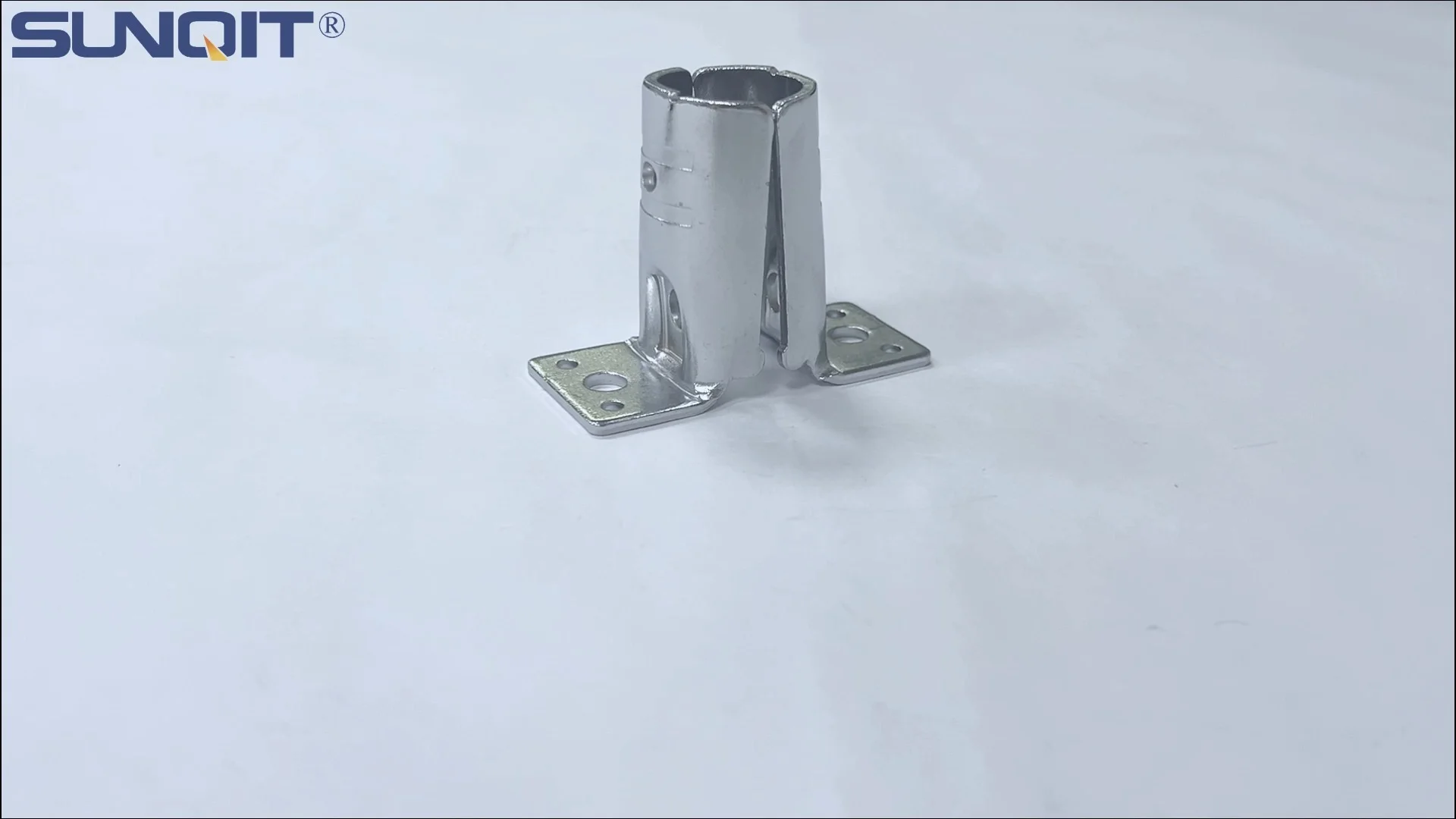
Vertical Lean Pipe Joint
Vertical lean pipe joint is used for 28mm lean pipe fixed on ground and keep it stable.
In the fast-paced world of modern manufacturing, where customer demands shift overnight and product lifecycles grow shorter by the day, flexibility isn't just a buzzword—it's the backbone of survival. Production lines that once thrived on rigid, one-size-fits-all setups now struggle to keep up. Enter the unsung heroes of adaptable manufacturing: vertical lean pipe joints. These small but mighty components are the quiet architects behind the flexible, reconfigurable systems that power today's most efficient factories. Whether you're building a workbench for assembly, a flow rack for material handling, or a turnover trolley for intra-factory transport, vertical lean pipe joints are the glue that holds lean systems together—literally and figuratively. In this article, we'll dive deep into what makes these joints so indispensable, exploring their adaptability features, real-world applications, and why they've become a cornerstone of lean manufacturing.
What Are Vertical Lean Pipe Joints, Anyway?
Before we unpack their adaptability, let's start with the basics: What exactly is a vertical lean pipe joint? At its core, it's a connector designed to join lean pipes—hollow tubes made from steel, aluminum, or plastic-coated materials—in vertical configurations. Unlike traditional welding or permanent fasteners, these joints allow for tool-free (or minimal-tool) assembly, making them ideal for structures that need to evolve with changing production needs. Think of them as the Lego bricks of manufacturing: simple, versatile, and infinitely reconfigurable.
Vertical lean pipe joints come in various materials, from zinc-plated steel for heavy-duty applications to lightweight aluminum for environments where portability matters. Many are also coated with PE (polyethylene) to resist corrosion, scratches, and wear—critical in busy factory floors where metal-on-metal contact and exposure to oils or coolants are common. But what truly sets them apart isn't just their build; it's their ability to turn a collection of pipes and accessories into a system that can grow, shrink, or transform with your business.
The Adaptability Features That Make Vertical Lean Pipe Joints Indispensable
Adaptability is more than just "being able to change"—it's about changing quickly, cost-effectively, and without sacrificing performance. Vertical lean pipe joints excel in this area, thanks to a handful of key features that make them the go-to choice for lean system designers and plant managers alike.
1. Modularity: Build, Break, Rebuild—No Welding Required
Imagine trying to rearrange a bookshelf that's been glued to the wall. Frustrating, right? Now imagine that same bookshelf, but every shelf and upright is connected with clips that pop on and off in seconds. That's the modularity of vertical lean pipe joints. Unlike welded structures, which are fixed in place once built, joints allow you to disassemble a workbench or flow rack, swap out components, and reassemble it into something entirely new—all without a blowtorch or a team of contractors.
Take, for example, a electronics manufacturer that suddenly needs to switch from assembling smartphones to tablets. Their old assembly workbenches, built with fixed wooden frames, are too low for the larger tablet screens, forcing workers to hunch over and slow down. With vertical lean pipe joints, though, the solution is simple: loosen the joints, adjust the height of the vertical pipes, re-tighten, and voilà—workbenches that fit the new product. No downtime, no wasted materials, and no extra costs beyond a few minutes of labor. That's the power of modularity.
2. Compatibility: Play Well With Others (Pipes, Accessories, and All)
A connector is only as good as the components it can connect. Vertical lean pipe joints shine here because they're designed to work seamlessly with a wide range of lean pipes and accessories—making them a versatile choice for almost any setup. Whether you're using 2.0mm PE-coated lean pipe for a lightweight trolley, stainless steel pipe for a cleanroom environment, or aluminum lean pipe for a corrosion-resistant workbench, vertical joints can handle it.
But their compatibility doesn't stop at pipes. They also pair effortlessly with the "extras" that make lean systems functional: casters for mobility, roller tracks for smooth material flow, and even accessories like aluminum honeycomb panels for workbench surfaces. For instance, if you need to add a roller track to a flow rack to speed up material picking, vertical joints provide built-in mounting points to attach the track guides—no need for custom brackets or modifications. This cross-compatibility means you can mix and match components from different suppliers, reducing reliance on a single vendor and keeping costs competitive.
3. Durability: Tough Enough for the Factory Floor (But Gentle on Your Budget)
Adaptability doesn't mean sacrificing strength. Vertical lean pipe joints are built to withstand the daily grind of manufacturing—think heavy loads, constant vibration, and the occasional bump from a forklift. Most are made from high-grade steel or aluminum, with reinforced stress points to handle vertical loads of up to 500kg or more, depending on the model. PE-coated joints add an extra layer of protection, resisting dents and scratches that could weaken the structure over time.
Consider a automotive parts warehouse using flow racks built with vertical lean pipe joints to store heavy engine components. Each shelf holds 400kg of parts, and workers are constantly sliding bins in and out, causing minor impacts. Over time, a cheaper plastic joint might crack or loosen, but a steel vertical joint? It keeps the rack stable, ensuring parts stay secure and workers stay safe. And because they're durable, these joints rarely need replacement—saving you money on maintenance and reducing downtime from unexpected failures.
4. Ease of Assembly: No Expertise Required (Really)
One of the biggest barriers to flexibility in manufacturing is the time and skill required to reconfigure equipment. Welding requires certified professionals; custom metal fabrication takes days. Vertical lean pipe joints, by contrast, are designed for "anyone, anywhere" assembly. Most use a simple hex key or a wrench to tighten, and many newer models feature quick-lock mechanisms that require no tools at all. Even a team with no prior experience can assemble a basic workbench or flow rack in under an hour.
Sarah, a production supervisor at a medical device plant, recalls her first experience with vertical lean pipe joints: "We needed a temporary packing station for a rush order, and our maintenance team was swamped. I grabbed two new hires, a box of pipes, and a handful of vertical joints, and we built the station ourselves in 45 minutes. It wasn't pretty, but it worked—and when the rush was over, we took it apart and stored the parts for next time. With traditional tools, that would have taken a full day and a carpenter." That ease of use isn't just convenient; it empowers frontline workers to solve problems on the spot, turning them into active participants in optimizing the production line.
5. Cost-Effectiveness: Save Now, Save Later
Let's talk numbers. At first glance, vertical lean pipe joints might seem pricier than basic nuts and bolts, but their long-term value tells a different story. Traditional fixed structures—like welded steel workbenches or wooden flow racks—are one-and-done: if you need to change their height, width, or function, you either live with inefficiency or throw them away and buy new. Vertical lean pipe joints, though, are reusable. That workbench you built for small parts can become a tool cart next month, then a storage rack the month after—all with the same set of joints and pipes.
Wholesale options from lean pipe suppliers further sweeten the deal. Buying joints in bulk reduces per-unit costs, and many suppliers offer package deals that include pipes, joints, and accessories—so you're not paying extra for shipping multiple separate orders. Over time, the savings add up: less waste, lower replacement costs, and fewer disruptions to production. It's no wonder that lean system managers often cite "cost per reconfiguration" as one of the top reasons they stick with vertical lean pipe joints.

Real-World Applications: Where Vertical Lean Pipe Joints Shine
Adaptability is great in theory, but how does it hold up in practice? Let's look at three common scenarios where vertical lean pipe joints prove their worth: workbenches, flow racks, and turnover trolleys. These are the bread-and-butter of manufacturing, and in each case, vertical joints turn ordinary structures into adaptable powerhouses.
Workbench E: From Assembly Station to Inspection Table (and Back)
Workbench E—single deck, no casters—is a staple in factories worldwide. It's simple, sturdy, and designed for tasks like manual assembly, quality inspection, or packaging. But what happens when your assembly line shifts, and suddenly you need the workbench to be higher, lower, or wider? With vertical lean pipe joints, the answer is "no problem."
A furniture manufacturer in Vietnam recently faced this exact challenge. Their Workbench E stations, originally built for assembling chair legs, needed to adapt to a new line of sofas, which required a wider surface and a lower height for ergonomic comfort. Using vertical joints, their team loosened the connections, added two extra vertical pipes to widen the frame, and adjusted the height by 15cm—all in under two hours. The result? Workers could now stand comfortably while assembling sofa frames, reducing fatigue and boosting productivity by 20%. And when the sofa line wraps up next quarter? They'll reconfigure the same workbenches back for chairs. No new benches, no waste—just adaptability.
Flow Rack B: 3 Rows, 3 Floors, and Infinite Possibilities
Flow racks are the backbone of material handling, designed to keep parts moving smoothly from storage to assembly. Flow Rack B, with its 3 rows and 3 floors, is a popular choice for high-volume facilities, but its effectiveness depends on how well it can adapt to changing part sizes and picking patterns. Vertical lean pipe joints make this adaptability possible.
A cosmetics manufacturer in France uses Flow Rack B to store small bottles of perfume and lotion. When they launched a new line of larger, 500ml bottles, the existing rack's shelves were too narrow, causing bottles to tip over and slow down picking. With vertical joints, though, they didn't need a new rack—they just adjusted the vertical spacing between the rows. By moving the vertical pipes outward and adding wider roller tracks (connected via the joints' built-in mounting points), they created shelves that fit the new bottles perfectly. Best of all, the change was reversible: when the limited-edition large bottles sell out, they can shrink the shelves back to their original size. For workers on the floor, this meant no more wasted time straightening fallen bottles—and for the company, it meant avoiding the €10,000 cost of a custom rack.
Turnover Trolleys: From Heavy Loads to Lightweight Hauling
Turnover trolleys are the workhorses of intra-factory transport, moving materials from warehouses to production lines and finished goods to shipping. But not all loads are created equal—one day, a trolley might carry heavy metal parts; the next, lightweight plastic components. Vertical lean pipe joints ensure the trolley can adapt to both.
A automotive supplier in Mexico uses turnover trolleys built with vertical joints to transport engine parts. When they started shipping lighter plastic trim pieces, they realized the trolleys were overbuilt—wasting space and making them harder to maneuver. Using vertical joints, they removed two vertical pipes from each side, reducing the trolley's width by 30% and making it easier for workers to push through narrow aisles. Later, when they landed a contract for heavier exhaust systems, they simply added the pipes back. The joints' durability meant the trolley could handle the increased load without bending or breaking, proving that adaptability and strength can go hand in hand.

How Vertical Lean Pipe Joints Stack Up Against the Competition
Of course, vertical lean pipe joints aren't the only connectors out there. There are 90° crossing joints for right-angle frames, parallel joints for horizontal supports, and even specialized joints for complex angles. But when it comes to adaptability, vertical joints stand out. Let's compare them side by side in the table below:
| Joint Type | Adaptability Rating (1-5) | Assembly Time (per joint) | Max Vertical Load Capacity | Best For |
|---|---|---|---|---|
| Vertical Lean Pipe Joint | 5/5 | 10 minutes | 500kg | Multi-level structures, height-adjustable setups, reconfigurable systems |
| 90° Crossing Joint | 3/5 | 15 minutes | 400kg | Fixed right-angle frames (e.g., square workbench legs) |
| Parallel Lean Pipe Joint | 4/5 | 12 minutes | 450kg | Horizontal supports, shelving, and parallel pipe configurations |
| 135° Aluminum Joint | 2/5 | 20 minutes | 350kg | Specialized angled structures (e.g., sloped flow racks) |
As the table shows, vertical lean pipe joints lead the pack in adaptability, thanks to their ability to handle multiple configurations and quick assembly times. While 90° and parallel joints have their uses, they're limited by fixed angles or orientations, making them less flexible for dynamic environments. For manufacturers who need to pivot quickly, vertical joints are the clear choice.

Future-Proofing Manufacturing: Vertical Joints in the Age of Industry 4.0
If adaptability is critical today, it will be even more so tomorrow. Industry 4.0—with its smart factories, IoT-connected machines, and data-driven production—demands systems that can not only change shape but also integrate with new technologies. Vertical lean pipe joints are already evolving to meet this challenge, with innovations that make them more than just connectors—they're enablers of the factory of the future.
One emerging trend is the integration of sensor-ready designs. New vertical joint models feature built-in mounting points for IoT sensors that track everything from load weight to joint tightness. For example, a flow rack equipped with these joints could send an alert to maintenance when a shelf is overloaded, preventing collapses and reducing downtime. Another trend is the use of sustainable materials, like recycled aluminum, which aligns with the growing focus on green manufacturing. Aluminum lean pipe joints are not only lighter and more corrosion-resistant than steel but also fully recyclable—making them a choice that's good for the planet and your bottom line.
Perhaps most exciting is the rise of "modular intelligence." Imagine a workbench built with vertical joints that can automatically adjust its height based on a worker's biometrics (scanned via a smartwatch) or reconfigure its layout based on a digital work order sent from the cloud. While this might sound like science fiction, early prototypes are already being tested in pilot factories, and vertical lean pipe joints are at the heart of these systems. Their modularity provides the physical flexibility, while new "smart joints" with embedded electronics provide the connectivity. It's adaptability 2.0—and it's coming sooner than you think.
Conclusion: Adaptability Isn't Optional—It's Essential
In a world where change is the only constant, vertical lean pipe joints are more than just components—they're strategic tools. They turn rigid production lines into flexible ecosystems, empower workers to solve problems on the fly, and help manufacturers stay ahead of the competition without breaking the bank. From Workbench E to Flow Rack B, from assembly lines to cleanrooms, these joints prove that adaptability isn't about being perfect—it's about being ready. Ready to adjust, ready to evolve, and ready to turn today's challenges into tomorrow's opportunities.
So, the next time you walk through a factory floor, take a closer look at the structures around you. Chances are, there's a vertical lean pipe joint holding it all together—quietly, reliably, and adaptably. And in that small, unassuming connector, you'll see the future of manufacturing: not rigid, not fixed, but ready for whatever comes next.