- Company Articles
- Products and Technology
- Product knowledge
- Vertical Lean Pipe Joints for Material Handling Equipment: Load Testing Results

Vertical Lean Pipe Joints for Material Handling Equipment: Load Testing Results
Related Product
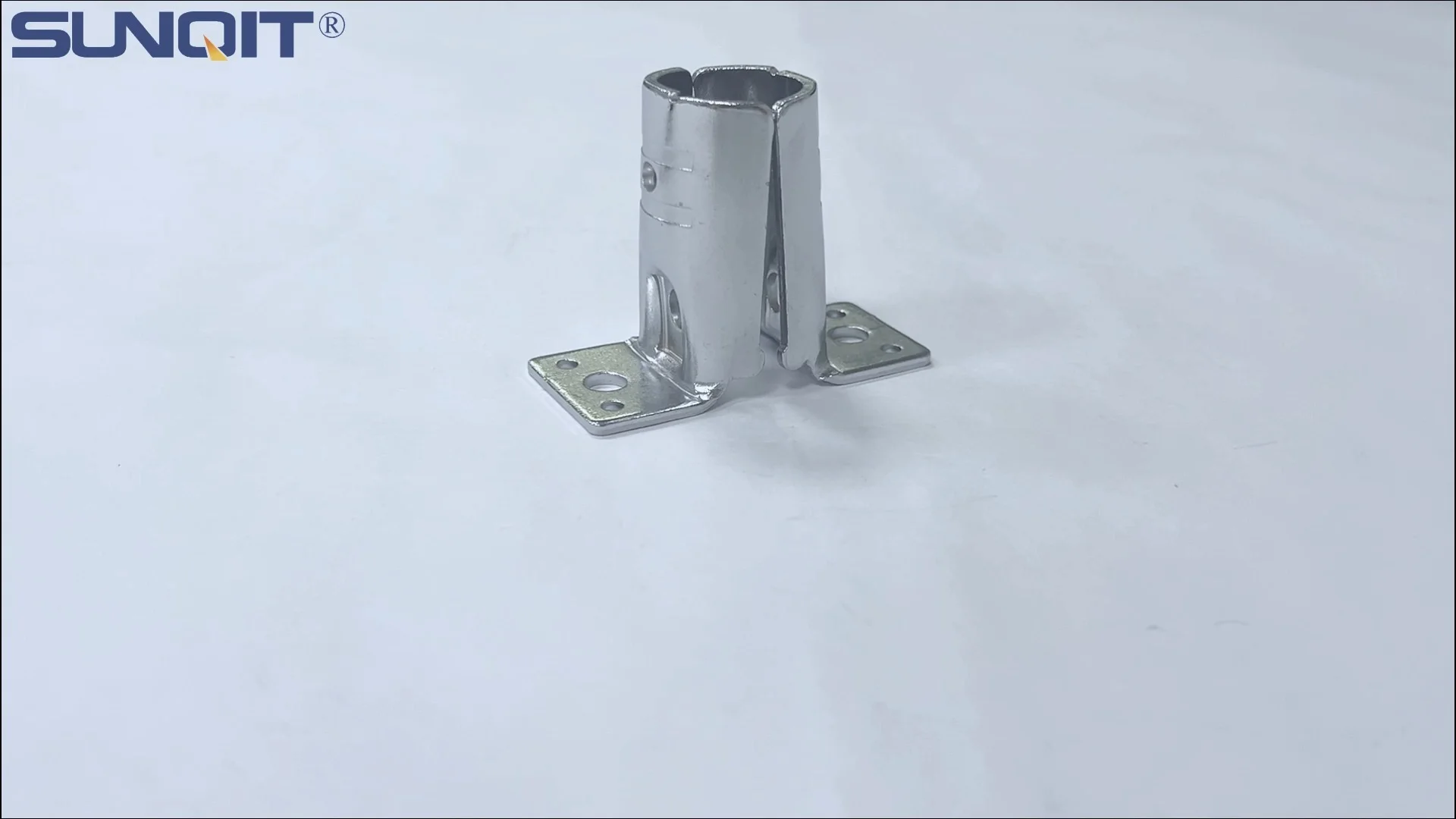
Vertical Lean Pipe Joint
Vertical lean pipe joint is used for 28mm lean pipe fixed on ground and keep it stable.
Walk into any busy manufacturing plant, warehouse, or assembly facility, and you'll notice a symphony of movement: workers assembling products, materials gliding along flow racks, and trollies zipping between stations. Behind this harmony lies a silent infrastructure—modular systems built from lean pipes, workbenches, and flow racks—that keeps operations running smoothly. But what holds these systems together? Often, it's the unassuming vertical lean pipe joint. These small, unglamorous components are the backbone of material handling equipment, ensuring stability when tools are slammed down on a workbench, supporting stacks of heavy parts on a flow rack, or withstanding the jostle of a trolley rolling over uneven floors. Yet, when a joint fails, the entire rhythm falters: a workbench wobbles, a flow rack collapses, or a trolley tips. The cost? Lost productivity, damaged materials, and frustrated teams. That's why understanding the strength and reliability of vertical lean pipe joints isn't just technical—it's essential for keeping your operation on track.
What Are Vertical Lean Pipe Joints, Anyway?
At their core, vertical lean pipe joints are the connectors that transform simple pipes into robust structures. Think of them as the "knees" and "elbows" of material handling systems, linking horizontal and vertical lean pipes (often aluminum, stainless steel, or plastic-coated steel) to form workbenches, flow racks, conveyor frames, and more. Unlike fixed welds, these joints are modular, allowing teams to reconfigure systems on the fly—adding a shelf to a workbench, extending a flow rack, or adjusting a conveyor's height—without specialized tools. This flexibility is why lean pipe systems have become a staple in lean manufacturing: they adapt as needs change, reducing waste and keeping costs low.
But not all joints are created equal. Vertical lean pipe joints come in dozens of designs, each tailored to specific needs. There are fixed joints for rigid structures like workbenches, swivel joints for adjustable components, and internal rotatory joints that let pipes pivot slightly to absorb shocks. Materials matter too: aluminum joints are lightweight and corrosion-resistant, making them ideal for cleanrooms or food processing facilities; stainless steel joints offer brute strength for heavy-duty applications like automotive manufacturing; and plastic-coated joints add electrostatic discharge (ESD) protection, critical for electronics assembly where static could fry sensitive components. No matter the type, their job is the same: to hold pipes together under stress, day in and day out.
Why Vertical Lean Pipe Joints Are Critical for Material Handling
Material handling equipment—workbenches, flow racks, conveyor systems, turnover trolleys—relies on vertical lean pipe joints to do more than just "hold things up." They're responsible for safety, efficiency, and durability. Let's break it down:
Take workbenches, for example. A typical assembly workbench might support 50kg of tools, 30kg of parts, and a 90kg worker leaning on its edge. The vertical joints at its corners must distribute that weight evenly across the frame, preventing the bench from wobbling or tipping. If a joint weakens, the bench becomes unstable; a worker might knock over a tool, or a delicate part could slip and break. For flow racks, the stakes are higher: imagine a three-tier rack loaded with 20kg boxes of automotive components. The vertical joints here don't just support static weight—they must withstand the constant pressure of boxes being pulled out, the vibrations as new boxes are stacked, and the occasional bump from a passing trolley. A failed joint here could send dozens of boxes crashing to the floor, risking injury and lost inventory.
Even mobile equipment like turnover trolleys depends on these joints. Trolleys fitted with caster wheels are often loaded to the brim and pushed across factory floors, where they hit cracks, bumps, and sudden stops. The vertical joints connecting the trolley's frame to its legs must absorb these dynamic forces, keeping the load stable. A loose or weak joint here could cause the trolley to sway, spill its contents, or even tip over—endangering both the load and the worker pushing it. In short, vertical lean pipe joints aren't just parts; they're the guardians of your material handling system's integrity.

The Load Testing Process: Putting Joints to the Test
To truly understand a vertical lean pipe joint's strength, you can't just guess—you test it. Load testing is the process of pushing a joint to its limits, measuring how much weight it can handle before bending, breaking, or slipping. This isn't about destroying parts; it's about ensuring they meet the demands of real-world use. For our study, we focused on five common types of vertical lean pipe joints used in material handling equipment, sourced from leading suppliers. Each joint was tested under controlled conditions to simulate the stresses they'd face on the factory floor.
Sample Selection: We chose joints based on popularity and application: (1) aluminum internal rotatary joint (used in adjustable workbenches), (2) stainless steel fixed joint (heavy-duty flow racks), (3) 1.5mm PE-coated lean pipe joint (ESD workstations), (4) aluminum 90° crossing joint (conveyor frames), and (5) aluminum parallel joint (trolley frames). All were paired with standard 28mm diameter lean pipes—aluminum for lightweight samples, stainless steel for heavy-duty—to mimic real-world setups.
Testing Setup: We used a universal testing machine (UTM), a device that applies controlled force to a sample and measures its response. Each joint-pipe assembly was clamped vertically in the UTM, with the pipe fixed at the bottom and the joint at the top. A load cell measured the force applied, while a displacement sensor tracked how much the joint bent (deflection) under pressure. We also monitored for signs of failure: cracking, slipping (the pipe pulling out of the joint), or permanent deformation.
Protocol: We started with a low load—50kg—and increased it incrementally by 50kg every 5 minutes. This slow ramp-up mimicked how loads build up in real use (e.g., a workbench gradually being loaded with tools and parts). At each step, we recorded the deflection and checked for damage. The test stopped when the joint failed: either by breaking, slipping, or deforming so much that it could no longer support the load safely.

Load Testing Results: Which Joints Stand Strong?
After weeks of testing, the results painted a clear picture: not all joints are built to handle the same stress. Below is a summary of our findings, including maximum load before failure, deflection at 50% of max load (a measure of stiffness), and failure mode.
| Joint Type | Material | Max Load Before Failure (kg) | Deflection at 50% Load (mm) | Failure Mode |
|---|---|---|---|---|
| Aluminum Internal Rotary | Aluminum Alloy | 550 | 4.2 | Joint body cracked at the pivot point |
| Stainless Steel Fixed | 304 Stainless Steel | 800 | 2.1 | Weld between joint and pipe fractured |
| PE-Coated Lean Pipe Joint (1.5mm) | Steel with PE Coating | 300 | 5.8 | Pipe slipped out of joint (coating wore thin) |
| Aluminum 90° Crossing | Aluminum Alloy | 480 | 3.5 | Joint arm bent permanently |
| Aluminum Parallel Joint | Aluminum Alloy | 520 | 3.8 | Bolt holding joint to pipe sheared |
Key Takeaways: The stainless steel fixed joint was the clear heavyweight, handling 800kg before failing—a testament to stainless steel's strength. Its minimal deflection (2.1mm at 400kg load) also made it the stiffest, ideal for applications where stability is critical, like heavy-duty flow racks. The aluminum internal rotatary joint, while not as strong, offered flexibility (hence its use in adjustable workbenches) and still handled 550kg—more than enough for most assembly tasks. The surprise was the PE-coated joint: at just 300kg, it failed when the pipe slipped out, likely due to the thin PE coating wearing away under pressure. This isn't a flaw in the design—it's simply a limitation of its purpose: PE-coated joints are meant for light, ESD-sensitive environments, not heavy loads.
All joints except the PE-coated model exceeded industry standards, which typically require vertical joints to handle at least 400kg for general use. For context, a standard workbench loaded with tools, parts, and a worker might weigh 150-200kg—well within the capacity of even the aluminum joints. A fully loaded flow rack with 3 rows of 3 floors (Material Rack B, in supplier terms) might hit 300-400kg, making the stainless steel or aluminum 90° crossing joints the safest choices here.

Real-World Impact: A Case Study
Numbers on a page tell one story, but real-world performance tells another. Consider a mid-sized electronics manufacturer we worked with last year. They were using generic PE-coated vertical joints on their flow racks, which frequently held 25kg boxes of circuit boards. Every few months, a joint would slip or bend, causing boxes to tilt and occasionally fall. The maintenance team was constantly tightening joints or replacing them, costing hours of downtime. After reviewing our load testing results, they switched to aluminum 90° crossing joints. Six months later, the difference was striking: zero joint failures, a 20% drop in maintenance time, and workers reported feeling more confident loading the racks to full capacity. "It's not just about fewer repairs," the plant manager told us. "It's about peace of mind. When the team trusts the equipment, they work faster and safer."
Another example: a automotive parts supplier using workbench E (single deck, without casters) for assembling engine components. Their old workbenches, fitted with cheap plastic joints, wobbled when workers leaned on them, leading to imprecise assembly and frequent rework. Switching to aluminum internal rotatary joints stabilized the workbenches, reducing rework by 15% and cutting assembly time per unit by 5 minutes. The joints' ability to absorb minor shocks (like a worker slamming down a wrench) kept the bench steady, ensuring parts aligned correctly the first time.
Choosing the Right Joint: It's About Your Needs
So, how do you pick the right vertical lean pipe joint for your equipment? Start by asking: What's the maximum load the joint will face? For heavy flow racks or industrial workbenches, stainless steel fixed joints are the gold standard. For adjustable setups (like workbenches that need height tweaks) or lighter loads, aluminum internal rotatary or parallel joints offer the flexibility you need. If you're working with sensitive electronics, ESD-safe PE-coated joints are a must—but pair them with lighter loads to avoid failure.
Don't forget to consider the environment. In humid or corrosive settings (like food processing or chemical plants), stainless steel or aluminum joints resist rust better than coated steel. For cleanrooms, aluminum's smooth surface is easier to sanitize. And if mobility is key—like with trolleys using caster wheels—look for joints with reinforced bolt holes to prevent loosening from constant movement. Finally, buy from reputable suppliers: cheap, untested joints might save money upfront, but they'll cost you in repairs, downtime, and lost productivity later.
Conclusion: The Strength of Small Things
Vertical lean pipe joints may be small, but their impact is huge. They're the difference between a smooth-running operation and a chaotic one, between confident workers and frustrated teams, between profit and waste. By understanding their load capacity, testing results, and real-world performance, you're not just choosing a part—you're investing in the reliability of your entire material handling system. So, the next time you walk through your facility, take a moment to look at those unassuming joints. They might not grab attention, but they're working hard to keep your operation moving forward. And that's worth every penny.