- Company Articles
- Products and Technology
- Product knowledge
- Vertical Lean Pipe Joints for Small-Scale Manufacturing Workshops

Vertical Lean Pipe Joints for Small-Scale Manufacturing Workshops
Related Product
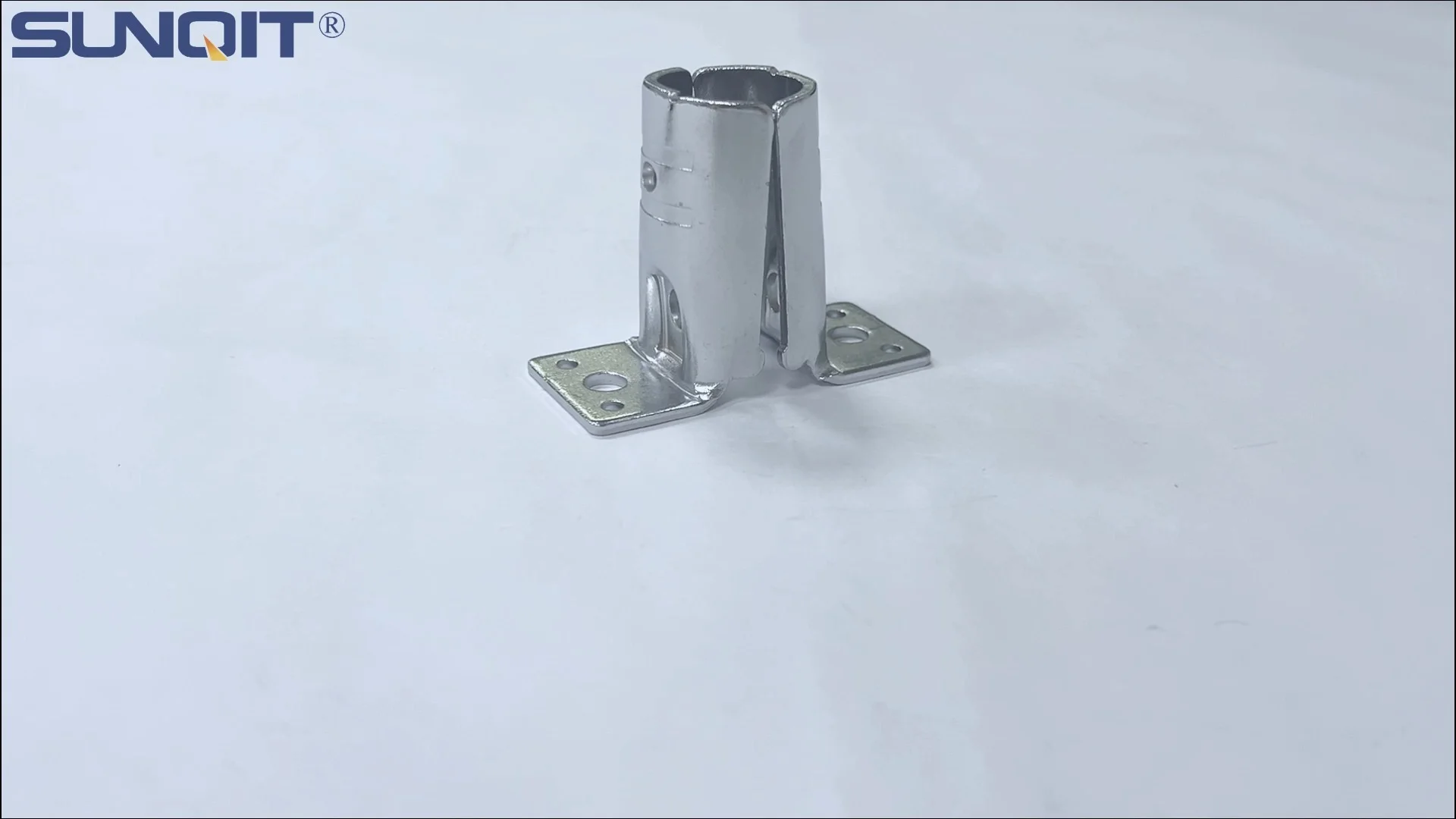
Vertical Lean Pipe Joint
Vertical lean pipe joint is used for 28mm lean pipe fixed on ground and keep it stable.
Small-scale manufacturing workshops often operate in tight spaces with ever-changing production needs. Whether you're assembling electronics, crafting custom parts, or managing a busy packaging line, the ability to adapt your workspace quickly can make or break efficiency. This is where lean manufacturing principles shine—and at the heart of many lean setups lies a humble yet powerful component: the vertical lean pipe joint. In this article, we'll explore how these unassuming connectors transform cluttered, rigid workspaces into agile, productivity-boosting environments, with a focus on their role in building lean pipe workbenches, integrating with flow racks, and enhancing mobility with caster wheels.
What Are Vertical Lean Pipe Joints?
Before diving into their benefits, let's clarify what vertical lean pipe joints are. Lean pipes—also known as "lean tubes"—are lightweight, durable tubes (often steel with a plastic coating or aluminum) used to build modular structures like workbenches, racks, and trolleys. Joints are the connectors that hold these pipes together, and vertical lean pipe joints are specifically designed to secure pipes at 90-degree angles, creating stable vertical supports. Unlike traditional fixed joints, these are engineered for quick assembly and disassembly, often requiring no tools beyond a hex key or even just hand-tightening.
Think of them as the "building blocks" of a lean system. A single vertical joint can connect a horizontal workbench surface to a vertical leg, or link a flow rack's side rail to its base. Their simplicity is deceptive: beneath the plastic or metal exterior lies a design that balances strength (to hold heavy tools or materials) with flexibility (to reconfigure when your workflow changes).
Why Small Workshops Need Vertical Lean Pipe Joints
1. Space Efficiency: Making Every Inch Count
Small workshops rarely have the luxury of extra space. A vertical lean pipe joint excels here by enabling vertical storage—utilizing the often-overlooked airspace above workbenches. For example, attaching a vertical pipe to your lean pipe workbench using a vertical joint lets you add overhead shelving for tools or materials, keeping the tabletop clear for active work. Compare this to bulky traditional cabinets, which take up floor space and can't be adjusted if you need to rearrange later.
I visited a 500 sq. ft. electronics assembly workshop last year where the team was struggling with component storage. Their solution? Using vertical lean pipe joints to build a wall-mounted flow rack above their main workbench. By stacking small parts bins on vertical pipes connected with these joints, they freed up 30% of their floor space—enough to add a second assembly station.
2. Cost-Effectiveness: Avoiding Overinvestment
Small businesses can't afford to sink money into custom-built furniture that becomes obsolete when production needs change. Vertical lean pipe joints solve this by being part of a modular system. Instead of buying a new workbench when you need a taller surface, you can simply adjust the vertical pipes using the joints—adding or removing sections as needed. This modularity also reduces waste: if a pipe gets damaged, you replace just that part, not the entire structure.
| Aspect | Traditional Fixed Furniture | Lean Pipe System with Vertical Joints |
|---|---|---|
| Initial Cost | $500–$1,000+ per unit | $200–$400 per basic setup |
| Reconfiguration Cost | High (often requires replacement) | Low (only new pipes/joints needed) |
| Lifespan Adaptability | Fixed (1–3 years before becoming outdated) | 5+ years (easily updated) |
3. Flexibility: Adapting to Daily Changes
In small workshops, no two days are the same. One week you might be assembling small gadgets; the next, larger components. Vertical lean pipe joints let you adjust your workspace on the fly. Need a taller workbench for a new machine? Loosen the vertical joints, add a pipe section, and retighten—done in 10 minutes. Want to move a flow rack from one corner to another? Disassemble it using the joints, transport the parts, and rebuild in a new location.
A local toy manufacturer I worked with uses this flexibility to great effect. During the holiday season, they scale up production, requiring more assembly lines. By using vertical lean pipe joints, they convert their compact workbenches into longer, multi-station lines by connecting additional sections. After the season, they break them down again to free up space for inventory storage.
4. Integration with Lean Principles
Lean manufacturing is all about eliminating waste—whether it's time, space, or materials. Vertical lean pipe joints support this by enabling "5S" organization (Sort, Set in Order, Shine, Standardize, Sustain). For instance, a lean pipe workbench with vertical joints can have designated zones for tools (hung on vertical pipes), materials (on a flow rack nearby), and finished products (on a trolley with caster wheels for easy transport). This reduces the time workers spend searching for items, cutting down on non-value-added activities.

Building a Lean Pipe Workbench with Vertical Joints: Step-by-Step
Let's walk through how to create a basic lean pipe workbench using vertical lean pipe joints. This is a common project for small workshops, and it illustrates just how user-friendly these systems are.
Tools and Materials You'll Need:
- 4 x 1.2m lean pipes (for legs)
- 4 x 1.5m lean pipes (for the tabletop frame)
- 8 x vertical lean pipe joints (to connect legs to the frame)
- 1 x plywood or metal tabletop (cut to 1.5m x 0.8m)
- 4 x caster wheels (optional, for mobility)
- Hex key (included with most joints)
- Measuring tape and level
Step 1: Assemble the Tabletop Frame
Start by connecting the four 1.5m pipes into a rectangle using corner joints (not vertical joints—save those for the legs). Tighten the joints just enough to hold the shape; you'll adjust for squareness later. Use the level to ensure the frame is even, then fully tighten the joints.
Step 2: Attach the Legs with Vertical Joints
Now, take the vertical lean pipe joints and attach one to each corner of the tabletop frame. These joints will face downward, providing a socket for the leg pipes. Slide a 1.2m pipe into each vertical joint, ensuring they're straight. Stand the frame upright and check that all legs are the same length—adjust by sliding the pipes up or down in the joints if needed. Once level, tighten the vertical joints securely.
Step 3: Add Caster Wheels (Optional)
For a mobile workbench, attach caster wheels to the bottom of each leg. Most caster wheels come with plates that bolt or clamp onto the pipe ends. This is where the modularity of lean systems shines: if you later decide you want a stationary bench, simply remove the casters and replace them with fixed feet.
Step 4: Secure the Tabletop
Finally, place the plywood or metal top on the frame and secure it with screws or clamps. If you want to add overhead storage later, you can attach vertical pipes to the back of the frame using more vertical joints, then add shelves or tool hooks.
Total assembly time? About 30 minutes—even for someone with no prior DIY experience. That's the beauty of vertical lean pipe joints: they turn complex projects into simple, achievable tasks.

Pairing with Flow Racks: Streamlining Material Handling
A lean pipe workbench is just the start. To truly optimize your workflow, pair it with a flow rack—a sloped rack that uses gravity to feed materials to the workbench. Vertical lean pipe joints are essential here, too, as they form the vertical supports that hold the rack's horizontal rails.
Imagine a flow rack next to your workbench, stocked with component bins. As you use parts from the front bin, the one behind it slides forward—no bending or reaching. The vertical joints ensure the rack is stable enough to hold heavy bins but flexible enough to adjust the slope angle (by adding or removing pipe sections) if you switch to lighter or heavier materials.
A local automotive repair shop I consulted for used this setup to organize small parts like screws and washers. They built a flow rack with three levels using vertical lean pipe joints, each level feeding a different workbench. This reduced the time mechanics spent fetching parts by 40%, letting them focus on repairs instead of searching.

Choosing the Right Vertical Lean Pipe Joints: Key Considerations
Not all vertical lean pipe joints are created equal. When shopping for your workshop, keep these factors in mind:
Material: Plastic-Coated Steel vs. Aluminum
Steel joints are stronger and more affordable, making them ideal for heavy-duty use (e.g., holding metal parts). Aluminum joints are lighter and resistant to corrosion, perfect for cleanrooms or workshops with moisture (like food processing). Both work with standard lean pipes, so choose based on your environment.
Load Capacity
Check the joint's load rating—most range from 50kg to 200kg per joint. For workbenches holding heavy machinery, opt for higher-rated joints. Remember: the total load is distributed across all joints, so a four-legged bench with 100kg-rated joints can hold up to 400kg (minus the tabletop weight).
Tool-Free vs. Tool-Required
Some vertical lean pipe joints feature quick-release levers for tool-free adjustment—great for workshops that reconfigure often. Others require a hex key, which offers a tighter, more permanent hold. Decide based on how often you'll need to change your setup.
Long-Term Benefits: Beyond the Initial Setup
The true value of vertical lean pipe joints emerges over time. Here's how they continue to benefit small workshops long after installation:
Reduced Downtime During Reconfigurations
Traditional workshops might shut down for a day to install new furniture. With vertical lean pipe joints, reconfiguring takes hours, not days. A bakery I worked with once needed to add a new mixing station; they disassembled a unused flow rack, used the pipes and vertical joints to build a new workbench, and were back to baking by lunchtime.
Scalability as Your Business Grows
As orders increase, you can expand your lean system incrementally. Add more vertical joints and pipes to extend workbenches, build additional flow racks, or create new trolleys. This "grow-as-you-go" approach avoids the upfront cost of overbuilding.
Employee Engagement and Ownership
When workers can adjust their own workspaces using vertical lean pipe joints, they feel more invested in their environment. A survey of small manufacturers found that teams with modular workstations reported 25% higher job satisfaction—likely because they could tailor their space to their specific tasks, reducing fatigue and frustration.
Conclusion: Small Changes, Big Impact
In the world of small-scale manufacturing, success often hinges on the ability to do more with less. Vertical lean pipe joints embody this philosophy, offering a simple, affordable way to transform chaotic workspaces into organized, flexible hubs of productivity. Whether you're building a lean pipe workbench, integrating a flow rack, or adding caster wheels for mobility, these unassuming connectors empower you to adapt, grow, and thrive—without breaking the bank.
So, the next time you look at your workshop and see inefficiency, remember: the solution might be as simple as a few pipes and joints. With vertical lean pipe joints, you're not just building furniture—you're building a lean system that grows with your business, one joint at a time.