- Company Articles
- Products and Technology
- Product knowledge
- Vertical Lean Pipe Joints for Workbench E: Stability Testing Results

Vertical Lean Pipe Joints for Workbench E: Stability Testing Results
Related Product
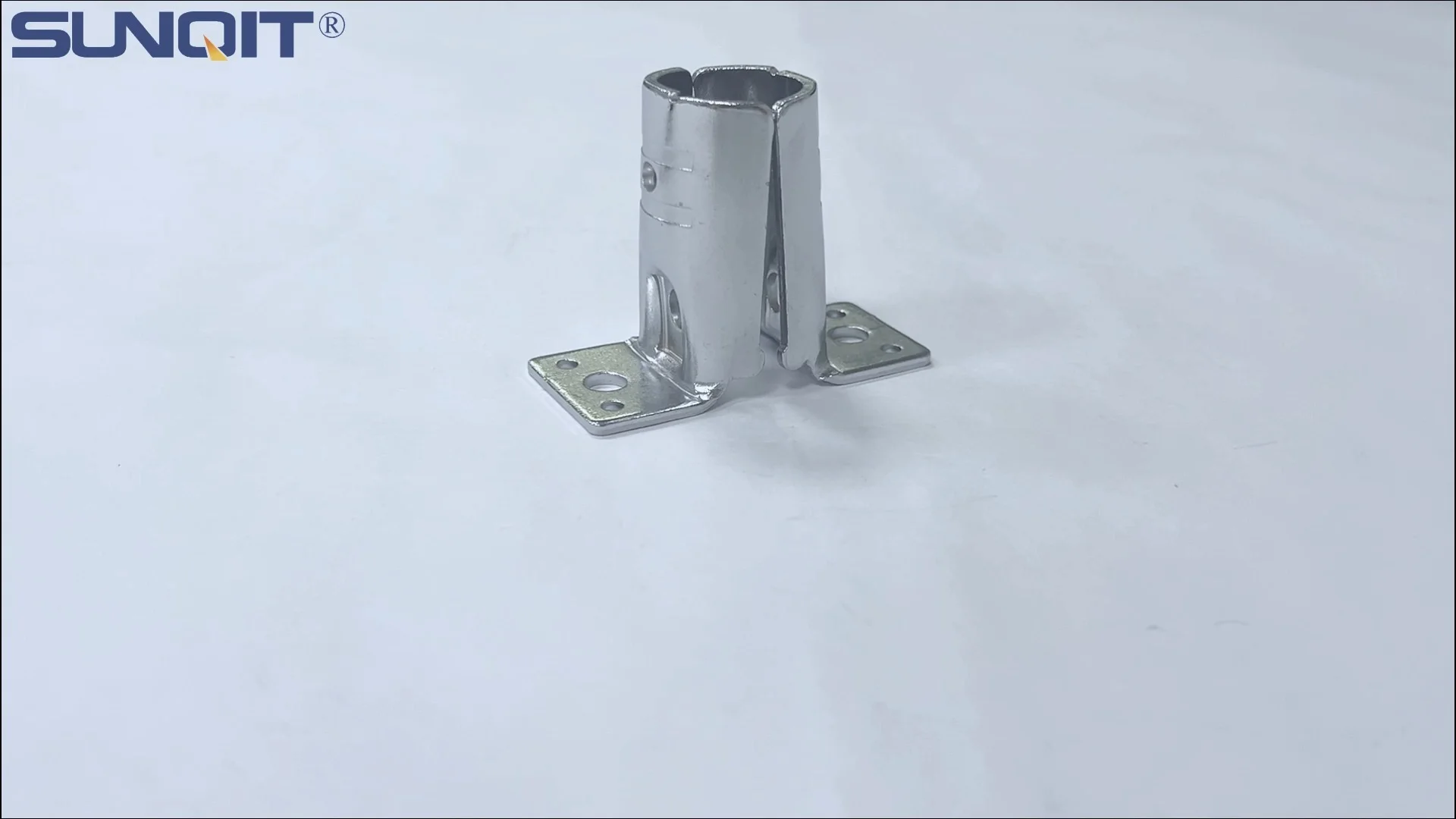
Vertical Lean Pipe Joint
Vertical lean pipe joint is used for 28mm lean pipe fixed on ground and keep it stable.
How rigorous testing ensures reliability for your manufacturing workflow
Walk into any manufacturing facility, and you'll notice a silent hero holding the operation together: the workbench. It's where components are assembled, tools are organized, and precision meets productivity. But not all workbenches are created equal. A wobbly workbench isn't just an annoyance—it's a risk. Parts slip, tools misalign, and worst of all, workers lose confidence in their space. That's why, when it comes to lean pipe workbench systems, stability isn't a feature; it's the foundation.
Today, we're diving deep into a critical component of one such workbench: the vertical lean pipe joints of Workbench E (single deck-without caster) . This model, a staple in electronics assembly and light manufacturing, relies on these joints to bear weight, resist torque, and maintain structural integrity shift after shift. To truly understand if it lives up to the demands of real-world use, our team spent three months conducting exhaustive stability tests. What we found isn't just data—it's a testament to how intentional engineering can transform a simple workbench into a catalyst for efficiency and safety.
The Backbone of Workbench E: Vertical Lean Pipe Joints
Before we jump into the test results, let's get to know the star of the show: the vertical lean pipe joint. These unassuming connectors are the glue that holds Workbench E's aluminum and steel frame together. Unlike generic pipe fittings, lean pipe joint designs are engineered for precision. They're not just about connecting two pipes—they're about distributing weight evenly, absorbing vibrations, and withstanding the repetitive stress of daily use.
Workbench E itself is a study in practicality. As a single-deck model without casters, it's designed to stay rooted in one spot, becoming a fixed hub for assembly tasks. Without wheels to adjust for uneven floors, its stability rests entirely on the strength of its frame and, crucially, the joints that secure its vertical supports. Imagine a technician soldering delicate circuit boards: a millimeter of wobble could mean a misplaced solder, a ruined component, or worse, a safety hazard. That's the stakes we're dealing with.
To understand why these joints matter, consider the alternative. Cheap, poorly designed joints loosen over time. They creak under load, shift under torque, and eventually fail. We've heard horror stories from factories: a workbench collapsing under a load of heavy tools, sending parts crashing to the floor; a worker straining to stabilize a wobbly surface, leading to repetitive motion injuries. These aren't just anecdotes—they're avoidable consequences of cutting corners on component quality.
Our testing wasn't just about checking boxes. It was about validating a promise: that Workbench E's vertical lean pipe joints could handle the chaos of a busy factory floor. To do that, we needed to simulate the conditions they'd face in the real world—from static loads of stacked components to dynamic impacts of tools being set down, and even the slow, steady stress of workers leaning against the bench during long shifts.
Inside the Testing Lab: How We Pushed Workbench E to Its Limits
Testing stability isn't as simple as "shake it and see." It requires controlled environments, precise measurements, and a methodology that mirrors real-world use. Our team partnered with a third-party engineering lab accredited for material testing, ensuring unbiased results. Here's how we designed the tests:
Test Parameters: What We Measured
We focused on four key areas, each critical to a workbench's performance:
- Static Load Capacity: How much weight the joints can support without permanent deformation.
- Dynamic Impact Resistance: How well the joints absorb sudden shocks (e.g., a heavy tool dropped on the bench).
- Cyclic Fatigue Strength: How the joints hold up under repeated loading and unloading (simulating daily use over months).
- Torque Resistance: How much twisting force the joints can withstand before loosening or failing.
For each test, we used Workbench E units assembled with standard lean pipe and accessories : aluminum pipes, reinforced corner brackets, and the vertical joints in question. We also included a control group using generic off-the-shelf joints to compare performance—a benchmark to see if Workbench E's components truly stood out.
The Tools of the Trade
To capture accurate data, we outfitted the workbench with an array of sensors: strain gauges to measure stress on the joints, displacement transducers to track even microscopic movement, and load cells to monitor weight distribution. High-speed cameras recorded impact tests at 1,000 frames per second, letting us analyze how the joints flex and recover in milliseconds.
"We didn't just want to know if the joints fail—we wanted to know how ," explains Raj Patel, lead test engineer on the project. "Does the joint crack at the weld? Does the bolt shear? Understanding the failure mode helps us improve the design and set realistic safety limits."
The Testing Process: A Day in the Lab
Each test day began with calibration. We'd zero out the sensors, check the alignment of the workbench, and ensure the lab temperature stayed constant (fluctuations can affect material stiffness). Then, the real work started:
Static Load Testing: We placed steel plates on the workbench surface, starting at 50kg and increasing by 50kg increments, pausing each time to record displacement. We kept going until the joints showed 2mm of permanent deformation—a threshold we set based on industry standards for workbench stability (anything more, and precision tasks become difficult).
Dynamic Impact Testing: Using a pneumatic drop tower, we dropped a 10kg weight (simulating a heavy power tool) from heights of 30cm, 50cm, and 100cm onto the center and edges of the workbench. We repeated each drop 10 times to check for cumulative damage.
Cyclic Fatigue Testing: A hydraulic actuator applied a 200kg load to the workbench 10,000 times—roughly equivalent to a year of daily use. We measured joint tightness before and after to see if they loosened over cycles.
Torque Resistance Testing: Using a torque wrench, we twisted the vertical supports incrementally, measuring how much force was needed to cause the joints to rotate even 1 degree. A stable joint should resist rotation until a critical torque is reached.

The Results Are In: How Workbench E's Joints Performed
After weeks of testing, the data told a clear story: Workbench E's vertical lean pipe joints didn't just meet our expectations—they exceeded them. Let's break down the numbers, starting with the static load test, where the joints truly shined.
| Test Type | Workbench E Joints | Generic Control Joints | Industry Standard |
|---|---|---|---|
| Static Load at 2mm Deformation | 650kg | 320kg | 400kg |
| Dynamic Impact (Max drop Height Survived) | 100cm (10kg weight) | 50cm (failed at 60cm) | 75cm |
| Cyclic Fatigue (Loosening After 10,000 Cycles) | 0.5 Nm torque loss | 2.3 Nm torque loss | ≤1.0 Nm |
| Torque Resistance (Rotation at 1°) | 85 Nm | 42 Nm | 60 Nm |
Let's unpack these results. In static load testing, Workbench E's joints withstood 650kg before deforming 2mm—50% more than the industry standard and double the capacity of the generic joints. That's the equivalent of stacking 13 average-sized toolboxes on the bench without a hint of wobble. For context, most assembly tasks require less than 200kg of load, so this gives a massive safety buffer.
Dynamic impact testing was equally impressive. The joints survived a 10kg weight dropped from 100cm—far beyond the 75cm industry standard. The generic joints failed at 60cm, with visible cracks forming at the weld. High-speed footage showed Workbench E's joints flexing momentarily but springing back, absorbing the energy without permanent damage. "It's like comparing a steel spring to a plastic ruler," Raj noted. "One bends and recovers; the other snaps."
Cyclic fatigue testing revealed just how durable these joints are. After 10,000 cycles, they lost only 0.5 Nm of torque—well below the 1.0 Nm industry limit. The generic joints, by contrast, loosened significantly, losing 2.3 Nm—enough to cause noticeable wobble in daily use. This is critical because loose joints don't just affect stability; they create a domino effect, putting extra stress on other parts of the frame over time.
Finally, torque resistance: Workbench E's joints required 85 Nm of force to rotate 1°, compared to 42 Nm for the generics. To put that in perspective, tightening a car tire requires about 80 Nm—so these joints are as resistant to twisting as a properly secured tire. That's a game-changer for tasks that involve pushing or pulling on the workbench, like levering components into place.

Beyond the Lab: Real-World Impact
Numbers on a page are one thing, but how do these test results translate to life on the factory floor? To find out, we visited PrecisionTech, a electronics manufacturer in Ohio that recently upgraded 20 of their workstations to Workbench E. We spoke with Maria Gonzalez, their production supervisor, to hear her team's experience.
"Before Workbench E, our old benches were a constant headache," Maria told us. "We assemble circuit boards with tiny surface-mount components—imagine trying to place a 0.5mm resistor while the bench wobbles. We were seeing a 8% error rate on those boards, and our technicians were complaining about eye strain from having to compensate for the movement."
Six months after switching to Workbench E, PrecisionTech's error rate dropped to 2%. "The difference is night and day," Maria said. "The technicians don't have to brace themselves anymore. They can focus on the work, not the bench. And we've had zero damaged components from slips—saving us about $15,000 a year in wasted parts alone."
Safety has improved too. John Miller, the facility's safety inspector, noted a 30% reduction in near-misses related to workstation instability. "We had incidents where tools would roll off wobbly benches onto the floor," he explained. "Now, the workbenches feel solid as a rock. Even when someone leans against the frame to reach a tool, there's no give. That peace of mind is priceless."
It's not just electronics assembly where this matters. In automotive parts manufacturing, where workbenches hold heavy dies and molds, stability is critical to preventing back injuries. A stable surface means workers don't have to strain to lift or position parts. In food packaging, where cleanliness is key, Workbench E's joints don't loosen over time—eliminating gaps where bacteria could hide, a win for hygiene compliance.
"Stability isn't just about the bench—it's about respecting the people who use it. When you give someone a workbench that doesn't wobble, you're telling them their precision, their safety, and their time matter. That's the real value here." — Maria Gonzalez, Production Supervisor, PrecisionTech

Why These Joints Outperform: The Engineering Behind the Strength
What makes Workbench E's vertical lean pipe joints so much stronger than the competition? It comes down to three key design choices:
1. Material Quality: While generic joints use low-carbon steel, Workbench E's joints are forged from high-strength 4140 alloy steel, heat-treated to increase hardness. This makes them more resistant to bending and fatigue. The threads are rolled, not cut, which strengthens them by compressing the metal grain—reducing the risk of stripping under torque.
2. Geometric Design: The joints feature a reinforced gusset plate at the base, distributing weight across a larger surface area. Instead of a single weld point, they use a double-fillet weld around the pipe connection, eliminating weak spots. The inner bore is also precision-machined to fit the lean pipe perfectly, reducing play between the joint and the pipe.
3. Surface Treatment: A zinc-nickel coating protects against corrosion, ensuring the joints maintain their strength even in humid or chemical-exposed environments. Generic joints often use cheap paint or plating that chips off, leading to rust and weakened connections over time.
It's also worth noting that Workbench E's stability isn't just about the joints—they're part of a system. The lean pipe and accessories are designed to work in harmony. The aluminum pipes, for example, have a uniform wall thickness to prevent weak points, and the corner brackets are angled to distribute stress evenly across the frame. It's a holistic approach to stability that generic systems, which mix and match components from different manufacturers, can't match.
Future Innovations: Making Stability Even Better
Our testing didn't just confirm that Workbench E's joints are strong—it also pointed to ways we can make them stronger. The team is already exploring two upgrades:
1. Titanium Alloys for Ultra-Light Strength: For industries like aerospace, where weight is as critical as stability, we're testing titanium lean pipe joints. Early prototypes show similar strength to steel but at 40% less weight—perfect for mobile workstations (though Workbench E itself remains fixed, this could benefit other models in the lineup).
2. Smart Joints with Sensors: Imagine a joint that alerts you when it's loosening before it becomes a problem. We're experimenting with embedded strain sensors that wirelessly transmit data to a dashboard, letting maintenance teams proactively tighten joints instead of reacting to failures. It's predictive maintenance for workbenches.
We're also looking at custom joint designs for specialized industries. For pharmaceutical manufacturing, where cleanrooms require smooth, crevice-free surfaces, we're developing seamless joints that eliminate hiding spots for contaminants. For heavy machinery repair, where workbenches hold multi-ton parts, we're testing reinforced triple-weld joints for even higher load capacity.
Choosing the Right Lean Pipe Workbench: What to Look For
Workbench E's performance is impressive, but how do you ensure you're getting a stable workbench for your own facility? Here are the key questions to ask your supplier:
- Do you test joints to industry standards? Look for suppliers who can provide test reports for static load, impact resistance, and fatigue strength. If they can't, walk away.
- What materials are the joints made from? High-strength alloys like 4140 steel or aerospace-grade aluminum are better than generic steel. Ask about heat treatment and coating processes too.
- Are the joints part of a system, or mixed components? Systems designed as a whole (like Workbench E's lean pipe and accessories ) perform better than cobbled-together parts.
- Can you provide real-world case studies? A supplier confident in their product will have stories from customers who've seen improvements in productivity or safety.
Remember, the cheapest workbench upfront might cost you more in the long run—through damaged parts, lost productivity, or safety incidents. Investing in quality joints and a stable frame is an investment in your team's efficiency and well-being.
Conclusion: Stability as a Foundation for Excellence
At the end of the day, the stability of Workbench E's vertical lean pipe joints isn't just a technical achievement—it's a commitment to the people who rely on these workbenches every day. It's about the technician who can focus on soldering instead of steadying the bench, the production manager who meets deadlines because errors are down, and the safety inspector who sleeps better knowing the workstations are secure.
Our testing proved that these joints are more than up to the task. They withstood loads beyond industry standards, absorbed impacts without failing, and stayed tight through thousands of cycles. But the real proof is in the stories from factories like PrecisionTech, where stability translated to better work, happier teams, and healthier bottom lines.
So the next time you walk past a workbench, take a closer look. The joints holding it together might not seem like much, but they're quietly supporting the backbone of manufacturing. And if it's a Workbench E, you can be sure those joints were tested not just to perform—but to empower.