- Company Articles
- Products and Technology
- Application Cases
- Vertical Lean Pipe Joints in Automotive Parts Assembly: Case Study Analysis

Vertical Lean Pipe Joints in Automotive Parts Assembly: Case Study Analysis
Related Product
Vertical Lean Pipe Joint
Vertical lean pipe joint is used for 28mm lean pipe fixed on ground and keep it stable.
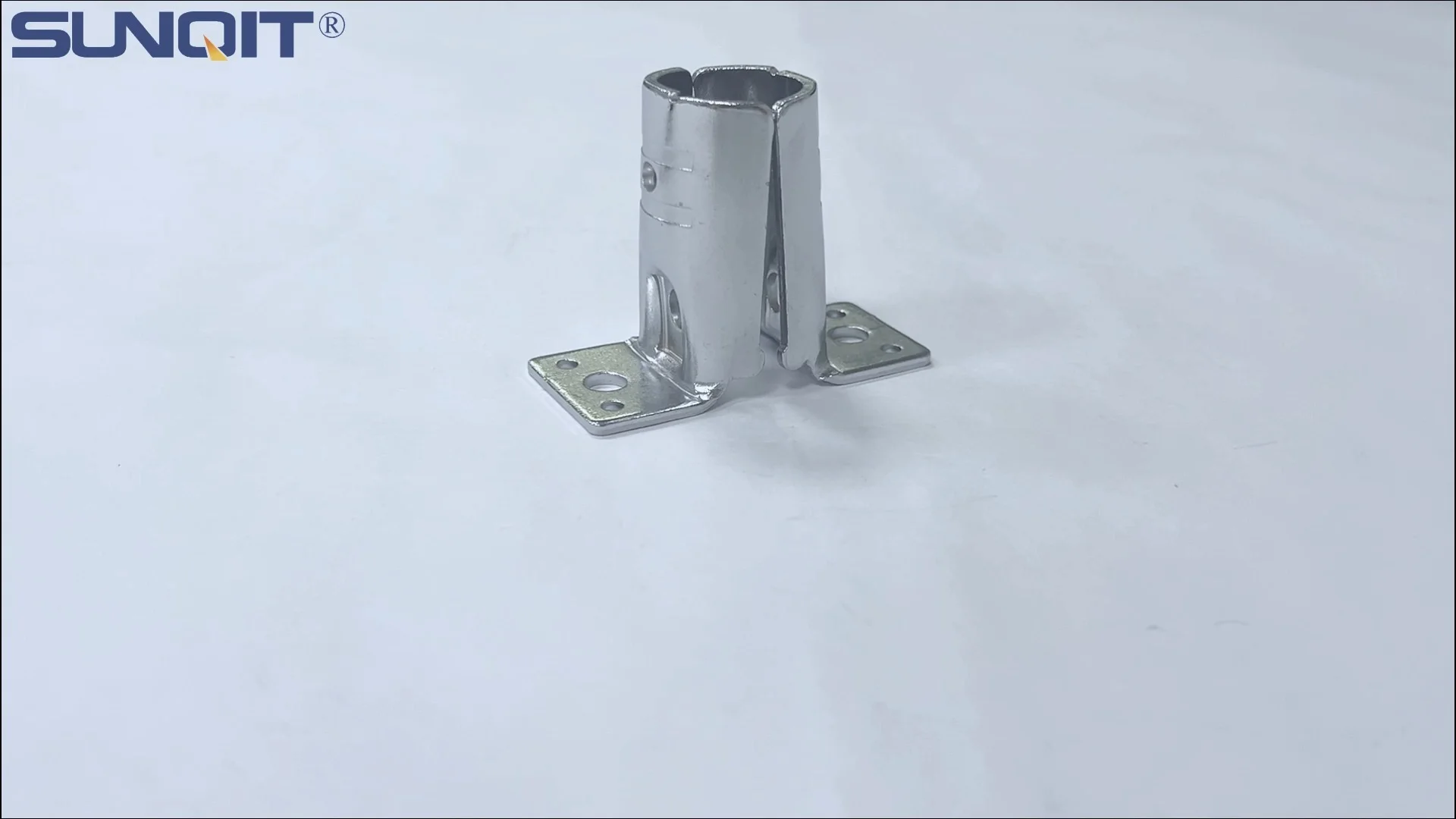
Introduction: The Hidden Backbone of Lean Manufacturing
Walk into any modern automotive assembly plant, and your eyes will likely be drawn to the robots gliding along tracks, the flash of welding sparks, or the synchronized dance of workers installing dashboards. But if you look closer—past the machinery and the buzz of activity—you'll notice something quieter, yet equally critical: the humble structures that hold it all together. Workbenches adjusted to ergonomic heights, flow racks feeding parts to the line, trolleys moving tools between stations. These aren't just metal and plastic; they're the physical embodiment of lean manufacturing. And at the heart of many of these structures? The vertical lean pipe joint.
In an industry where every second counts—where a 5-minute delay on one line can ripple into thousands of dollars in lost production—flexibility isn't a luxury. It's survival. Automotive plants today don't just build one model; they switch between sedans, SUVs, electric vehicles, and hybrids, sometimes multiple times a day. Traditional fixed structures—welded steel frames, bolted workbenches—can't keep up. They're rigid, time-consuming to reconfigure, and expensive to replace. That's where lean pipe systems come in, and within those systems, vertical lean pipe joints play a starring role. These small, unassuming connectors are the reason a workbench can be raised by 6 inches in 2 minutes or a flow rack can be extended to hold a new part size without calling in a maintenance crew.
This article dives into the world of vertical lean pipe joints, exploring how they've transformed assembly line efficiency at a mid-sized automotive plant in the Midwest. We'll break down what makes these joints unique, the challenges they solved, and the tangible impact they had on everything from worker fatigue to production targets. Because in lean manufacturing, the smallest components often drive the biggest results.
Understanding Vertical Lean Pipe Joints: More Than Just a "Connector"
Before we jump into the case study, let's get clear on what a vertical lean pipe joint is—and why it matters. At first glance, it might look like a simple metal piece with holes for pipes, but that's barely scratching the surface. A vertical lean pipe joint is engineered to do three critical things: connect lean pipes (typically 28mm or 30mm diameter) at 90-degree vertical angles, provide rock-solid stability under load, and allow for tool-free adjustments. Unlike fixed welded joints, these are designed to be reconfigured. Twist a lever, loosen a bolt, adjust the height, and lock it back in—all in under a minute.
Most vertical lean pipe joints are made from die-cast aluminum or chrome-plated steel, chosen for their strength and resistance to corrosion (important in automotive plants where oil, coolant, and moisture are part of daily life). The chrome plating isn't just for looks; it adds a layer of durability, preventing rust from weakening the joint over time. Some joints even feature internal springs or locking mechanisms that "click" into place, giving workers tactile feedback that the connection is secure—no guesswork, no second-guessing.
But why "vertical" specifically? In lean systems, pipes are arranged both horizontally (to create surfaces like workbench tops) and vertically (to add height, like shelves on a flow rack or legs on a trolley). Vertical joints are optimized for upward load-bearing. A poorly designed vertical joint might wobble when holding a 50kg tool chest; a well-engineered one? It can support that weight day in, day out, through hundreds of adjustments. That reliability is why they're the unsung heroes of modular lean structures.
Think of it this way: If a lean system is a human body, the lean pipes are the bones, and the vertical joints are the joints (knees, hips, shoulders) that let those bones move and support weight. Without strong, flexible joints, the body—er, the assembly line—can't adapt. And in automotive manufacturing, adaptability is everything.

The Automotive Assembly Challenge: When Rigidity Breaks the Line
To understand the impact of vertical lean pipe joints, let's first paint a picture of the problem they're solving. Consider a typical scenario at a mid-sized automotive plant—let's call it "Maple Ridge Motors" (a fictional facility based on common industry challenges). Maple Ridge produces three models: a compact SUV, a hybrid sedan, and an electric hatchback. Each model has different parts, different tool requirements, and different assembly sequences. In 2023, their production schedule called for switching between models twice a week. Sounds manageable, right? Not with their old setup.
Maple Ridge's assembly line had been built with fixed steel workbenches. These were sturdy, but that was their only virtue. To adjust the height of a workbench for the SUV's taller door panels, workers needed a wrench, a helper, and 45 minutes—time they didn't have between shifts. The flow racks feeding parts to the line were bolted to the floor; if a new part required a wider shelf, maintenance had to cut and weld steel, a process that took 4 hours and left the line idle. Worst of all, the tool trolleys were one-size-fits-all. The electric hatchback's battery installation tools were heavier than the sedan's, so workers strained to lift them from low trolleys, leading to frequent back pain complaints.
By early 2023, the problems were adding up. Maple Ridge was missing production targets by 8% monthly, overtime costs were spiking, and the plant manager, Raj Patel, was fielding calls from HR about rising worker compensation claims. "We had the best workers, the best robots, but our own structures were holding us back," Raj recalls. "It was like trying to dance in concrete boots."
The root cause? Rigidity. Traditional fixed structures worked when plants built one model for years, but in today's high-mix environment, they're a liability. Maple Ridge needed a system that could keep up with change—without sacrificing strength or safety. That's when their lean manufacturing consultant suggested looking at modular lean pipe systems, with a specific focus on vertical lean pipe joints.

Case Study: Maple Ridge Motors Implements Vertical Lean Pipe Joints
Background: A Plant in Need of Flexibility
Maple Ridge Motors is a 500-worker plant outside Detroit, producing 150,000 vehicles annually. Their core challenge, as identified in a 2023 lean audit, was "changeover inefficiency." The audit found that 12% of total production time was spent reconfiguring workstations between models—time that could be better spent building cars. The audit also noted that 60% of worker fatigue complaints were linked to poorly adjusted workbench heights and heavy lifting from fixed trolleys.
Raj's team evaluated three options: (1) replace all fixed structures with custom adjustable steel frames (expensive, slow to install), (2) Outsource some assembly to third-party vendors (risky for quality control), or (3) Adopt a modular lean pipe system using vertical lean pipe joints (lower cost, quick to implement). They chose option 3, partnering with a local lean pipe supplier to pilot the system on their busiest line: the SUV/sedan mixed assembly line.
Step 1: Problem Identification—Mapping the Pain Points
Before installing anything, the team spent two weeks mapping the line's pain points. They shadowed workers, timed changeovers, and documented every "waste" (a key lean term for non-value-added activity). Here's what they found:
- Workbench Height Issues: 7/10 workers reported hunching or stretching to reach tools. The fixed 36-inch height was too low for taller workers and too high for shorter ones.
- Flow Rack Rigidity: The line used 4-foot-wide flow racks, but the SUV's door panels required 5-foot widths. Workers had to stack panels on the floor, creating tripping hazards.
- Tool Trolley Weight: Battery installation tools for the electric hatchback weighed 35kg. Trolleys with fixed handles forced workers to bend at the waist to push them.
- Changeover Time: Switching from sedan to SUV required repositioning 8 workstations. Each reposition took 45 minutes, with 2 workers per station.
Step 2: Solution Design—Leveraging Vertical Lean Pipe Joints
The lean pipe supplier recommended a system built around PE-coated lean pipes (for durability) and chrome-plated vertical lean pipe joints (for corrosion resistance). The plan was to replace 8 fixed workbenches, 4 flow racks, and 6 tool trolleys with modular versions using these joints. The key design features:
Adjustable Workbenches: Using vertical lean pipe joints at the legs, workers could adjust height from 30 to 42 inches with a hex key. The joints locked into place with a spring-loaded pin, ensuring stability even when tools were slammed down during shifts.
Expandable Flow Racks: Vertical joints connected horizontal pipes, allowing workers to add or remove shelves in minutes. The racks could widen from 4 to 6 feet by loosening vertical joints, sliding pipes, and relocking—no tools needed beyond a gloved hand.
Ergonomic Trolleys: Trolley handles, mounted on vertical joints, could adjust from 36 to 48 inches. This let workers set the handle height to their waist, reducing strain.
"The vertical joints were the linchpin," says Maria Gonzalez, the line supervisor who oversaw the project. "We could have used any lean pipe, but the joints had to be strong enough to hold the weight and easy enough for a single worker to adjust. The chrome ones we chose? They clicked into place, so you knew they were secure. No more 'Is this tight enough?' debates."
Step 3: Implementation—From Design to Deployment
The pilot launched in March 2023, with a 3-day installation window during a scheduled maintenance shutdown. The lean pipe supplier's team trained 20 key workers on assembling and adjusting the new structures. "I was skeptical at first," admits Jamal Williams, a 10-year veteran assembler. "We'd tried 'adjustable' workbenches before—they wobbled so bad, you couldn't set a cup of coffee on them. But these? The vertical joints felt solid. I adjusted mine to 38 inches on day one, and it didn't budge all week."
After installation, the team ran a 2-week "ramp-up" phase, monitoring performance and making tweaks. One issue emerged: The vertical joints on the flow racks were slipping slightly under heavy part loads (e.g., stacks of SUV doors). The supplier quickly sent reinforced joints with thicker chrome plating, and the problem was solved.

Results: When Small Joints Drive Big Change
By June 2023—three months after implementation—Maple Ridge's pilot line was unrecognizable. The results, tracked via production data and worker surveys, were striking. Below is a comparison of key metrics before and after the vertical lean pipe joint installation:
| Key Performance Indicator | Before Implementation | After Implementation | Improvement |
|---|---|---|---|
| Assembly Line Changeover Time | 45 mins per workstation | 15 mins per workstation | 67% reduction |
| Worker Fatigue Complaints | 12 per week | 3 per week | 75% reduction |
| Production Target Miss Rate | 8% monthly | 2% monthly | 75% reduction |
| Tool Trolley Push Force (avg) | 25 lbs of force | 12 lbs of force | 52% reduction |
| Workbench Adjustment Frequency | 0 (fixed) | 3x per shift (avg) | N/A (new capability) |
Perhaps the most telling result wasn't in the numbers, though—it was in the worker feedback. "I used to come home with a sore lower back every night," says Lisa Chen, a battery installation technician. "Now I adjust my trolley handle to my hip height, and it's like night and day. I actually look forward to my shifts again."
Raj Patel, the plant manager, puts it this way: "We thought we were investing in metal joints. What we really invested in was our workers' ability to adapt. And when workers can adapt, the whole plant adapts."
Beyond the Joint: Integrating with the Broader Lean System
Vertical lean pipe joints didn't work in isolation at Maple Ridge—they were part of a larger lean system. For example, the new adjustable workbenches were paired with ESD (Electrostatic Discharge) mats to protect sensitive electronics, and the flow racks were connected to roller tracks (another key lean component) to let parts glide to the line via gravity. But the joints were the glue that held these elements together.
Take the flow racks: By using vertical lean pipe joints to connect aluminum guide rails (purchased from the same lean pipe supplier), workers could adjust the angle of the roller tracks, controlling how fast parts rolled down. For heavy SUV doors, they steepened the angle slightly; for lighter sedan mirrors, they flattened it. "Before, we had parts crashing into the end of the rack and getting damaged," says Jamal Williams. "Now we tweak the angle with the vertical joints, and everything moves smooth as butter."
The system also proved scalable. After the pilot's success, Maple Ridge rolled out vertical lean pipe joints to two more lines, including their electric vehicle battery assembly area. There, the joints' corrosion resistance (thanks to chrome plating) was a game-changer, as battery assembly involves frequent exposure to electrolytes and cleaning solutions.
Lessons Learned and Future Outlook
Maple Ridge's experience offers three key lessons for other automotive plants considering modular lean systems:
- Focus on the "Human" in "Human-Machine Interface": Tools and structures are only as good as they are usable. The vertical lean pipe joints' tool-free adjustment and tactile locking mechanism made them worker-friendly—critical for adoption.
- Start Small, Scale Fast: Piloting on one line let Maple Ridge iron out kinks (like the initial slipping joint issue) before investing in the entire plant. This reduced risk and built worker buy-in.
- Don't Underestimate Durability: Automotive plants are harsh environments. Chrome-plated, corrosion-resistant joints outlasted cheaper plastic alternatives the team tested—proving that upfront cost matters less than long-term reliability.
Looking ahead, the future of vertical lean pipe joints in automotive assembly is bright. Suppliers are already developing "smart" joints with built-in sensors that alert maintenance when a connection loosens—a far cry from the manual checks of today. And as electric vehicles grow in complexity, with more unique parts and tighter tolerances, the need for flexible, adjustable structures will only increase.
Conclusion: The Power of Small Components in Big Systems
In the grand scheme of automotive manufacturing, vertical lean pipe joints are easy to overlook. They don't have the flash of a robot or the prestige of a high-tech battery. But as Maple Ridge Motors discovered, they're the quiet enablers of efficiency. They turn rigid lines into adaptable ecosystems, where workers aren't just cogs in a machine—they're partners in optimizing the process.
Lean manufacturing isn't about eliminating waste for the sake of it. It's about creating systems that respect people, reduce frustration, and let teams do their best work. And sometimes, that starts with a small, chrome-plated joint that lets a workbench rise, a flow rack expand, or a trolley adjust. In the end, it's not just about building better cars—it's about building better ways to build.
So the next time you see a car roll off the line, take a moment to think about what's behind it. The robots, the workers, the engineers—and yes, the vertical lean pipe joints. They may not get the glory, but they're the reason the line keeps moving.