- Company Articles
- Products and Technology
- Application Cases
- Vertical Lean Pipe Joints in Automotive Production: Enhancing Line Flexibility

Vertical Lean Pipe Joints in Automotive Production: Enhancing Line Flexibility
Related Product
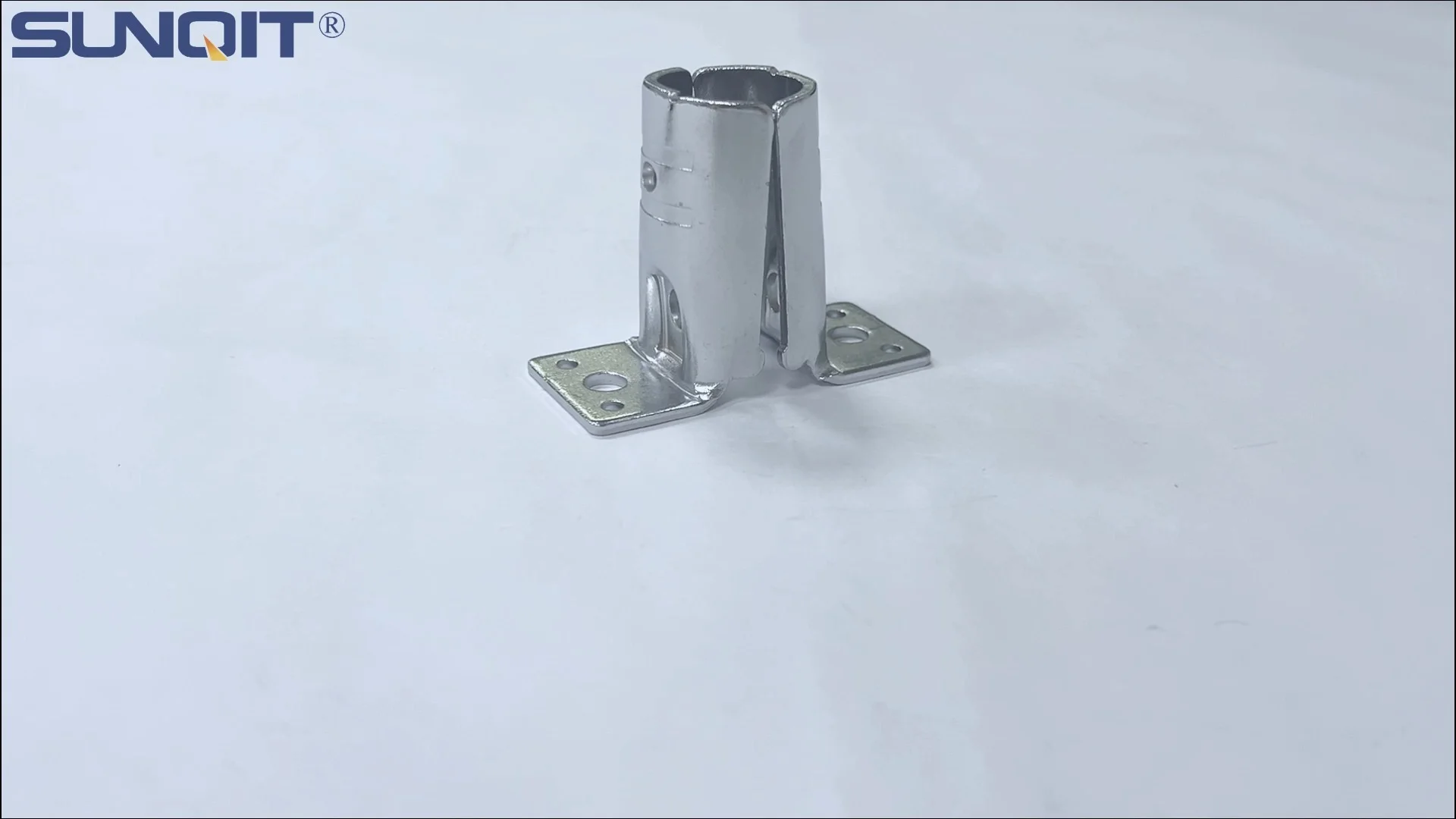
Vertical Lean Pipe Joint
Vertical lean pipe joint is used for 28mm lean pipe fixed on ground and keep it stable.
In the high-stakes world of automotive manufacturing, where consumer demands shift overnight and production targets change with the season, the ability to adapt is more than a luxury—it's a survival skill. Traditional assembly lines, with their welded steel frames and fixed workstations, once represented the pinnacle of industrial efficiency. Today, they often feel like relics, weighing down operations with their rigidity. Enter lean manufacturing systems, a philosophy built on eliminating waste and embracing adaptability. At the heart of this revolution lies a deceptively simple component: the vertical lean pipe joint. This unassuming piece of hardware is quietly transforming automotive production floors, turning rigid lines into dynamic, responsive ecosystems that can keep pace with the industry's relentless evolution.
The Hidden Cost of Rigidity in Automotive Assembly
To understand why vertical lean pipe joints have become indispensable, we first need to unpack the challenges facing modern automotive plants. Consider a typical scenario: a plant producing compact sedans suddenly receives an order to ramp up production of electric SUVs—vehicles with larger frames, different component layouts, and unique assembly steps. With a traditional setup, reconfiguring the line to accommodate these changes means weeks of downtime, costly welding and fabrication, and a team of engineers redesigning workstations from scratch. By the time the line is ready, market demands might have shifted again, leaving the plant with excess capacity or outdated processes.
This rigidity also seeps into day-to-day operations. Workers on the line often struggle with fixed-height workbenches that don't account for ergonomic differences, leading to fatigue and increased errors. Material flow racks, bolted to the floor, can't be adjusted to match new part sizes, forcing teams to use inefficient workarounds like stacking bins or manually moving components. Even small changes, like adding a new sensor to a quality check station, require hours of drilling and modification. Over time, these inefficiencies add up: lost productivity, higher labor costs, and a workforce frustrated by systems that don't support their best work.
Waste, the arch-nemesis of lean manufacturing, thrives in such environments. In lean terminology, "muda" (waste) includes not just physical waste like scrap material, but also non-value-added activities such as waiting, overprocessing, and unnecessary movement. A rigid line is a breeding ground for these wastes, trapping plants in a cycle of reacting to problems rather than anticipating them.
Lean Systems: Beyond Buzzwords, Building Adaptability
Lean manufacturing, born from the Toyota Production System of the 1950s, was designed to combat these exact issues. At its core, lean is about creating more value with fewer resources by focusing on customer needs and eliminating waste. Over the decades, this philosophy has evolved from a set of principles to a toolkit of physical and digital tools—and lean pipe systems are among the most tangible examples of this evolution.
A lean pipe system, often called a "flexible pipe system," consists of lightweight, modular pipes (typically steel, aluminum, or plastic-coated steel) and joints that connect them into structures like workbenches, flow racks, material trolleys, and even entire assembly lines. Unlike traditional steel framing, these systems require no welding or specialized tools to assemble. Instead, components snap or bolt together, allowing teams to build, modify, and disassemble structures in minutes rather than days. This modularity is the foundation of their appeal, but it's the vertical lean pipe joint that unlocks their full potential.
At first glance, a lean pipe system might look simple—pipes and joints, after all, are hardly cutting-edge technology. But their power lies in their simplicity. By standardizing components, lean pipe systems allow plants to mix and match parts to create custom solutions without custom costs. Need a taller workbench for a new component? Swap out a few vertical pipes and tighten the joints. Want to add a flow rack to feed parts to a station? Connect a few horizontal pipes and attach roller tracks. The system adapts to the work, not the other way around.

Vertical Lean Pipe Joints: The Unsung Heroes of Modularity
If lean pipe systems are the body of the flexible assembly line, vertical lean pipe joints are its joints—literally. These small, often metallic connectors are designed to link vertical pipes to horizontal or diagonal ones, but their real magic is in their adjustability. Unlike fixed brackets, vertical lean pipe joints can rotate, lock at multiple angles, and support varying loads, making them the linchpin of a system that can be reconfigured on the fly.
Take, for example, a vertical lean pipe joint with a 360-degree swivel mechanism. This type of joint allows a horizontal pipe (say, part of a flow rack) to be rotated around a vertical support, adjusting the height or angle of the rack in seconds. A worker needing to lower a section to reduce bending can simply loosen the joint, reposition the pipe, and tighten it back—no tools required beyond a standard wrench. For a plant switching between assembling car doors for sedans and SUVs, this means the same flow rack can be adjusted to feed parts at the optimal height for each vehicle type, reducing worker strain and speeding up assembly.
Materials matter, too. Many vertical lean pipe joints are made from durable aluminum or zinc-plated steel, ensuring they can withstand the wear and tear of a busy production floor—think constant vibrations, heavy loads, and exposure to lubricants or cleaning agents. Some are even coated in ESD (electrostatic discharge) materials, critical for electronics assembly areas where static electricity could damage sensitive components. This durability ensures that reconfigured structures remain stable and safe, even after repeated adjustments.
But perhaps the most valuable feature of vertical lean pipe joints is their compatibility with a vast ecosystem of accessories. From caster wheels that turn a fixed workstation into a mobile cart to roller tracks that facilitate smooth material flow, these joints act as universal connectors, allowing plants to build exactly what they need. A single vertical joint might support a workbench on one side, a tool holder on another, and a bin rack above—all without compromising stability. This versatility eliminates the need for custom fabrication, as most components can be sourced off the shelf from a lean pipe supplier.

From Concept to Floor: The Benefits of Vertical Lean Pipe Joints in Action
To quantify the impact of these joints, let's look at the numbers. A study by the Manufacturing Technology Insights found that plants using lean pipe systems with adjustable joints reduced changeover time between production runs by an average of 65%. For a mid-sized automotive plant running two shifts daily, that translates to saving over 200 hours of downtime per year—time that can be redirected to actual production. Another report from the Lean Enterprise Institute noted that ergonomic adjustments made possible by vertical joints reduced worker fatigue-related errors by 30%, a critical metric in an industry where even a minor mistake can lead to costly recalls.
Cost savings are equally compelling. Traditional workstation reconfiguration can cost $5,000–$15,000 per station, including labor and materials. With lean pipe systems, the same reconfiguration might cost $500–$2,000, as existing pipes and joints can be repurposed. Over time, the ROI compounds: a plant with 50 workstations could save upwards of $500,000 in the first year alone. And because lean pipe structures are lightweight, they require less floor space, allowing plants to increase production capacity without expanding their physical footprint—a huge advantage in urban areas where real estate is at a premium.
But the benefits go beyond dollars and cents. Workers often report higher job satisfaction when using lean pipe systems, as they feel empowered to adjust their workstations to fit their needs. A line worker in Michigan, when asked about the change, noted: "Before, if the bench was too low, I'd have to bend all day. Now, I can tweak the joint myself during my break and get back to work without waiting for maintenance. It makes me feel like the plant cares about how I do my job." This sense of ownership can boost morale and retention, critical in an industry facing ongoing labor shortages.

Case Study: How One SUV Plant Cut Changeover Time by 70%
Let's dive into a real-world example. A major automotive manufacturer in the Midwest produces both gas-powered SUVs and electric crossovers on the same assembly line. In 2023, they faced a challenge: demand for electric models spiked, requiring the line to switch between gas and electric production twice weekly. With their old setup, each switch took 12 hours—time spent repositioning welding robots, adjusting conveyor heights, and rebuilding workbenches. By the end of the year, the plant was losing over 1,200 production hours annually to changeovers.
The solution? A complete overhaul of the line using lean pipe systems with vertical lean pipe joints. The plant replaced fixed steel workstations with modular ones, where vertical joints allowed workers to adjust heights, add tool holders, or reposition material racks in minutes. Flow racks, once bolted to the floor, were mounted on casters and connected via adjustable roller tracks, enabling teams to reconfigure material flow paths in under an hour. Even the quality inspection stations were transformed: vertical joints supported adjustable lighting and camera mounts, ensuring inspectors could get clear views of components for both vehicle types without retooling.
The results were striking. Changeover time dropped from 12 hours to just 3.5 hours—a 70% reduction. Worker complaints about ergonomic issues fell by 45%, and the plant's on-time delivery rate improved by 18%. Perhaps most notably, the plant was able to add a third weekly production run of electric crossovers without increasing its workforce or extending shifts. As the plant manager put it: "The vertical lean pipe joints didn't just save us time—they gave us the agility to chase opportunities we couldn't before."
Integration with Workbenches and Flow Racks: A Holistic Approach to Flexibility
Vertical lean pipe joints rarely work in isolation; their true power shines when paired with other lean components like workbenches and flow racks. A lean pipe workbench, for instance, isn't just a table—it's a customizable hub where every element, from the height of the surface to the placement of tool hooks, can be adjusted via vertical joints. Imagine a workstation where the operator can raise the bench by 6 inches when assembling a larger component, then lower it back for smaller parts—all without tools. Add a set of casters, and that same workstation can be rolled to a different part of the line during a changeover, eliminating the need for duplicate setups.
Flow racks, too, benefit immensely from vertical lean pipe joints. These racks, used to store and transport materials from storage to the line, rely on gravity or rollers to feed parts to workers. With traditional racks, the angle of the rollers is fixed, limiting the types of parts they can handle. With vertical joints, the angle can be adjusted to accommodate heavier parts (steeper angle) or delicate components (gentler slope). In one plant producing engine components, workers adjusted flow rack angles using vertical joints to reduce jamming of cylindrical parts by 90%, cutting down on the time spent unclogging racks and improving material flow.
| Feature | Traditional Fixed Systems | Lean Pipe Systems with Vertical Joints |
|---|---|---|
| Changeover Time | 12–24 hours per line | 1–4 hours per line |
| Ergonomic Adjustability | Fixed height/angle; no on-site changes | Tool-free height/angle adjustments in minutes |
| Cost per Reconfiguration | $5,000–$15,000 per workstation | $500–$2,000 per workstation (reusing components) |
| Space Efficiency | Fixed footprint; underutilized vertical space | Modular design maximizes vertical storage; mobile setups reduce floor space |
| Worker Satisfaction | High frustration due to rigid setups | Improved morale from customizable, ergonomic workspaces |
The synergy between vertical lean pipe joints, workbenches, and flow racks also supports the "5S" methodology—a cornerstone of lean manufacturing focused on sorting, setting in order, shining, standardizing, and sustaining. By making it easy to organize tools, label storage areas, and keep workspaces clutter-free, these systems turn 5S from a checklist item into a daily habit. A worker in a 5S-certified plant using lean pipe systems noted: "Everything has a place, and that place can change if we need it to. It's not about being perfect—it's about being adaptable."
Choosing the Right Lean Pipe Supplier: A Partner in Flexibility
Of course, none of these benefits are possible without a reliable lean pipe supplier. The market is flooded with low-quality joints and pipes that bend under load or wear out after a few adjustments, turning a promising investment into a costly headache. When selecting a supplier, look for three key traits: product breadth, technical support, and a commitment to quality.
Product breadth ensures you can source everything from vertical joints to roller tracks to ESD workbench components from a single partner, simplifying procurement and ensuring compatibility. Technical support is equally critical—look for suppliers that offer on-site consultations to help design custom setups, as well as training for your team on how to safely adjust and maintain the systems. Finally, quality certifications (like ISO 9001) and warranties (at least 1–2 years) are non-negotiable, as they protect your investment and ensure the components can withstand the demands of automotive production.
Many leading suppliers also offer sustainability benefits, such as using recycled aluminum in their joints or providing take-back programs for old components. For automotive plants aiming to reduce their carbon footprint—an increasingly important goal for both consumers and regulators—this can be an added advantage.
The Road Ahead: Vertical Lean Pipe Joints in the Age of Industry 4.0
As automotive manufacturing embraces Industry 4.0—with smart sensors, IoT connectivity, and AI-driven analytics—vertical lean pipe joints are evolving alongside it. Imagine a future where a vertical joint is equipped with a sensor that monitors load capacity in real time, alerting managers if a workstation is being overloaded. Or where AI algorithms suggest optimal workbench configurations based on production data, and workers use a mobile app to adjust joints to the recommended settings with a single tap. While these innovations are still emerging, they highlight how even simple components like joints can become part of the smart factory ecosystem.
Another trend is the rise of aluminum lean pipe systems. Lighter than steel but equally strong, aluminum pipes and joints are easier to maneuver, making reconfigurations faster and safer. They're also resistant to corrosion, ideal for plants with strict hygiene standards or those operating in humid environments. As aluminum extrusion technology improves, we can expect even more precise, durable joints that support heavier loads while remaining lightweight.
But perhaps the most enduring trend is the growing recognition that flexibility isn't just about technology—it's about people. Vertical lean pipe joints put control back in the hands of the workers who know the line best, empowering them to make adjustments that improve their own productivity and well-being. In an industry facing a skills gap, this empowerment is key to attracting and retaining talent. Younger workers, in particular, value workplaces that prioritize adaptability and innovation—and a production floor filled with modular, adjustable systems sends a clear message: this is a place that's ready to evolve.
Conclusion: Building a Line That Grows with Your Ambitions
In the end, vertical lean pipe joints are more than just hardware—they're a statement about how a plant chooses to operate. They say: "We refuse to be limited by yesterday's tools. We will adapt, innovate, and put our people first." In an automotive industry undergoing its biggest transformation in a century—from internal combustion to electric, from mass production to personalized mobility—this mindset is invaluable.
Whether you're running a small component supplier or a large OEM plant, the message is clear: rigidity is a liability, and flexibility is an asset. Vertical lean pipe joints, paired with a robust lean system, workbenches, and flow racks, offer a path to that flexibility—one that's affordable, scalable, and built to last. As the automotive landscape continues to shift, the plants that thrive will be those that can bend without breaking. And at the heart of that resilience? A simple, adjustable joint that connects pipes, people, and possibilities.