- Company Articles
- Products and Technology
- Product knowledge
- Vertical Lean Pipe Joints in Cold Storage: Material Resistance & Performance

Vertical Lean Pipe Joints in Cold Storage: Material Resistance & Performance
Related Product
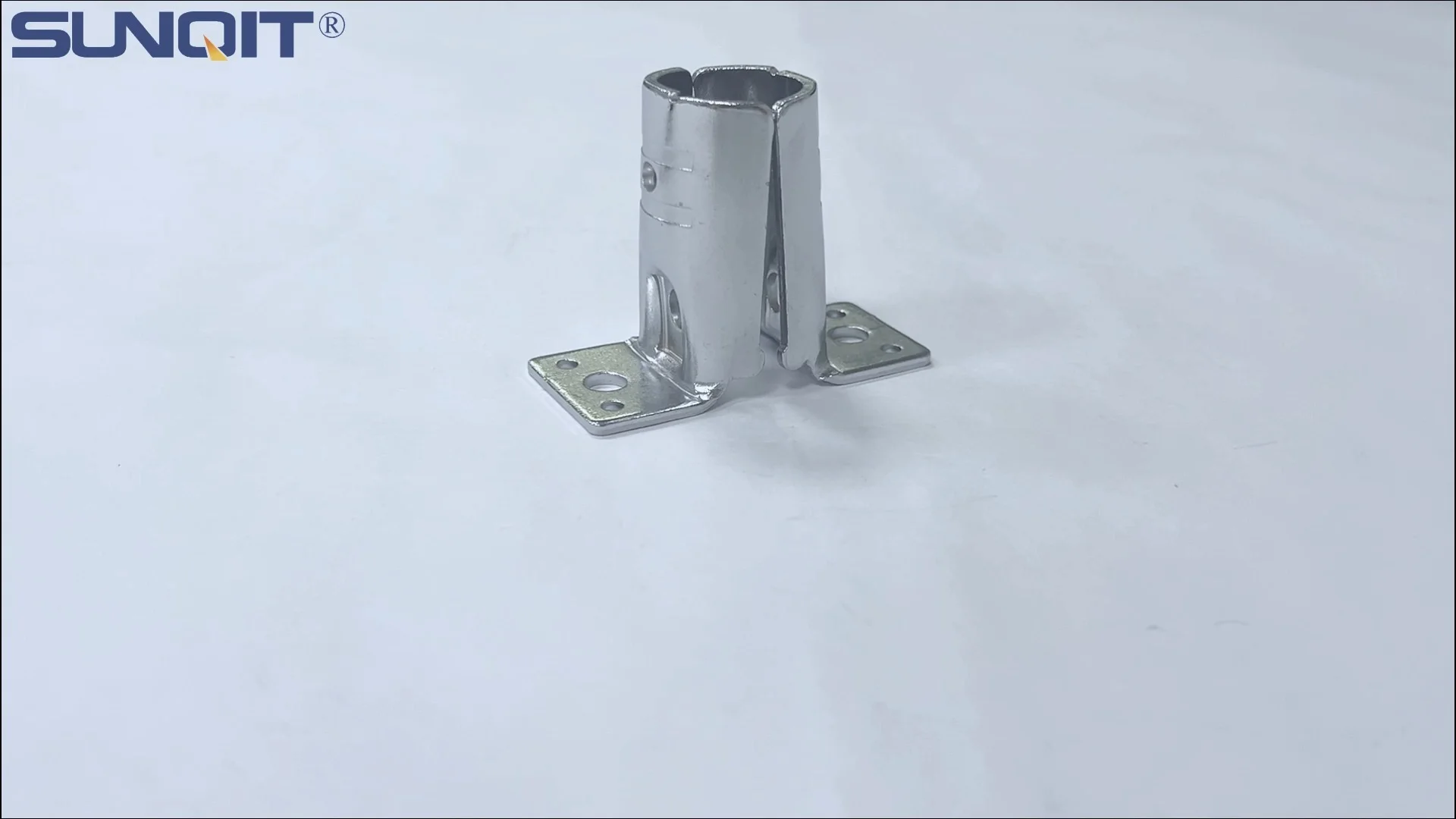
Vertical Lean Pipe Joint
Vertical lean pipe joint is used for 28mm lean pipe fixed on ground and keep it stable.
Walk into any cold storage facility, and you'll immediately feel the bite of sub-zero temperatures—a harsh, unforgiving environment where every piece of equipment must work twice as hard to keep up. From frozen food warehouses storing tons of meat and vegetables to pharmaceutical labs preserving life-saving vaccines, these spaces are the unsung heroes of supply chains worldwide. But here's the thing: the extreme conditions inside—think temperatures plummeting to -30°C, constant humidity, and even the occasional splash of cleaning chemicals—don't just challenge human comfort. They put enormous stress on the very systems that keep operations running smoothly.
This is where lean systems step in. Designed to streamline workflow, reduce waste, and boost efficiency, lean pipe setups—with their modular workbenches, flow racks, and conveyors—have become indispensable in cold storage. But at the heart of these systems lie vertical lean pipe joints: small, unassuming components that hold everything together. In a environment where a single rusted joint or cracked connection can disrupt an entire production line, choosing the right vertical lean pipe joints isn't just about cost—it's about reliability, safety, and long-term performance. Let's dive into why material resistance matters in cold storage, how vertical lean pipe joints rise to the challenge, and what factors every facility manager should consider.
The Cold Storage Gauntlet: What Makes This Environment So Tough?
To understand why vertical lean pipe joints need to be built like tanks, let's first unpack the unique challenges of cold storage. It's not just "cold"—it's a complex mix of temperature extremes, moisture, and operational stress that tests materials to their limits.
First, the temperatures. Most cold storage facilities operate in one of three zones: chilled (2°C to 10°C, common for fresh produce), frozen (-18°C to -25°C, typical for meat and frozen meals), or ultra-low (-40°C to -80°C, used for specialized pharmaceuticals like mRNA vaccines). At these lows, many materials become brittle; plastics can crack, metals can lose flexibility, and even adhesives used in coatings can fail. Then there's humidity. While frozen zones are dry, chilled areas often have high moisture levels to keep produce fresh, leading to condensation on equipment. That condensation isn't just water—it's a breeding ground for rust and corrosion when it mixes with dust, oils, or cleaning agents.
Cleaning is another factor. Cold storage facilities are rigorously sanitized to prevent contamination, using strong chemicals like chlorine-based disinfectants or hydrogen peroxide. These agents are great at killing bacteria, but they're also corrosive, especially on unprotected metals. Add in the constant vibration from forklifts, pallet jacks, and conveyor belts, and you've got a scenario where even the sturdiest components can wear down over time. For vertical lean pipe joints, which bear the weight of shelving, support workbenches, and keep flow racks stable, these conditions aren't just "challenging"—they're make-or-break.
Lean Systems in Cold Storage: Why Vertical Lean Pipe Joints Are Non-Negotiable
Lean manufacturing principles—waste reduction, flexibility, and continuous improvement—aren't just for warm factories. In cold storage, where space is often tight and every second counts (imagine loading a truck full of frozen goods before they thaw), lean systems are game-changers. Lean pipe setups, made from lightweight pipes and modular joints, allow facilities to reconfigure workstations, flow racks, and material handlers on the fly. Need to add a new shelf for seasonal inventory? Swap out a section of conveyor to speed up order picking? With lean systems, it's possible in hours, not days.
But none of this flexibility works without reliable vertical lean pipe joints. These small connectors are the glue that holds the system together. They're responsible for joining pipes at 90-degree angles, supporting vertical loads (like stacked pallets), and ensuring that structures don't wobble or collapse under stress. A weak joint in a frozen food warehouse might mean a shelf full of frozen pizzas crashing to the floor; in a pharmaceutical lab, it could risk damaging temperature-sensitive vaccines. In short, vertical lean pipe joints aren't just parts—they're the backbone of operational safety and efficiency.
Take, for example, a busy food distribution center in Chicago. During peak holiday seasons, their lean pipe flow racks handle thousands of frozen turkeys daily, with each rack supported by dozens of vertical lean pipe joints. If even one joint fails, the entire rack could tilt, slowing down order fulfillment and risking product loss. That's why choosing joints built to withstand cold storage's unique pressures isn't just smart—it's essential.

Vertical Lean Pipe Joints: Design 101—More Than Just a "Connector"
Before we dive into materials, let's clarify what vertical lean pipe joints actually are. At their core, they're mechanical fasteners designed to connect lean pipes (hollow tubes made of steel, aluminum, or coated materials) at vertical angles. But their design is surprisingly sophisticated. A good vertical joint needs to do three things: hold pipes securely, allow for easy assembly and disassembly (since lean systems are modular), and withstand the specific stresses of the environment—whether that's heavy loads, low temperatures, or chemical exposure.
Most vertical lean pipe joints are made from metal (like steel or aluminum) and feature a clamping mechanism—often a screw or bolt that tightens around the pipe to create a firm grip. Some are fixed (permanently locking pipes in place), while others are swivel or adjustable, allowing for minor angle tweaks during setup. But in cold storage, "adjustable" doesn't mean "fragile." The best joints balance flexibility with ruggedness, using reinforced designs to prevent loosening from vibration or thermal expansion (yes, even metals shrink and expand in extreme temps).
Load capacity is another key factor. A vertical joint in a workbench might only need to support 50kg, but one in a flow rack holding stacked pallets could need to handle 500kg or more. Manufacturers test joints for both static loads (steady weight) and dynamic loads (weight plus movement, like when a pallet is slid onto a rack). In cold storage, where ice or frost can make surfaces slippery, dynamic loads are especially common—so joints must grip pipes tightly to prevent shifting.

Material Matters: Choosing Vertical Lean Pipe Joints That Stand Up to the Cold
Now, the critical question: what materials make vertical lean pipe joints suitable for cold storage? Not all metals or coatings are created equal, and the wrong choice can lead to premature failure. Let's break down the top contenders and how they perform in the cold storage gauntlet.
Stainless Steel Pipe Series: The Corrosion-Resistant Workhorse
When it comes to cold storage, stainless steel is often the gold standard—and for good reason. Stainless steel pipe series, particularly grades 304 and 316, are alloyed with chromium (at least 10.5%) and nickel, which form a thin, invisible layer of chromium oxide on the surface. This layer acts as a shield, preventing rust and corrosion even when exposed to moisture and chemicals. In chilled zones with high humidity, or frozen zones where condensation forms during defrost cycles, this resistance is a lifesaver.
Grade 304 is the most common, offering excellent corrosion resistance in most cold storage environments. It's also affordable and easy to machine, making it a popular choice for vertical lean pipe joints in food processing facilities. But for operations using harsh cleaners (like chlorine-based sanitizers) or those near coastal areas (where salt air might seep in), grade 316 is better. With added molybdenum, 316 is more resistant to chlorides, making it ideal for pharmaceutical cold rooms or seafood warehouses where salt is present.
Stainless steel also handles temperature extremes well. Unlike some plastics, it doesn't become brittle at -30°C, and its strength remains consistent across cold storage temperature ranges. This means vertical lean pipe joints made from stainless steel won't crack under load, even in ultra-low freezers. The downside? Stainless steel is heavier and more expensive than other options, so it's often reserved for high-stress applications where durability is non-negotiable.
PE Coated Lean Pipe: The Budget-Friendly Alternative
For facilities looking to balance performance and cost, PE coated lean pipe is a strong contender. PE (polyethylene) coated lean pipe starts with a steel core, then adds a thick layer of PE plastic coating—usually 0.8mm to 2.0mm thick. The coating acts as a barrier, preventing moisture and chemicals from reaching the steel underneath, while the steel core provides strength. This combo makes PE coated lean pipe joints lightweight, easy to handle, and resistant to dents and scratches—important in busy cold storage where forklifts or pallets might bump into racks.
PE coating also offers some insulation benefits. In chilled zones, it can help reduce condensation by slowing heat transfer between the cold pipe and warmer air. And since the coating comes in colors like blue or yellow, it's easy to color-code workstations (e.g., yellow for "frozen," blue for "chilled") to improve workflow. But there are caveats. At very low temperatures (-25°C and below), PE can become stiff and prone to cracking, especially if the joint is under constant stress. The coating can also peel or chip if scratched by sharp objects, exposing the steel core to rust. For this reason, PE coated lean pipe joints are best suited for chilled zones or mild frozen environments (-18°C and above), where the coating remains flexible.
Aluminum Lean Pipe: Lightweight and Corrosion-Resistant (But Less Sturdy)
Aluminum is another option, prized for its lightweight and natural corrosion resistance (thanks to a thin oxide layer that forms on its surface). Aluminum lean pipe joints are easy to transport and assemble, making them a favorite for temporary setups or facilities that reconfigure their lean systems frequently. They're also non-magnetic and non-sparking, which is useful in environments with flammable materials (though rare in cold storage).
However, aluminum has lower tensile strength than steel or stainless steel, so it's not ideal for heavy loads. A vertical lean pipe joint made from aluminum might bend under the weight of a fully loaded flow rack, especially in frozen zones where the metal's flexibility decreases slightly. It's also more expensive than PE coated lean pipe, so it's often used in light-duty applications—like small workbenches or mobile carts—rather than heavy shelving or conveyor supports.

Material Showdown: Comparing Performance in Cold Storage
To help visualize how these materials stack up, let's compare their key properties in a cold storage context:
| Material | Corrosion Resistance | Temp Range (Safe Operation) | Max Load Capacity (Vertical Joint) | Cost (Relative) | Best For |
|---|---|---|---|---|---|
| Stainless Steel (304) | Excellent (resists moisture, mild chemicals) | -270°C to 650°C | Up to 800kg | High | Frozen zones, food processing, heavy loads |
| Stainless Steel (316) | Superior (resists chlorides, salt) | -270°C to 650°C | Up to 800kg | Very High | Pharmaceutical cold rooms, coastal facilities |
| PE Coated Lean Pipe (2.0mm coating) | Good (barrier protection; risk if coating cracks) | -18°C to 60°C | Up to 500kg | Moderate | Chilled zones, light to medium loads, budget-focused |
| Aluminum Lean Pipe | Good (natural oxide layer) | -200°C to 300°C | Up to 300kg | Moderate-High | Light-duty workbenches, mobile carts, temporary setups |
Real-World Performance: Case Studies from the Cold Storage Frontlines
Numbers and specs tell part of the story, but real-world examples show how these materials hold up in action. Let's look at two facilities that faced joint-related challenges and how they solved them.
Case Study 1: A Frozen Food Warehouse's Battle with Rust
A large frozen food distributor in Canada was using standard steel vertical lean pipe joints in their -20°C warehouse. Within a year, they noticed rust forming on the joints, especially around connection points where condensation pooled during defrost cycles. The rust weakened the joints, and several flow racks began to wobble, forcing the facility to shut down sections for repairs. After consulting with a lean pipe supplier, they switched to 304 stainless steel vertical lean pipe joints. Five years later, the joints show no signs of rust, even with weekly cleaning using a chlorine-based sanitizer. The initial cost was 30% higher, but the reduced maintenance and downtime saved them over $50,000 annually.
Case Study 2: A Chilled Produce Facility Tries PE Coated Pipes
A fresh produce distributor in California needed to expand their chilled storage (5°C) and wanted to keep costs low. They opted for PE coated lean pipe joints, assuming the coating would protect against moisture. However, after six months, they noticed the coating was peeling at the joint clamps, where the screw pressure had worn through the plastic. Without the coating, the steel core began to rust. The solution? They switched to a thicker 2.0mm PE coating and added rubber gaskets at the clamp points to reduce friction. The gaskets protected the coating, and the thicker layer held up better to pressure. Two years later, the joints are still corrosion-free, proving that PE coated lean pipe can work in chilled zones—with the right design tweaks.
Maintaining Vertical Lean Pipe Joints: Tips for Longevity
Even the best vertical lean pipe joints need a little care to thrive in cold storage. Here are some maintenance tips to extend their lifespan:
Inspect Regularly for Damage: Check joints monthly for signs of corrosion, cracks, or loose clamps. In frozen zones, pay extra attention to areas prone to condensation (like near doorways) and clean off ice buildup, which can trap moisture against the joint.
Lubricate Moving Parts: If using adjustable or swivel vertical lean pipe joints, lubricate the moving parts with a low-temperature grease (silicone-based works best) to prevent freezing. Avoid petroleum-based lubricants, which can thicken in the cold.
Use Compatibility Cleaners: Match cleaning agents to your joint material. For stainless steel, avoid abrasive cleaners that can scratch the protective oxide layer. For PE coated joints, steer clear of harsh solvents that can dissolve the plastic coating.
Tighten Clamps Seasonally: Metals expand and contract with temperature changes. In cold storage, this can loosen clamps over time. Tighten joint screws every 3–6 months to ensure a secure grip.
Choosing a Lean Pipe Supplier: What to Look For
Even the best material can fail if it's poorly manufactured. When sourcing vertical lean pipe joints for cold storage, partner with a lean pipe supplier who understands the unique demands of the environment. Here's what to ask:
Material Certifications: Do they provide test reports for corrosion resistance (like salt spray testing per ISO 9227)? For food or pharmaceutical use, ensure the materials meet FDA or EU 10/2011 standards for food contact.
Customization Options: Can they adjust joint design (e.g., thicker PE coating, reinforced clamps) for your specific temperature or load needs? A good supplier will work with you to solve problems, not just sell off-the-shelf parts.
Technical Support: Do they offer guidance on material selection? For example, a supplier familiar with cold storage might recommend 316 stainless steel over 304 if they know you use chlorine cleaners.
Final Thoughts: Invest in Joints, Invest in Reliability
Vertical lean pipe joints might be small, but they're the unsung heroes of cold storage lean systems. In an environment where downtime costs money and product loss risks reputations, choosing the right material—whether stainless steel for heavy loads, PE coated for budget-friendliness, or aluminum for light-duty setups—can make or break operations. By prioritizing material resistance, partnering with a knowledgeable lean pipe supplier, and staying on top of maintenance, cold storage facilities can ensure their lean systems run smoothly for years, even in the chilliest conditions.
At the end of the day, it's simple: a strong joint means a strong system. And in cold storage, strength isn't just a nice-to-have—it's essential.