- Company Articles
- Products and Technology
- Product knowledge
- Vertical Lean Pipe Joints in Consumer Electronics Repair Stations

Vertical Lean Pipe Joints in Consumer Electronics Repair Stations
Related Product
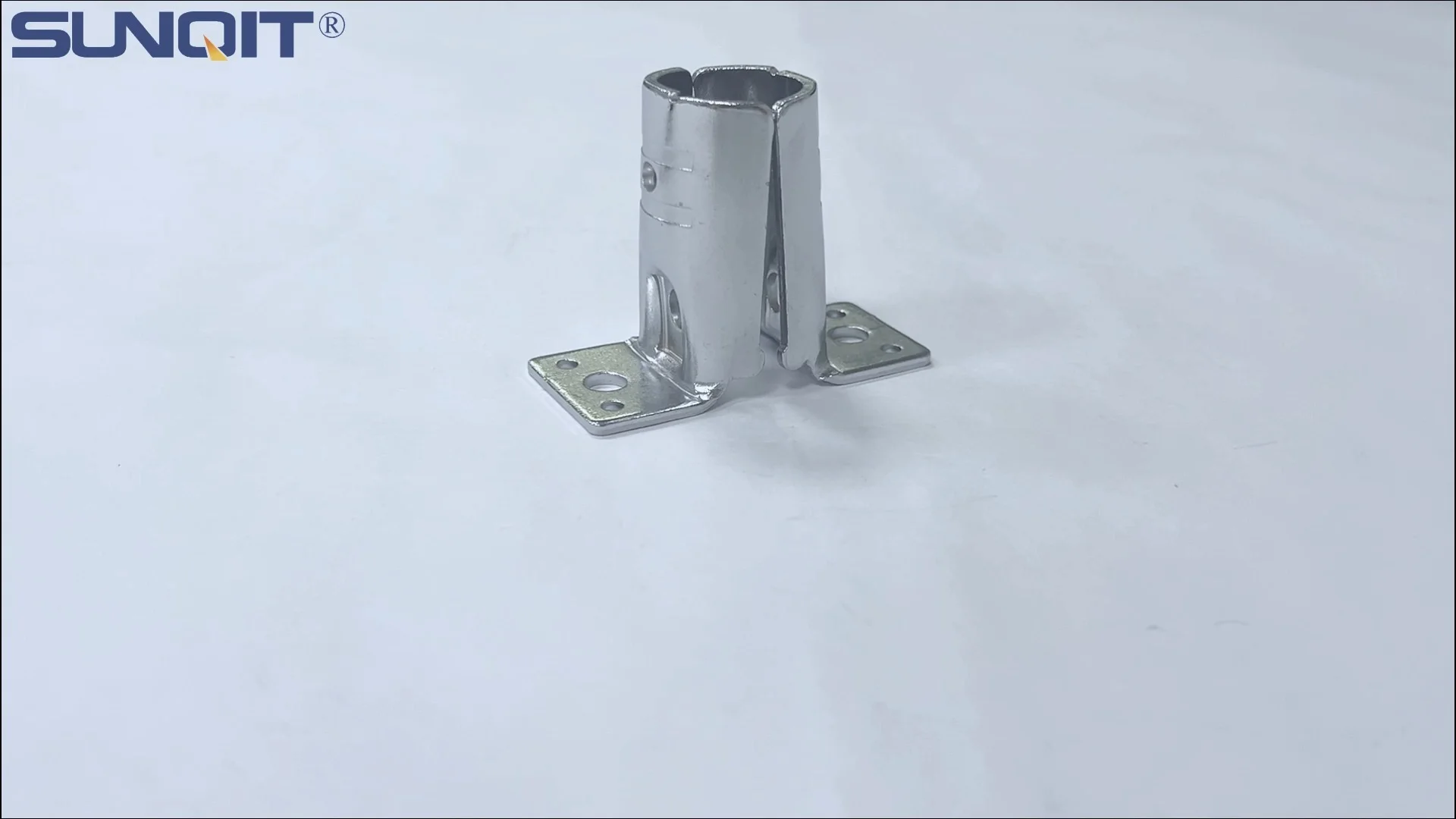
Vertical Lean Pipe Joint
Vertical lean pipe joint is used for 28mm lean pipe fixed on ground and keep it stable.
Walk into any busy consumer electronics repair station, and you'll likely find a flurry of activity: technicians hunched over workbenches, tweezers in hand, navigating tiny screws and delicate circuit boards. Phones, laptops, tablets, and smartwatches—each with its own unique components—pile up, waiting for diagnosis and repair. In this high-stakes environment, where precision and speed matter, the smallest inefficiencies can snowball into missed deadlines, frustrated customers, and even costly mistakes like static damage to sensitive parts. This is where the quiet power of lean pipe systems comes into play, and at the heart of these systems lies an unsung hero: the vertical lean pipe joint.
The Hidden Challenges of Electronics Repair Stations
Consumer electronics repair is a balancing act. Technicians need quick access to tools—screwdrivers, spudgers, heat guns—without cluttering their workspace. They must organize hundreds of tiny parts (think 0.5mm screws or microchips) to avoid loss or mix-ups. They need to protect sensitive components from electrostatic discharge (ESD), which can fry a motherboard in an instant. And they need to do all this in limited space, often juggling multiple repairs at once.
Traditional workstations, with fixed shelves, bulky toolboxes, and static-prone surfaces, often fall short. A technician might spend 10 minutes hunting for a specific screwdriver buried under a pile of parts, or accidentally knock over a container of screws while reaching for a cable. Static buildup from plastic workbenches or ungrounded tools can ruin a $500 component in seconds. Meanwhile, rigid, one-size-fits-all setups fail to adapt to the varying needs of repairing a 7-inch tablet versus a 15-inch laptop.
This is where lean manufacturing principles—focused on minimizing waste, maximizing efficiency, and adapting to change—have revolutionized repair stations. And at the core of these lean setups are lean pipe systems, built from modular pipes and joints that let technicians customize their workspace on the fly. Among these components, vertical lean pipe joints stand out as critical connectors that transform cluttered chaos into streamlined order.
Lean Pipe Systems: Building Blocks of Adaptable Workspaces
Lean pipe systems, originally developed in manufacturing to optimize production lines, have found a second home in electronics repair. Made from materials like aluminum, steel, or plastic-coated steel ( pe coated lean pipe ), these systems consist of pipes and joints that snap together without welding or complex tools. The result? A workspace that can be reconfigured in minutes, not days, to meet evolving needs.
Imagine a repair station where the workbench height adjusts to fit a technician's posture, where tool racks pivot to bring frequently used items within arm's reach, and where parts bins slide smoothly along tracks to reduce bending and stretching. This isn't just a dream—it's the reality of a well-designed lean pipe system. And none of it would be possible without the versatility of joints, especially vertical lean pipe joints, which anchor vertical structures (like tool towers, shelving, or ESD grounding arms) to horizontal workbenches or frames.
Unlike fixed metal brackets or glued joints, vertical lean pipe joints are engineered for flexibility. They can rotate, lock into place, and support varying weights, making them ideal for holding everything from lightweight tool hooks to heavy power supplies. Whether you're mounting a magnifying lamp above a repair area or a bin for discarded packaging, vertical joints provide the stability and adjustability needed to keep the workspace functional and personalized.

Vertical Lean Pipe Joints: The Backbone of Customization
At first glance, a vertical lean pipe joint might seem simple—a small, often metallic component with holes or clamps to connect pipes. But its design is deceptively clever. Most vertical joints are made from durable materials like zinc-plated steel or aluminum, chosen for their strength and resistance to corrosion (important in busy repair shops where spills or humidity are common). They feature internal mechanisms that allow 360-degree rotation or fixed angles, letting technicians position vertical pipes exactly where they need them.
Take, for example, a vertical lean pipe joint with a swivel base. A technician repairing a laptop might swing a tool rack mounted on a vertical pipe from the left to the right side of their workbench, depending on whether they're accessing the keyboard or the screen. When not in use, the rack can be rotated out of the way to free up space. For heavier items, like a soldering iron station, a fixed vertical joint ensures stability, preventing accidental tipping during use.
Another key feature of vertical joints is their load capacity. A typical joint can support 15–30 kg, enough to hold multiple layers of tool organizers, parts bins, or even small monitors for displaying repair guides. This load capacity is critical in repair stations, where every inch of vertical space is valuable. Instead of spreading tools across the workbench surface, technicians can store them vertically, keeping the area clear for the device being repaired.
| Joint Type | Key Features | Primary Use in Repair Stations | Advantage Over Traditional Setups |
|---|---|---|---|
| Vertical Lean Pipe Joint (Swivel) | 360° rotation, zinc-plated steel, 20kg load capacity | Tool racks, ESD grounding arms, adjustable lighting | Adapts to left/right-handed technicians; frees up surface space |
| 90° Fixed Lean Pipe Joint | Locked 90° angle, aluminum alloy, 25kg load capacity | Shelving, vertical part bins, monitor mounts | Sturdy vertical storage without workspace |
| 180° Swivel Lean Pipe Joint | 180° rotation, plastic-coated steel, 15kg load capacity | Temporary part holders, fold-down work surfaces | Collapsible when not in use; ideal for small stations |
| Parallel Lean Pipe Joint | Dual-pipe connection, steel with rubber grips, 30kg load capacity | Heavy tool towers, dual-sided workbenches | Supports multiple vertical pipes for expanded storage |

From Workbench to ESD Workstation: Integrating Vertical Joints
A repair station isn't just about tools and parts—it's about protecting the devices being repaired. ESD, or electrostatic discharge, is a silent killer in electronics repair. Even a small static shock (undetectable to humans) can damage semiconductors, capacitors, or integrated circuits. That's why esd workstation setups are non-negotiable, and vertical lean pipe joints play a key role in making these workstations effective.
An ESD workstation typically includes an anti-static workbench surface, grounded mats, wrist straps, and ionizers to neutralize static charges. Vertical lean pipe joints are used to mount these components securely. For example, an ionizer fan can be attached to a vertical pipe above the workbench, positioned to blow ionized air directly onto the device. The vertical joint ensures the fan stays in place, even when technicians move around the bench. Similarly, grounding straps can be connected to vertical pipes (which are themselves grounded to the building's electrical system), providing a continuous path for static to dissipate safely.
But ESD protection is just one part of the equation. The workbench itself, often built from lean pipe and aluminum profiles, relies on vertical joints to maintain stability. A typical repair workbench might have a flat surface supported by four vertical pipes, each connected to the frame with fixed vertical joints. This modular design allows shops to adjust the bench height (by swapping out pipe lengths) to suit technicians of different heights, reducing strain on backs and shoulders during long repair sessions.
Vertical joints also enable the addition of accessories like side rails for holding repair manuals, cup holders (to prevent spills on devices), or even small whiteboards for jotting down part numbers. These additions might seem minor, but they contribute to a more organized, stress-free workspace—exactly what technicians need to stay focused on intricate repairs.

Roller Track: Keeping Parts Flowing with Vertical Joint Support
In a busy repair station, parts and tools need to move as efficiently as the technicians. That's where roller track systems come in, and once again, vertical lean pipe joints are there to support them. Roller tracks—rows of small, free-spinning wheels—allow parts bins, tool trays, or even entire device holders to slide smoothly from one end of the workbench to the other. This eliminates the need to reach across the bench or walk to a separate shelf, saving precious seconds per repair.
Vertical joints are used to mount roller tracks at the perfect height. For example, a roller track might be attached to a vertical pipe above the workbench, holding bins of frequently used screws (0.8mm, 1.0mm, 1.2mm) within easy reach. When a technician needs a screw, they simply slide the bin down the track, grab what they need, and push it back—no bending, no searching. Vertical joints ensure the track stays level and secure, even with constant sliding.
Roller tracks can also be mounted vertically, using vertical joints to create a "parts elevator" along the side of the workbench. This is especially useful for storing larger items, like replacement screens or batteries, which can be slid up or down to the desired height. In a shop repairing 50+ devices daily, this vertical storage method cuts down on floor space and reduces the risk of items being knocked over.
The beauty of roller track systems, supported by vertical lean pipe joints, is their adaptability. If a shop starts repairing more tablets (which require larger parts bins), they can easily add extra roller track sections using additional vertical joints. If a technician prefers their parts on the left instead of the right, the track can be repositioned in minutes. This flexibility is impossible with fixed wooden shelves or metal racks, which require drilling, sawing, or even replacement to modify.
Case Study: How a Phone Repair Shop Cut Repair Time by 30% with Vertical Lean Pipe Joints
Consider "QuickFix Repairs," a small phone repair shop in downtown Chicago with 5 technicians. Before adopting lean pipe systems, their workstations were a mix of secondhand wooden tables and plastic toolboxes. Technicians reported spending 15–20 minutes per repair just searching for tools or parts, and static damage ruined 2–3 devices per month. The shop owner, Maria, was frustrated with low productivity and high waste.
After researching solutions, Maria invested in lean pipe workbenches, esd workstation surfaces, and a set of vertical lean pipe joints. Each workstation was customized: vertical pipes with swivel joints held tool organizers (screwdrivers, tweezers, spudgers) that rotated to face the technician. Roller tracks, mounted on vertical joints above the benches, held color-coded parts bins (red for iPhone screws, blue for Samsung, etc.). ESD wrist straps were connected to the vertical pipes, ensuring continuous grounding.
The results were dramatic. Within a month, tool search time dropped to 2–3 minutes per repair, and static damage fell to zero. Technicians could now repair 8–10 phones daily instead of 5–6, boosting revenue by 40%. "The vertical joints made all the difference," Maria noted. "We could adjust everything to how each tech worked—no more forcing someone to use a setup that didn't fit their style. It's like giving them a workspace tailored just for them."
Maintaining Your Lean System: Caring for Vertical Lean Pipe Joints
To keep a lean pipe system performing at its best, regular maintenance is key—and vertical lean pipe joints are no exception. Here are a few simple steps repair shops can take to ensure their joints (and the entire system) last for years:
- Tighten joints monthly: With daily use, the bolts or clamps on vertical joints can loosen. A quick check with a hex key or wrench ensures joints stay secure, preventing wobbling tool racks or sagging shelves.
- Clean with a dry cloth: Repair shops can get dusty, and debris in joint mechanisms can hinder rotation. Wiping joints down monthly with a dry microfiber cloth removes dust and prevents jamming.
- Lubricate moving parts: Swivel vertical joints benefit from a drop of machine oil every 3 months to keep rotation smooth. Avoid using WD-40, which can attract dust over time.
- Inspect for corrosion: In humid environments, steel joints may rust. If rust spots appear, sand them lightly and apply a thin coat of anti-corrosion spray to prevent further damage.
- replace worn parts: If a joint's rotation becomes stiff or a clamp no longer holds the pipe securely, replace it immediately. Most lean pipe suppliers offer affordable replacement joints, and swapping one out takes less than 5 minutes.
By following these steps, repair shops can ensure their vertical lean pipe joints remain reliable, keeping the entire system functional and efficient.
Beyond the Repair Station: Scaling with Vertical Lean Pipe Joints
The benefits of vertical lean pipe joints extend beyond individual workstations. As a repair shop grows, lean pipe systems can scale to meet new demands—all thanks to the modularity of pipes and joints. For example, adding a second workbench requires only a few extra pipes and vertical joints, which can be assembled on-site without professional help. A new storage area for repaired devices can be built using vertical joints to create tall, narrow racks that maximize vertical space.
Even specialized areas, like a testing station for repaired devices, can be built with vertical lean pipe joints. Imagine a setup where vertical pipes, connected by swivel joints, hold charging cables, diagnostic tools, and a small monitor. Technicians can rotate the tools to test a phone, then swing them out of the way to test a laptop—all without moving the device itself.
In larger facilities, lean pipe systems with vertical joints can even be used to create assembly lines for more complex repairs, like laptop motherboard replacements. Each station in the line focuses on one step (removing the old motherboard, installing the new one, testing), with vertical joints supporting tool storage and parts delivery via roller tracks. This division of labor, made possible by modular workspaces, further boosts efficiency and consistency.
Conclusion: Vertical Lean Pipe Joints—Small Components, Big Impact
In the world of consumer electronics repair, where precision, speed, and safety are paramount, vertical lean pipe joints are more than just hardware—they're enablers of excellence. By supporting customizable workbenches, ESD protection systems, roller tracks, and tool storage, these small but mighty components transform chaotic repair stations into havens of efficiency.
Technicians no longer waste time searching for tools or fighting with cluttered workspaces. Static damage, once a constant threat, becomes a thing of the past. And shop owners see higher productivity, happier employees, and more satisfied customers. In short, vertical lean pipe joints prove that the most impactful solutions in any industry are often the ones working quietly behind the scenes.
So the next time you pick up a repaired phone or laptop, take a moment to appreciate the unseen infrastructure that made it possible. Chances are, somewhere in that repair shop, a vertical lean pipe joint is hard at work—holding, supporting, and adapting to keep the world of consumer electronics running smoothly.