- Company Articles
- Products and Technology
- Application Cases
- Vertical Lean Pipe Joints in Pharmaceutical Manufacturing: Cleanroom Compliance

Vertical Lean Pipe Joints in Pharmaceutical Manufacturing: Cleanroom Compliance
Related Product
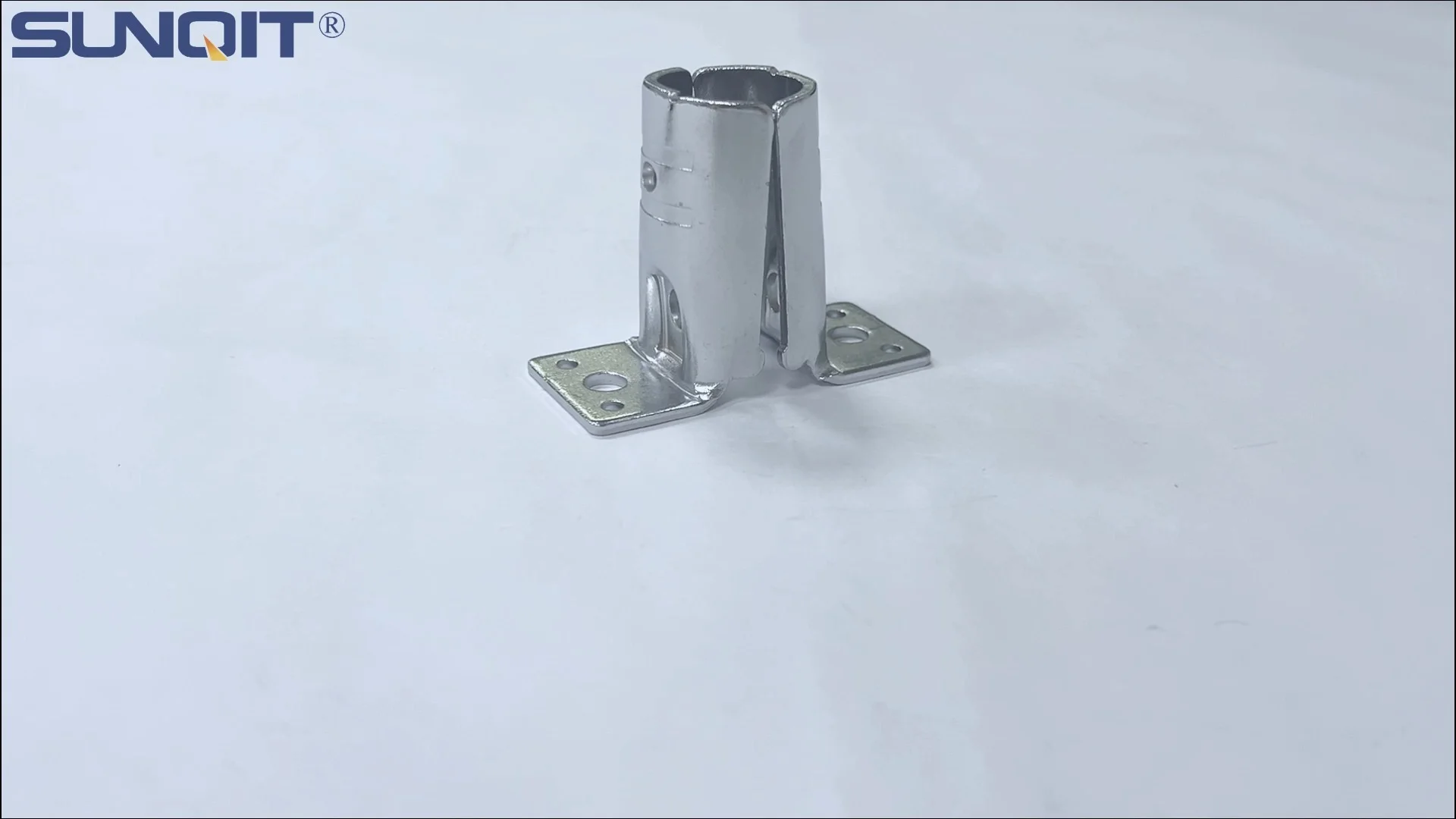
Vertical Lean Pipe Joint
Vertical lean pipe joint is used for 28mm lean pipe fixed on ground and keep it stable.
In the world of pharmaceutical manufacturing, where the line between safe, effective products and costly recalls is razor-thin, every detail of the production environment matters. Cleanrooms, the controlled spaces where drugs, medical devices, and biologics are made, are the frontline of this battle—they must maintain stringent levels of cleanliness, sterility, and order to meet regulatory standards and protect patient health. Yet, these spaces also face the pressure of modern manufacturing: adaptability. As production needs shift—new products, updated processes, or scaled output—cleanrooms can't afford to be rigid. This is where vertical lean pipe joints step in, quietly revolutionizing how pharmaceutical facilities balance compliance and flexibility.
If you've ever toured a pharmaceutical plant, you've likely seen the hallmarks of a well-designed cleanroom: sealed walls, HEPA filtration systems, and workers in head-to-toe gowns. What you might not notice, however, is the infrastructure holding it all together—the racks, workstations, and material transport systems that keep operations flowing. These structures are more than just "furniture"; they're critical components of compliance. A poorly designed rack with hard-to-clean crevices, or a workstation that can't be sanitized thoroughly, becomes a hidden risk for contamination. This is why forward-thinking manufacturers are turning to lean pipe systems, and in particular, vertical lean pipe joints, to build the backbone of their cleanrooms.
The Stakes of Cleanroom Compliance: Why "Good Enough" Isn't Enough
Before diving into the role of vertical lean pipe joints, it's important to ground ourselves in what's at stake with cleanroom compliance. For pharmaceutical manufacturers, compliance isn't just a box to check—it's a legal, ethical, and financial imperative. Regulatory bodies like the FDA (Food and Drug Administration), EMA (European Medicines Agency), and ISO (International Organization for Standardization) have laid out strict guidelines that dictate everything from air particle counts to surface materials.
Take ISO 14644-1, for example, which classifies cleanrooms based on the number of particles (0.5μm and larger) permitted per cubic meter of air. An ISO 5 cleanroom—common for sterile product manufacturing—allows no more than 3,520 particles per m³, compared to the millions found in a typical office. Meanwhile, the FDA's Current Good Manufacturing Practices (cGMP) go further, requiring that "facilities shall be designed, constructed, and maintained to prevent contamination" (21 CFR Part 211.42). This means every surface, joint, and corner must be designed to resist microbial growth and facilitate easy cleaning.
The consequences of non-compliance are stark. In 2022, a major pharmaceutical company recalled over 100,000 bottles of blood pressure medication due to contamination traced back to a poorly maintained mixing tank—costing millions in fines and reputational damage. In another case, a medical device manufacturer faced a FDA warning letter after inspectors found "uncleanable gaps in workstation joints" that could harbor bacteria. These incidents aren't outliers; they're reminders that compliance failures often start with the smallest details—like how a pipe connects to a joint.
The Challenge of Rigid Infrastructure: Why Traditional Systems Fall Short
For decades, pharmaceutical cleanrooms relied on fixed infrastructure: welded steel racks, concrete workbenches, and custom-built shelving. These systems were durable, but they came with a critical flaw: rigidity. When a manufacturer needed to adjust a workstation height for ergonomics, add a shelf for new raw materials, or reconfigure a production line for a clinical trial batch, they faced a dilemma. Tearing down and rebuilding fixed structures meant shutting down the cleanroom, disrupting production, and incurring high costs. Worse, welding or cutting metal on-site risked introducing contaminants—sparks, dust, or debris—that could compromise the cleanroom's air quality.
Plastic or aluminum systems emerged as alternatives, but they brought their own issues. Plastic, while lightweight, often couldn't withstand the frequent sanitization cycles (think daily wipe-downs with 70% isopropyl alcohol or hydrogen peroxide fogging) required in pharma cleanrooms, leading to cracking or discoloration over time. Aluminum, though corrosion-resistant, sometimes lacked the structural strength for heavy loads, and its joints—often held together with bolts or screws—created tiny crevices where bacteria could hide. For compliance officers, these were red flags: "How do we prove this surface is truly clean if we can't reach every inch?"

Enter Lean Pipe Systems: A New Era of Modular Cleanroom Design
Lean manufacturing principles—focused on eliminating waste, improving efficiency, and continuous improvement—have long been a cornerstone of industries like automotive and electronics. But in recent years, their application to pharmaceutical manufacturing has gained momentum, driven by the need for both efficiency and compliance. At the heart of this shift are lean pipe systems, also known as "flexpipe" systems: modular structures built from pipes and joints that can be assembled, disassembled, and reconfigured without welding, cutting, or specialized tools.
Lean pipe systems are simple in concept but powerful in execution. They use lightweight yet strong pipes (typically steel, stainless steel, or aluminum) and precision-engineered joints to create everything from workbenches and material racks to mobile trolleys and conveyor supports. What makes them transformative for cleanrooms is their modularity: a single system can be reimagined dozens of times over its lifespan, adapting to new processes or product lines without major construction. And at the center of this adaptability are the joints—the connectors that hold the system together. Among these, vertical lean pipe joints play a starring role, enabling the creation of vertical structures (like multi-tiered racks or tall workstations) that maximize space in often cramped cleanrooms.
What Are Vertical Lean Pipe Joints?
Vertical lean pipe joints are specialized connectors designed to join vertical pipes to horizontal pipes, other vertical pipes, or accessories like shelves, hooks, or tool holders. Unlike traditional pipe fittings, which may use threads, bolts, or welding, these joints are engineered for quick assembly and disassembly. Most use a clamping mechanism: a split collar that wraps around the pipe, secured by a lever or a hex key, creating a tight, stable connection without damaging the pipe's surface. This design is a game-changer for cleanrooms, but their benefits go far beyond easy assembly.
Let's break down their key features, using a common example: a stainless steel vertical lean pipe joint from a reputable "stainless steel pipe series" (a keyword that highlights the material's importance in pharma). First, the material: 316L stainless steel. This grade is prized in pharmaceutical manufacturing for its exceptional corrosion resistance—critical in environments where frequent exposure to water, sanitizers, and even harsh chemicals (like bleach for viral decontamination) is the norm. Unlike carbon steel, which can rust, or aluminum, which may pit, 316L stainless steel maintains its integrity over years of use, ensuring the joint doesn't become a source of particulate contamination.
Second, the design: smooth, crevice-free surfaces. A well-engineered vertical lean pipe joint has no threads, gaps, or recesses where bacteria, dust, or product residue can accumulate. The connection between the joint and the pipe is seamless, with rounded edges that prevent "dead zones" during cleaning. When a technician wipes down the structure with a lint-free cloth or runs a sanitizing sponge over it, they can cover every square inch—no hidden corners to worry about. For compliance audits, this is invaluable: it means the manufacturer can provide documented proof that the surface is clean, meeting FDA and ISO requirements for "aseptic processing."
Third, versatility. Vertical lean pipe joints aren't one-trick ponies. They can connect pipes at 90-degree angles (for building square racks), 45 degrees (for diagonal bracing), or even 180 degrees (for extending vertical columns). Some models include built-in slots or holes for attaching accessories like tool hooks, label holders, or even small shelves, eliminating the need for additional brackets that could create more crevices. This versatility means a single set of joints can be used to build everything from a 4-foot-tall workbench (there's the "workbench" keyword!) for tablet counting to a 10-foot-tall material rack for storing vials—all within the same cleanroom.

Compliance in Action: How Vertical Lean Pipe Joints Support Regulatory Standards
For pharmaceutical manufacturers, compliance isn't just about avoiding fines—it's about ensuring patient safety. Vertical lean pipe joints, when designed and implemented correctly, act as silent allies in this mission. Let's walk through how they support key regulatory requirements, using real-world scenarios.
1. Material Compliance: Meeting FDA and USP Standards
The FDA's Code of Federal Regulations (21 CFR Part 211.65) states that "equipment shall be constructed so that surfaces that contact components, in-process materials, or drug products shall be inert, non-reactive, non-absorptive, and not shedding particles." For vertical lean pipe joints, this translates to material selection. Stainless steel 316L, as part of a "stainless steel pipe series," is often the gold standard here. It's inert, meaning it won't react with drug products (even acidic or basic formulations), and it doesn't absorb liquids or chemicals, preventing cross-contamination between batches. Unlike plastic joints, which might leach additives into sanitizers, or painted metal, which can chip and shed particles, 316L stainless steel is "passive"—it interacts minimally with its environment, keeping the product safe.
The United States Pharmacopeia (USP) further reinforces this with USP <88> Biological Reactivity Tests and USP <661> Plastic Packaging Systems and Their Materials of Construction. While these standards focus more on product contact surfaces, they set a precedent for all materials in the cleanroom: they must be "biologically safe." Stainless steel vertical lean pipe joints, being non-porous and non-reactive, easily meet these criteria, giving quality assurance teams peace of mind.
2. Cleanability: Simplifying Aseptic Processing
ISO 14644-2, the standard for cleanroom maintenance, emphasizes that "surfaces shall be smooth, non-shedding, and resistant to the cleaning agents and disinfectants used." Vertical lean pipe joints excel here, thanks to their smooth, crevice-free design. Consider a scenario: a cleanroom operator is performing a post-production cleaning check on a workstation built with vertical lean pipe joints. They spray the surface with a quaternary ammonium compound (a common disinfectant), let it sit for the required contact time, then wipe it down with a sterile wipe. Because the joint has no bolts, threads, or gaps, the wipe glides over the surface, leaving no residue behind. A swab test later confirms: no colony-forming units (CFUs) of bacteria or fungi—passing the strict microbial limits set by the FDA for sterile manufacturing (often ≤1 CFU per 25 cm²).
Compare this to a traditional bolted joint: the threads around the bolt head create tiny valleys where bacteria can hide. Even with thorough cleaning, a swab might pick up 5 or 10 CFUs, triggering an investigation, additional cleaning cycles, and potential delays in production. Over time, these "false failures" waste time and resources—something vertical lean pipe joints help eliminate.
3. Adaptability: Reducing Downtime and Contamination Risks
One of the most underrated compliance benefits of vertical lean pipe joints is their role in reducing downtime during reconfiguration. When a manufacturer needs to adjust a lean pipe system—say, raising a workbench by 6 inches to accommodate taller operators or adding a shelf to a material rack—they can do so in hours, not days. Since vertical lean pipe joints require no welding, cutting, or drilling, the process is clean and fast: loosen the joint, adjust the pipe, retighten, and sanitize. There's no need to bring in construction crews, shut down the cleanroom, or perform extensive air quality testing afterward (though routine monitoring is still required). This minimizes disruption to production schedules and reduces the risk of contamination from construction-related activities.
For example, a contract development and manufacturing organization (CDMO) working on multiple clinical trial batches might need to reconfigure a production line weekly. With vertical lean pipe joints, their team can disassemble a workstation on Friday evening, reconfigure it over the weekend, and have it sanitized and ready for Monday's batch—all without compromising the cleanroom's ISO 7 classification. This agility not only supports compliance with FDA's "flexibility in manufacturing" guidelines but also helps the CDMO meet tight clinical trial timelines, getting life-saving drugs to patients faster.

Real-World Applications: Vertical Lean Pipe Joints in Action
To understand the impact of vertical lean pipe joints, let's look at three common applications in pharmaceutical cleanrooms, where compliance and functionality intersect.
1. Aseptic Workstations for Drug Compounding
In sterile compounding cleanrooms (ISO 5 or better), where pharmacists or technicians prepare injectable drugs like chemotherapy or antibiotics, workstations are the center of activity. These workstations must be height-adjustable (to suit different operators), stable (to prevent spills), and easy to sanitize (to maintain sterility). A typical setup might include a flat work surface (often stainless steel), integrated tool holders for syringes and vials, and a waste bin for sharps. With vertical lean pipe joints, manufacturers can build these workstations to custom specifications: the vertical pipes support the work surface at the desired height, while horizontal pipes create a frame for attaching accessories. If an operator reports wrist strain from bending over, the team can loosen the vertical joints, raise the surface by 2 inches, and retighten—all in 15 minutes, with no disruption to the cleanroom.
2. Multi-Tiered Material Racks for Raw Material Storage
Raw materials—active pharmaceutical ingredients (APIs), excipients, and packaging components—need to be stored in cleanrooms to prevent contamination before use. Space is often limited, so multi-tiered racks are essential. Vertical lean pipe joints make these racks both sturdy and adjustable. For example, a rack built with vertical joints might have three shelves: the bottom for heavy API containers, the middle for excipient bags, and the top for small tools. If a new API arrives in taller drums, the team can remove a shelf by detaching the vertical joints, reposition the remaining shelves, and reattach—no need to buy a new rack. The stainless steel construction ensures the rack resists corrosion from condensation (common in refrigerated cleanrooms) and stands up to daily cleaning.
3. Mobile Trolleys for Material Transport
Moving materials between cleanroom zones (e.g., from the warehouse to the filling line) requires trolleys that are easy to maneuver, stable, and cleanable. Vertical lean pipe joints, combined with casters (another key accessory), create durable mobile trolleys. The vertical pipes form the trolley's frame, while horizontal pipes create shelves or a platform for holding bins. Since the joints are secure, the trolley doesn't wobble, even when carrying heavy loads (like glass vials for injectables). After use, the trolley can be wheeled to a cleaning station, wiped down, and sanitized—its smooth surfaces ensuring no residue is left behind. For compliance, this means fewer opportunities for cross-contamination between zones.
Material Selection for Vertical Lean Pipe Joints: A Comparison
While stainless steel is the gold standard for pharmaceutical cleanrooms, it's not the only option for vertical lean pipe joints. Depending on the cleanroom's classification (e.g., ISO 8 vs. ISO 5), the type of product being manufactured (oral solids vs. sterile injectables), and budget constraints, manufacturers may consider alternatives. Below is a comparison of common materials, highlighting their compliance benefits and limitations:
| Material Type | Key Compliance Features | Cleanability Rating (1-5) | Resistance to Sanitizers | Cost Range | Ideal Application |
|---|---|---|---|---|---|
| 316L Stainless Steel (Stainless Steel Pipe Series) | Crevice-free design, corrosion-resistant, FDA-compliant for direct contact | 5 | Excellent (resists alcohols, peroxides, bleach) | High | ISO 5/7 cleanrooms, sterile manufacturing, direct product contact zones |
| Anodized Aluminum (Aluminum Profile) | Lightweight, corrosion-resistant, smooth surface | 4 | Good (resists alcohols, mild disinfectants; avoid strong acids) | Medium | ISO 8 cleanrooms, non-sterile manufacturing (e.g., oral tablets) |
| Plastic-Coated Steel (Lean Pipe Joint) | Low cost, lightweight, color-coded options for zone separation | 3 | Fair (may crack or discolor with frequent peroxide or bleach use) | Low | Warehouse staging areas, non-cleanroom support zones |
For most pharmaceutical cleanrooms, 316L stainless steel remains the top choice, especially in zones where product contact is possible. Its ability to withstand harsh sanitizers, maintain smooth surfaces, and meet regulatory standards makes it worth the higher upfront cost. Aluminum profiles are a strong runner-up for less critical areas, while plastic-coated steel is best reserved for non-cleanroom or low-risk zones (e.g., storage outside the ISO-classified areas).
Maintenance and Validation: Keeping Vertical Lean Pipe Systems Compliant
Even the best vertical lean pipe joints won't maintain compliance on their own—they require proper maintenance and validation. Here's how manufacturers can ensure their systems stay audit-ready:
Routine Inspection
Weekly visual inspections are a must. Technicians should check for signs of wear: loose joints (which can cause wobbling and particulate generation), corrosion (especially in humid cleanrooms), or damage to the surface (like scratches that could harbor bacteria). If a joint is loose, it should be tightened immediately using the manufacturer's recommended tool (usually a hex key or torque wrench to avoid over-tightening, which can damage the pipe). Any damaged joints should be replaced promptly—don't wait for an audit to flag them.
Cleaning Validation
As part of their overall cleaning validation program, manufacturers should include lean pipe systems. This involves: (1) selecting a worst-case scenario (e.g., the joint most difficult to clean), (2) applying a soil (e.g., product residue,), (3) performing the standard cleaning procedure, and (4) testing the surface for residues or microbes. For vertical lean pipe joints, this might involve swabbing the joint-pipe interface and sending the swab to the lab for HPLC (to detect chemical residues) or agar plating (to count CFUs). Passing results demonstrate that the system can be cleaned effectively, supporting compliance with FDA's 21 CFR Part 211.67 ("Equipment cleaning and maintenance").
Documentation
Compliance is as much about paperwork as it is about performance. Manufacturers should keep detailed records of: (1) material certificates for the joints (e.g., 316L stainless steel test reports), (2) maintenance logs (inspection dates, tightened joints, replacements), (3) cleaning validation results, and (4) reconfiguration records (dates, changes made, sanitization steps). During FDA inspections, this documentation proves that the system is "controlled" and that the manufacturer takes compliance seriously.
Future Trends: Where Vertical Lean Pipe Joints Are Headed
As pharmaceutical manufacturing evolves, so too will the role of vertical lean pipe joints. Here are three trends shaping their future:
1. Smart Joints with Embedded Sensors
The rise of Industry 4.0 is bringing "smart" technology to cleanrooms, and vertical lean pipe joints are no exception. Imagine a joint with a built-in sensor that monitors temperature, humidity, or even joint tightness. If the joint loosens beyond a safe torque, it sends an alert to the maintenance team's tablet, preventing failure. Or, in a cold-storage cleanroom, a temperature sensor in the joint could flag if the environment exceeds the required range, protecting heat-sensitive vaccines. These "smart joints" would add a layer of proactive compliance, turning reactive maintenance into predictive action.
2. 3D-Printed Custom Joints
3D printing (additive manufacturing) is revolutionizing custom part production, and vertical lean pipe joints are poised to benefit. For manufacturers with unique needs—e.g., a joint that connects three pipes at a 120-degree angle for a circular workstation—3D printing could create one-of-a-kind stainless steel joints with perfectly smooth surfaces. This would reduce lead times for custom designs and allow for even more flexibility in cleanroom layouts.
3. Sustainability-Focused Materials
As pharmaceutical companies aim to reduce their environmental footprint, vertical lean pipe joints may see a shift toward recycled or recyclable materials. For example, manufacturers could use recycled 316L stainless steel for joints, without compromising performance. Additionally, modularity itself supports sustainability: a lean pipe system that can be reconfigured 10 times over its lifespan reduces the need for new materials, cutting down on waste.
Conclusion: Balancing Compliance and Innovation
In the high-pressure world of pharmaceutical manufacturing, vertical lean pipe joints are more than just connectors—they're compliance partners. By combining the rigidity needed for cleanroom integrity with the flexibility to adapt to changing needs, they help manufacturers meet the dual demands of regulation and innovation. Whether it's a 316L stainless steel joint in an ISO 5 cleanroom producing life-saving vaccines or an aluminum joint in a warehouse staging area, these small but mighty components play a critical role in ensuring that every drug that leaves the facility is safe, effective, and compliant.
As we look to the future, one thing is clear: the pharmaceutical industry will continue to push for higher standards of cleanliness, efficiency, and adaptability. Vertical lean pipe joints, with their focus on design, material science, and modularity, are ready to rise to the challenge. For compliance officers, production managers, and facility engineers, they're not just a tool—they're a reminder that sometimes, the most impactful innovations in manufacturing are the ones that hold everything together.