- Company Articles
- Products and Technology
- Technology Sharing
- Vertical Lean Pipe Joints in Smart Factories: Integration with IoT Systems

Vertical Lean Pipe Joints in Smart Factories: Integration with IoT Systems
Related Product
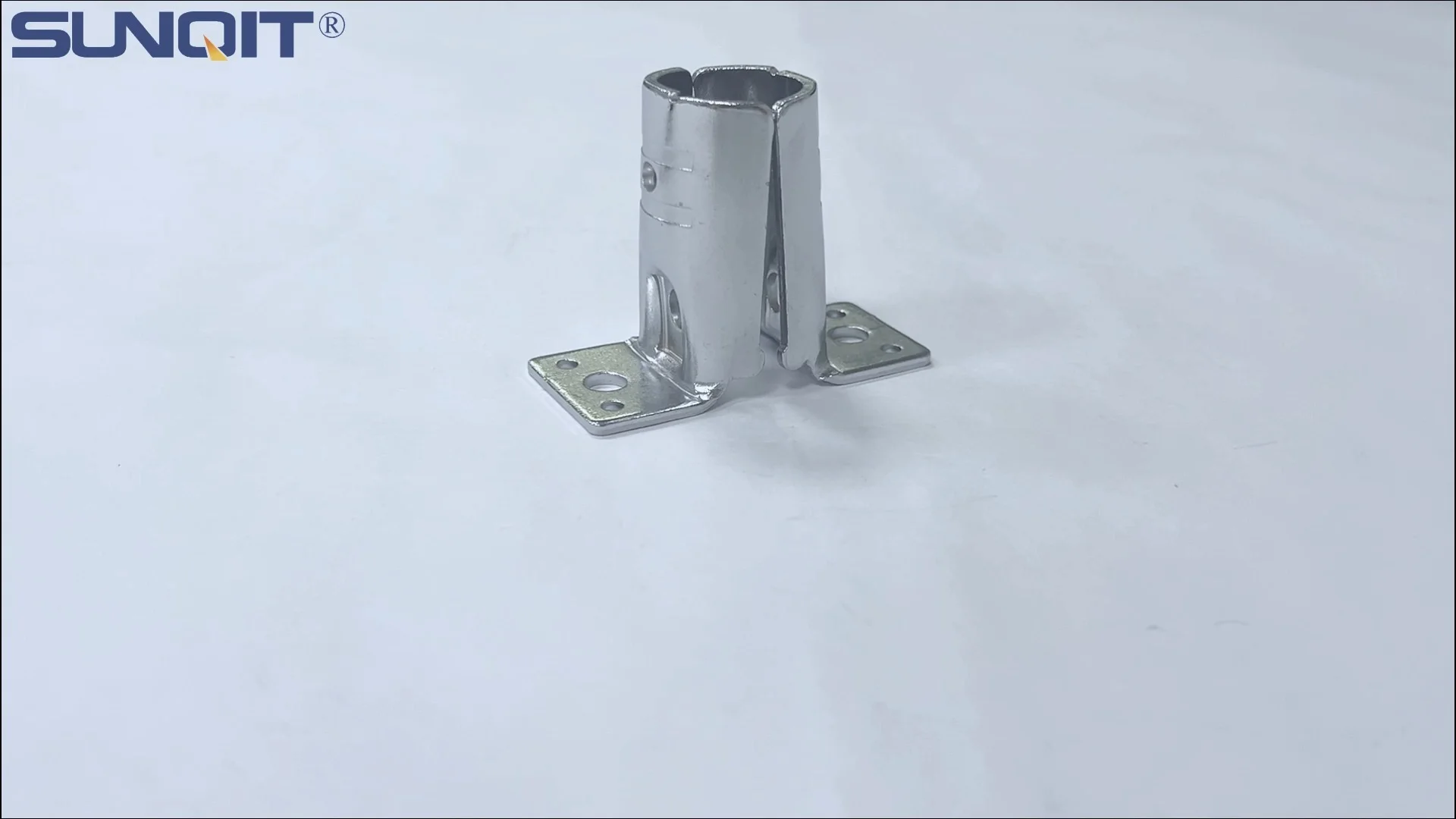
Vertical Lean Pipe Joint
Vertical lean pipe joint is used for 28mm lean pipe fixed on ground and keep it stable.
Walk into any modern smart factory today, and you'll notice a quiet revolution unfolding. The clatter of assembly lines is softer, the movement of materials more intentional, and the air hums with a subtle efficiency that feels almost intuitive. At the heart of this transformation lies the evolution of lean systems —those time-tested frameworks designed to eliminate waste, streamline workflows, and put people at the center of production. But in 2025, lean isn't just about physical organization anymore. It's about data, connectivity, and the ability to adapt in real time. And surprisingly, one of the unsung heroes driving this shift is a humble component you might have overlooked: the vertical lean pipe joint.
For decades, vertical lean pipe joints have been the backbone of factory floors, holding together workbenches, flow racks, and turnover trolleys with quiet reliability. Simple, modular, and endlessly adaptable, they've enabled manufacturers to build and rebuild production lines on the fly, embodying the "lean" philosophy of flexibility. But as factories embrace the Internet of Things (IoT), these unassuming joints are getting a high-tech upgrade. Today, they're not just connectors—they're data hubs, bridging the gap between physical workflow and digital intelligence. Let's dive into how vertical lean pipe joints are redefining what smart manufacturing looks like, and why their integration with IoT systems is more critical than ever.
Understanding Vertical Lean Pipe Joints: The Quiet Workhorses of Lean Systems
Before we talk about IoT, let's ground ourselves in the basics. What exactly is a vertical lean pipe joint, and why has it been a staple in factories for so long? Imagine a typical workbench on an assembly line: its frame is likely made of metal pipes, connected at every corner and joint by small, sturdy components. Those components are lean pipe joints, and the vertical ones specifically handle the upward and downward forces that keep the structure stable—whether it's supporting a heavy tool on a workbench or holding up tiers of a flow rack stacked with parts.
Traditionally, these joints are simple but clever. Take the vertical lean pipe joint chrome variant, for example. Its chrome plating resists corrosion in dusty or humid factory environments, while its clamp-style design lets workers tighten or loosen it with a hex key, making assembly and reconfiguration a breeze. No welding, no specialized tools—just a few twists, and you can adjust the height of a workbench, add a shelf to a flow rack, or reposition a trolley. This modularity is why lean systems rely on them: in a world where production needs change weekly (or even daily), being able to adapt physical spaces quickly is non-negotiable.
But for all their strengths, traditional vertical lean pipe joints have a limitation: they're passive. They hold things together, but they don't "know" anything. A flow rack using these joints can't tell you when a bin is running low on screws. A workbench can't alert you if a tool is left in an unsafe position. They're silent partners, but in a smart factory, silence isn't always golden. That's where IoT steps in.
Why IoT and Vertical Lean Pipe Joints Are a Match Made in Manufacturing Heaven
Smart factories thrive on data. Every machine, every process, and yes, every physical structure generates insights that can make operations smoother, safer, and more efficient. The problem? Most of the factory floor—including the lean systems built with vertical pipe joints—has historically been "dark" to this data. IoT changes that by turning passive structures into active data collectors, and vertical lean pipe joints are the perfect entry point for this transformation.
Think about it: these joints are everywhere. They're in workbenches where operators assemble products, in flow racks that feed materials to production lines, and in turnover trolleys that move goods between stations. If you can embed tiny sensors into these joints, you suddenly have a network of "eyes and ears" covering the entire factory. A joint in a flow rack could track weight, letting you know when a shelf is nearly empty. A joint in a workbench could measure vibration, alerting maintenance if a tool is malfunctioning. A joint in a trolley could track location, optimizing material delivery routes.
But it's not just about data collection—it's about action. IoT-enabled vertical lean pipe joints don't just send numbers to a dashboard; they enable closed-loop systems. For example, if a flow rack's joint sensors detect that a component bin is 90% empty, they can automatically trigger a request to the warehouse for restocking. If a workbench joint senses that a worker has been standing at an awkward angle for too long, it can send a gentle reminder to adjust the height—reducing strain and preventing injuries. This marriage of physical structure and digital intelligence turns lean systems from static frameworks into dynamic, responsive ecosystems.

Key Components of IoT-Enabled Vertical Lean Pipe Systems
So, what does an IoT-enabled vertical lean pipe system actually look like? Let's break it down into the building blocks that make the magic happen. At its core, it's a mix of hardware, software, and connectivity—all integrated seamlessly into the humble pipe joint.
1. Smart Sensors: The "Nervous System" of the Joint
The star of the show is the sensor embedded within the vertical lean pipe joint. These are tiny, low-power devices that measure everything from weight and vibration to temperature and proximity. For example, a load cell sensor in a flow rack joint can detect how much weight is on a shelf—critical for preventing overloading and ensuring worker safety. A proximity sensor might track when a bin is removed or replaced, giving real-time visibility into material flow. Some joints even include gyroscopes to detect if a structure (like a trolley) is being tipped or moved improperly, sending instant alerts to supervisors.
The best part? These sensors are designed to be retrofittable. You don't have to replace all your existing vertical lean pipe joints—just swap out the ones in high-priority areas (like high-traffic flow racks or critical workbenches) with sensor-equipped versions. This modularity keeps costs low and adoption barriers minimal.
2. Connectivity: Bridging the Physical and Digital Worlds
Sensors generate data, but that data needs to get somewhere useful. Most IoT-enabled joints use wireless connectivity—Bluetooth Low Energy (BLE) or Wi-Fi—to send data to a central gateway, which then uploads it to the cloud. For factories with poor Wi-Fi coverage, some joints even act as mesh nodes, relaying data from other sensors to ensure no information gets lost. This "self-healing" network is crucial in large facilities where dead zones are common.
3. Cloud Platforms: Turning Data into Insights
Once the data reaches the cloud, software platforms (like AWS IoT or Microsoft Azure) process it using analytics tools. These platforms can track trends over time—for example, noticing that a particular flow rack's joints consistently report low stock on Tuesdays, indicating a surge in production that day. They can also set thresholds: if a workbench joint's vibration sensor detects unusual movement (signaling a loose tool), it triggers an alert to the maintenance team via a mobile app. Some platforms even integrate with existing ERP or MES systems, so data from the joints feeds directly into production planning and inventory management.
4. Actuators: From Insights to Action
For the most advanced systems, IoT-enabled vertical lean pipe joints include small actuators—motors or solenoids—that allow the joint to "act" on data. Imagine a workbench where the height can be adjusted automatically: sensors in the joints detect the worker's height (via a badge or camera), then trigger the actuators to raise or lower the bench to the optimal position. Or a flow rack where joints lock a shelf in place if it's overloaded, preventing collapse. These actuators turn the joint from a passive connector into an active participant in the workflow.
| Feature | Traditional Vertical Lean Pipe Joints | IoT-Enabled Vertical Lean Pipe Joints |
|---|---|---|
| Data Collection | None—passive structural support only | Weight, vibration, temperature, proximity, and more via embedded sensors |
| Adaptability | Manual reconfiguration (tools required) | Automatic adjustments via actuators; remote monitoring for needed tweaks |
| Maintenance | Reactive (fixed after failure) | Predictive (alerts for loose joints, worn sensors, or overload risks) |
| Integration with Workflow | Independent of digital systems | Seamless connection to ERP/MES platforms; triggers actions like restocking or tool alerts |
| Cost | Lower upfront cost | Higher initial investment, but ROI via reduced waste and downtime |

Real-World Impact: How Factories Are Winning with IoT-Enabled Lean Systems
Talk is cheap—let's look at how IoT-enabled vertical lean pipe joints are making a difference on actual factory floors. Take the case of PrecisionWorks, a mid-sized manufacturer of automotive components. Before integrating IoT, their production line relied on manual checks of flow racks to ensure parts were in stock. Workers would spend 2–3 hours daily walking the line, scribbling notes on clipboards, and then entering data into spreadsheets. Inevitably, mistakes happened: a bin would be marked as full when it was empty, leading to production delays. "We were losing 10–15% of our shift time just on inventory checks," says Raj Patel, PrecisionWorks' operations manager. "And even then, we'd still have stockouts because the data was always a few hours old."
In 2024, PrecisionWorks retrofitted 30% of their flow rack vertical lean pipe joints with IoT sensors. The results were immediate. Sensors tracked bin weights and sent alerts to the warehouse team when stock hit 20% capacity. "Now, our flow racks essentially 'order' their own restocks," Patel explains. "We've cut stockout incidents by 40%, and our workers are spending that 2–3 hours on value-added tasks instead of walking around with clipboards." The ROI? They recouped the sensor investment in just 8 months.
Another example comes from ElectroServe, a consumer electronics plant that produces smart home devices. Their challenge? Worker ergonomics. With assembly tasks varying in height and complexity, workbenches often needed manual height adjustments—leading to delays and occasional strains. By installing IoT-enabled vertical lean pipe joints with height sensors and actuators, ElectroServe created "smart workbenches" that adapt to each worker. Sensors detect the worker's badge (which includes height and preference data) and automatically adjust the bench to their ideal position. "It sounds small, but the difference in morale is huge," says Maria Gonzalez, a production lead at ElectroServe. "No more stopping to crank the bench up or down—we just walk up, and it's ready. And if someone forgets to adjust it, the joint sends a gentle reminder to their tablet. We've seen a 25% drop in reported strains since we rolled this out."

Challenges and Solutions: Navigating the IoT-Lean Integration Journey
Of course, integrating IoT into vertical lean pipe systems isn't without hurdles. Let's address the most common challenges and how forward-thinking factories are overcoming them.
Challenge 1: Cost and ROI Concerns
The biggest pushback? "Is this worth the investment?" For small to medium-sized factories, adding sensors and connectivity to every joint might seem pricey. The solution? Start small. Focus on high-impact areas first—like flow racks that frequently run out of critical parts or workbenches with high injury rates. As Patel from PrecisionWorks puts it: "We didn't IoT-enable every joint overnight. We picked the 10 flow racks that caused the most stockouts, installed sensors, and proved the value. Once leadership saw the savings, scaling up was easy."
Challenge 2: Data Overload
Sensors generate a lot of data. Without the right tools to filter and analyze it, factories can quickly drown in numbers. The fix? Cloud platforms with built-in analytics that prioritize alerts. For example, instead of bombarding managers with every vibration reading, the system only flags anomalies (like sudden, unusual shaking that might mean a loose joint). "We use AI to 'teach' the platform what 'normal' looks like," explains Gonzalez from ElectroServe. "Now, we only get alerts that matter—no more noise."
Challenge 3: Integration with Legacy Systems
Many factories run on older ERP or MES software that wasn't designed for IoT data. The solution? Use cloud-based middleware platforms that act as a bridge between the sensors and legacy systems. These platforms translate IoT data into a format the old software can understand, avoiding the need for a full system overhaul.
Challenge 4: Data Security
With more data flowing over wireless networks, security is a top concern. Factories can mitigate this by using encrypted communication protocols (like TLS 1.3) for sensor data, restricting access to dashboards via role-based permissions, and regularly updating firmware on IoT devices to patch vulnerabilities. "We treat sensor data like any other sensitive info," says Gonzalez. "Encryption, strong passwords, and regular audits—no shortcuts."
The Future: Where Lean and IoT Go From Here
So, what's next for vertical lean pipe joints and IoT? The future is all about deeper integration, smarter automation, and even more human-centric design.
First, expect AI to play a bigger role. Today's IoT systems mostly react to data (e.g., "if stock is low, alert the warehouse"). Tomorrow's systems will predict and prevent issues before they happen. Imagine a vertical lean pipe joint in a flow rack that uses machine learning to forecast stock needs based on production schedules, seasonal demand, and even weather (since humidity can affect material usage in some industries). "We're already testing AI models that predict stockouts 3 days in advance," Patel hints. "That would let us pre-position materials, cutting lead times even further."
Second, look for "self-healing" joints. Future IoT-enabled vertical lean pipe joints might include built-in diagnostic tools that detect loose connections or sensor malfunctions, then trigger a maintenance request automatically. Some could even have self-tightening mechanisms—using small motors to adjust clamps if vibration sensors detect looseness. "Why wait for a joint to fail when it can fix itself?" Gonzalez muses.
Finally, integration with cobots (collaborative robots) will take center stage. Cobots already work alongside humans on factory floors, but IoT-enabled vertical lean pipe joints could act as their "guides." For example, a cobot tasked with restocking a flow rack could use data from the joint's proximity sensors to navigate to the exact shelf, ensuring precise placement. Or a joint in a workbench could signal a cobot to deliver a tool when a worker starts a specific task. "It's not about replacing humans—it's about making their jobs easier and safer," Patel emphasizes. "Cobots handle the heavy lifting, and workers focus on the skilled, creative parts of the job."
Conclusion: Vertical Lean Pipe Joints as the Backbone of Smart Lean Manufacturing
At first glance, vertical lean pipe joints might seem like components—metal bits holding pipes together in a factory. But in reality, they're the unsung heroes of lean systems, enabling the flexibility and adaptability that modern manufacturing demands. Now, with IoT integration, they're evolving into something more: the connective tissue between the physical and digital worlds of smart factories.
By embedding sensors, connectivity, and even actuators into these joints, factories are transforming static lean systems into dynamic, data-driven ecosystems. Flow racks that order their own restocks, workbenches that adapt to workers, and production lines that predict issues before they occur—this isn't science fiction. It's happening today, in factories like PrecisionWorks and ElectroServe, where the humble vertical lean pipe joint is proving that innovation doesn't always mean replacing the old with the new. Sometimes, it means making the old smarter.
As we look ahead, one thing is clear: the future of manufacturing isn't just about machines and data—it's about people. IoT-enabled vertical lean pipe joints are helping factories become more efficient, yes, but also more human-centric. They free workers from tedious tasks, reduce strain, and create environments where people and technology collaborate seamlessly. In the end, that's the true power of smart lean systems: they don't just make factories better—they make work better, too.