- Company Articles
- Products and Technology
- Product knowledge
- Vertical Lean Pipe Joints in Warehousing Logistics: Streamlining Storage Systems

Vertical Lean Pipe Joints in Warehousing Logistics: Streamlining Storage Systems
Related Product
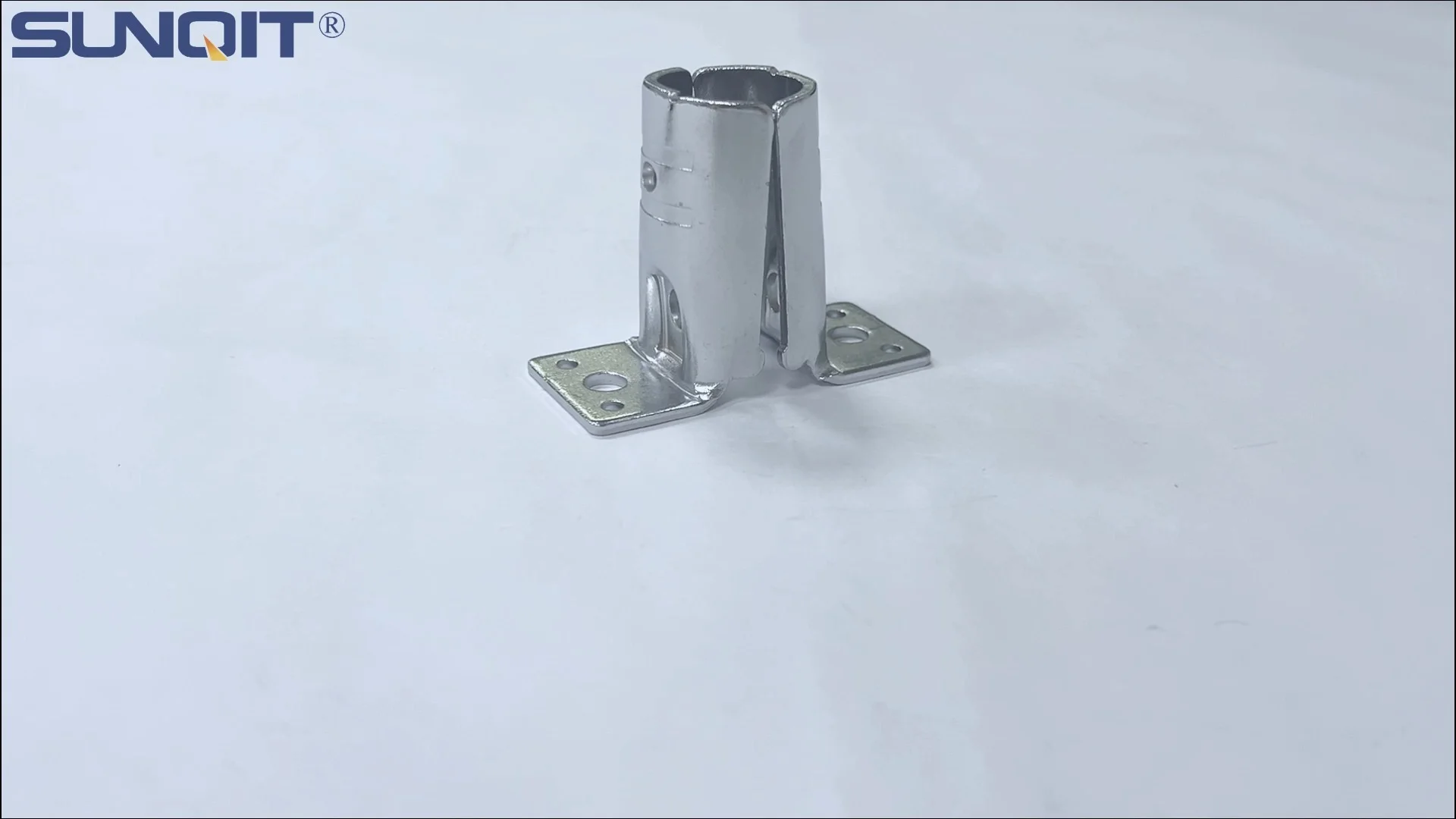
Vertical Lean Pipe Joint
Vertical lean pipe joint is used for 28mm lean pipe fixed on ground and keep it stable.
If you've ever walked through a busy warehouse during peak hours, you know the energy in the air—forklifts humming, workers moving quickly to stack pallets, and the constant buzz of activity as products make their way from storage to shipping. But behind that energy often lies a hidden challenge: inefficiency. Maybe it's a cluttered assembly area where tools are hard to reach, or a material rack that can't adjust to seasonal inventory spikes, or a conveyor system that jams because the flow of goods isn't smooth. These small hiccups add up, costing time, money, and even employee morale.
In recent years, warehouses and distribution centers have turned to lean systems to cut waste and boost productivity. At the heart of these systems is a simple yet powerful component: lean pipe. But what truly makes lean pipe systems adaptable and effective? It's the joints that hold them together—especially vertical lean pipe joints. These unassuming connectors are the unsung heroes of modern warehousing, turning rigid structures into flexible, customizable solutions that grow with your business. In this article, we'll dive into how vertical lean pipe joints are transforming storage systems, making warehouses more efficient, adaptable, and worker-friendly.
The Role of Lean Systems in Modern Warehousing
Before we get into the specifics of vertical lean pipe joints, let's take a step back and understand why lean systems matter in today's logistics landscape. Lean manufacturing—pioneered by Toyota in the 1950s—focuses on eliminating waste ("muda") in all forms: wasted time, wasted space, wasted movement, and even wasted materials. Over time, this philosophy spread beyond manufacturing floors to warehouses, where the goal is the same: do more with less, without sacrificing quality.
In warehousing, waste often shows up as disorganized storage, inefficient material flow, or rigid structures that can't adapt to changing needs. For example, a fixed metal shelf might work well for storing large boxes in January, but if your business shifts to smaller items in June, that shelf becomes a liability. You either waste space or spend money on new storage solutions. Lean systems solve this by prioritizing flexibility, modularity, and simplicity—and that's where lean pipe comes in.
Lean pipe, also known as "flexible pipe" or "kitchen pipe" (a nod to its early use in Japanese factories to build makeshift workstations), is typically a steel pipe coated in plastic or aluminum. It's lightweight, strong, and—most importantly—easy to assemble and reconfigure. But lean pipe alone is just a tube. To build functional structures like workbenches, flow racks, or material trolleys, you need joints. And among all the joint types, vertical lean pipe joints stand out for their ability to create stable, vertical connections that form the backbone of most lean systems.
Understanding Vertical Lean Pipe Joints: More Than Just a Connector
At first glance, a vertical lean pipe joint might look like any other metal connector. But its design is purpose-built for the demands of warehouse environments. Unlike fixed welds or permanent bolts, vertical lean pipe joints allow for quick assembly and disassembly, using simple tools like hex keys or wrenches. They're designed to connect lean pipes at 90-degree angles (though some models offer adjustable angles), creating vertical supports that are both sturdy and flexible.
Let's break down what makes vertical lean pipe joints unique. Most are made from die-cast aluminum or steel, coated to resist corrosion—a must in warehouses where humidity or spills are common. The inner mechanism often includes a clamping system that grips the lean pipe tightly, ensuring the joint won't loosen even under heavy loads. Some models, like the "vertical lean pipe joint chrome" variant, feature a sleek finish that's easy to clean, making them ideal for industries like food processing or pharmaceuticals where hygiene is critical.
But the real magic is in their versatility. A single vertical lean pipe joint can connect multiple pipes: for example, a vertical support pipe, a horizontal shelf beam, and a diagonal brace for extra stability. This modularity means you can build almost anything: a workbench with adjustable height, a flow rack with varying shelf depths, or a mobile trolley with custom storage compartments. And if your needs change? Simply loosen the joint, reposition the pipes, and tighten—no cutting, welding, or specialized labor required.
Common Types of Lean Pipe Joints and Their Uses
| Joint Type | Key Features | Best For |
|---|---|---|
| Vertical Lean Pipe Joint | 90-degree vertical connection, strong clamping grip, corrosion-resistant coating | Workbench legs, flow rack supports, vertical storage towers |
| Three Way Lean Pipe Joint | Connects three pipes at 90-degree angles, ideal for corner supports | Trolley frames, multi-tiered shelving, assembly station corners |
| 90° Straight Lean Pipe Joint | Flat horizontal/vertical connection, low profile for tight spaces | Conveyor rails, shelf edges, lightweight material racks |

How Vertical Lean Pipe Joints Streamline Storage Systems
Now that we understand what vertical lean pipe joints are, let's explore how they solve real-world warehouse problems. We'll look at three key areas: flexibility, durability, and cost-effectiveness. For each, we'll share examples of how these joints make a tangible difference in day-to-day operations.
1. Flexibility: Adapting to Changing Needs
Consider a mid-sized clothing retailer that experiences seasonal spikes. In Q4 (holiday season), they stock bulky winter coats and boots, requiring deep shelves and tall racks. In Q2, they switch to lightweight summer dresses and sandals, needing more horizontal space for bins and hanging racks. With traditional fixed shelving, this would mean either overcrowding the warehouse in Q4 or wasting space in Q2—or worse, buying new shelves twice a year.
With vertical lean pipe joints, the solution is simple. Using lean pipe and vertical joints, they build adjustable flow racks. In Q4, they set the vertical supports 36 inches apart to accommodate large boxes. In Q2, they loosen the joints, reposition the vertical pipes to 24 inches apart, and add more horizontal beams for smaller bins. The entire reconfiguration takes a team of two workers less than a day, with no special tools. This flexibility not only saves space but also reduces stress for warehouse staff, who no longer have to "make do" with ill-fitting storage.
Another example: a contract manufacturer that builds custom electronics for different clients. Each client has unique assembly requirements—some need workbenches with extra shelves for components, others need integrated tool hooks, and a few require ESD (electrostatic discharge) protection to prevent damage to sensitive parts. Instead of building a separate workbench for each client, they use vertical lean pipe joints to create modular workstations. By swapping out accessories (like ESD mats or tool holders) and adjusting the height of the vertical supports, they can reconfigure a single workbench in 30 minutes to meet any client's needs. This not only cuts down on setup time but also reduces the number of workbenches needed, freeing up floor space.
2. Durability: Standing Up to Warehouse Wear and Tear
Warehouses are tough environments. Pipes get bumped by forklifts, shelves are loaded and unloaded hundreds of times a day, and joints are constantly tightened and loosened during reconfigurations. A flimsy joint can lead to wobbly structures, which not only slow down work but also create safety hazards.
Vertical lean pipe joints are built to withstand this abuse. Take the "vertical lean pipe joint chrome" model, for example. Its steel core and chrome plating resist scratches and rust, even when exposed to moisture or cleaning chemicals. The clamping mechanism is designed to maintain grip even after repeated adjustments—unlike plastic joints, which can wear out over time. In fact, many suppliers warranty these joints for 5+ years, a testament to their longevity.
A distribution center for automotive parts shared their experience: they'd previously used plastic joints for their flow racks, but after six months, the joints began to crack under the weight of heavy car parts. They switched to steel vertical lean pipe joints and saw a 90% reduction in joint failures over the next two years. "We used to have a team member dedicated to tightening loose joints every week," said the warehouse manager. "Now, we check them monthly, and most are still rock-solid."
3. Cost-Effectiveness: Saving Money Over Time
At first glance, lean pipe systems with vertical joints might seem more expensive than basic wire shelving or plywood racks. But the long-term savings tell a different story. Let's break down the costs:
- Lower upfront investment: Lean pipe and joints are cheaper than custom metal fabrication. A basic workbench built with lean pipe costs 30-50% less than a welded steel workbench.
- Reduced replacement costs: As we saw with the automotive parts distributor, durable joints mean fewer replacements. Over 5 years, this can save thousands in maintenance.
- Minimal labor costs: Assembling a lean system with vertical joints takes a fraction of the time of building fixed structures. A team of two can build a 20-foot flow rack in a day, compared to 3-4 days for a welded rack.
- Space savings: By maximizing vertical space and adapting to inventory changes, lean systems reduce the need for warehouse expansion. For a warehouse paying $10 per square foot annually, saving 500 square feet equals $5,000 per year.
A small electronics manufacturer in Texas calculated their ROI after switching to lean pipe systems with vertical joints. They spent $12,000 on materials (pipes, joints, accessories) to build workbenches, flow racks, and trolleys. Within the first year, they saved $8,000 in labor costs (faster assembly), $5,000 in space savings (no need to rent extra storage), and $3,000 in reduced product damage (sturdier racks meant fewer fallen items). Total savings: $16,000—more than covering the initial investment.

Integrating Vertical Lean Pipe Joints with Other Warehouse Components
Vertical lean pipe joints don't work in isolation—they're part of a larger ecosystem of warehouse components. Let's explore how they integrate with three key tools: workbenches, flow racks, and conveyors. Each integration enhances the overall efficiency of the storage system.
Workbenches: The Heart of Assembly and Picking
Workbenches are where the "magic" happens in many warehouses—whether it's assembling products, packing orders, or inspecting goods. A well-designed workbench reduces worker fatigue and speeds up tasks. Vertical lean pipe joints are critical here because they allow for custom height, shelving, and accessory placement.
For example, an assembly line worker might need their workbench at 36 inches high to avoid bending, while a quality inspector prefers a 40-inch height to stand comfortably. With vertical lean pipe joints, adjusting the height is as simple as loosening the joints, sliding the vertical pipes up or down, and retightening. No need for separate workbenches—one adjustable setup works for everyone.
Accessories like tool hooks, bin holders, and monitor mounts can also be attached using vertical joints. A picker packing online orders might add a small shelf above the workbench (connected via vertical joints) to hold shipping labels and tape dispensers, keeping everything within arm's reach. This reduces unnecessary movement, which studies show can save up to 2 hours per worker per day.
Flow Racks: Keeping Materials Moving
Flow racks are designed to move materials from the back to the front using gravity, so workers can easily access the next item without reaching or bending. They're essential for "first in, first out" (FIFO) inventory management, common in food, pharmaceuticals, and electronics.
Vertical lean pipe joints form the sides of flow racks, supporting the inclined roller tracks that guide materials forward. The beauty is that the angle of the rollers can be adjusted by changing the height of the vertical supports. For heavy items like canned goods, a steeper angle (achieved by raising the back vertical pipes) ensures smooth flow. For lightweight items like cosmetic bottles, a gentler angle (lower back vertical pipes) prevents tipping.
A beverage distributor in Florida uses flow racks built with vertical lean pipe joints to store cases of soda. During the summer, they stock more 24-packs (heavier), so they adjust the vertical supports to create a steeper incline. In winter, when 12-packs (lighter) are more popular, they flatten the angle. This adaptability ensures the flow racks work efficiently year-round, reducing jams and worker frustration.
Conveyors: Connecting the Dots in Material Flow
Conveyors automate the movement of goods between stations—from receiving to storage, storage to picking, and picking to shipping. They're a cornerstone of high-volume warehouses, but they can be rigid and expensive to reconfigure. That's where vertical lean pipe joints come in: they allow for the creation of flexible, temporary conveyor supports or auxiliary systems that work alongside fixed conveyors.
Imagine a large distribution center with a main conveyor line running the length of the warehouse. During peak season, they need to add a "satellite" line to handle overflow from the main line. Building a permanent conveyor would take weeks and cost tens of thousands of dollars. Instead, they use lean pipe and vertical joints to build a lightweight, temporary conveyor support structure in a day. The vertical joints anchor the supports to the floor, while horizontal pipes hold the conveyor rollers. When peak season ends, they disassemble the structure and store the pipes and joints for next year—no wasted space, no wasted money.
Another example: a furniture manufacturer uses conveyors to move large frames from the assembly line to the painting booth. But sometimes, frames need minor touch-ups before painting, requiring a "detour" to a nearby workbench. Instead of building a separate conveyor, they use vertical lean pipe joints to create a small, adjustable ramp that connects the main conveyor to the workbench. The ramp's height is set using vertical joints to match the conveyor and workbench levels, ensuring frames glide smoothly without getting stuck.

Choosing the Right Lean Pipe Supplier
With so many benefits to vertical lean pipe joints, you might be ready to upgrade your warehouse. But not all lean pipe suppliers are created equal. To ensure you get the most value, look for these key qualities:
- Quality materials: Joints should be made from high-grade steel or aluminum with corrosion-resistant coatings. Ask for material specifications and test reports.
- Range of accessories: A good supplier offers not just joints and pipes, but also roller tracks, casters, workbench tops, and ESD accessories. This one-stop shopping saves time and ensures compatibility.
- Technical support: Even with modular systems, you might need help designing a custom setup. Look for suppliers with in-house experts who can provide drawings or on-site consultations.
- Fast delivery: Warehouses can't afford long downtime. Choose a supplier with local stock or short lead times to keep your project on schedule.
Don't hesitate to ask for references. A reputable lean pipe supplier will be happy to share case studies or connect you with existing customers. This gives you insight into how their products perform in real-world settings, not just in a catalog.
The Future of Warehousing: Lean, Flexible, and Human-Centered
As warehouses face increasing pressure to deliver faster, handle more SKUs, and adapt to e-commerce growth, the need for flexible storage systems will only grow. Vertical lean pipe joints are more than just a trend—they're a foundation for building warehouses that prioritize both efficiency and worker well-being.
Think about it: a warehouse with rigid, fixed structures feels cold and impersonal. Workers struggle to find what they need, and management is stuck in a cycle of reacting to problems instead of anticipating them. With lean pipe systems and vertical joints, the warehouse becomes a dynamic space that adapts to its people, not the other way around. Workers feel empowered to adjust their workstations for comfort, and managers can quickly scale up or down as business needs change.
In the end, vertical lean pipe joints remind us that great logistics solutions don't have to be complicated. Sometimes, the most impactful innovations are the ones that make everyday tasks a little easier—tightening a joint, repositioning a shelf, or building something new from the same simple parts. And in a world where efficiency and adaptability are everything, that's a powerful advantage.