- Company Articles
- Products and Technology
- Product knowledge
- Vertical Lean Pipe Joints: The Backbone of Reconfigurable Lean Pipe Systems

Vertical Lean Pipe Joints: The Backbone of Reconfigurable Lean Pipe Systems
Related Product
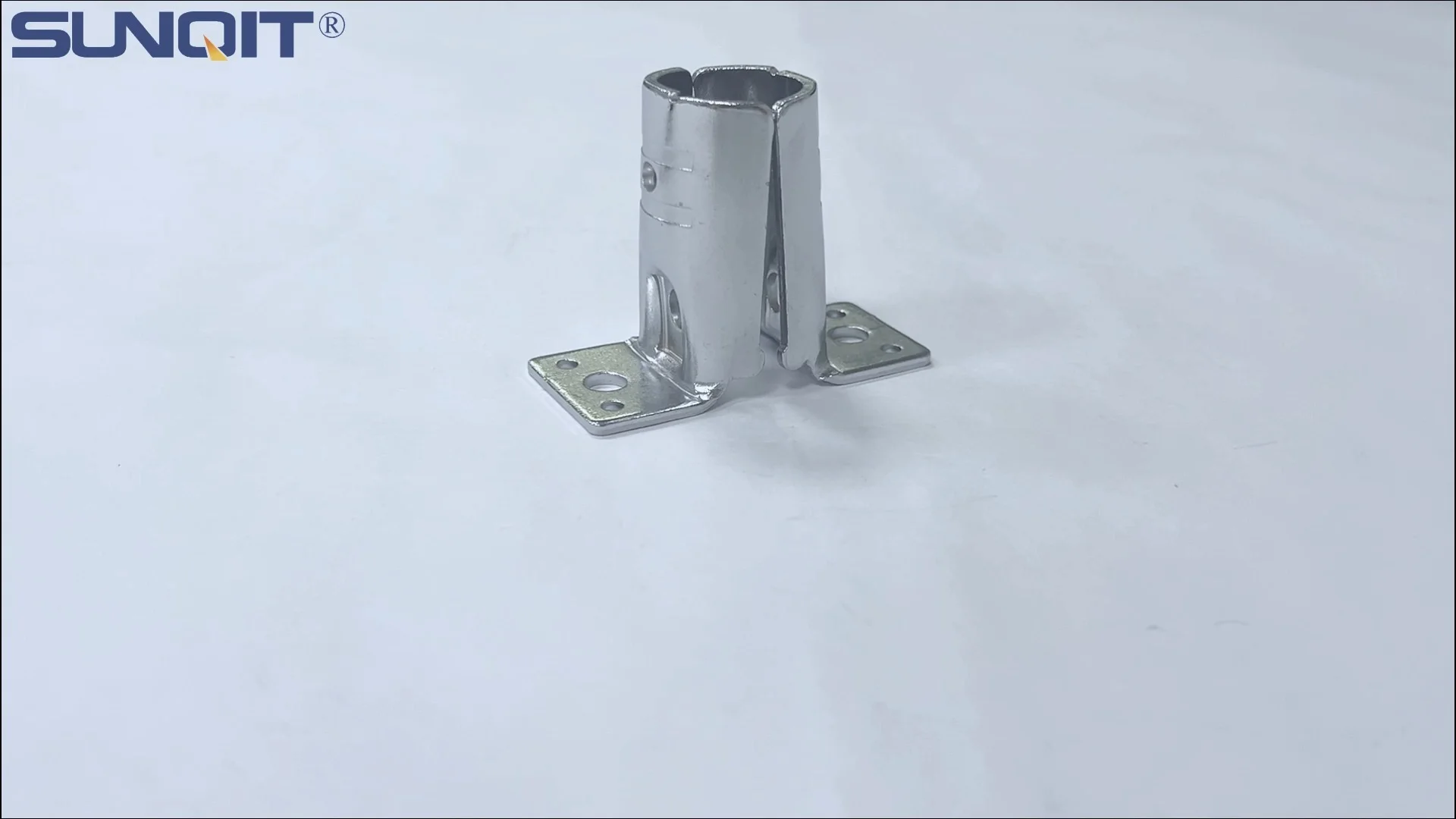
Vertical Lean Pipe Joint
Vertical lean pipe joint is used for 28mm lean pipe fixed on ground and keep it stable.
Walk into any modern manufacturing facility, warehouse, or assembly plant today, and you'll notice a quiet revolution happening on the factory floor. Gone are the days of rigid, one-size-fits-all production lines bolted to the ground, impossible to adjust without weeks of planning and a small army of contractors. Instead, you'll see flexible workstations, dynamic material flow racks, and modular structures that seem to shift and adapt as easily as the tides—all built from a simple yet ingenious combination of pipes and joints. At the heart of this revolution, often overlooked but absolutely critical, are vertical lean pipe joints. These unassuming connectors are the unsung heroes that turn ordinary pipes into reconfigurable powerhouses, enabling businesses to stay agile in an era where change is the only constant.
In today's fast-paced manufacturing landscape, adaptability isn't just a nice-to-have—it's a survival skill. Consumer demands shift overnight, product life cycles shrink, and production lines must pivot from one SKU to another with minimal downtime. This is where lean systems shine, and at the core of any lean system is the ability to reconfigure on the fly. But what makes that reconfiguration possible? It's not just the pipes themselves, though high-quality lean pipe is essential. It's the joints that hold them together—specifically, vertical lean pipe joints. These small but mighty components are the backbone that gives lean pipe systems their strength, flexibility, and transformative potential. Let's dive into why they matter, how they work, and why they're the secret weapon behind some of the most efficient production floors in the world.
What Are Vertical Lean Pipe Joints, Anyway?
Before we can appreciate their importance, let's start with the basics: What exactly are vertical lean pipe joints? At their simplest, they're mechanical connectors designed to join lean pipes (also known as "lean tubes") at vertical angles, creating stable, load-bearing structures that can be easily adjusted or reconfigured. Unlike traditional welded or glued connections, these joints are designed for disassembly and reassembly—think of them as the Lego blocks of the manufacturing world, but built to withstand the rigors of industrial use.
Most vertical lean pipe joints are made from durable materials like chrome-plated steel or aluminum, chosen for their strength, corrosion resistance, and ability to grip pipes tightly without damaging them. Their design is deceptively simple: a central body with clamping mechanisms that secure the pipe in place, often with set screws or cam levers that can be tightened or loosened by hand or with a basic tool like a hex key. This simplicity is intentional—no specialized training required, no need for welding torches or heavy equipment. A single worker can adjust a joint in minutes, making on-the-fly modifications a reality.
But what sets vertical lean pipe joints apart from other types of connectors? As the name suggests, they're optimized for vertical connections, allowing pipes to be stacked or extended upward to create height in structures like workbenches, racks, or shelving units. This vertical orientation is crucial because it maximizes vertical space—a precious commodity in crowded facilities—while still allowing for horizontal adjustments. Whether you need to raise a shelf by 6 inches to accommodate taller bins or lower a workstation to ergonomic heights for a new team member, vertical joints make it possible without rebuilding the entire structure.
A Closer Look at Design Variations
Not all vertical lean pipe joints are created equal. Depending on the application, you might encounter different designs tailored to specific needs. For example, "fixed" vertical joints lock pipes at a strict 90-degree angle, ideal for stable structures like the legs of a lean pipe workbench where movement isn't needed. Then there are "internal rotation" vertical joints, which allow limited swivel or tilt, giving structures a bit of flexibility—useful for flow racks where materials might need to glide down a slight incline, or workstations that need to adjust to uneven floors.
Some joints also feature multiple connection points, allowing for "tee" or "cross" configurations where three or four pipes meet at a single joint. This versatility means a single vertical joint can serve as a hub, supporting both vertical and horizontal pipes to create complex structures with minimal components. Imagine building a multi-tiered material rack: vertical joints at each corner provide the height, while horizontal joints connect the shelves, all secured with the same type of connector. It's modularity at its finest.
Why Reconfigurability Matters—And How Vertical Joints Make It Possible
Let's talk about reconfigurability. In manufacturing, this term gets thrown around a lot, but what does it really mean for a business? Simply put, reconfigurability is the ability to adapt a production system or workspace to meet new requirements quickly and cost-effectively. Maybe your company just launched a new product line that's 20% larger than the old one, so your assembly workbench needs to be wider. Or perhaps you're shifting from batch production to just-in-time (JIT) manufacturing, so your material flow racks need to deliver parts to the line faster. Or maybe you're downsizing your facility and need to condense three workstations into two without sacrificing productivity. In all these cases, a reconfigurable system saves you from the nightmare of tearing everything down and starting over.
Traditional fixed structures—think wooden shelves bolted to the wall or steel workbenches welded together—are the opposite of reconfigurable. To modify them, you'd need to cut, drill, weld, or even replace entire sections, which is time-consuming, expensive, and often results in a Frankenstein-like structure that's weaker than the original. Vertical lean pipe joints eliminate this problem by turning your workspace into a modular system where every component is a building block. Need to add a shelf? Just add a vertical joint and a pipe. Need to move a workstation across the floor? Disassemble the joints, transport the parts, and reassemble in the new location. It's like rearranging furniture, but for industrial equipment.
The Cost of Rigidity in Manufacturing
To understand the value of reconfigurability, let's consider the cost of rigidity. Suppose a company invests in a custom-built steel assembly line for a specific product. Two years later, the product is discontinued, and the line is obsolete. The company is left with a choice: spend tens of thousands of dollars to rebuild the line, or let it sit idle, wasting space and capital. Now imagine that same company had used a lean pipe system with vertical joints. When the product changes, they can reconfigure the existing pipes and joints into a new line in a fraction of the time and cost—no new steel, no contractors, just a day or two of work for the maintenance team.
This isn't just about saving money (though that's a big part of it). It's about speed. In today's market, the company that can pivot fastest wins. A competitor using rigid systems might take weeks to launch a new product line; your company, using reconfigurable lean systems, could do it in days. That speed to market can be the difference between capturing market share and watching it slip away. And at the center of that speed are vertical lean pipe joints, making sure every adjustment is quick, secure, and repeatable.

Vertical Joints in Action: Building Blocks of Lean Systems
To truly grasp the impact of vertical lean pipe joints, let's look at how they work with other components to create real-world lean systems. Two of the most common applications are lean pipe workbenches and flow racks—both staples of modern manufacturing, and both heavily dependent on vertical joints for their functionality.
Lean Pipe Workbenches: Where Precision Meets Flexibility
A lean pipe workbench is more than just a table—it's the command center of an assembly line, where workers spend hours piecing together products, inspecting components, or packaging finished goods. Its design directly impacts productivity, ergonomics, and even worker satisfaction. A poorly designed workbench can lead to fatigue, errors, and wasted motion; a well-designed one feels like an extension of the worker's hands.
Vertical lean pipe joints are critical here because they determine the workbench's height, stability, and adaptability. Most workbenches start with four vertical pipes (the legs), each secured to a base plate or caster (for mobility). At the top of these legs, horizontal pipes form the frame, and a work surface (like a plywood or aluminum panel) is added. But what if the workbench needs to be taller for a standing worker or shorter for someone seated? With vertical joints, you don't need a new bench—just adjust the height of the legs by loosening the joints, sliding the pipes up or down, and retightening. It's that simple.
But workbenches often need more than just a flat surface. They might have overhead shelves for tools, side racks for parts bins, or even integrated lighting. Each of these additions relies on vertical joints. An overhead shelf, for example, is supported by vertical pipes extending upward from the workbench legs, connected by horizontal pipes and secured with vertical joints. If the worker needs more overhead space, those joints can be loosened, and the shelf can be raised. If a new tool rack is needed on the side, add a vertical joint to the leg and attach a horizontal pipe—no drilling, no welding, just a few turns of a hex key.
Flow Racks: Keeping Materials Moving with Vertical Support
Flow racks (also called gravity flow racks) are another area where vertical lean pipe joints shine. These racks use inclined roller tracks to allow materials—like bins, cartons, or components—to "flow" from the back to the front, ensuring that the oldest stock is used first (FIFO: first in, first out) and reducing the need for workers to reach or bend. Flow racks are a cornerstone of lean manufacturing, minimizing waste by keeping materials at the point of use.
Building a flow rack requires a sturdy frame, and vertical joints are what give that frame its height and stability. The vertical pipes form the uprights of the rack, with horizontal pipes connecting them at different levels to create tiers. Each tier holds a roller track, which is slightly inclined to allow gravity to do the work. But here's where vertical joints add even more value: they allow you to adjust the angle of the roller track by raising or lowering one end of the horizontal pipe. A steeper incline might be needed for heavier bins, while a gentler slope works for lighter parts. With vertical joints, you can tweak that angle until the flow is just right—no need to shim the rack or build a new frame.
What if the flow rack needs to grow? Maybe your production volume increases, and you need an extra tier. Just add two more vertical pipes, secure them with vertical joints to the existing frame, and add a new horizontal pipe and roller track. In an hour, you've doubled the rack's capacity without disrupting the existing workflow. That's the power of vertical joints in action.

Materials Matter: Aluminum Lean Pipe and the Evolution of Joint Design
While vertical lean pipe joints are critical, they're only as good as the pipes they connect. For decades, the standard material for lean pipes was galvanized steel—strong, affordable, and durable. But in recent years, aluminum lean pipe has emerged as a popular alternative, and for good reason: it's lighter, corrosion-resistant, and often more compatible with modern joint designs. This shift to aluminum has further enhanced the reconfigurability of lean systems, and vertical joints have evolved to keep pace.
Aluminum lean pipe offers several advantages over traditional steel. First, it's significantly lighter—about one-third the weight of steel—making it easier to handle during assembly and reconfiguration. A single worker can lift and position aluminum pipes without help, reducing the risk of injury and speeding up the process. Second, aluminum naturally resists rust and corrosion, making it ideal for environments with moisture, like food processing plants or cleanrooms. Third, it's more aesthetically pleasing, with a sleek, modern finish that many facilities prefer for customer tours or office-adjacent workspaces.
But aluminum is also softer than steel, which means vertical joints designed for steel pipes might not grip it as effectively. To address this, manufacturers have developed specialized vertical joints with rubberized or textured clamping surfaces that bite into aluminum without damaging it, ensuring a secure hold even under heavy loads. Some joints also feature adjustable clamping pressure, allowing users to fine-tune the grip based on the pipe material—tighter for softer aluminum, looser for steel if needed. This versatility means a single joint design can work with both materials, giving facilities the flexibility to mix and match pipes based on the application.
Chrome vs. Aluminum Joints: Choosing the Right Fit
Just as pipes come in different materials, vertical lean pipe joints do too. Chrome-plated steel joints are still widely used, valued for their strength and affordability. They're a great choice for heavy-duty applications, like supporting loaded flow racks or workbenches in automotive plants where durability is paramount. Aluminum joints, on the other hand, are lighter and more corrosion-resistant, making them ideal for clean environments or applications where weight is a concern, such as mobile workstations on casters.
To help you decide, let's compare the two in a quick table:
| Feature | Chrome-Plated Steel Joints | Aluminum Joints |
|---|---|---|
| Weight | Heavier (adds stability to large structures) | Lighter (easier to handle during reconfiguration) |
| Corrosion Resistance | Good, but may rust if chrome is scratched | Excellent, no rust risk |
| Cost | More affordable upfront | Slightly higher cost, but longer lifespan in harsh environments |
| Best For | Heavy loads, dry environments, budget-sensitive projects | Cleanrooms, food processing, mobile structures, lightweight applications |
Ultimately, the choice between chrome and aluminum joints depends on your specific needs. Many facilities opt for a mix: chrome joints for stationary, heavy structures and aluminum joints for mobile or corrosion-prone areas. The key is that vertical joints, regardless of material, are designed to work seamlessly with their pipe counterparts, ensuring a secure, reliable connection every time.

The Benefits of Investing in Quality Vertical Lean Pipe Joints
At this point, you might be thinking, "Okay, vertical lean pipe joints are useful, but can't I just buy the cheapest ones available?" The short answer: yes, you could—but you'll likely regret it. Like any component, the quality of vertical joints directly impacts the performance, safety, and longevity of your lean system. Investing in high-quality joints might cost a bit more upfront, but the long-term benefits far outweigh the savings.
Perhaps the biggest benefit of quality vertical joints, though, is the confidence they inspire. When you know your workbenches won't wobble, your flow racks won't collapse, and your entire lean system can adapt to whatever the future throws at it, you can focus on what really matters: making great products and growing your business.
Choosing the Right Lean Pipe Supplier: A Partnership for Success
Even the best vertical lean pipe joints are only as good as the supplier who provides them. With so many options on the market, from generic overseas manufacturers to specialized domestic suppliers, choosing the right partner can feel overwhelming. But a few key factors can help you narrow down the field and find a supplier who will support your lean journey for years to come.
First, look for a supplier with a proven track record in the industry. How long have they been manufacturing lean pipe components? Do they have case studies or testimonials from customers in your industry? A supplier who understands the unique challenges of manufacturing, warehousing, or logistics will be better equipped to recommend the right vertical joints, pipes, and accessories for your specific needs.
Second, prioritize product breadth and compatibility. A good supplier should offer a full range of vertical joints, including fixed, internal rotation, and multi-way designs, as well as compatible pipes (steel, aluminum), accessories (casters, shelves, roller tracks), and tools. This one-stop shopping saves you time and ensures all components work together seamlessly—no more guessing if a joint from Supplier A will fit a pipe from Supplier B.
Third, ask about customization options. While standard vertical joints work for most applications, some projects might require custom designs—special sizes, unique clamping mechanisms, or branded colors. A supplier with in-house engineering capabilities can work with you to develop custom solutions, ensuring your lean system meets your exact specifications.
Finally, don't overlook customer support. Even the best products need backup, whether it's help selecting the right joint, troubleshooting a reconfiguration issue, or expediting a rush order. A supplier with responsive customer service, technical support, and fast shipping can be a lifesaver when you're up against a tight deadline.
Conclusion: Vertical Joints—The Backbone of Tomorrow's Workspaces
As we've explored, vertical lean pipe joints are far more than just connectors—they're the backbone of reconfigurable lean systems, enabling the flexibility, adaptability, and efficiency that modern manufacturing demands. From lean pipe workbenches that adjust to worker needs to flow racks that scale with production, these unassuming components make it possible to build workspaces that grow and change with your business.
In a world where the only constant is change, the ability to reconfigure quickly and cost-effectively isn't just an advantage—it's essential. Vertical lean pipe joints put that power directly in the hands of your team, turning your facility into a dynamic, responsive environment that can tackle whatever challenges come next. They're a testament to the beauty of simplicity: a well-designed joint, paired with quality pipes and a little creativity, can transform a static workspace into a lean, mean, productivity machine.
So the next time you walk through your facility, take a moment to look at the structures around you—the workbenches, the racks, the flow systems. Chances are, there's a vertical lean pipe joint holding it all together, quietly doing its job. And while it might not get the glory, it's the reason your team can adapt, innovate, and thrive in an ever-changing world. That's the power of the backbone.