- Company Articles
- Products and Technology
- Product knowledge
- Vertical Lean Pipe Joints vs. Inner Rotating Aluminum Joints: When to Use Each

Vertical Lean Pipe Joints vs. Inner Rotating Aluminum Joints: When to Use Each
Related Product
Vertical Lean Pipe Joint
Vertical lean pipe joint is used for 28mm lean pipe fixed on ground and keep it stable.
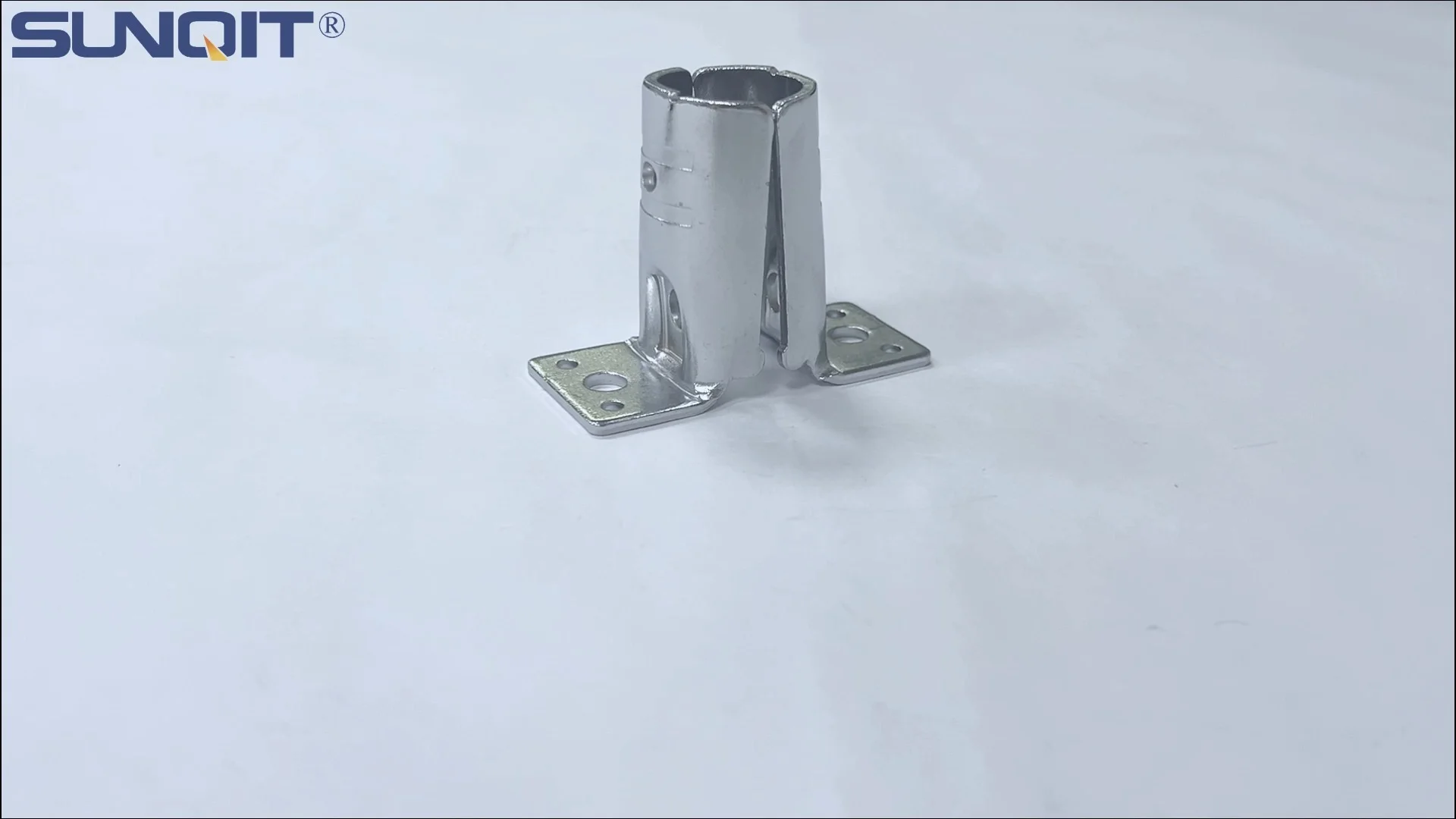
Walk into any manufacturing facility, warehouse, or assembly plant, and you'll quickly realize that the "big picture" efficiency often hinges on the smallest components. Conveyor belts, workbenches, material racks—these workhorses of production don't just magically hold themselves together. Behind the scenes, joints are the unsung heroes, quietly ensuring stability, flexibility, and functionality. Today, we're zooming in on two critical players in this space: vertical lean pipe joints and inner rotating aluminum joints. While they might sound like niche parts, choosing the right one can mean the difference between a clunky, rigid workspace and a dynamic, adaptable setup that grows with your needs. Let's break down what they are, how they work, and when to reach for each.
The Foundation: Why Joints Matter in Lean Systems
Before diving into the specifics, let's set the stage. In lean manufacturing—where minimizing waste and maximizing flow are king—modular systems are everything. These systems rely on pipes, profiles, and joints to build custom workbenches, material racks, assembly lines, and more. Unlike fixed, one-size-fits-all furniture, modular setups can be reconfigured, expanded, or repurposed as production needs change. And at the heart of this modularity? Joints. They're the connectors that turn simple tubes into complex, functional structures. A poorly chosen joint can lead to wobbly workbenches, inefficient material flow, or even safety hazards. A well-chosen one? It becomes invisible, letting your team focus on what matters: building better products, faster.
Today, we're focusing on two joint types that serve distinct but equally important roles: vertical lean pipe joints (the sturdy, no-nonsense veterans) and inner rotating aluminum joints (the flexible, modern upstarts). Both are part of larger ecosystems—think lean pipe and accessories for the former, and aluminum pipe accessories for the latter—but their designs and purposes set them apart.
Meet the Contenders: What Are Vertical Lean Pipe Joints?
If you've ever seen a traditional lean manufacturing setup, chances are you've encountered vertical lean pipe joints. These are the workhorses of classic lean systems, designed to create strong, fixed vertical connections between pipes. Let's start with the basics: what exactly is a vertical lean pipe joint?
At their core, vertical lean pipe joints are clamping mechanisms that secure two or more lean pipes at a fixed 90-degree (or near-vertical) angle. They're typically made from metal—often steel with a chrome plating or a plastic coating for durability—and feature a simple, robust design: a base that wraps around one pipe, a vertical arm that clamps onto another, and a bolt or lever to tighten the connection. No fancy moving parts, no complicated adjustments—just a straightforward "grab and hold" approach.
These joints are most commonly used with lean pipes (also called "lean tubes"), which are usually 28mm in diameter and made from steel, stainless steel, or PE-coated steel. The combination of lean pipes and vertical joints is a staple in setups like workbench frames, material racks (think "Material Rack B (3 row and 3 floor)" from common inventory lists), and static assembly stations. Why? Because when you need a structure to stay put—no wobbling, no shifting—vertical lean pipe joints deliver.
Key Features of Vertical Lean Pipe Joints
- Fixed Orientation: Once tightened, they lock pipes into place—no rotation, no swiveling. This is a feature, not a bug, for stability-focused setups.
- High Load Capacity: Steel construction means they can handle heavy weights. A typical vertical joint can support hundreds of kilograms, making them ideal for material racks holding bulky parts.
- Cost-Effective: Simple design = lower production costs. They're often cheaper than more complex joints, making them a budget-friendly choice for large-scale installations.
- Easy Installation: No special tools required—just a wrench or even a hand-tightened lever. Even someone new to lean systems can assemble a basic frame in minutes.
- Corrosion Resistance (Optional): Chrome plating or PE coating adds a layer of protection against rust, useful in humid or semi-outdoor environments.
But like any tool, they have limitations. The fixed orientation that makes them stable also makes them inflexible. If you need to adjust the angle of a shelf or reconfigure a workbench, you'll have to loosen the joint, reposition the pipes, and retighten—hardly a quick process. They're also heavier than aluminum alternatives, which can add up in large structures. And while steel is strong, it's prone to scratches, which can lead to rust if the coating is damaged.
Real-World Example: The Static Material Rack
Imagine a warehouse storing automotive parts—heavy engine blocks, transmission housings, and metal brackets. The facility uses a "Material Rack B (3 row and 3 floor)" to organize these parts. Each shelf needs to hold 200kg without bending or shifting. Here, vertical lean pipe joints shine. They lock the steel pipes into a rigid frame, ensuring the rack stays stable even when loaded to capacity. Since the parts are stored in fixed locations (no need to adjust shelf angles daily), the lack of rotation is irrelevant. The low cost and high strength make vertical joints the obvious choice.

The Flexible Alternative: Inner Rotating Aluminum Joints
Now, let's shift gears to the newer kid on the block: inner rotating aluminum joints. If vertical lean pipe joints are the "anchors," these are the "swivel chairs" of the joint world. As the name suggests, internal rotatary aluminum joint (to use the exact keyword) is designed with movement in mind—specifically, internal mechanisms that allow connected pipes to rotate or pivot, adding a layer of adjustability that vertical joints can't match.
First, the material: aluminum. Unlike steel, aluminum is lightweight, corrosion-resistant, and has a clean, modern look. This makes inner rotating aluminum joints popular in industries where aesthetics or weight matter—think electronics manufacturing, medical device assembly, or cleanrooms. But the real star is the internal rotation mechanism. Inside the joint, there's a bearing or pivot point that lets one pipe rotate relative to another, often 360 degrees or within a fixed range (like 0-180 degrees). Some designs even allow for locking the rotation at specific angles, blending flexibility with stability when needed.
These joints pair with aluminum pipes (sometimes called "basic aluminum tubes" or "aluminum lean pipes"), which are lighter than steel lean pipes but still surprisingly strong. Together, they're used in setups where adjustability is key: adjustable workbenches, dynamic assembly lines, or material feeders that need to angle toward workers as they shift positions.
Key Features of Inner Rotating Aluminum Joints
- Internal Rotation: The defining feature. Whether it's a full 360-degree spin or a limited pivot, this allows pipes (and the shelves/arms attached to them) to move as needed.
- Lightweight: Aluminum is about 1/3 the weight of steel, making structures easier to assemble, move, and reconfigure. A worker can adjust a shelf on an aluminum workbench without needing a second person to help lift.
- Corrosion Resistance: Aluminum naturally forms a protective oxide layer, so it won't rust—perfect for humid environments or facilities that require regular cleaning (like food processing or pharmaceuticals).
- Sleek Design: No bulky, industrial-looking chrome here. Aluminum joints have a smooth, modern finish that fits in with clean, organized workspaces.
- Moderate Load Capacity: While not as strong as steel vertical joints, they still handle most everyday loads. A typical inner rotating aluminum joint can support 50-150kg, depending on the design.
The tradeoffs? Cost and complexity. The internal rotation mechanism adds parts (bearings, locking pins), making them pricier than vertical lean pipe joints. They also have lower maximum load capacity—you wouldn't use them for a rack holding engine blocks. And while aluminum resists corrosion, it's softer than steel, so it can dent if hit with heavy tools or parts.
Real-World Example: The Adjustable Electronics Workbench
A smartphone assembly plant needs workbenches where operators assemble delicate circuit boards. Workers alternate between sitting and standing, and different phone models require different tool placements. Enter the workbench with inner rotating aluminum joints. The shelves holding tools and components can pivot 180 degrees—swinging toward the operator when seated, away when standing—to avoid strain. The lightweight aluminum frame makes it easy to adjust, and the corrosion-resistant material stands up to daily cleaning with disinfectants. Here, flexibility trumps raw strength, making inner rotating joints the perfect fit.

Side-by-Side: Comparing the Two Joints
To make it easier to see how these joints stack up, let's put them head-to-head in a comparison table. This will help you quickly assess which is right for your specific needs.
| Feature | Vertical Lean Pipe Joints | Inner Rotating Aluminum Joints |
|---|---|---|
| Primary Material | Steel (chrome-plated or PE-coated) | Aluminum |
| Rotation Capability | None (fixed orientation) | Internal rotation (360° or limited pivot) |
| Load Capacity | High (200-500kg typical) | Moderate (50-150kg typical) |
| Weight | Heavy (steel construction) | Lightweight (aluminum) |
| Corrosion Resistance | Moderate (good with coating; prone to rust if scratched) | High (aluminum oxide layer prevents rust) |
| Cost | Lower (simple design, steel is cheaper) | Higher (internal mechanisms, aluminum costs more) |
| Best For | Static structures, heavy loads, budget projects | Adjustable setups, lightweight needs, clean environments |
| Common Applications | Material racks, fixed workbenches, heavy-duty shelving | Adjustable workbenches, dynamic assembly lines, cleanrooms |

When to Choose Vertical Lean Pipe Joints
Now that we've covered the basics, let's get practical: when should you reach for vertical lean pipe joints? Here are the scenarios where they shine brightest:
1. You Need Maximum Stability and Load Capacity
If your structure will hold heavy items—think automotive parts, large machinery components, or stacks of metal sheets—vertical lean pipe joints are the way to go. Their fixed design and steel construction mean they won't budge under pressure, reducing the risk of accidents or damage to parts. Material racks, in particular, benefit from this: a "Material Rack B (3 row and 3 floor)" filled with heavy tools or inventory needs joints that can handle the stress, and vertical lean pipe joints deliver.
2. Your Setup Won't Need Reconfiguration
Some structures are built to last—permanent fixtures in the factory layout. If you're setting up a workbench that will always be in the same spot, holding the same tools, or a material rack that never needs shelf adjustments, the lack of rotation in vertical joints is irrelevant. You'll save money and get a sturdier structure by choosing fixed joints over flexible ones.
3. Budget Is a Primary Concern
Let's face it: manufacturing budgets are tight. If you're building a large number of structures (dozens of workbenches, hundreds of rack units), the cost difference between vertical lean pipe joints and inner rotating aluminum joints adds up fast. Vertical joints are simpler to make, so they're cheaper to buy—making them ideal for high-volume, cost-sensitive projects.
4. You're Working in a Rugged Environment
Steel is tough. If your facility is a rough-and-tumble place—heavy machinery moving around, tools dropping, parts being dragged across surfaces—vertical lean pipe joints can take a beating. Scratches to the coating might happen, but the steel underneath is still strong. Aluminum joints, while durable, are softer and more prone to dents in chaotic environments.
When to Choose Inner Rotating Aluminum Joints
On the flip side, here are the situations where inner rotating aluminum joints are the better choice:
1. You Need Adjustability and Flexibility
If your setup changes regularly—workers switching tasks, product lines updating, or ergonomic needs evolving—rotation is key. Inner rotating joints let you pivot shelves, adjust angles, or reposition arms without disassembling the entire structure. This is a game-changer in dynamic environments like assembly lines, where efficiency depends on adapting to new products or processes quickly.
2. Weight Matters (for Assembly or Mobility)
Aluminum's lightweight nature makes a big difference in two ways: assembly and mobility. If your team needs to build or reconfigure structures frequently, aluminum joints reduce fatigue—no more straining to lift heavy steel pipes. And if you have mobile workbenches or carts (like "Turnover Trolley and Rack" setups), the lighter frame makes them easier to push around the factory floor.
3. You Need Corrosion Resistance or a Clean Aesthetic
Facilities like food processing plants, pharmaceutical labs, or electronics factories can't risk rust or contamination. Aluminum's natural corrosion resistance makes it ideal here—no rust, no flaking coatings, and easy to clean with harsh chemicals. Plus, the sleek, modern look of aluminum fits in with cleanroom or high-tech environments, where appearance often matters as much as functionality.
4. Loads Are Moderate (Not Extreme)
While they can't match steel vertical joints for raw strength, inner rotating aluminum joints handle most everyday loads with ease. If you're building a workbench for small parts, a tool shelf, or a light-duty material feeder, they're more than up to the task. Just avoid using them for anything that requires supporting hundreds of kilograms.
Beyond the Joint: The Ecosystem of Accessories
It's worth noting that neither joint exists in a vacuum. Both are part of larger systems of lean pipe and accessories (for vertical joints) and aluminum pipe accessories (for inner rotating joints). These accessories—things like casters, roller tracks, and end caps—can enhance the functionality of your structure, regardless of the joint type you choose.
For example, adding casters to a vertical lean pipe workbench makes it mobile, even with the heavy steel frame. Pairing inner rotating aluminum joints with "Plastic Roller Track Guide Rail Yellow" creates a material feeder that can pivot to direct parts to different stations. The key is to match the accessories to the joint's strengths: heavy-duty casters for steel setups, lightweight roller tracks for aluminum ones.
Final Thoughts: Choosing the Right Joint for Your Space
At the end of the day, there's no "better" joint—only the right joint for the job. Vertical lean pipe joints are the reliable, cost-effective choice for static, heavy-duty setups where stability is non-negotiable. Inner rotating aluminum joints are the flexible, modern option for dynamic environments where adjustability and weight matter more than raw strength.
To sum it up: Ask yourself three questions: How heavy are the loads? Will I need to reconfigure the structure? What's my budget? If loads are heavy, setup is static, and budget is tight—go with vertical lean pipe joints. If flexibility, weight, or corrosion resistance are priorities—inner rotating aluminum joints are the way to go.
And remember: the best setups often mix and match. Maybe you use vertical joints for the heavy material rack in the corner and inner rotating joints for the adjustable workbench on the assembly line. The beauty of modular systems is that you can tailor them to your unique needs—one joint at a time.
So, next time you're planning a workspace upgrade, don't overlook the joints. Those small, unassuming connectors might just be the key to unlocking a more efficient, productive, and adaptable operation.