- Company Articles
- Products and Technology
- Product knowledge
- Vertical Lean Pipe Joints vs. Plastic Connectors: Durability in Industrial Settings

Vertical Lean Pipe Joints vs. Plastic Connectors: Durability in Industrial Settings
Related Product
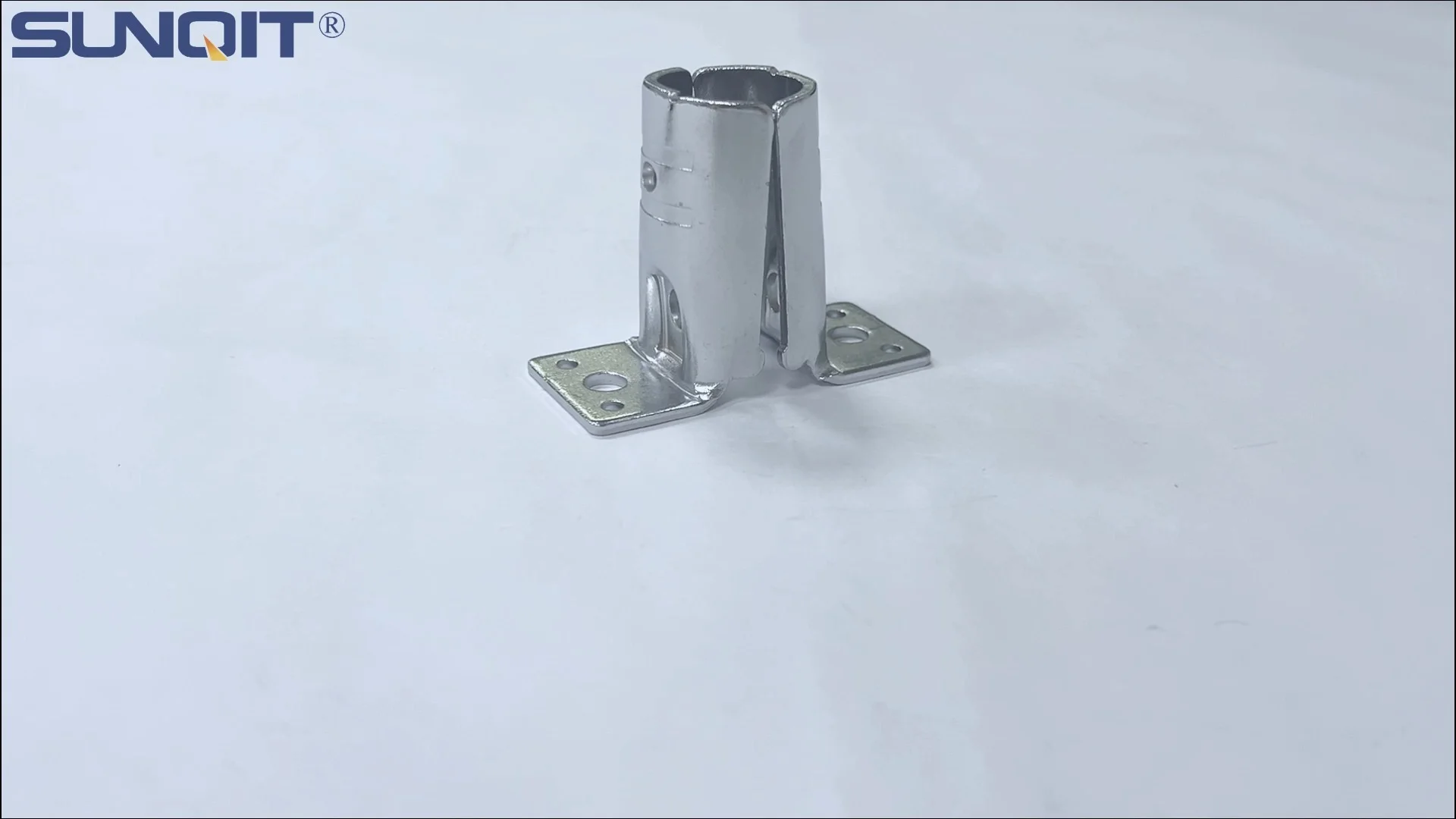
Vertical Lean Pipe Joint
Vertical lean pipe joint is used for 28mm lean pipe fixed on ground and keep it stable.
The Unsung Heroes of Industrial Efficiency
Walk into any bustling factory, warehouse, or manufacturing plant, and your eyes might be drawn to the big machines—the robotic arms assembling cars, the conveyor belts carrying products, the towering storage racks. But if you look closer, you'll notice the smaller components that hold everything together: the joints that secure workbenches, the connectors that link flow racks, the fasteners that keep material trolleys stable. These unassuming parts are the backbone of industrial operations. When they fail, production halts, deadlines slip, and costs pile up. Today, we're zeroing in on two critical players in this ecosystem: vertical lean pipe joints and plastic connectors. Which one truly stands the test of time in the harsh realities of industrial settings?
In the world of lean manufacturing, where efficiency and reliability are non-negotiable, the choice between these two components isn't just about cost—it's about longevity, performance, and the ability to keep your operations running smoothly day in and day out. Let's dive in.
What Are We Actually Comparing?
Vertical Lean Pipe Joints: The Heavy-Duty Workhorses
First, let's clarify what we mean by "vertical lean pipe joints." These are the metal connectors used to join lean pipes—often steel, aluminum, or stainless steel tubes—in vertical structures like workbenches, material racks, and assembly line stations. Designed for rigidity and strength, they're typically made from zinc-plated steel, stainless steel, or aluminum alloys, with threaded bolts or clamping mechanisms that lock pipes securely in place. You'll find them in applications where stability is critical: think of a workbench supporting heavy tools, or a flow rack loaded with automotive parts. Their name "vertical" comes from their common use in upright structures, though they're versatile enough for horizontal and angled connections too.
Plastic Connectors: The Lightweight Contenders
Plastic connectors, on the other hand, are usually molded from polymers like nylon, polypropylene, or ABS. They're designed to be lightweight, easy to assemble, and affordable. You'll often see them in temporary setups, light-duty workbenches, or environments where weight is a concern—like small-scale assembly lines or retail stockrooms. They come in various shapes, from T-joints to elbows, and typically snap or twist onto pipes, requiring minimal tools for installation.

Material Matters: The Foundation of Durability
Durability starts with what something is made of. Let's break down the materials behind vertical lean pipe joints and plastic connectors, and how they hold up in industrial environments.
Vertical Lean Pipe Joints: Built to Resist Wear
Most vertical lean pipe joints are crafted from metal—zinc-plated steel being the most common. Zinc plating adds a layer of corrosion resistance, making them suitable for humid or slightly damp environments (think food processing plants or warehouses with temperature fluctuations). Stainless steel joints take this a step further, resisting rust even in washdown areas or outdoor settings. Aluminum joints, while lighter, still offer impressive strength-to-weight ratios, ideal for mobile structures like turnover trolleys.
The key here is metal's inherent resistance to deformation. Unlike plastic, metal doesn't "fatigue" easily—meaning it won't weaken or crack after repeated stress. When you tighten a steel joint onto a lean pipe, it maintains that grip for years, even under constant vibration from nearby machinery or the daily jostling of materials.
Plastic Connectors: Convenience Over Longevity
Plastic connectors are often made from glass-reinforced nylon or polypropylene, which gives them some rigidity. Manufacturers add glass fibers to boost strength, but there's a limit to how much stress plastic can handle. Over time, exposure to heat, chemicals, or even just the weight of the structure itself can cause plastic to degrade. For example, nylon connectors left in direct sunlight (common in warehouses with skylights) may become brittle as UV rays break down their molecular structure. Similarly, in cold environments, plastic becomes stiffer and more prone to cracking—imagine a plastic joint on a workbench in a refrigerated warehouse during winter.
Another issue? Plastic's tendency to "creep." Under constant load, plastic slowly deforms over time. A plastic connector holding up a shelf with 50kg of parts might start to bend after a few months, leading to sagging shelves or wobbly workbenches. Metal joints, by contrast, stay put.

Load-Bearing: When Every Kilogram Counts
In industrial settings, "good enough" load capacity isn't enough. A workbench might need to support heavy tools, a flow rack might hold boxes of raw materials, and a material trolley could be loaded with finished products. Let's see how these two components stack up when the pressure is on.
Vertical Lean Pipe Joints: Handling the Heavy Lifting
Metal lean pipe joints are engineered for high load-bearing. A standard zinc-plated steel vertical joint can easily support 200-300kg of vertical weight—more than enough for most industrial workbenches or 3-row material racks. Stainless steel joints, with their thicker walls, can handle even more. This strength comes from the way metal distributes weight: the joint clamps tightly around the pipe, creating a rigid connection that doesn't flex. In assembly lines where parts are constantly being added or removed, this stability is crucial—no one wants a workbench to shift mid-operation, risking product damage or worker injury.
Consider a car manufacturing plant, where a workbench might hold engine components weighing 150kg. A vertical lean pipe joint securing that workbench's legs will maintain its position for years, even with mechanics leaning on it, tools dropping, and parts sliding across the surface. The joint doesn't just "hold"—it anchors .
Plastic Connectors: Limited by Design
Plastic connectors are simply not built for heavy loads. Most max out at 50-100kg, and that's under ideal conditions (room temperature, no vibration, minimal movement). Even then, their grip on the pipe is weaker. Plastic connectors often rely on friction or snap-fit designs, which can loosen over time as the plastic wears down. A common scenario: a small electronics factory uses plastic connectors on a flow rack to save costs. Initially, it works—light circuit boards glide along the rollers. But as production ramps up and heavier components are added, the plastic joints start to bend. Within six months, the rack sags in the middle, causing jams as parts get stuck. Workers have to stop the line to adjust the rack, costing valuable time.
Worse, plastic connectors can fail suddenly. A sharp impact—like a worker accidentally bumping a trolley into a plastic-jointed shelf—might cause the connector to crack instantly, sending parts crashing to the floor. Metal joints, by contrast, might dent but won't break, giving you time to repair them before a full failure.

Environmental Resistance: Battling the Elements
Industrial settings are rarely "ideal." Factories can be hot, cold, dusty, humid, or full of chemicals. How do vertical lean pipe joints and plastic connectors fare when Mother Nature (or the production floor) throws curveballs?
Temperature Extremes
Metal joints laugh at temperature swings. Steel remains strong in freezing cold (down to -40°C) and doesn't soften in high heat (up to 200°C for zinc-plated steel). This makes them perfect for environments like foundries, where nearby furnaces radiate heat, or cold storage facilities. Plastic connectors, however, have narrow comfort zones. Nylon starts to soften at around 80°C—common near industrial ovens or in summer warehouses without AC. At 100°C, it becomes pliable enough to lose its grip on pipes. In cold weather, plastic becomes brittle: a -10°C warehouse could turn a plastic joint into a ticking time bomb, ready to crack at the first jolt.
Chemicals and Moisture
Many factories use cleaning agents, lubricants, or coolants that can eat away at materials. Stainless steel vertical lean pipe joints resist most chemicals, from degreasers to mild acids. They're a staple in pharmaceutical plants, where equipment is regularly sanitized with harsh cleaners. Plastic connectors? Not so much. Even common substances like mineral oil or isopropyl alcohol can cause plastic to swell or become brittle over time. In a maintenance shop where tools are cleaned with solvent wipes, a plastic-jointed workbench might start showing cracks in the connectors within a year.
Humidity is another enemy of plastic. While some plastics are water-resistant, prolonged exposure to moisture can lead to mold growth or weakening of the material. Metal joints, especially stainless steel or zinc-plated ones, resist rust and corrosion, making them suitable for coastal factories or facilities with high humidity (like paper mills).
Wear and Tear: Daily Use in the Trenches
Industrial components don't live in a bubble. They're adjusted, moved, cleaned, and bumped into—every single day. Let's see how vertical lean pipe joints and plastic connectors hold up under this daily grind.
Vertical Lean Pipe Joints: Tough Enough for the Long Haul
Metal joints thrive on routine abuse. Need to reconfigure a workbench to fit a new assembly line? Loosen the steel joint, adjust the pipe, retighten—and it's as good as new. The threads on metal joints don't strip easily, even after multiple adjustments. Compare that to a plastic connector: twist it too hard, and the plastic threads strip, rendering the connector useless. Metal also resists scratches and dents. A worker dropping a wrench on a steel joint might leave a small mark, but the joint's functionality remains intact. A plastic joint, though, could crack or split from the impact.
Vibration is another factor. Nearby machinery sends constant tremors through factory floors, which can loosen connections over time. Metal joints, with their tight clamping action, stay secure. Plastic joints, however, slowly work themselves loose as the plastic flexes with each vibration. By the end of the week, that "tight" plastic joint might be wobbly, requiring a worker to stop and retighten it—yet another interruption to productivity.
Plastic Connectors: A Short Lifespan in High-Traffic Areas
Plastic connectors are great for low-use, light-duty setups—like a temporary display rack in a retail store. But in industrial settings, their lifespan plummets. Let's take a common scenario: a material handler uses a plastic-jointed turnover trolley to move parts between stations. Every day, the trolley is loaded, pushed, stopped abruptly, and unloaded. The plastic wheels transmit shocks to the connectors, which absorb the impact. Over months, the connectors develop hairline cracks at the stress points. One day, the trolley hits a uneven spot on the floor, and a connector snaps—spilling parts everywhere and stranding the handler until a replacement is found.
Even something as simple as cleaning can wear down plastic. Pressure washing a plastic-jointed flow rack (common in food processing) can force water into tiny cracks, causing the plastic to degrade faster. Metal joints, by contrast, can handle pressure washing without a second thought.
Cost: The Short View vs. the Long View
At first glance, plastic connectors seem cheaper. A pack of 10 plastic T-joints might cost $20, while 10 steel vertical lean pipe joints could run $50 or more. But industrial durability isn't about upfront cost—it's about total cost of ownership (TCO). Let's crunch the numbers.
*Estimates based on average industrial usage; excludes labor costs for replacement and downtime.
The table tells the story: plastic connectors cost more in the long run. But the real kicker is downtime. When a plastic connector fails, production stops. A line worker can't assemble products if their workbench is wobbly. A material handler can't move parts if their trolley breaks. Every minute of downtime costs money—$50, $100, even $500 per minute in high-volume industries. Vertical lean pipe joints, with their near-zero failure rate, eliminate this risk.
Real-World Impact: A Case Study
From Plastic Headaches to Metal Reliability
The Setting: A mid-sized electronics manufacturer in Ohio, producing circuit boards for medical devices. Their assembly line relied on plastic-jointed workbenches and flow racks to move components between stations.
The Problem: Within 18 months of installation, plastic connectors began failing. Flow racks sagged, causing parts to jam. Workbench legs wobbled, leading to misaligned circuit boards (and quality issues). The maintenance team was replacing connectors weekly, costing $300 in parts and 4-5 hours of downtime monthly.
The Switch: The plant manager replaced all plastic connectors with stainless steel vertical lean pipe joints. The initial investment was $2,500 (vs. $800 for plastic), but the results were immediate.
The Outcome: Over the next 3 years, the plant saw zero connector failures. Downtime dropped by 95%, saving $18,000 annually in labor and replacement parts. Quality issues from wobbly workbenches disappeared, reducing scrap rates by 12%. The total ROI on the metal joints? Just 4 months.
When to Choose Which: The Bottom Line
Vertical lean pipe joints and plastic connectors each have their place—but in industrial settings, the choice is clear. If you need a setup that will last, handle heavy loads, resist harsh environments, and minimize downtime, vertical lean pipe joints are the way to go. They're the backbone of a reliable lean system, ensuring your workbenches, flow racks, and material trolleys stay strong for years.
Plastic connectors might work for temporary, light-duty applications—like a pop-up assembly station for a short-term project. But for the daily grind of manufacturing, warehousing, or logistics, they're a false economy. The cost of frequent replacements, downtime, and lost productivity far outweighs the upfront savings.
In the end, industrial durability isn't about cutting corners. It's about investing in components that keep your operations running—today, tomorrow, and for years to come. Vertical lean pipe joints don't just connect pipes; they connect your team to efficiency, reliability, and peace of mind.