- Company Articles
- Products and Technology
- Product knowledge
- Vertical Lean Pipe Joints vs. Traditional Fasteners: Time-Saving Benefits

Vertical Lean Pipe Joints vs. Traditional Fasteners: Time-Saving Benefits
Related Product
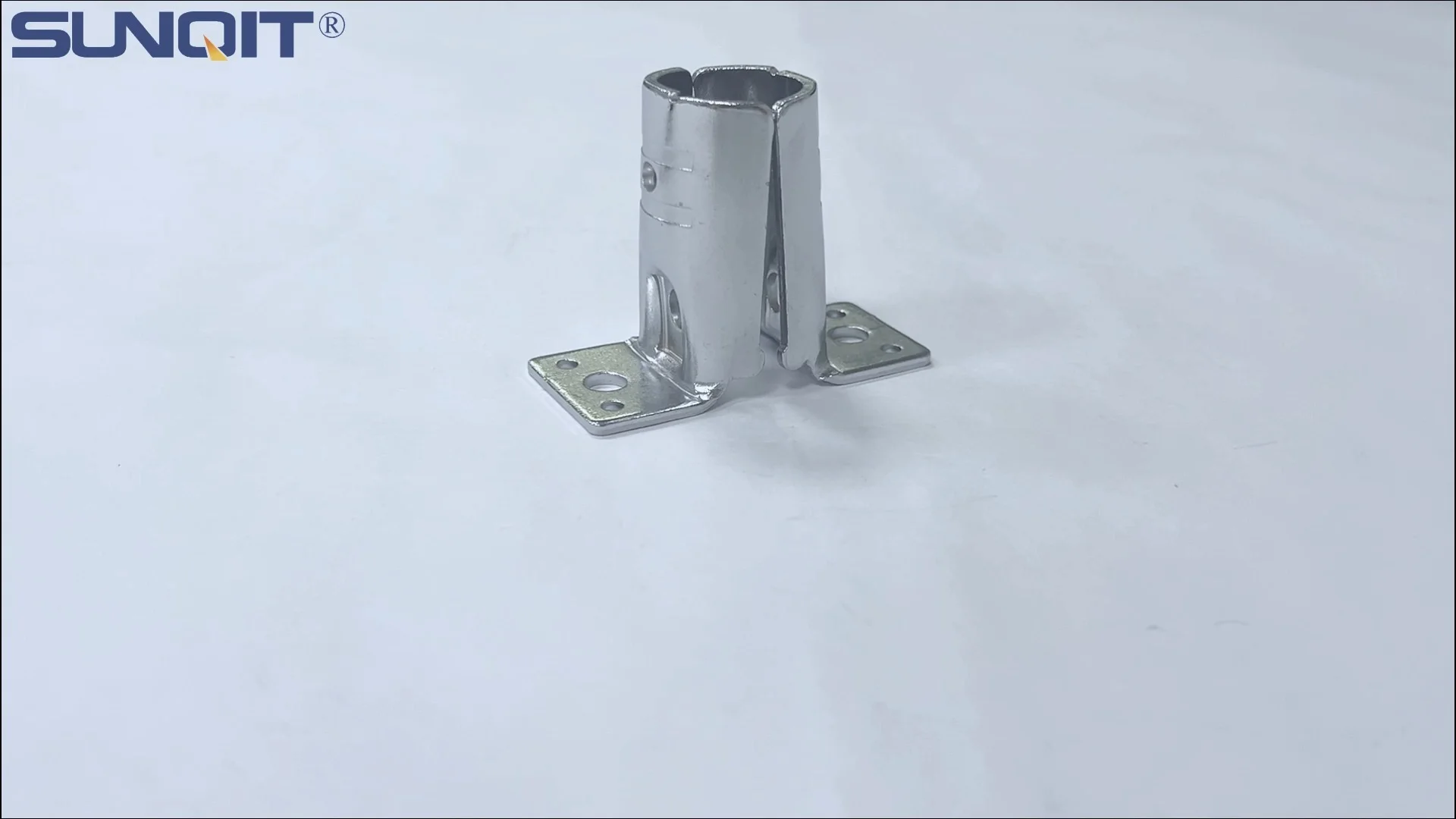
Vertical Lean Pipe Joint
Vertical lean pipe joint is used for 28mm lean pipe fixed on ground and keep it stable.
Let's start with a scenario we've all heard (or lived) on the factory floor: It's Monday morning, and the production schedule is already tight. Your team needs to set up a new assembly station by noon to meet a rush order. The old way? Grabbing a drill, a box of bolts, and spending the next three hours measuring, aligning, and tightening—only to realize halfway through that a hole is misdrilled, forcing you to start over. By the time the station is finally ready, the morning is gone, and your team is playing catch-up for the rest of the day. Sound familiar?
In manufacturing, time is more than money—it's the difference between hitting deadlines, keeping clients happy, and staying competitive. Yet for decades, factories have relied on traditional fasteners like bolts, screws, and welding to build workbenches, racks, and production lines. These methods are reliable, but they're also slow, rigid, and surprisingly wasteful. Enter vertical lean pipe joints: a modular, tool-free alternative that's quietly revolutionizing how teams build, adapt, and optimize their workspace. In this article, we'll dive into why swapping traditional fasteners for vertical lean pipe joints isn't just a small upgrade—it's a game-changer for time savings, flexibility, and bottom-line results.
The Hidden Cost of Traditional Fasteners: Why "Reliable" Often Means "Slow"
Let's get real about traditional fasteners. Bolts, screws, and welding have been industry staples for a reason: they're strong, familiar, and cheap upfront. But when you factor in the time they take to install, the labor required, and the hassle of reconfiguration, their true cost starts to add up. Let's break down the pain points:
1. Setup Time: Hours (or Days) Instead of Minutes
Imagine building a simple
lean pipe workbench
—something basic, with a frame, a top, and a shelf for tools. With traditional fasteners, here's what the process looks like: First, you measure and mark where each bolt will go (easy to mess up, especially if you're working with a team of people). Then, you drill holes (another step where precision matters—one off-center hole and the whole frame is lopsided). Next, you line up the pipes or profiles, thread the bolts through, and tighten them with a wrench (over-tighten, and you strip the thread; under-tighten, and the bench wobbles). If you're welding, add in prep time (cleaning the metal), waiting for the weld to cool, and grinding down rough edges.
A single workbench might take 2–3 hours for a skilled worker. Now multiply that by 10 workbenches for a new production line, and suddenly you're looking at a full day (or more) of setup time. And that's assuming everything goes right. Miss a measurement? You're redrilling. Strip a bolt? You're hunting for a replacement. Weld a joint at the wrong angle? You're cutting it off and starting over.
2. Tools and Skill: Not Everyone Can Do It
Traditional fasteners demand tools—drills, wrenches, welders—and skilled people to use them. A new hire can't just walk in and start building a bolted frame; they need training to measure accurately, drill straight, and tighten bolts to the right torque. Welding? That's a specialized skill that takes months to master. This creates bottlenecks: if your go-to welder is out sick, setup grinds to a halt. And tools themselves are a hassle—they get lost, break, or run out of battery (looking at you, cordless drills).
3. Rigidity: When "Permanent" Becomes a Problem
Markets change, product lines evolve, and workflows shift. A workbench that's perfect for assembling small electronics might need to be taller, wider, or reconfigured for larger components six months later. With traditional fasteners, adapting that bench means more drilling, more bolts, or—worse—cutting and rewelding. It's not just time-consuming; it often damages the materials, making them unusable for future projects. What was supposed to be a "permanent" solution becomes a costly, inflexible burden.
4. Waste: Time, Materials, and Frustration
Every misdrilled hole, stripped bolt, or crooked weld is waste. You're wasting the material (that pipe with the off-center hole is now scrap), wasting labor (the hour spent fixing a mistake), and wasting morale (nothing kills a team's momentum like starting over). Over time, these small wastes add up to big losses—losses that show up in overtime costs, missed deadlines, and burned-out employees.
Enter Vertical Lean Pipe Joints: The "Click-and-Go" Revolution
So, what's the alternative? Vertical lean pipe joints—those unassuming, often plastic or metal connectors designed to snap onto pipes and lock in place without tools. At first glance, they might seem too simple to replace "tough" fasteners like bolts or welds. But once you see them in action, their genius becomes clear. Let's break down how they work and why they're a time-saving powerhouse.
What Are Vertical Lean Pipe Joints, Anyway?
Think of a
lean pipe joint
as a universal connector for pipes (usually steel,
aluminum lean pipe
, or plastic-coated steel). Most are designed with a split or clamp-style opening that fits around the pipe, plus a locking mechanism—often a lever, a twist, or a push-button—that secures the joint in place. Some have multiple ports (for T-joints, elbows, or crosses), letting you build complex structures by just snapping pipes into place. No drilling, no bolts, no welding. Just align, insert, and lock.
The Magic of "Tool-Free" Assembly: Setup in Minutes, Not Hours
Let's go back to that
lean pipe workbench
example. With vertical lean pipe joints, the process is night and day. You start with pre-cut pipes (or cut them on-site with a simple pipe cutter—no precision needed). Then, you take a vertical joint, slide it onto the end of a pipe, and twist the locking lever (or push the button). The joint tightens around the pipe, creating a secure connection. You repeat this for the frame: vertical pipes for legs, horizontal pipes for the top and shelf, and joints at each corner.
How long does this take? A basic workbench? 15–20 minutes. Even a new hire could do it after a 5-minute demo. No measuring (the joints are designed to fit standard pipe diameters), no drilling (the pipes don't need holes), no tools (just your hands). And if you mess up? No problem—just unlock the joint, reposition the pipe, and lock it again. It's like building with adult Legos, but for factories.
Flexibility: Adapt in Seconds, Not Days
Here's where vertical lean pipe joints really shine: reconfiguration. Let's say that workbench needs to be taller to accommodate a new machine. With traditional fasteners, you'd need to disassemble the frame, drill new holes, and rebuild. With lean joints? Unlock the vertical joints, slide the pipes up to the new height, relock, and you're done. Total time? 5 minutes.
The same goes for
flow racks
—those sloped racks used to feed materials to assembly lines. If you need to add a new level for smaller parts, just snap on a few more joints and pipes. If demand drops and you need to shrink the rack, remove a section in seconds. No tools, no waste, no downtime. This flexibility turns your workspace into a living, breathing system that adapts to your needs—not the other way around.

By the Numbers: How Vertical Lean Pipe Joints Save Time (and Money)
Talk is cheap—let's look at real-world numbers. We worked with a mid-sized electronics manufacturer in Ohio that recently switched from bolted frames to vertical lean pipe joints for their assembly lines. Here's what they reported:
- Setup time for a new workbench: From 2.5 hours (bolted) to 20 minutes (lean joints) → 87% time savings .
- Reconfiguring a flow rack for a new product: From 4 hours (disassembling/rebuilding with bolts) to 30 minutes (adjusting lean joints) → 92% time savings .
- Labor costs: Reduced need for skilled welders/drillers; new hires could build frames independently after a 1-hour training → 30% lower labor costs for setup .
- Downtime: Production lines back up and running 3x faster after reconfigurations → 66% less lost production time .
These aren't just impressive stats—they're transformative. For a company running two shifts a day, 66% less downtime on reconfigurations means hundreds of extra units produced each month. For a team stretched thin, 87% faster setup means less overtime and less burnout. And for managers, it means saying "yes" to rush orders or product changes without panicking about setup time.
The Comparison Table: Traditional Fasteners vs. Vertical Lean Pipe Joints
| Metric | Traditional Fasteners (Bolts/Welding) | Vertical Lean Pipe Joints |
|---|---|---|
| Setup Time (Basic Workbench) | 2–3 hours | 15–20 minutes |
| Tools Required | Drill, wrench, welder, measuring tape | None (tool-free) |
| Skill Level Needed | Skilled labor (welders, trained assemblers) | Any employee (5-minute training) |
| Reconfiguration Time | Hours (disassemble, redrill/re-weld) | Minutes (unlock, adjust, relock) |
| Material Waste | High (misdrilled holes, stripped bolts, damaged pipes) | Low (pipes/joints reusable indefinitely) |
| Long-Term Cost* | Higher (labor, downtime, waste) | Lower (faster setup, less labor, reusability) |
*Based on 3+ reconfigurations/year over 3 years

Beyond Time Savings: Why Lean Joints Make Your Team Happier (and More Productive)
Time isn't the only thing vertical lean pipe joints save—they also save frustration. Let's talk about the human side of manufacturing. When your team spends less time wrestling with bolts and more time actually building, assembling, or creating, morale gets a boost. Here's how:
1. Empowerment: "I Can Fix This Myself"
Imagine you're a line worker, and the workbench is too low—your back is aching after an hour. With traditional fasteners, you'd have to flag down a supervisor, who'd then track down a maintenance worker with a drill. By the time it's fixed, your shift is half over. With lean joints? You unlock the vertical joints, adjust the height, and get back to work—no middleman, no waiting. That sense of control over your workspace isn't just convenient; it's empowering. Employees feel trusted, and trusted employees are more engaged.
2. Creativity: Experiment Without Fear
Innovation thrives when failure is cheap. With traditional fasteners, trying a new layout for a production line is risky—if it doesn't work, you've wasted hours of setup time. With lean joints, teams can prototype new workflows in minutes. Want to test a U-shaped assembly line instead of a straight one? Build it, run a test batch, and if it doesn't work, tear it down and try again—all in an hour. This freedom to experiment leads to better processes, happier teams, and a culture of continuous improvement.

Material Matters: Why Aluminum Lean Pipe Takes Joints to the Next Level
Vertical lean pipe joints are powerful on their own, but pairing them with the right material amplifies their benefits. Enter
aluminum lean pipe
—lightweight, corrosion-resistant, and strong enough for most manufacturing applications. Here's why it's a match made in efficiency heaven:
1. Lightweight = Easier Handling
Steel pipes are strong, but they're heavy. Lifting a 10-foot steel pipe into place with a bolted joint takes two people and careful maneuvering. Aluminum lean pipe weighs about 1/3 less than steel, so one person can carry, position, and connect pipes with ease. This cuts down on handling time and reduces the risk of strains or injuries.
2. Corrosion Resistance = Longer Lifespan
In factories with humidity, coolants, or harsh chemicals, steel pipes rust—weakening joints and making reconfiguration a nightmare (rusted bolts are impossible to loosen). Aluminum lean pipe resists corrosion, so your frames stay strong and easy to adjust for years. No more replacing rusted parts, no more fighting with seized bolts.
3. Smooth Finish = Better for Joints (and Hands)
Aluminum lean pipe has a smooth, consistent surface that plays perfectly with vertical lean pipe joints. No rough edges to catch on gloves, no burrs to damage the joint's locking mechanism. It's a small detail, but it makes assembly feel effortless—another way to keep your team moving fast.
Myth-Busting: "Aren't Lean Joints Too Weak for Heavy Duty?"
We hear this a lot: "Sure, lean joints are fast, but can they handle real manufacturing weight?" Let's put this to rest. Modern vertical lean pipe joints are engineered to meet industrial standards. Most can support 50–200 lbs per joint, depending on the size and material (metal joints hold more than plastic ones). For context:
- A typical workbench with aluminum lean pipe and metal joints can hold 500+ lbs (enough for tools, parts, and a worker leaning on it).
- A flow rack with 1-inch aluminum pipe and steel joints can support 30–50 lbs per linear foot (plenty for boxes of electronics, small parts, or automotive components).
- For heavier loads (e.g., engine parts), manufacturers offer reinforced joints and thicker aluminum pipes (up to 2mm wall thickness) that match or exceed the strength of bolted steel frames.
The key is choosing the right joint for the job. Plastic joints work great for lightweight applications like small parts storage; metal joints are better for heavy workbenches or flow racks. And because lean systems are modular, you can mix and match—using reinforced joints in high-stress areas and standard joints elsewhere—to balance strength and cost.
The Future of Workspace Design: Lean, Fast, and Flexible
Manufacturing isn't slowing down—and neither should your workspace. Vertical lean pipe joints represent more than a tool; they're a shift in mindset. They turn "this is how we've always done it" into "how can we do it better, faster, and smarter?" They let you build for today's needs while keeping an eye on tomorrow's changes.
Whether you're a small shop looking to streamline setup or a large manufacturer aiming to cut downtime, the message is clear: traditional fasteners are holding you back. Vertical lean pipe joints, paired with aluminum lean pipe, flow racks, and other modular components, offer a path to a more efficient, adaptable, and human-centered workspace.
So, the next time you're staring at a pile of bolts and a stopwatch, ask yourself: What could my team accomplish with 87% more time? The answer might just be the competitive edge you've been looking for.