- Company Articles
- Products and Technology
- Product knowledge
- Vertical Lean Pipe Joints vs. Welded Connections: Cost & Flexibility Comparison

Vertical Lean Pipe Joints vs. Welded Connections: Cost & Flexibility Comparison
Related Product
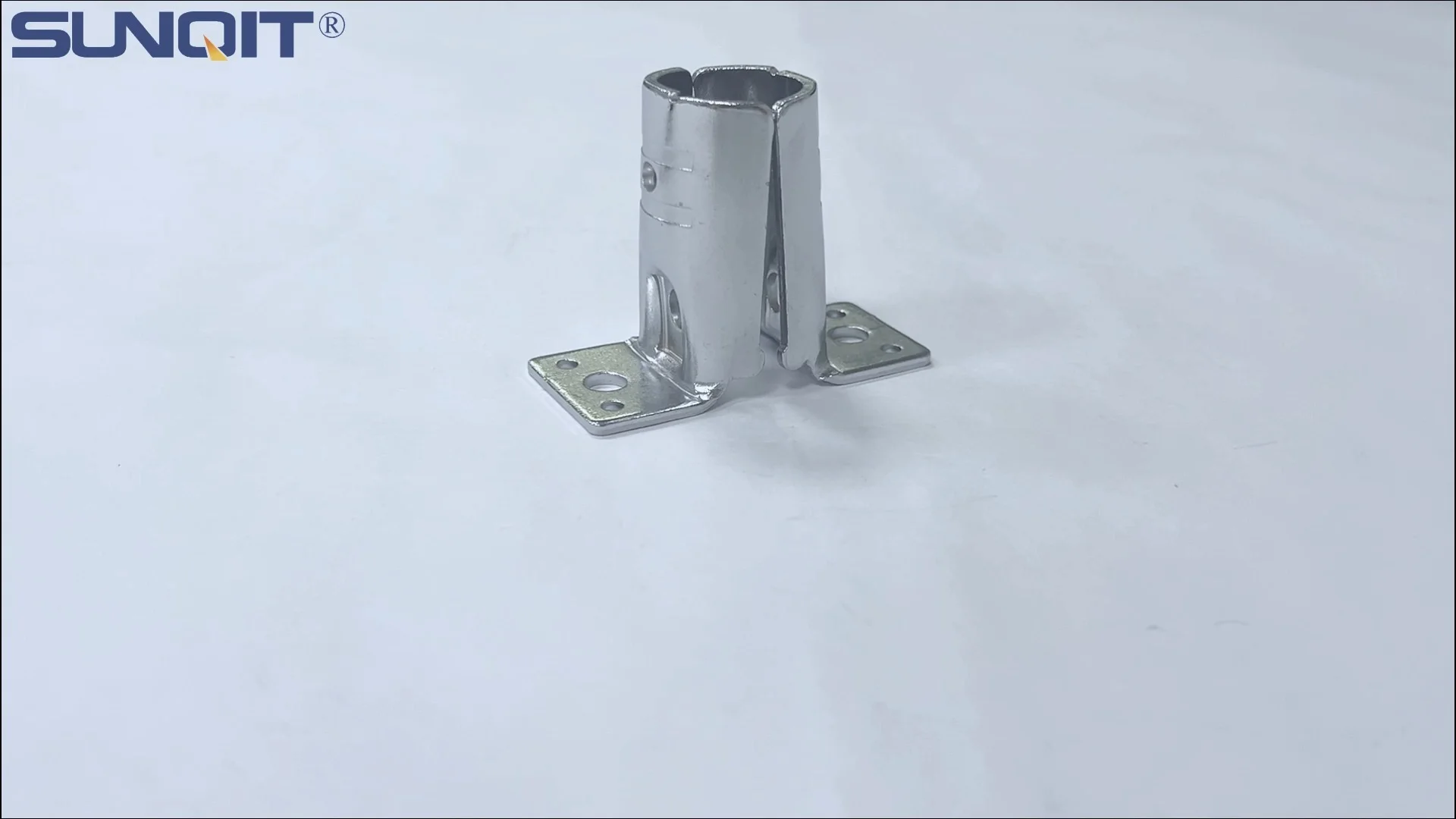
Vertical Lean Pipe Joint
Vertical lean pipe joint is used for 28mm lean pipe fixed on ground and keep it stable.
In the fast-paced world of manufacturing and workshop management, the efficiency of production lines, assembly stations, and material handling systems can make or break a business's bottom line. Every decision—from the layout of workbenches to the design of flow racks—ripples through daily operations, affecting everything from labor productivity to adaptability in the face of changing market demands. Among the most critical choices manufacturers face is how to construct these essential systems: relying on traditional welded connections or embracing modern modular solutions like vertical lean pipe joints. This article dives deep into the cost and flexibility of these two approaches, helping you determine which aligns best with your operational needs, long-term goals, and budget constraints.
Understanding the Basics: What Are Vertical Lean Pipe Joints?
Before we compare, let's clarify what vertical lean pipe joints are and why they've become a staple in lean manufacturing environments. At their core, vertical lean pipe joints are mechanical components designed to connect lengths of lean pipe (also known as "lean tubes") without the need for welding, drilling, or permanent adhesion. These joints act as the "building blocks" of modular systems, allowing users to assemble, disassemble, and reconfigure structures like workbenches, flow racks, and turnover trolleys with minimal effort.
Lean pipes themselves are typically made from materials like steel (often coated in plastic for durability and ESD protection), aluminum, or stainless steel, depending on the application. The joints, which come in various angles (90°, 45°, 180°, etc.) and designs (fixed, rotating, swivel), are engineered to lock pipes securely in place while maintaining the system's overall stability. What sets them apart is their simplicity: most require no specialized tools—just a wrench or even hand-tightening—to assemble, making them accessible to teams with limited technical expertise.
Beyond the joints and pipes, lean pipe systems often include a range of accessories: caster wheels for mobility, roller tracks for material flow, leveling feet for stability, and brackets for mounting shelves or tools. This ecosystem of components is what gives vertical lean pipe joints their reputation for versatility. Whether you're building a lightweight assembly workbench for small parts or a heavy-duty flow rack for bulk materials, the modular nature of these joints means you can mix and match components to create a custom solution without starting from scratch.
The Traditional Approach: What Are Welded Connections?
Welded connections, by contrast, represent the tried-and-true method of building industrial structures. For decades, welding has been the go-to for creating rigid, permanent frameworks—think steel beams in construction or fixed conveyor supports in factories. In this process, a skilled welder uses heat to melt and fuse metal components (like steel pipes or profiles) together, creating a bond that's often praised for its strength and durability.
Welded connections are valued for their ability to create seamless, load-bearing structures that can withstand heavy weights and constant use. In environments where stability is non-negotiable—such as automotive manufacturing lines or heavy machinery assembly—welded frames have long been the default. However, this permanence comes with trade-offs. Once welded, a structure is fixed in place; modifying its height, width, or layout requires cutting, re-welding, and often repainting, which is time-consuming and labor-intensive. Additionally, welding demands specialized skills, equipment (like welding machines, protective gear, and ventilation systems), and compliance with safety regulations, all of which add layers of complexity to the process.
Real Scenario: A mid-sized electronics manufacturer recently expanded its product line, requiring a new assembly station. Their existing setup used welded workbenches, which had served them well for years. To add the new station, they had to hire a welder for two days, rent equipment, and temporarily shut down a section of the production floor to avoid safety hazards. The total cost? Over $1,500, not including downtime. Six months later, when product specs changed and the station needed to be reconfigured, they faced the same process again—costing another $1,200 and disrupting workflow for a day. This cycle of fixed structures and costly modifications is a common pain point for teams relying on welded connections.

Cost Comparison: Short-Term Expenses vs. Long-Term Value
Cost is often the first factor businesses consider when choosing between vertical lean pipe joints and welded connections. But as the example above shows, focusing solely on upfront expenses can lead to costly surprises down the line. Let's break down the costs of each approach across three key categories: initial investment, long-term maintenance, and adaptability costs.
Initial Investment: Lean Pipe Joints vs. Welded Connections
At first glance, welded connections might seem cheaper. After all, steel pipes and profiles are relatively inexpensive, and if you already have a welder on staff, the labor cost might feel minimal. However, this overlooks hidden expenses. Welding requires more than just a welder: you need protective gear (helmets, gloves, aprons), a power source, ventilation to remove fumes, and often permits or safety inspections to comply with workplace regulations. For small to medium-sized businesses without in-house welding expertise, hiring a contract welder can cost $50–$100 per hour, and a single project (like building a workbench or flow rack) can take 4–8 hours, pushing initial labor costs to $200–$800.
Vertical lean pipe joints, on the other hand, have a higher upfront cost for materials. A basic lean pipe joint might cost $5–$15, and a typical workbench setup could require 10–15 joints, plus pipes, accessories, and tools (though many systems only need a hex key or adjustable wrench). For example, a simple aluminum workbench with a single deck (without casters) might cost $300–$500 in materials, depending on the pipe thickness and accessories. While this is higher than the raw material cost of welded steel, the labor savings are significant: a team of two workers with no specialized training can assemble the same workbench in 1–2 hours, eliminating the need for expensive welding labor.
Long-Term Maintenance: Repairs, Replacements, and Upkeep
Welded structures are known for their durability, but they're not immune to wear and tear. Over time, welded joints can develop cracks due to vibration, corrosion (especially in humid or chemical-exposed environments), or overloading. Fixing these issues isn't as simple as replacing a single part: you'll need to grind down the old weld, re-weld the joint, and repaint the area to prevent rust. This process can cost $100–$300 per repair, plus downtime while the structure is out of commission.
Lean pipe systems, by contrast, are designed for easy maintenance. If a vertical lean pipe joint becomes loose or damaged, it can be replaced individually in 10–15 minutes, with replacement joints costing as little as $5. Pipes, roller tracks, or caster wheels can also be swapped out without affecting the entire structure. For example, if a plastic roller track guide rail (yellow or grey) on a flow rack wears out, you can simply unclip the old rail and snap on a new one for $20–$40, keeping the system operational with minimal downtime.
Adaptability Costs: When Your Needs Change
The biggest cost difference between the two approaches often emerges when production needs shift. Market trends, new product lines, or process improvements can require reconfiguring workbenches, expanding flow racks, or rearranging assembly lines. For welded structures, this means essentially starting over: cutting apart the old framework, disposing of scrap metal, purchasing new materials, and hiring a welder to build the updated system. The cost of this "rip and replace" cycle can be 2–3 times the initial investment, not to mention the lost productivity during downtime.
Lean pipe joints, by design, thrive on change. Since they're modular, you can disassemble a workbench, add extra shelves to a flow rack, or extend a conveyor system by simply unclipping old joints and adding new pipes and components. For example, if a manufacturer needs to add a second level to a material rack (originally a 3-row, 3-floor setup), they can purchase additional lean pipes, joints, and roller tracks, then assemble the new level in a few hours—no cutting, welding, or disposal costs. The reusability of lean pipe components also reduces waste: 80–90% of parts from a disassembled structure can be repurposed for new projects, slashing material costs over time.

Flexibility: The Hidden Advantage of Vertical Lean Pipe Joints
Cost is quantifiable, but flexibility—how easily a system adapts to change—is often the game-changer for businesses in dynamic industries. In today's market, where product lifecycles shrink and customer demands evolve rapidly, a rigid production line can become a liability. Let's explore how vertical lean pipe joints and welded connections stack up in terms of adaptability, modularity, and scalability.
Adaptability: Responding to Layout Changes
Workshop layouts are rarely static. Seasonal demand spikes might require adding temporary assembly stations; new machinery might need to be integrated into existing lines; or ergonomic improvements could call for adjusting workbench heights. With welded connections, these changes are disruptive. For example, moving a welded workbench 10 feet across the floor would require disconnecting utilities (like power or air lines), hiring a forklift to transport it, and re-welding it in place—assuming it even fits through doorways or around obstacles. More often than not, businesses end up building entirely new structures rather than moving old ones.
Vertical lean pipe systems, by contrast, are built for mobility and reconfiguration. Many lean pipe workbenches and trolleys come with caster wheels, allowing them to be rolled to new locations in minutes. Even fixed structures, like flow racks, can be disassembled into lightweight components (pipes, joints, roller tracks) that fit into a standard pickup truck or van. This adaptability is a lifesaver for businesses with limited space or those testing new workflows. For instance, a small manufacturer of medical devices used vertical lean pipe joints to build a prototype assembly line. When testing revealed bottlenecks, they rearranged the workbenches and flow racks overnight, saving weeks of downtime compared to reworking welded structures.
Modularity: Customizing for Specific Tasks
No two production tasks are identical. An electronics assembly station might need ESD protection (via ESD workbenches and grounded lean pipes), while a heavy machinery workshop requires sturdier materials like stainless steel pipes. Welded connections offer little room for customization once the structure is built. Adding a tool rail to a welded workbench, for example, would require welding brackets to the frame, which could weaken the original welds or damage the bench's surface.
Lean pipe joints, however, are modular by design, allowing for endless customization. Need to add a tool holder to a workbench? Clip on an aluminum pipe with a bracket. Want to integrate a conveyor with roller tracks into a flow rack? Connect the roller track placon mount to the aluminum profile using a joint. Even specialized components like swivel roller balls (1 inch or 0.5 inch) or plastic roller track guide rails (yellow for high-visibility, grey for low-profile) can be added or swapped out without modifying the core structure. This modularity ensures that each system is tailored to the task at hand, improving ergonomics, reducing waste, and boosting productivity.
Scalability: Growing with Your Business
As businesses grow, so do their operational needs. A startup might begin with a single workbench but quickly expand to multiple assembly lines, requiring flow racks, material trolleys, and conveyor systems. Welded connections make scaling a slow, costly process: each new structure requires designing, sourcing materials, and hiring labor, creating bottlenecks in expansion timelines.
Lean pipe joints, by contrast, allow for incremental scaling. Since components are standardized (e.g., 2020, 3030, or 4040 aluminum profiles, common lean pipe diameters), you can start small and add components as needed. For example, a manufacturer starting with a basic aluminum workbench (Workbench E, single deck without casters) can later add caster wheels for mobility, then connect it to a flow rack using roller tracks and joints. As production volume increases, they can purchase additional lean pipes, joints, and accessories to build new workstations—often using the same supplier (like a trusted lean pipe supplier) for consistent quality and compatibility.

Side-by-Side Comparison: Key Metrics
To summarize the cost and flexibility differences, let's look at a side-by-side comparison of vertical lean pipe joints and welded connections across critical metrics:
| Metric | Vertical Lean Pipe Joints | Welded Connections |
|---|---|---|
| Initial Investment | Higher upfront for components ($300–$800 for a workbench), but lower labor costs (no welding fees). | Lower material costs ($100–$300 for steel pipes/profiles), but higher labor ($200–$800 for welding) and equipment fees. |
| Assembly Time | 2–4 hours for a standard workbench/flow rack (no specialized skills needed). | 4–8 hours for the same structure (requires skilled welders). |
| Maintenance Cost | Low: $5–$50 per repair (replaceable joints/pipes). | High: $100–$300 per repair (re-welding, repainting). |
| Reconfiguration Cost | Low: $100–$300 (new components + labor for reassembly). | Very High: 2–3x initial investment (rip and replace). |
| Adaptability | Excellent: Easy to disassemble, reconfigure, and reuse components. | Poor: Fixed structure; changes require rebuilding from scratch. |
| Scalability | High: Incremental expansion with standardized components. | Low: Slow, costly expansion requiring new materials and labor. |
| Waste Reduction | High: 80–90% of components reusable; minimal scrap. | Low: High scrap from cutting old structures; limited reuse. |
Real-World Applications: When to Choose Which?
While vertical lean pipe joints offer clear advantages in cost and flexibility, there are scenarios where welded connections might still be the better choice. Let's explore two common applications—workbenches and flow racks—to see how each approach performs in practice.
Application 1: Workbenches for Assembly Lines
Workbenches are the backbone of assembly lines, supporting tools, materials, and workers through repetitive tasks. For a stable, long-term setup with zero plans for reconfiguration (e.g., a dedicated station for a single product with a 5+ year lifecycle), welded workbenches might make sense. They're strong enough to support heavy machinery and resistant to the wear and tear of constant use. However, most manufacturers today need workbenches that can adapt to new tools, ergonomic adjustments (like height changes for different workers), or additional storage as product lines evolve.
Vertical lean pipe workbenches shine here. For example, an automotive parts supplier uses aluminum workbenches (Workbench E, single deck without casters) for assembling small components. When they introduced a new part requiring additional tools, they added a side shelf using aluminum guide rails, lean pipe joints, and a plastic roller track for easy material access—all in under two hours. Six months later, when they switched to a standing work model, they raised the workbench height by replacing the legs with longer aluminum pipes and adjustable leveling feet. The total cost of these modifications? Less than $200, compared to $1,000+ for a new welded workbench.
Application 2: Flow Racks for Material Handling
Flow racks (also called "gravity flow racks") use roller tracks to move materials from the back to the front, reducing the need for manual lifting and improving picking efficiency. In warehouses with static inventory and fixed picking routes, welded flow racks can be durable and cost-effective. But in dynamic environments—where SKUs change, order volumes fluctuate, or storage needs grow—their lack of adaptability becomes a problem.
Lean pipe flow racks, by contrast, are designed for flexibility. A third-party logistics provider (3PL) using material racks (3-row, 3-floor setups) with plastic roller track guide rails (yellow for high-visibility) recently needed to add a fourth row to accommodate new clients. Using their existing lean pipe supplier, they ordered additional aluminum pipes, vertical lean pipe joints, and roller track placon mounts. Their team assembled the new row in a morning, with no disruption to ongoing operations. The total cost was $350, compared to $1,500 for a new welded flow rack.
Application 3: Heavy-Duty Material Handling (When Welding Still Wins)
There are exceptions to the rule. In applications requiring extreme load-bearing capacity—such as supporting machinery weighing 10,000+ pounds or withstanding constant vibration (e.g., near industrial presses)—welded connections may still be necessary. The permanent bond of a weld provides structural integrity that modular joints, while strong, can't always match. However, even here, hybrid approaches are emerging: using welded frames for the core structure and lean pipe joints for secondary components (like shelves or material guides) that need flexibility.
Choosing the Right Solution: Key Questions to Ask
Deciding between vertical lean pipe joints and welded connections ultimately depends on your unique needs. To make the right choice, ask yourself these questions:
- How often do my production needs change? If you reconfigure layouts, add products, or update processes annually (or more frequently), lean pipe joints are likely the better investment.
- What's my long-term growth plan? If you anticipate expanding production or adding new lines in the next 2–3 years, lean pipe's scalability will save time and money.
- Do I have in-house welding expertise? Without a skilled welder on staff, the labor costs of welded connections can quickly outweigh upfront material savings.
- What's my tolerance for downtime? If even a day of production disruption costs thousands, the quick assembly and reconfiguration of lean pipe joints will minimize losses.
- How important is sustainability? If reducing waste and reusing materials align with your company values, lean pipe's modularity supports eco-friendly practices.
Conclusion: The Future of Modular Manufacturing
Vertical lean pipe joints and welded connections each have their place in manufacturing, but the trend toward flexibility, adaptability, and cost-efficiency is clear. Welded connections offer strength and permanence, but they come with hidden costs in maintenance, reconfiguration, and downtime. Vertical lean pipe joints, by contrast, provide a modular, scalable solution that grows with your business, reduces waste, and keeps operations agile in an ever-changing market.
For most modern manufacturers—whether small workshops or large production facilities—the long-term value of lean pipe joints far outweighs their upfront costs. By investing in a modular system, you're not just building workbenches or flow racks; you're building a foundation for continuous improvement, where change is an opportunity rather than a disruption. And in today's competitive landscape, that adaptability might be the most valuable tool in your operational toolkit.