- Company Articles
- Products and Technology
- Product knowledge
- Warehouse Logistics: 4040E EU Standard Aluminum Profile for Flow Racks & Conveyors

Warehouse Logistics: 4040E EU Standard Aluminum Profile for Flow Racks & Conveyors
Related Product
4040E EU Standard Aluminum Profile
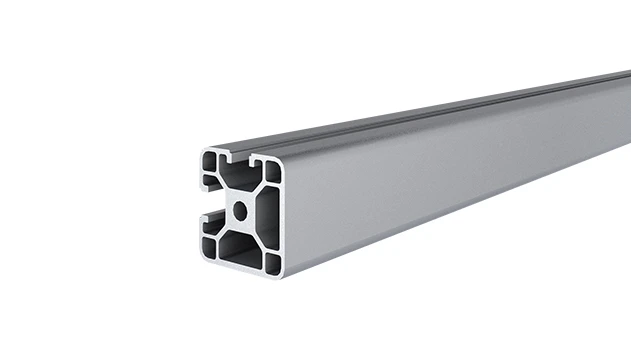
4040E is a 4.00x4.00 CM fractional 40 series square extrusion T-slot profile with two side open T-slots, two side with closed face, each side with 4.00cm face. The profile has align-a-grooves to assist in aligning connecting profiles.
Walk into any busy warehouse, and you'll likely see the same scene: workers hustling to move boxes, shelves stacked haphazardly, and conveyor belts that creak under the weight of daily use. For logistics managers, these aren't just everyday sights—they're symptoms of a bigger problem: inefficiency. When your warehouse isn't optimized, every second wasted on searching for inventory or manually moving goods eats into your bottom line. But what if there was a way to transform this chaos into a streamlined, almost rhythmic flow of operations? Enter the unsung hero of modern warehouse design: the 4040E EU Standard Aluminum Profile . This unassuming yet powerful material is redefining how flow racks and conveyors are built, making warehouses smarter, faster, and more adaptable than ever before.
What Makes the 4040E EU Standard Aluminum Profile So Special?
Before diving into how it transforms flow racks and conveyors, let's get to know the 4040E aluminum profile itself. At first glance, it might look like just another metal bar, but its design and engineering are anything but ordinary. The "4040" refers to its dimensions: 40mm in width and 40mm in height, creating a square cross-section that strikes the perfect balance between strength and versatility. The "E" denotes its compliance with EU standards—a seal of quality that ensures consistency, durability, and safety, whether you're using it in a small workshop or a sprawling distribution center.
What truly sets the 4040E apart is its T-slot design. Running along its length are precision-machined slots that act as connection points for a wide range of aluminum profile accessories —think brackets, connectors, end caps, and even custom components. This means no welding, no drilling, and no complicated tools. With just a few bolts and a hex key, you can assemble, disassemble, or reconfigure structures in hours, not days. And because it's made from high-grade aluminum, it's lightweight enough to handle manually yet sturdy enough to support heavy loads—up to 500kg per linear meter in some configurations. Corrosion-resistant, non-magnetic, and low-maintenance, it's built to withstand the harsh conditions of warehouse environments, from temperature fluctuations to occasional spills.
Flow Racks: The Backbone of Efficient Picking, Powered by 4040E
In warehouse logistics, "flow" is everything. When products flow smoothly from storage to picking to shipping, costs drop, and customer satisfaction rises. That's where flow racks come in. Unlike static shelving, flow racks use gravity to move products forward as items are picked, ensuring a first-in-first-out (FIFO) system that reduces waste and keeps inventory fresh. But not all flow racks are created equal. Traditional models, often made from wood or generic steel, are bulky, hard to adjust, and prone to wear and tear. Enter 4040E aluminum profiles—the game-changer that turns flow racks from rigid structures into flexible, future-proof assets.
Here's how it works: The 4040E aluminum profile forms the frame of the flow rack, providing a stable base that can be customized to fit any warehouse layout. Want shelves at 12-inch intervals for small parts? Or 24-inch spacing for larger boxes? With T-slot accessories like angle brackets and shelf supports, you can adjust heights on the fly. But the real magic happens when you pair the 4040E frame with roller track —the smooth, wheeled surface that lets products glide forward with minimal effort. Roller tracks clip directly into the T-slots of the 4040E profile, eliminating the need for messy adhesives or permanent fasteners. This means if your product sizes change next month, you can swap out roller tracks for wider or narrower ones in minutes.
| Feature | Traditional Flow Racks | 4040E Aluminum Profile Flow Racks |
|---|---|---|
| Assembly Time | 2–3 days (requires tools/welding) | 4–6 hours (tool-free with T-slot accessories) |
| Customization | Limited (fixed shelf heights, hard to modify) | Unlimited (adjust heights, add/remove shelves, swap roller tracks) |
| Durability | 5–7 years (wood rots, steel rusts) | 15+ years (aluminum resists corrosion, T-slots stay intact) |
| Weight Capacity | 300–400kg per shelf (varies by material) | Up to 500kg per shelf (reinforced with aluminum brackets) |
Take the example of a regional electronics distributor I worked with last year. Their old wooden flow racks were constantly warping under the weight of circuit boards and cables, leading to jams and frequent replacements. After switching to 4040E aluminum profile flow racks with roller tracks, they reported a 30% reduction in picking time—because workers no longer had to pull or lift heavy boxes; products slid right to them. They also saved 15% on labor costs by reallocating staff from rack maintenance to more valuable tasks like order processing. And when they expanded their product line to include larger items, they simply adjusted the shelf heights using 4040E angle brackets—no need to buy new racks.

Conveyors: Automating Movement with 4040E's Strength and Precision
If flow racks optimize picking, conveyors automate movement—turning manual material handling into a seamless, hands-free process. From roller conveyors that move pallets to belt conveyors that transport small packages, these systems are the arteries of modern warehouses, ensuring goods get from Point A to Point B without human intervention. But building a conveyor system that's reliable, adaptable, and cost-effective has always been a challenge—until 4040E aluminum profiles came along.
4040E profiles excel as conveyor frames for one simple reason: stability. Conveyors vibrate, carry heavy loads, and need to stay aligned to prevent jams. The 4040E's square cross-section and rigid aluminum construction minimize flexing, even under continuous use. And because it's lightweight, installing a 4040E-based conveyor system is a breeze compared to steel—no need for cranes or heavy machinery. Workers can carry sections by hand and assemble them on-site, saving on installation costs.
Roller conveyors, in particular, benefit from the 4040E's design. The roller track—those rows of small wheels that let items roll forward—mounts directly to the T-slots of the 4040E frame. This allows for precise alignment, ensuring wheels spin smoothly and products move at a consistent speed. Want to adjust the conveyor's angle for steeper inclines? Use height-adjustable feet (another T-slot accessory) to tilt the frame. Need to add a curve to navigate around a pillar? 4040E corner brackets let you create 90-degree or 45-degree bends without compromising stability.
A food and beverage warehouse in the Midwest recently shared their success story with me. They were using a hodgepodge of steel conveyors that constantly jammed and required weekly maintenance. After upgrading to a 4040E aluminum profile roller conveyor system, their downtime dropped by 75%. "We used to have two guys fixing jams every morning," their logistics manager told me. "Now, the conveyors run like clockwork. And when we expanded our cold storage area, we just disassembled a section of the conveyor, moved it, and reassembled it in an afternoon. With steel, that would've taken a week and cost twice as much."
Why 4040E Aluminum Profiles Are a Smart Investment for Any Warehouse
By now, you might be thinking: "This all sounds great, but is the 4040E worth the upfront cost?" Let's break it down. Traditional warehouse equipment often comes with a lower sticker price, but it costs more in the long run—think frequent repairs, replacement parts, and lost productivity from downtime. 4040E aluminum profiles, on the other hand, are a strategic investment. Here's why:
1. Efficiency That Scales with Your Business
Warehouses rarely stay the same. Sales spike, product lines expand, and layouts need to evolve. With 4040E, you're not stuck with a "set it and forget it" system. Need to add a new flow rack section for seasonal inventory? Grab some extra profiles and accessories. Want to extend a conveyor to reach a new shipping dock? Disassemble the end section and add more roller track. This scalability means your warehouse can grow without overhauling its entire infrastructure.
2. Cost Savings Over Time
Yes, 4040E aluminum profiles cost more than wood or generic steel upfront. But consider this: A typical 4040E flow rack lasts 15+ years, while a wooden one might need replacing every 5 years. Over 15 years, you'd buy three wooden racks for the price of one 4040E system. Add in savings from reduced labor (faster assembly, less maintenance) and fewer inventory losses (thanks to FIFO flow), and the ROI becomes clear. One manufacturing plant I consulted for calculated that their 4040E investment paid for itself in just 18 months.
3. Safety First
Warehouse safety isn't optional—it's a legal and moral obligation. 4040E aluminum profiles prioritize safety in ways traditional materials can't. The smooth, rounded edges of the profiles reduce the risk of cuts and scrapes. T-slot accessories like end caps cover sharp edges, and the sturdy frame minimizes the chance of shelves collapsing under heavy loads. Even better, because 4040E systems are easy to adjust, you can design ergonomic workstations that reduce bending and lifting—cutting down on back injuries and workers' compensation claims.
Getting Started: Building Your 4040E System
Ready to upgrade your warehouse with 4040E aluminum profiles? Here's a quick guide to getting started: First, assess your needs. Map out your current workflow—where are the bottlenecks? Do you need more flow racks for picking, or conveyors to connect storage and shipping? Next, sketch a layout. Use 4040E's modularity to your advantage: design shelves and conveyor paths that fit your space, not the other way around. Then, gather your accessories. Essentials include roller track for flow racks, connectors for conveyor bends, and end caps for safety. Most suppliers offer pre-configured kits for common setups, but don't be afraid to mix and match—T-slots make customization easy.
Finally, don't underestimate the power of testing. Start small: build one flow rack section or a short conveyor segment to test how it works with your products. Adjust as needed, then scale up. Remember, the goal isn't to replace everything at once—it's to create a system that grows with you, one T-slot at a time.
The Future of Warehouse Logistics Is in the Details
In the world of warehouse logistics, success lies in the details: the height of a shelf, the smoothness of a roller track, the flexibility of a frame. The 4040E EU Standard Aluminum Profile isn't just a material—it's a tool that puts those details in your hands. It turns rigid, frustrating warehouses into dynamic, efficient spaces where products flow, workers thrive, and profits grow. So if you're tired of watching your team struggle with outdated equipment, or if you're ready to take your warehouse to the next level, it's time to consider the 4040E difference. After all, in logistics, every second counts—and with 4040E, you'll be counting more wins, not more delays.