- Company Articles
- Products and Technology
- Application Cases
- Warehouse Logistics: Aluminum Workbench C as a Central Sorting Station

Warehouse Logistics: Aluminum Workbench C as a Central Sorting Station
Related Product
Aluminum Workbench C
aluminum-tube-workbench-is-more-flexible-and-durable,-compared-with-traditional-pe/abs-coated-steel-tube.-it-is-easy-to-assemble,-anti-corrosion,-rust-protection,-and-recycle-use-after-disassemble.
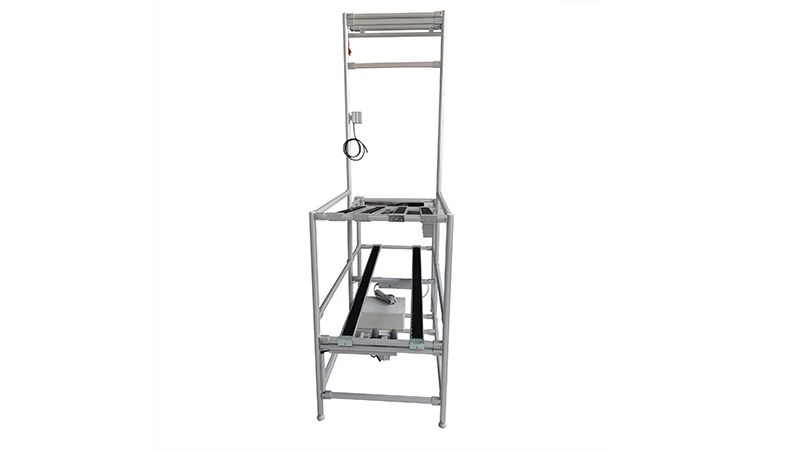
In the hum of a busy warehouse, where the clock ticks to the rhythm of incoming and outgoing packages, there's one spot that never sleeps: the central sorting station. It's the nerve center, the place where chaos meets order, where a single misplaced package can send ripples of delays through the entire supply chain. For warehouse managers and frontline workers alike, this station isn't just a workspace—it's the heartbeat of efficiency. But what if the very tool meant to streamline this process is actually holding you back? Enter Aluminum Workbench C: not just a table, but a game-changer designed to turn sorting from a daily headache into a smooth, almost poetic dance of productivity.
The Unsung Hero of Warehouse Efficiency: Why the Central Sorting Station Matters
Let's start with the basics: why does a central sorting station deserve so much attention? Imagine a warehouse without one—packages pile up in corners, workers dart between disorganized piles, and every "where does this go?" slows down the line. A well-designed central sorting station cuts through that noise. It's where incoming goods are inspected, labeled, and routed to their next destination—whether that's a storage rack, a shipping truck, or another part of the production floor. Done right, it reduces bottlenecks, slashes errors, and even boosts worker morale by turning a chaotic space into one that feels manageable.
But here's the catch: traditional sorting stations often fall short. Heavy wooden workbenches that scratch easily, steel tables that rust in humid environments, or flimsy plastic setups that wobble under the weight of daily use. Add to that rigid designs that can't adapt when your warehouse needs change—maybe you're handling more small packages one month, or bulkier items the next—and suddenly, your "solution" becomes part of the problem. Workers hunch over surfaces that are too low, waste time moving materials across clunky tables, and grow frustrated with a setup that doesn't work with them. That's where Aluminum Workbench C steps in: built not just to exist in a warehouse, but to thrive in it.
Aluminum Workbench C: A Design That Listens to Warehouse Needs
At first glance, Aluminum Workbench C might look like any other workbench. But take a closer look, and you'll see the difference is in the details—details that come from understanding the realities of warehouse work. Let's start with the material: aluminum. Not just any aluminum, but high-grade aluminum profile (think: the kind that balances strength and lightness like a well-tuned instrument). Why aluminum? Because in a warehouse, you need something that can take a beating without weighing you down. Wood warps when it gets damp, steel dents and rusts, but aluminum? It's resistant to corrosion, easy to clean (just wipe away dust or spills), and surprisingly sturdy for its weight. That means you can load it up with boxes, tools, and scanners without worrying about it sagging, and if you need to reposition it (say, to rearrange your sorting layout), two people can move it without breaking a sweat.
Then there's the design itself. Aluminum Workbench C features a single-deck surface—no unnecessary layers to clutter the space—with a smooth, flat top that's gentle on packages (no snags on tape or labels) but tough enough to handle daily use. What really sets it apart, though, is how it plays well with others. We're talking about aluminum profile accessories: the little (but mighty) components that turn a basic table into a customized sorting hub. Need a shelf for scanners and labels? Add a simple bracket. Want to attach a tool holder for box cutters or tape dispensers? Screw on an accessory rail. These aren't afterthoughts—they're built into the workbench's DNA, thanks to the T-slot design of the aluminum profile. Slide, lock, adjust: it's like building with building blocks, but for grown-ups who need their workspace to keep up with their to-do list.
Ergonomics matter too. A sorting station isn't just about the workbench—it's about the people using it. Aluminum Workbench C can be adjusted to different heights (yes, even after installation) to suit workers of all sizes, reducing the strain on backs and shoulders that comes from hunching or reaching. The surface is wide enough to spread out packages without feeling cramped, but not so wide that you're stretching across it all day. It's the kind of thoughtfulness that turns a "job" into a task that feels doable, even on the busiest days.

Roller Track: The Silent Partner in Smooth Material Flow
A sorting station is only as good as how easily materials move through it. That's where roller track comes in—and Aluminum Workbench C was practically made to work with it. Roller track isn't just a series of wheels; it's the circulatory system of your sorting process, carrying packages from the receiving area to the workbench, and then from the workbench to their next stop. Imagine this: a cart full of incoming packages rolls up to the workbench. Instead of lifting each box onto the table (straining your back in the process), you simply slide them onto the connected roller track. The wheels glide smoothly, letting you position each package exactly where you need it—no heavy lifting, no wasted time.
Aluminum Workbench C integrates with roller track seamlessly, thanks to specialized connectors (like roller track placon mounts, if you want to get technical). These little pieces lock the roller track to the workbench, creating a continuous flow from "in" to "sort" to "out." Want to route packages to the left for storage and to the right for shipping? Add a split in the roller track. Need to slow things down for careful inspection? Tighten the roller tension. It's flexibility that adapts to your workflow, not the other way around. And because both the workbench and the roller track are aluminum-based, they're built to last—no mismatched materials that wear each other down over time.
Here's a real-world example: a small e-commerce warehouse I worked with recently was struggling with slow sorting times. Their old wooden workbench sat, and workers had to carry packages from the receiving cart to the table, then carry them again to the shipping area. After installing Aluminum Workbench C with roller track, they cut down on manual lifting by 60%. Packages now glide from the cart to the workbench, get sorted, and then glide onto another roller track leading to shipping. Workers reported less fatigue, and the team hit their daily targets 30 minutes earlier. All because the workbench and roller track worked together like a well-rehearsed team.

Flow Rack Integration: Extending the Sorting Ecosystem
A central sorting station doesn't exist in a vacuum—it's part of a larger ecosystem, and that ecosystem includes storage. Enter flow rack: the unsung hero of organized storage, where items "flow" forward as the front ones are removed, making it easy to grab what you need without digging. Aluminum Workbench C plays nicely with flow rack too, acting as the bridge between incoming materials and storage. Picture this: after sorting packages on the workbench, you slide them onto a flow rack (say, Material Rack B, with 3 rows and 3 floors for maximum organization) that's positioned right next to the workbench. Now, instead of walking across the warehouse to store items, you're just reaching over—and when it's time to pick items for shipping, they're right there, ready to go.
What makes this integration work? Again, it's the adaptability of aluminum. Both the workbench and flow rack use aluminum profile, so you can align their heights perfectly—no awkward gaps between the workbench surface and the flow rack shelves. Add a few swivel roller balls (1 inch, maybe) to the edge of the workbench, and suddenly sliding packages onto the flow rack is as easy as pushing a book across a table. It's these small, intentional design choices that turn a collection of tools into a cohesive system.

Aluminum Workbench C vs. Traditional Workbenches: A Side-by-Side Look
Still not convinced? Let's put Aluminum Workbench C head-to-head with traditional options. The table below breaks down how it stacks up against wooden, steel, and basic plastic workbenches in the areas that matter most to warehouse operations:
| Feature | Traditional Wooden Workbench | Steel Workbench | Basic Plastic Workbench | Aluminum Workbench C |
|---|---|---|---|---|
| Durability | Scratches easily; warps in humidity | Sturdy but prone to rust; dents on impact | Lightweight but bends under heavy loads | Corrosion-resistant; scratch-resistant; no warping |
| Customization | Limited (nails/screws damage wood) | Basic (welded parts can't be adjusted) | Almost none (fixed design) | High (aluminum profile accessories for shelves, tool holders, etc.) |
| Weight & Mobility | Heavy; hard to move | Very heavy; often permanent | Light but unstable when moved | Lightweight (easily repositioned) but stable when in use |
| Integration with Roller Track/Flow Rack | Difficult (no built-in connectors) | Possible but clunky (requires drilling) | Not designed for it | Seamless (built-in T-slots for roller track placon mounts and flow rack connectors) |
| Ergonomics | Fixed height; often too low/high | Sometimes adjustable but heavy to modify | Fixed height; flimsy surface | Adjustable height; smooth, stable surface |
The verdict? Aluminum Workbench C isn't just better—it's built for a different mindset . Traditional workbenches are static; they're furniture. Aluminum Workbench C is dynamic; it's a tool that grows with your warehouse.
The Human Touch: How Aluminum Workbench C Supports Your Team
At the end of the day, warehouses are run by people—and people thrive when their tools make their jobs easier. Aluminum Workbench C understands that. Take, for example, Maria, a sorting station worker at a regional distribution center I visited. Before they switched to Aluminum Workbench C, she was using a steel workbench that was too low, so she spent 8 hours a day hunched over, sorting packages. "My back hurt so bad I could barely sleep at night," she told me. "And the bench was so heavy we couldn't move it—so when we got a rush of small packages, we had to pile them on the floor, which made everything messier."
After switching to Aluminum Workbench C, Maria's team adjusted the height to fit her (and her coworkers), added a small shelf for her scanner (so it wasn't always sliding off the table), and connected a roller track to reduce lifting. "Now I stand up straight, the scanner is right where I need it, and packages just glide," she said. "I go home without back pain, and we're faster too. It sounds silly, but that workbench made me feel like the company cared about how I did my job."
That's the human touch Aluminum Workbench C brings: it's not just about efficiency—it's about respect. Respect for the workers who show up every day, respect for the challenges they face, and respect for the fact that a small change (like a better workbench) can make a big difference in someone's quality of life.
Sustainability: Doing More with Less (and Doing It Greener)
In today's world, efficiency isn't just about speed—it's about sustainability too. Warehouses are under pressure to reduce their environmental footprint, and Aluminum Workbench C fits right into that mission. Aluminum is 100% recyclable, which means when (if ever) your workbench reaches the end of its life, it can be melted down and turned into something new—no waste. Compare that to wooden workbenches (which end up in landfills) or plastic ones (which take centuries to decompose). Plus, because aluminum is so durable, you won't need to replace it every few years—reducing the resources spent on manufacturing and shipping new workbenches.
There's also the energy savings. Aluminum Workbench C is lightweight, so transporting it uses less fuel than hauling heavy steel or wooden workbenches. And because it's customizable, you won't need to buy multiple workbenches for different tasks—just adjust the accessories. It's a small contribution, but in a world where every bit counts, it adds up.
Conclusion: Aluminum Workbench C—More Than a Workbench, a Catalyst for Change
Warehouse logistics can feel like a puzzle with a million pieces, but the central sorting station is the piece that holds it all together. Aluminum Workbench C isn't just another piece of that puzzle—it's the one that makes the rest fit. It's the workbench that understands your warehouse's rhythm, adapts to your needs, and supports your team in ways that go beyond the bottom line. From its aluminum profile build to its seamless integration with roller track and flow rack, from its ergonomic design to its sustainability, it's a tool built for the warehouses of today—and tomorrow.
So if you're tired of sorting stations that slow you down, workbenches that fight against you, and setups that feel stuck in the past, it might be time to meet Aluminum Workbench C. It's not just a workbench—it's a partner in efficiency, a supporter of your team, and a step toward a warehouse that works with you, not against you. After all, in the world of logistics, the best solutions aren't just about moving packages—they're about moving forward.