- Company Articles
- Products and Technology
- Product knowledge
- Warehouse Logistics: Lean Pipe Clamp B's Role in Sturdy Material Rack B Construction

Warehouse Logistics: Lean Pipe Clamp B's Role in Sturdy Material Rack B Construction
Related Product
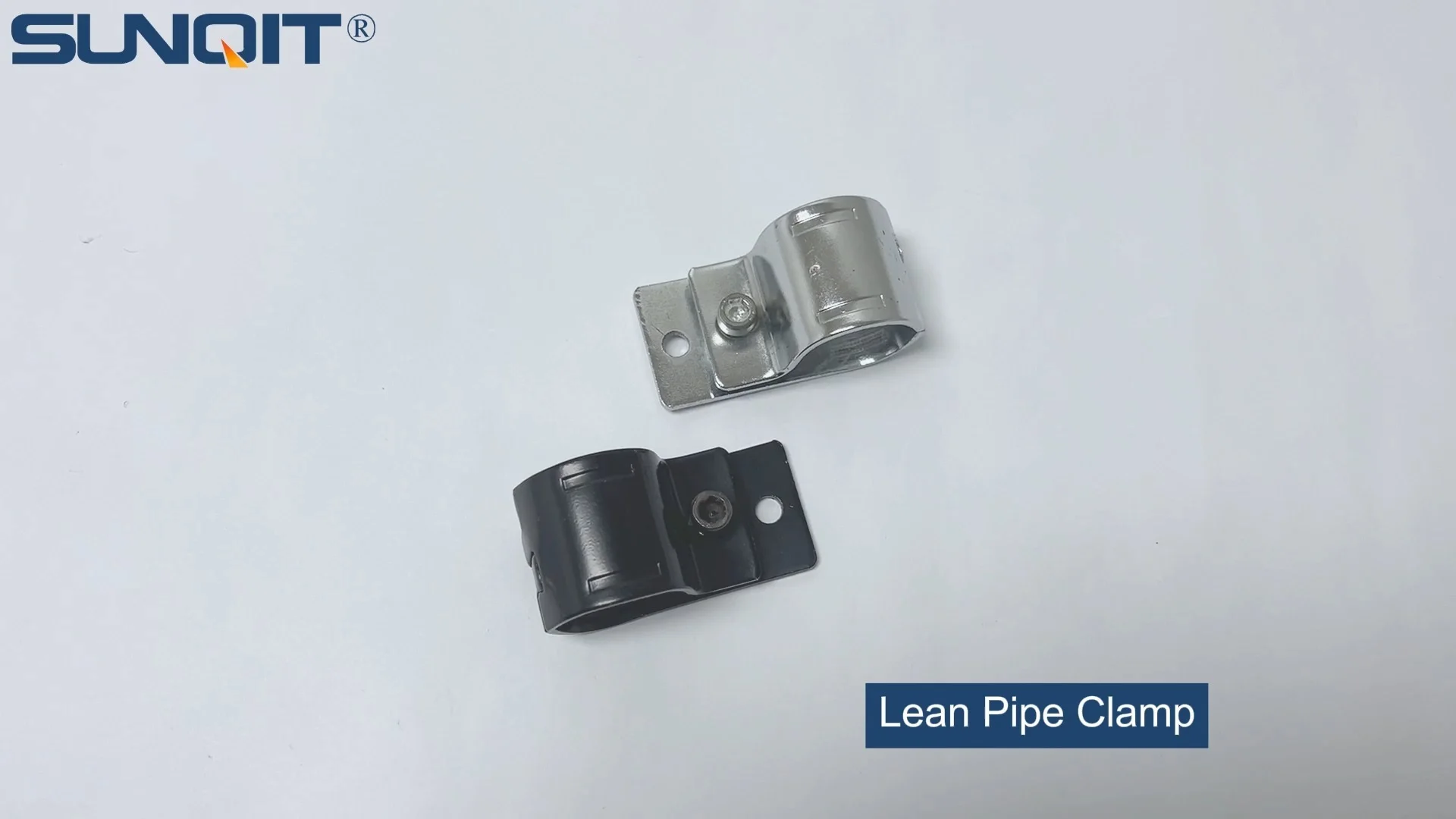
Lean Pipe Clamp
Lean pipe clamp is used for rack system hang monitor or other panel for workbenck, flowrack in production daily use.
Walk into any busy warehouse, and you'll quickly realize that behind the scenes of smooth operations lies a silent hero: the material rack. These structures aren't just metal and pipes cobbled together—they're the backbone of storage, organization, and efficiency. But here's the thing: not all material racks are created equal. A flimsy rack can slow down workflows, risk damage to inventory, and even compromise safety. That's where the details matter—specifically, the components that hold everything together. Today, we're shining a spotlight on one such component that often flies under the radar but makes all the difference: Lean Pipe Clamp B . And we'll explore how it transforms the construction of a workhorse in warehouses everywhere: Material Rack B (3 row and 3 floor) .
1. The Backbone of Warehouse Efficiency: Why Material Racks Deserve Your Attention
Let's start with the basics. In the world of warehouse logistics, space is money, and organization is sanity. Whether you're storing electronics, automotive parts, or bulk goods, how you arrange and access inventory directly impacts productivity. Material racks are the unsung organizers here—they maximize vertical space, keep items visible and accessible, and turn chaotic piles into streamlined systems. But for a rack to do its job well, it needs two non-negotiable traits: sturdiness and flexibility.
Sturdiness is obvious. A rack that wobbles under the weight of boxes or bends when loaded with tools isn't just useless—it's dangerous. Imagine a shelf collapsing mid-shift, scattering products and halting work. Not only does this cost time and money, but it also puts workers at risk. Flexibility, on the other hand, is about adaptability. Warehouses rarely stay the same; inventory sizes change, seasonal demands fluctuate, and new products roll in. A good rack should be easy to reconfigure, expand, or repurpose without needing a complete overhaul.
Enter Material Rack B (3 row and 3 floor) —a design that's become a staple in warehouses for a reason. With three rows and three floors, it strikes a balance between storage capacity and accessibility. It's compact enough to fit in tight spaces but roomy enough to hold a variety of items, from small parts bins to larger boxes. But here's the catch: the "sturdiness" of Material Rack B doesn't just depend on the pipes or panels used. It hinges on the connections between those parts. And that's where Lean Pipe Clamp B steps in.
2. Lean Pipe Clamp B: The Unsung Hero of Sturdy Connections
If Material Rack B is the body of the operation, then Lean Pipe Clamp B is the joint that holds the skeleton together. Think of it as the glue—but a glue that's strong, adjustable, and built to last. So, what exactly is Lean Pipe Clamp B? At its core, it's a specialized fastening component designed to connect lean pipe (the lightweight, durable pipes commonly used in warehouse structures) securely. But unlike generic clamps that might loosen over time or break under pressure, Lean Pipe Clamp B is engineered with precision for the demands of warehouse life.
Let's break down its design. Most Lean Pipe Clamp B models are made from high-grade steel or aluminum, chosen for their strength and resistance to wear. They feature a unique "grip" mechanism—often a combination of a clamp body, a tightening bolt, and a rubber or plastic lining that prevents slipping. When you attach it to a lean pipe, it doesn't just "hold" the pipe; it embraces it, distributing pressure evenly to avoid denting or damaging the pipe while ensuring a rock-solid connection. This is a far cry from cheaper plastic clamps that crack under stress or generic metal clamps that corrode and loosen after repeated use.
What really sets Lean Pipe Clamp B apart, though, is its versatility. Unlike fixed brackets that only work with specific pipe sizes or angles, this clamp is adjustable. Need to tweak the height of a shelf on Material Rack B? Loosen the bolt, reposition the clamp, and tighten it back up—no need for power tools or complicated adjustments. This flexibility is a game-changer in warehouses, where layouts often need to evolve to meet new needs. And because it's reusable, you can disassemble and reassemble Material Rack B as many times as needed without compromising the clamp's integrity.

3. Material Rack B (3 Row and 3 Floor): A Closer Look at the Design
To understand why Lean Pipe Clamp B is so critical, let's first get familiar with Material Rack B (3 row and 3 floor) itself. Picture this: a freestanding rack with three vertical columns (rows) spaced evenly apart, connected by horizontal beams that form three distinct levels (floors). Each floor typically features a flat surface—often made of plywood, metal, or even wire mesh—where items are placed. The dimensions can vary, but a standard setup might measure around 120cm in width, 50cm in depth, and 180cm in height, making it ideal for both small parts and medium-sized boxes.
Now, let's zoom in on the construction process. Building Material Rack B starts with the vertical pipes—these are the "legs" that support the entire structure. Then come the horizontal pipes, which connect the vertical columns to form the frame of each floor. Finally, the shelves are added, resting on the horizontal beams. Seems straightforward, right? But here's where the weak points often emerge: the joints between vertical and horizontal pipes. If these joints are loose, the rack can sway, shelves can sag, and in the worst case, the entire structure can collapse under load.
This is where Lean Pipe Clamp B proves its worth. Every connection point on Material Rack B—where a vertical pipe meets a horizontal beam, or where a cross-brace is added for stability—relies on a clamp to hold it tight. With Lean Pipe Clamp B, each of these connections becomes a point of strength. For example, on the bottom floor of Material Rack B, the horizontal pipes that span the width of the rack are secured to the vertical columns using Lean Pipe Clamp B. The clamp's tight grip ensures that even if a heavy box is slid onto the shelf, the horizontal pipe won't shift or bend., on the top floor, where lighter items might be stored but accessibility is key, the clamps allow for the height of the shelf to align with workers' reach—no need to rebuild the entire rack.

4. By the Numbers: A Technical Breakdown of Lean Pipe Clamp B and Material Rack B
To really appreciate the impact of Lean Pipe Clamp B, let's look at the specs. Below is a table comparing key details of Lean Pipe Clamp B and Material Rack B (3 row and 3 floor), so you can see how they work together to create a sturdy, reliable storage solution:
| Component | Key Specification | Primary Function | Material | Load Capacity |
|---|---|---|---|---|
| Lean Pipe Clamp B | Compatible with 28mm-30mm lean pipes; adjustable bolt tension (0-50N·m) | Secures vertical/horizontal pipes at 90° or 45° angles; prevents joint slippage | High-carbon steel (zinc-plated for corrosion resistance) or aluminum alloy | Up to 500kg per clamp (when used in pairs on horizontal beams) |
| Material Rack B (3 row and 3 floor) | Dimensions: 120cm (W) x 50cm (D) x 180cm (H); 3 rows, 3 floors | Multi-level storage for tools, parts, and inventory; optimizes vertical space | Frame: 28mm lean pipe; Shelves: 18mm plywood or steel mesh; Connections: Lean Pipe Clamp B | 50kg-80kg per shelf (evenly distributed load) |
Let's unpack this. For Lean Pipe Clamp B, the load capacity of 500kg per clamp (when paired) is a standout number. That means on a single horizontal beam of Material Rack B, which uses two clamps (one on each vertical column), the beam can safely support up to 1000kg—well beyond the 50-80kg per shelf of Material Rack B. This over-engineering isn't just a safety net; it ensures that even if a shelf is accidentally overloaded (we've all seen that one overstuffed bin), the clamps won't fail., the zinc-plated steel or aluminum material of the clamp resists rust, making it suitable for warehouses with humidity or temperature fluctuations—no more dealing with corroded clamps that seize up or snap.
For Material Rack B, the 120cm width and 50cm depth are designed to fit standard pallet sizes and warehouse aisles, while the 180cm height (about 6 feet) is tall enough to maximize vertical space without requiring ladders for access. And with three rows, the rack can separate inventory by category—say, row 1 for incoming parts, row 2 for in-process items, and row 3 for finished goods—all while keeping everything within arm's reach. None of this would be possible without Lean Pipe Clamp B ensuring that each row and floor stays aligned and stable.

5. Why Lean Pipe Clamp B Stands Out: Benefits Over Traditional Clamps
You might be wondering: "Can't I just use any clamp for my material rack?" The short answer is yes, but the long answer is: "You'll regret it." Traditional clamps—whether plastic, generic metal, or even zip ties (yes, we've seen it)—simply don't hold up to the demands of daily warehouse use. Let's compare Lean Pipe Clamp B to two common alternatives to see why it's worth the investment:
Plastic Clamps: These are cheap and easy to install, but they're also brittle. Exposed to sunlight, temperature changes, or heavy loads, they crack or snap. A cracked clamp on Material Rack B could mean a shelf giving way, risking damage to inventory or injury to workers. Lean Pipe Clamp B, with its steel or aluminum construction, is built to withstand impacts, temperature swings, and UV exposure—no cracking, no snapping.
Welded Joints: Welding is permanent, which sounds like a good thing for stability. But in a warehouse where layouts change, permanence is a curse. If you need to reconfigure Material Rack B to fit a new batch of larger items, welded joints mean you'll have to cut the pipes and reweld them—a time-consuming, labor-intensive process. Lean Pipe Clamp B, on the other hand, lets you disassemble and reassemble the rack in minutes. Need to add an extra shelf? Just loosen the clamps, add a new horizontal pipe, and tighten them back up. It's flexibility without sacrificing strength.
Another hidden benefit of Lean Pipe Clamp B is cost-effectiveness. While it might have a higher upfront cost than plastic clamps, it lasts significantly longer—often 5-10 years compared to 1-2 years for plastic. And because it's reusable, you won't have to buy new clamps every time you reconfigure Material Rack B. Over time, this adds up to serious savings. Plus, fewer clamp failures mean fewer accidents, less downtime for repairs, and lower insurance costs—all wins for your bottom line.
6. Real-World Impact: How One Warehouse Transformed with Lean Pipe Clamp B
Let's put this in context with a real example. A mid-sized electronics warehouse in Ohio was struggling with their old material racks. They were using generic metal clamps on their 3-row, 3-floor racks, but after a few months, the clamps would loosen, causing shelves to sag. Workers were spending extra time adjusting the racks, and twice in one year, a shelf collapsed, damaging $2,000 worth of circuit boards each time. The warehouse manager was frustrated—they needed a solution that was sturdy but also flexible, as they often reorganized racks to accommodate new product lines.
After switching to Lean Pipe Clamp B, the difference was night and day. The new clamps held tight even under heavy loads, and when the warehouse needed to reconfigure the racks for a new batch of larger components, workers were able to adjust the shelves in minutes instead of hours. Six months later, there had been zero shelf collapses, and the manager reported a 15% increase in productivity—workers weren't wasting time fixing racks, and inventory was easier to access. "It sounds silly to get excited about a clamp," the manager told us, "but Lean Pipe Clamp B turned our flimsiest racks into our most reliable ones. We're now using them on all our Material Rack B units."
7. Beyond Material Rack B: Lean Pipe Clamp B's Versatility in Warehouse Solutions
While we've focused on Material Rack B, it's worth noting that Lean Pipe Clamp B isn't a one-trick pony. Its design makes it compatible with a wide range of warehouse structures, from workbenches to turnover trolleys. For example, many warehouses use aluminum profile workbenches—sturdy, lightweight surfaces for assembling products. Lean Pipe Clamp B can connect the aluminum profile legs to the tabletop frame, ensuring the workbench doesn't wobble during use., on turnover trolleys (those handy carts used to move inventory around), the clamps secure the handlebar to the frame, preventing it from twisting or detaching when loaded with heavy boxes.
This versatility is key in modern warehouses, where "modularity" is the name of the game. Instead of buying separate components for racks, workbenches, and trolleys, you can use Lean Pipe Clamp B to build and adapt all of them using the same lean pipes and accessories. It's like having a Swiss Army knife for warehouse construction—one tool that solves multiple problems.
8. Looking Ahead: The Future of Warehouse Components
As warehouses evolve—adopting automation, IoT sensors, and smarter inventory management—so too will the components that power them. But one thing remains constant: the need for sturdy, flexible, and reliable structures. Lean Pipe Clamp B aligns perfectly with this future. Its adjustability makes it easy to integrate with new technologies—for example, adding sensor brackets to Material Rack B to track inventory levels, or attaching LED lights under shelves for better visibility. And as sustainability becomes a priority, the clamp's reusability and durable materials (like recyclable aluminum) make it an eco-friendly choice compared to single-use fasteners.
In the end, the success of a warehouse isn't just about the big machines or fancy software. It's about the small, often overlooked components that keep everything running smoothly. Lean Pipe Clamp B might not have the flash of a robotic forklift, but it's the kind of innovation that makes a tangible difference in daily operations. So the next time you walk through a warehouse and see a sturdy, well-organized Material Rack B, take a closer look at the joints—and chances are, you'll spot Lean Pipe Clamp B doing its job: quietly, reliably, and without fanfare.
Because in warehouse logistics, the strongest structures aren't built on luck. They're built on details—like a clamp that refuses to let go.