- Company Articles
- Products and Technology
- Solution
- Warehouse Logistics Optimization: Custom T-Groove Aluminum Pipe Designs

Warehouse Logistics Optimization: Custom T-Groove Aluminum Pipe Designs
Related Product
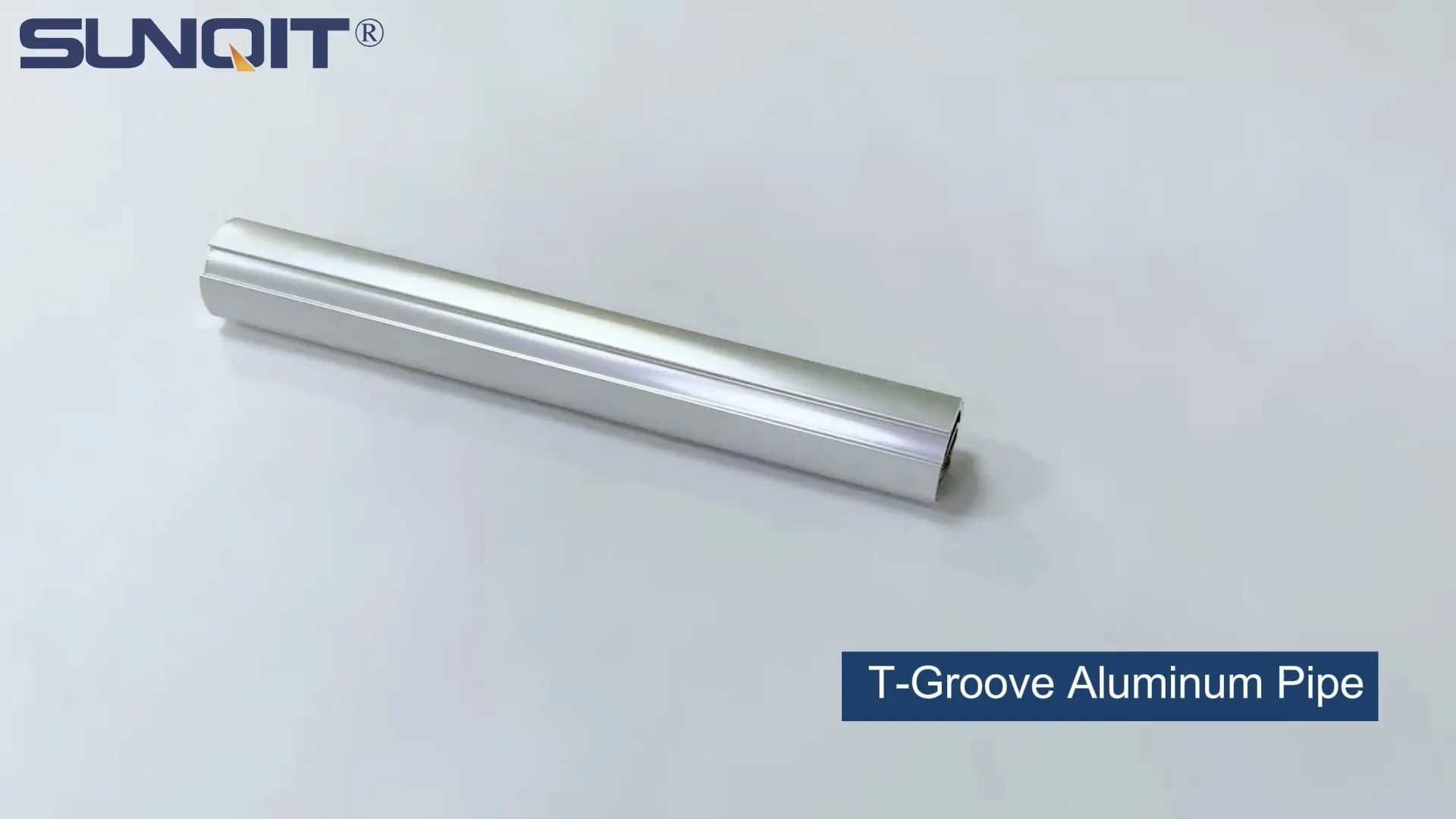
T-Groove Aluminum Pipe
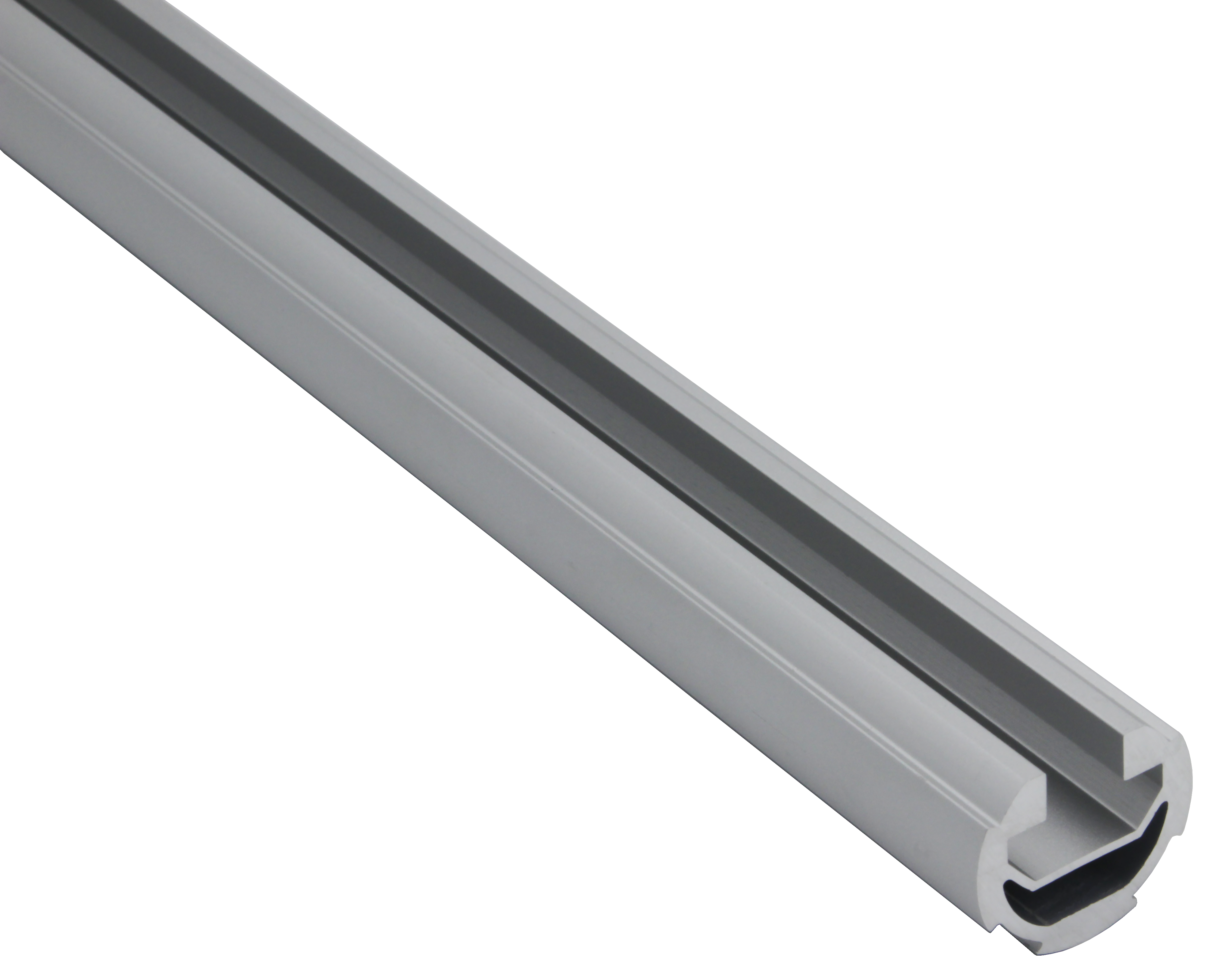
The aluminum pipe opening 10mm is installed into the T-shaped slider, which can be installed with casters or other matching functional parts. The groove can be used for positioning and is used for the track of the roller.
In the fast-paced world of modern commerce, the warehouse isn't just a storage space—it's the beating heart of logistics, where efficiency can make or break a business. Every second spent searching for a misplaced item, every awkwardly positioned workstation, every delay in material flow eats into profits and customer satisfaction. For years, warehouses have grappled with static layouts, rigid systems, and one-size-fits-all solutions that struggle to keep up with shifting demands. But what if there was a way to build a warehouse that adapts as quickly as your business does? Enter custom T-groove aluminum pipe designs—a game-changer in the quest for logistics excellence.
These unassuming aluminum extrusion profiles, with their signature T-shaped slots, are quietly revolutionizing how warehouses operate. Far more than just metal tubes, they're the building blocks of flexible, customizable systems that align with the unique rhythm of your workflow. Whether you're assembling products, storing inventory, or moving goods from receiving to shipping, T-groove aluminum pipes offer a level of adaptability that traditional materials like steel or wood simply can't match. Let's dive into how these versatile tools are redefining warehouse logistics, one modular component at a time.
What Are T-Groove Aluminum Pipes, Anyway?
At their core, T-groove aluminum pipes—often called aluminum extrusion profiles—are long, slender pieces of aluminum shaped through a process called extrusion. Imagine squeezing toothpaste from a tube: the aluminum is heated and forced through a die, resulting in a consistent cross-sectional shape. What makes these pipes special is the T-slot running along their length—a narrow, T-shaped channel that acts as a built-in connection point for accessories. This simple design feature is what unlocks their true potential.
Aluminum, the material of choice here, brings a host of benefits to the table. It's lightweight enough to be maneuvered by a single worker but strong enough to support heavy loads, making it ideal for everything from workbenches to material racks. Unlike steel, it resists corrosion, so you won't have to worry about rust eating away at your structures in humid warehouses or cold storage facilities. And because it's non-magnetic and non-sparking, it's safe to use in environments where electrical components or flammable materials are present.
But the real magic lies in the ecosystem of aluminum profile accessories that accompany these pipes. From brackets and connectors to hinges and end caps, these small parts turn basic aluminum pipes into complex, functional systems. Need to attach a shelf? Slide a bracket into the T-slot and tighten a screw. Want to add a roller track for smooth material flow? Use a specialized connector to lock it in place. It's like building with an infinitely expandable set of Lego blocks—only sturdier and designed for the demands of industrial work.
T-Groove Aluminum and the Lean System Philosophy
In the world of warehouse management, "lean" isn't just a buzzword—it's a mindset focused on eliminating waste, streamlining processes, and continuous improvement. Lean systems thrive on adaptability: identifying inefficiencies, making small changes, and repeating the cycle. This is where T-groove aluminum pipes truly shine. They're not just tools for building structures; they're enablers of lean thinking.
Consider the problem of waste, one of the core targets of lean methodology. Traditional warehouse setups often require overbuilding—installing permanent steel racks or fixed workbenches that can't be adjusted if your needs change. If you introduce a new product line with larger boxes, you might have to tear down and rebuild entire sections of your storage system, wasting time, money, and materials. T-groove aluminum, by contrast, is inherently modular. You can add, remove, or reposition components as needed, so you only build what you need, when you need it. No more over-engineering, no more wasted resources.
Continuous improvement, another lean principle, is also made easier with T-groove systems. Let's say your team notices that workers are spending too much time bending down to retrieve parts from low shelves. With a traditional wooden shelf, fixing this would mean buying a new shelf or hiring a carpenter to modify the existing one. With T-groove aluminum, you can simply adjust the height of the shelves using adjustable brackets—all in an afternoon. This ability to tweak processes on the fly turns every employee into a potential improver, fostering a culture of innovation that drives long-term efficiency.
Perhaps most importantly, T-groove aluminum supports the lean goal of "flow"—ensuring materials and products move through the warehouse with minimal interruption. By customizing roller tracks, conveyors, and workstations to align with your workflow, you reduce bottlenecks and keep things moving. For example, a well-designed roller track system using T-groove aluminum can guide products from a storage rack directly to a packing workbench, eliminating the need for manual carrying and cutting down on handling time. It's lean in action: less effort, more output.
Customization: Building a Warehouse That Fits Your Workflow
No two warehouses are the same. A small electronics manufacturer has different needs than a large fulfillment center, and a cold storage facility operates nothing like a automotive parts depot. That's why customization isn't just a nice-to-have with T-groove aluminum—it's essential. Let's explore how you can tailor these systems to solve your specific logistics challenges, with a focus on three key areas: workbenches, roller tracks, and conveyors.
Workbenches: Where Precision Meets Comfort
The workbench is the command center of many warehouse operations—whether it's assembling products, packing orders, or inspecting goods. A poorly designed workbench can lead to worker fatigue, errors, and slowdowns. T-groove aluminum workbenches, however, are built to adapt to the people using them, not the other way around.
Imagine a workbench for a team of assemblers. One worker might need extra space for tools, another might prefer a lower surface to avoid bending, and a third might require a shelf for reference manuals. With T-groove aluminum, you can adjust the height of the bench using telescoping legs, add tool holders that slide along the T-slots, and attach shelves at just the right height. Even accessories like LED task lights or anti-fatigue mats can be integrated seamlessly. And if your assembly process changes next month? Simply reconfigure the bench—no need to buy a new one.
Roller Tracks: Keeping Materials Moving
In any warehouse, moving materials from point A to point B is a daily challenge. Carrying boxes by hand is slow and tiring; using forklifts for small loads is overkill. Roller tracks—also known as flow rails—solve this problem by letting gravity (or a gentle push) do the work. And when built with T-groove aluminum, they become incredibly versatile.
For example, a picking area might use a roller track system to slide products from a high shelf down to a packing station. The angle of the track can be using adjustable brackets, ensuring items move at the perfect speed—fast enough to keep up with demand, slow enough to prevent damage. T-groove aluminum also makes it easy to add side guides (using plastic or aluminum guide rails) to keep items on track, or to split a single track into multiple lanes for sorting. And if you need to extend the track or change its direction later? Just add more aluminum pipes and connectors—no welding or heavy machinery required.
Conveyors: Automating the Flow
For larger warehouses or high-volume operations, conveyors take material handling to the next level. But traditional conveyor systems are often expensive, fixed in place, and difficult to modify. T-groove aluminum changes that by serving as a lightweight, modular frame for conveyor belts, roller conveyors, or even chain conveyors.
Picture a shipping department where packages need to move from a packing line to a sorting area. A T-groove aluminum conveyor frame can be assembled in hours, with the conveyor belt or rollers attached directly to the T-slots. If you need to add a curve to navigate around a pillar, specialized corner brackets make it possible. And when your shipping volume spikes during peak seasons? Extend the conveyor by adding more sections—no need to shut down operations for days of construction.
To illustrate just how customizable these systems can be, here's a breakdown of common components and their logistics benefits:
| Component Type | Key Aluminum Profile Accessories | Logistics Benefit |
|---|---|---|
| Workbench | Adjustable height brackets, tool holders, LED light mounts | Ergonomic workflows reduce worker fatigue; tools within arm's reach cut down on search time |
| Roller Track | Plastic/steel roller wheels, side guide rails, angle adjusters | Smooth, gravity-driven material flow eliminates manual carrying; adjustable angles prevent product damage |
| Conveyor System | Conveyor belt brackets, motor mounts, corner connectors | Automated movement reduces labor costs; modular design allows quick scaling for demand spikes |
| Material Rack | Shelf brackets, dividers, label holders | Adjustable shelving adapts to varying inventory sizes; clear labeling speeds up picking |
| Turnover Trolley | Caster wheels, handle bars, locking mechanisms | Lightweight design makes manual transport easy; lockable casters ensure stability during loading/unloading |

Beyond Flexibility: The Hidden Benefits of T-Groove Aluminum
While flexibility is the star of the show, T-groove aluminum pipe designs offer a host of other advantages that make them a smart long-term investment for warehouses. Let's shine a light on some of these underappreciated benefits.
Durability That Stands the Test of Time
Warehouses are tough environments. Forklifts bump into racks, products get dropped, and systems are used day in and day out. T-groove aluminum holds up surprisingly well under this abuse. Unlike wood, it doesn't warp, rot, or attract pests. Unlike steel, it doesn't rust or require regular painting. Even after years of use, the T-slots remain clean and functional, ensuring accessories can still be added or removed with ease. Many manufacturers back their aluminum profiles with warranties of 10 years or more—a testament to their longevity.
Cost-Effectiveness in the Long Run
It's true: T-groove aluminum systems can have a higher upfront cost than basic steel or wood setups. But when you factor in their lifespan and adaptability, they often work out cheaper over time. Think about it: a wooden shelf might cost $50, but if you need to replace it in 2 years because it's warped, you're spending $50 again. An aluminum shelf, on the other hand, might cost $100 but last 10+ years—and if your needs change, you can reconfigure it instead of replacing it. Plus, the labor savings from quick installations and reconfigurations add up fast.
Safety First
Warehouse accidents are costly in more ways than one. T-groove aluminum systems prioritize safety with features like smooth, rounded edges that reduce the risk of cuts, and stable structures that minimize the chance of collapse. Many aluminum profile accessories, like caster wheels with locking mechanisms, add an extra layer of security—ensuring trolleys stay put when loaded and workbenches don't shift during use. And because the systems are so easy to adjust, you can quickly fix safety hazards, like a wobbly shelf or a misaligned roller track, before they lead to incidents.
Sustainability: Good for the Planet, Good for Your Brand
In an era where consumers care deeply about sustainability, choosing eco-friendly warehouse solutions isn't just the right thing to do—it's good for business. Aluminum is 100% recyclable, and recycling it uses just 5% of the energy required to produce new aluminum. When you're done with a T-groove aluminum structure, you can disassemble it and recycle the pipes, or repurpose them into something new. Compare that to wood, which often ends up in landfills, or steel, which is heavier to transport and requires more energy to recycle. It's a small step, but it adds up to a big difference for your carbon footprint.

Real-World Impact: How T-Groove Aluminum Transforms Warehouses
It's one thing to talk about the benefits of T-groove aluminum in theory, but seeing it in action is where the story truly comes alive. Let's look at a few hypothetical (but realistic) scenarios where these systems have made a tangible difference in warehouse logistics.
Scenario 1: The E-Commerce Fulfillment Center
A mid-sized company was struggling with slow order picking times. Their warehouse had fixed steel racks, and pickers were spending too much time walking back and forth between shelves and packing stations. They decided to invest in T-groove aluminum roller tracks and flow racks. Within a week, they'd reconfigured their storage area: products were stored on flow racks, with roller tracks guiding items directly to packing workbenches. The result? Picking time dropped by 35%, and order accuracy improved—all without shutting down operations during the transition.
Scenario 2: The Electronics Manufacturer
A electronics manufacturer introduced a new product line with smaller, more delicate components. Their existing workbenches were too large and rigid to accommodate the new assembly process. Using T-groove aluminum, they built custom workstations with adjustable shelves, anti-static mats (attached via T-slot brackets), and built-in bins for small parts. Workers could now reach components without stretching, and the workbenches were easy to clean—reducing the risk of dust damaging sensitive electronics. Production time for the new line decreased by 20% in the first month.
Scenario 3: The Seasonal Warehouse
A toy distributor experiences extreme seasonal fluctuations: 80% of their annual sales happen in the final three months of the year. Their warehouse was bursting at the seams during peak season but felt empty the rest of the year. With T-groove aluminum, they built modular storage racks and conveyors that could be disassembled and stored during slow months. When peak season hits, they reassemble the systems in days, doubling their storage capacity without investing in permanent infrastructure. The savings on rent for extra warehouse space? Over $50,000 annually.
Choosing the Right T-Groove System: What to Consider
Ready to explore T-groove aluminum for your warehouse? Here are a few key factors to keep in mind to ensure you get the most out of your investment:
- Load Capacity: Different aluminum pipes have different weight limits. Be sure to choose profiles rated for the heaviest items you'll be storing or moving.
- Environment: Will the system be used in a cold, humid, or corrosive environment? Look for aluminum profiles with special coatings if needed.
- Workflow Analysis: Before diving in, map out your current workflow. Where are the bottlenecks? What processes could be streamlined? This will help you design a system that truly solves your unique challenges.
- Quality of Accessories: The best aluminum pipes are only as good as the accessories that connect them. Invest in high-quality brackets, connectors, and fasteners to ensure stability and longevity.
- Future Growth: Think about how your needs might change in the next 5 years. Will you add new product lines? Expand your storage capacity? Choose a system that can grow with you.
The Future of Warehouse Logistics: Smarter, More Adaptive Spaces
As technology advances and consumer expectations rise, warehouses will only become more dynamic. T-groove aluminum pipe designs are poised to play a central role in this evolution. We're already seeing trends like integrating IoT sensors into T-groove structures to monitor inventory levels in real time, or adding smart lighting systems that adjust based on worker presence. In the future, we might even see AI-powered design tools that suggest optimal T-groove configurations based on your workflow data.
But no matter how advanced technology gets, the core appeal of T-groove aluminum will remain: it puts control back in the hands of warehouse managers. It's a reminder that the best logistics solutions aren't about replacing humans—they're about empowering them to work smarter, faster, and more comfortably.
Final Thoughts: Building a Warehouse That Grows With You
Warehouse logistics isn't just about moving things from point A to point B—it's about creating a system that feels like an extension of your team: adaptable, reliable, and always ready to rise to the challenge. Custom T-groove aluminum pipe designs don't just build structures; they build possibilities. They turn static warehouses into dynamic, living spaces that evolve with your business, reduce waste, and keep your team moving forward.
So if you're tired of fighting against rigid systems that hold you back, consider the flexibility of T-groove aluminum. It might just be the key to unlocking the logistics efficiency you've been searching for. After all, in the world of warehousing, the future belongs to those who can adapt—and with T-groove aluminum, adaptation has never been easier.