- Company Articles
- Products and Technology
- Solution
- Warehouse Logistics Optimization Using Five Way Straight Lean Pipe Joints

Warehouse Logistics Optimization Using Five Way Straight Lean Pipe Joints
Related Product
Five Way Straight Lean Pipe Joint
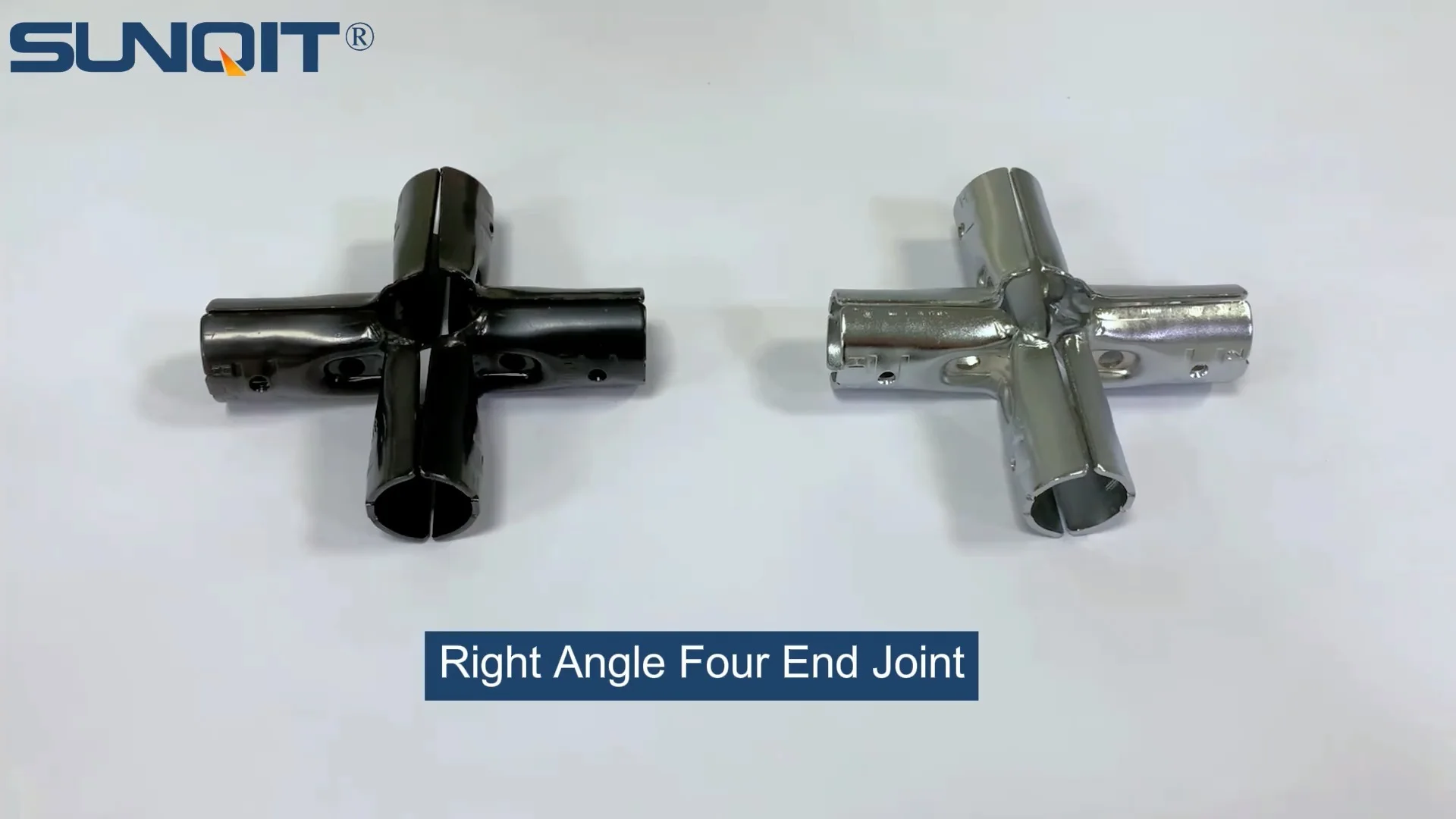
Five way straight lean pipe joint, for 5 pcs 28mm lean pipe connect in straight angle,which used widely in workbench, flow rack, hand trolley frame connection.
Walk into any busy warehouse, and you'll likely see a flurry of activity: workers moving goods, conveyor belts humming, and shelves stacked to the ceiling. But behind this chaos lies a critical truth: the efficiency of these operations hinges on the infrastructure that supports them. Traditional warehouse setups—with fixed steel racks, welded workbenches, and rigid conveyor systems—often struggle to keep up with today's fast-paced, ever-changing logistics demands. They're expensive to install, hard to reconfigure, and prone to becoming obsolete as business needs shift. Enter lean systems, a philosophy built on eliminating waste and maximizing flexibility—and at the heart of many of these systems lies a small but mighty component: the five way straight lean pipe joint. In this article, we'll explore how this unassuming connector is revolutionizing warehouse logistics, making operations more agile, cost-effective, and adaptable than ever before.
The Pain Points of Traditional Warehouse Logistics
Before diving into the solutions, let's first understand the challenges that plague many warehouses. For starters, rigidity is a major issue. Traditional steel racks and workbenches are built to last—but that durability comes at a cost. Once welded or bolted into place, they're nearly impossible to adjust. If your business expands, introduces a new product line, or needs to rearrange workflows to meet seasonal demands, you're stuck either living with inefficiency or investing in expensive new equipment.
Then there's cost . Custom steel fabrication isn't cheap, and neither is the labor required to install it. Add in the downtime during installation—when operations grind to a halt—and the total cost of ownership skyrockets. What's more, these fixed structures often lead to space waste . A rack that's perfect for storing large boxes today might leave gaps when you switch to smaller items tomorrow, or a workbench that's too big for a new, more streamlined process takes up valuable floor space that could be used for other tasks.
Finally, lack of scalability is a dealbreaker for growing businesses. A warehouse that works for 100 orders a day might crumble under the pressure of 500 orders a day. Traditional setups can't scale quickly, leaving managers scrambling to find temporary fixes that only add to the chaos. These pain points aren't just inconveniences—they directly impact the bottom line, leading to missed deadlines, higher labor costs, and frustrated teams.
Lean Systems: A New Approach to Warehouse Efficiency
Lean systems emerged as a response to these challenges, rooted in the idea that efficiency comes from flow —the smooth, uninterrupted movement of goods from receiving to shipping. Unlike traditional setups, lean systems prioritize flexibility , modularity , and waste reduction . They're designed to adapt to changing needs, minimize unnecessary steps, and empower workers to do their jobs more effectively.
At the core of most lean systems are lean pipes (also known as "lean tubes")—lightweight, durable tubes made from materials like steel (often PE-coated) or aluminum. These pipes are paired with lean pipe joints , connectors that allow users to assemble structures without welding or specialized tools. The result? A modular framework that can be built, taken apart, and reconfigured in hours, not days.
But not all lean pipe joints are created equal. While basic joints (like two-way or three-way connectors) work for simple structures, more complex setups demand a higher level of versatility. That's where the five way straight lean pipe joint shines. As the name suggests, this joint allows for connections in five directions—typically four horizontal and one vertical—making it possible to build intricate, multi-functional structures with minimal parts. It's the Swiss Army knife of lean pipe components, enabling warehouse managers to create everything from custom workbenches to dynamic flow racks and even modular conveyor systems.

Five Way Straight Lean Pipe Joints: The Unsung Hero of Lean Logistics
Let's take a closer look at what makes the five way straight lean pipe joint so special. At first glance, it might seem like just another metal connector, but its design is engineered for both strength and flexibility. Most five way joints are made from durable materials like zinc-plated steel or aluminum, ensuring they can withstand the weight of heavy goods and the wear and tear of daily warehouse use.
The key feature is its multi-directional connectivity . Unlike standard joints that limit you to 2-3 connections, the five way joint lets you branch out in multiple directions from a single point. Imagine building a flow rack: with a five way joint, you can connect horizontal rails for shelving, vertical supports for stability, and even diagonal braces for extra strength—all without needing additional connectors. This not only simplifies assembly but also reduces the number of parts you need to stock, cutting down on inventory costs.
Another advantage is tool-free assembly . Most five way joints use a clamping mechanism or set screws that can be tightened by hand or with a basic wrench. This means your team doesn't need to be skilled welders or engineers to build or modify structures. A few minutes of training is all it takes to start assembling custom solutions, reducing reliance on external contractors and minimizing downtime.
Compatibility is also a big plus. Five way straight lean pipe joints are designed to work with standard lean pipe sizes (often 28mm or 30mm in diameter), as well as aluminum profiles and other lean accessories like casters, roller tracks, and workbench tops. This interoperability means you can mix and match components to create tailored solutions, rather than being locked into a single manufacturer's proprietary system.

Practical Applications: How Five Way Joints Transform Warehouse Setups
Now that we understand the "why" behind five way joints, let's explore the "how"—specifically, how they're used to optimize three critical warehouse components: lean pipe workbenches, flow racks, and conveyor systems.
1. Lean Pipe Workbenches: Custom Workstations for Every Task
Workbenches are the heartbeat of warehouse operations—where picking, packing, assembly, and quality control happen. A one-size-fits-all workbench rarely works, though: a picker might need extra shelving for tools, while an assembly line worker might require a flat surface with integrated roller tracks to move parts along.
With five way straight lean pipe joints, you can build workbenches that adapt to each task. For example, a packing station could feature:
- Vertical supports made from PE-coated lean pipes, connected via five way joints for stability.
- Horizontal shelves (using aluminum profiles) attached to the joints for storing boxes and packing materials.
- A lower shelf for tools, connected via the fifth port on the joint to maximize under-bench space.
- Integrated roller track (using roller track placon mount connectors) along the back edge to slide packages onto a conveyor.
The best part? If tomorrow you need to add a computer monitor shelf or adjust the height of the workbench, you can simply loosen the joints, reposition the pipes, and tighten them back up. No need to buy a new workbench—just reconfigure the existing one.
2. Flow Racks: Streamlining Material Handling with Gravity
Flow racks (also called gravity racks) are a staple in warehouses, using inclined roller tracks to let goods slide from the back to the front, minimizing the need for manual lifting. Traditional flow racks are often fixed in size, but with five way joints, you can build racks that adapt to your inventory.
Let's say you stock products of varying sizes: small electronics, medium-sized boxes, and large bins. With a five way joint-based flow rack, you can:
- Adjust shelf heights by moving vertical supports connected via five way joints, ensuring each level fits the product size.
- Add dividers using horizontal pipes (connected to the five way joints) to separate different SKUs, preventing mix-ups.
- Incorporate swivel roller balls (like 1-inch stainless steel swivel roller balls) on the shelves for easy manual adjustment of goods.
A warehouse in the automotive industry, for example, used five way joints to build flow racks for storing car parts. They were able to reconfigure the racks weekly as new part models arrived, reducing the time spent searching for items by 30% and cutting down on material handling errors.
3. Conveyor Systems: Modular Movement for Dynamic Workflows
Conveyors are essential for moving goods across long distances, but traditional belt or roller conveyors are often fixed in place, limiting their usefulness. Modular conveyors built with lean pipes and five way joints offer a better alternative. By combining lean pipes, roller tracks (like 40 steel roller track or aluminum roller track), and five way joints, you can create custom conveyor paths that adapt to your layout.
For instance, a distribution center handling e-commerce orders might need a conveyor that splits into multiple lanes to route packages to different packing stations. With five way joints, you can build a main conveyor line and then branch off into secondary lines using the joint's multiple ports. If order volumes spike during the holidays, you can quickly add more branches or extend the conveyor by connecting additional pipe sections—no welding or heavy machinery required.
Even better, these modular conveyors can be paired with casters (using caster accessories like caster fixed plates) to create mobile units. Need to move the conveyor to a different area of the warehouse for a special project? Just unlock the casters and roll it into place. When the project ends, roll it back or disassemble it for storage.

The Tangible Benefits: Why Warehouses Are Switching to Five Way Joints
It's one thing to talk about features, but what do these benefits mean for your bottom line? Let's break down the real-world advantages of using five way straight lean pipe joints in your warehouse:
| Benefit | Traditional Warehouse Setup | Lean Pipe Setup with Five Way Joints |
|---|---|---|
| Assembly Time | Weeks (welding, custom fabrication) | Hours (tool-free, modular assembly) |
| Reconfiguration Cost | High (requires new fabrication) | Low (reuse existing parts) |
| Space Efficiency | Poor (fixed structures waste space) | High (customizable to fit needs) |
| Scalability | Limited (hard to expand quickly) | Excellent (add/remove parts as needed) |
| Worker Productivity | Stagnant (rigid workflows cause delays) | Increased (ergonomic, adaptable setups) |
Cost Savings That Add Up
The most immediate benefit is lower upfront and ongoing costs . Traditional steel structures can cost tens of thousands of dollars to design, fabricate, and install. Lean pipe systems with five way joints, on the other hand, are significantly cheaper. A basic lean pipe workbench might cost a fraction of the price of a custom steel one, and since you can build it yourself, you save on labor. Over time, the ability to reconfigure instead of replace structures means you'll spend less on new equipment as your business grows.
Increased Agility in a Fast-Changing Market
In today's logistics landscape, adaptability is key. Consumer demands shift, supply chains get disrupted, and new technologies emerge—your warehouse needs to keep up. Five way joints make it easy to pivot. For example, if you suddenly need to add a new assembly line for a hot-selling product, you can quickly build a lean pipe workbench and flow rack using existing parts. When the product's popularity fades, you can disassemble the setup and reuse the pipes and joints elsewhere.
Improved Worker Satisfaction and Safety
Happy, safe workers are productive workers. Traditional workbenches and racks are often one-size-fits-all, leading to awkward postures and increased risk of injury. With lean pipe workbenches built using five way joints, you can adjust heights to fit individual workers, add ergonomic features like footrests or tool hangers, and ensure aisles are wide enough for easy movement. This not only reduces the risk of accidents but also boosts morale—workers feel valued when their workspace is designed with their comfort in mind.
Case Study: How XYZ Logistics Cut Costs by 25% with Five Way Joints
Let's look at a real-world example of how five way straight lean pipe joints transformed a warehouse. XYZ Logistics, a mid-sized distribution center handling electronics components, was struggling with inefficiency. Their fixed steel racks were too deep, leading to "honeycombing" (unused space between items), and their workbenches were too low, causing workers to hunch over for hours. The company estimated they were losing $50,000 annually due to wasted space and labor inefficiencies.
After researching lean solutions, XYZ decided to invest in a lean pipe system centered around five way joints. They started by replacing their fixed workbenches with custom lean pipe workbenches (using workbench E single deck setups without casters for stationary use). Using five way joints, they added overhead shelving for tools, under-bench storage for boxes, and roller tracks along the back to slide components to the assembly line.
Next, they replaced their steel racks with flow racks built using five way joints, aluminum profiles, and 38 aluminum roller track with side guides. The new racks were shallower, eliminating honeycombing, and the gravity-fed roller tracks reduced the need for workers to reach deep into shelves. Within three months, XYZ saw significant improvements:
- Assembly time per order dropped by 18% (workers no longer wasted time searching for parts).
- Warehouse space utilization improved by 30% (the modular racks fit more items in the same footprint).
- Worker compensation claims related to back injuries fell by 40% (ergonomic workbenches reduced strain).
Best of all, the total cost of the transition—including lean pipes, five way joints, and labor—was recouped in just eight months. Today, XYZ continues to reconfigure their setup as needed; when they added a new product line last quarter, they built additional flow racks in a single day using leftover parts from their initial investment.
Getting Started: Tips for Implementing Five Way Joints in Your Warehouse
Ready to make the switch to lean pipe systems with five way joints? Here are a few tips to ensure a smooth transition:
- Start small : Don't try to overhaul your entire warehouse at once. Begin with a single workbench or flow rack to test the system and train your team.
- Stock the essentials : Focus on core components first: lean pipes (PE-coated or aluminum), five way joints, roller tracks, casters, and basic accessories like end caps and clamps. You can expand your inventory as needed.
- Involve your team : Your workers know the most about their daily challenges. Ask for their input when designing new setups—they'll likely have great ideas for improving workflows.
- Partner with a reliable supplier : Choose a lean pipe supplier that offers high-quality five way joints and a range of compatible accessories. Look for suppliers with good customer support—you'll want help troubleshooting if needed.
Conclusion: The Future of Warehouse Logistics Is Modular
In a world where flexibility and efficiency are non-negotiable, the five way straight lean pipe joint is more than just a tool—it's a catalyst for change. By replacing rigid, wasteful structures with modular, adaptable lean systems, warehouses can reduce costs, improve productivity, and stay ahead of the competition. Whether you're building a simple workbench or a complex conveyor system, the five way joint empowers you to create solutions that grow with your business, not against it.
So, the next time you walk through your warehouse, take a look at your current setup. Are your racks holding you back? Are your workbenches working for your team, or against them? If the answer is the latter, it might be time to embrace the power of lean pipe systems—and the humble five way joint that makes them possible. The future of warehouse logistics is modular, and it starts with a single connection.