- Company Articles
- Products and Technology
- Solution
- Warehouse Logistics Solutions: Using Aluminum Guide Rail B for Material Handling Systems

Warehouse Logistics Solutions: Using Aluminum Guide Rail B for Material Handling Systems
Related Product
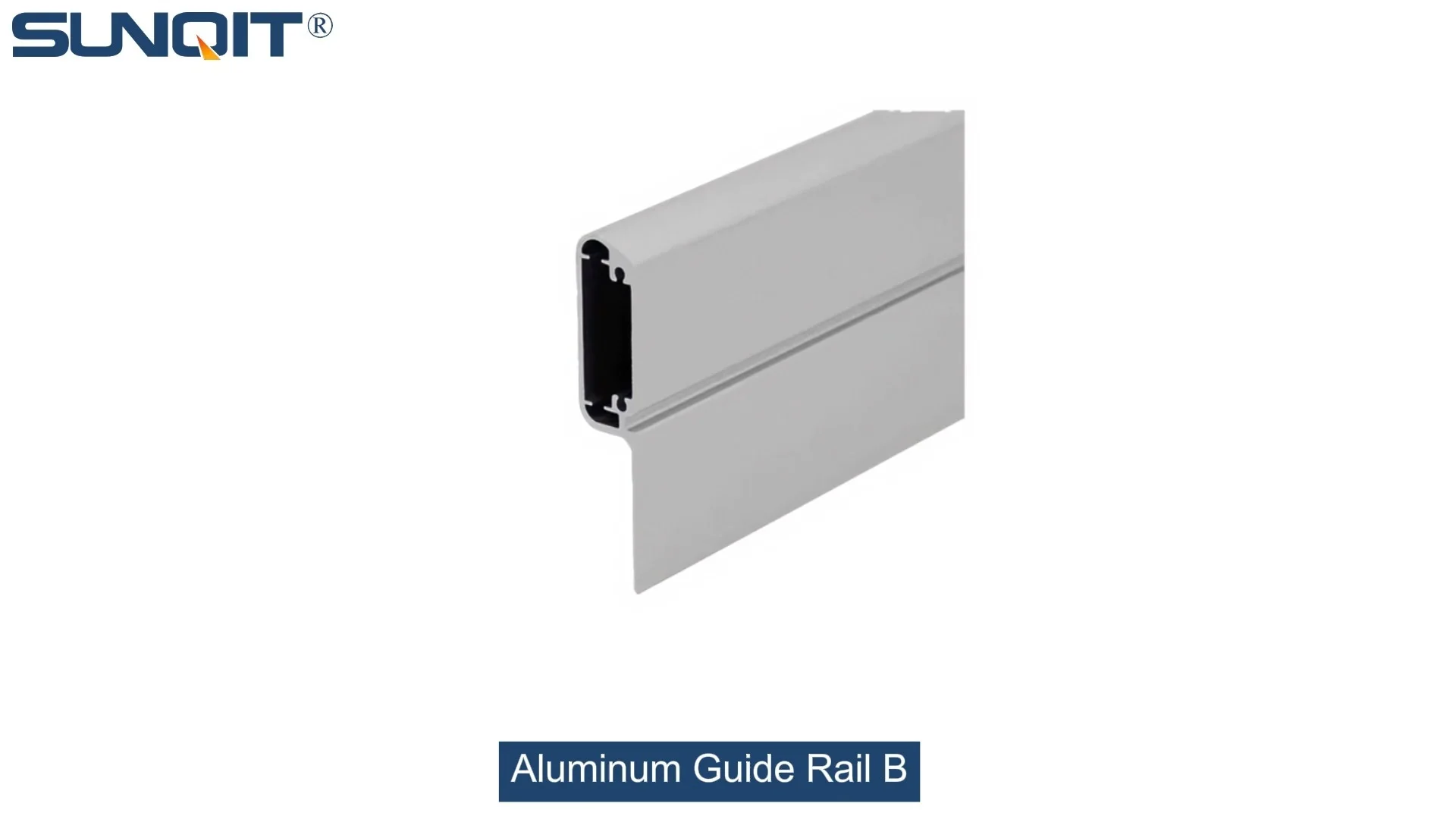
Aluminum Guide Rail B
The aluminum guide rails hold the transport goods securely on the roller track. For installation, the guide rails are simply pushed over the roller tracks.To protect sensitive products.
The Unsung Hero of Smooth Material Flow: Why Aluminum Guide Rail B Matters
Walk into any high-performing warehouse or manufacturing facility today, and you'll notice something missing: chaos. Instead of workers rushing to move heavy loads, parts, or conveyors stalling mid-operation, there's a rhythm—a seamless dance of materials gliding from station to station. What makes this possible? It's not just luck or hard work. It's the quiet power of well-designed material handling components, and one that's quickly becoming indispensable is Aluminum Guide Rail B .
Think about it: every time a product moves from storage to assembly, or from a workbench to shipping, it relies on guides to stay on track. A flimsy rail bends under pressure; a rigid one can't adapt when your needs change; a low-quality one rusts or jams, turning small delays into big losses. Aluminum Guide Rail B was built to solve these headaches. Let's break down why it's become a go-to choice for teams serious about efficiency.
First, the material says it all. Aluminum isn't just lightweight—it's tough. Unlike steel rails that weigh down installation teams and corrode in humid warehouses, aluminum stands up to moisture, frequent cleaning, and heavy use without breaking a sweat. That's a game-changer for industries like food processing or medical device manufacturing, where cleanliness and durability are non-negotiable.
Then there's the flexibility. Ever tried modifying a fixed steel rail? It usually means cutting, welding, and hoping for the best. Aluminum Guide Rail B? It's designed to be adjusted on the fly. Need a longer section? Cut it to size with basic tools. Want to switch from a straight line to a gentle curve? Pair it with swivel connectors (like the roller track placon mount joint from the product line) and reconfigure in minutes. No special skills, no downtime—just a system that bends to your workflow, not the other way around.
And let's not overlook the little details that make a big difference. Available in practical colors like yellow (for high-visibility zones) and grey (for sleek, low-profile setups), these rails do more than guide materials—they communicate. A yellow Aluminum Guide Rail B on a conveyor instantly signals "keep clear" to workers, while a grey one blends into cleanroom environments, keeping the focus on precision. Plus, their smooth, burr-free finish means no snags on delicate parts—critical for electronics or medical tools where even a small scratch can ruin a product.
A Team Player: How Aluminum Guide Rail B Works with Other Lean Components
Great tools don't work alone. Aluminum Guide Rail B truly shines when paired with other lean system staples, turning individual parts into a powerhouse material handling network. Let's look at three key partners that make this possible:
1. With Flow Racks: Gravity-Powered Efficiency
Flow racks are the backbone of "first in, first out" (FIFO) inventory management, and they rely on smooth rails to let products slide forward as items are picked. Traditional plastic or steel rails often fail here—they stick, sag, or wear unevenly. Aluminum Guide Rail B, though? It's a match made in logistics heaven. Its low friction surface lets boxes, bins, and components glide effortlessly, even with heavy loads. And because aluminum resists warping, the rack maintains a consistent slope over time, so you never have to prop up one end to keep things moving.
Take a typical automotive parts warehouse: they use multi-level flow racks with Aluminum Guide Rail B to store small components like bolts and washers. As workers pick from the front, the next bin slides into place automatically—no bending, no reaching, no wasted steps. The result? A 20% faster picking rate and fewer strained backs. That's the power of a rail that works with the system, not against it.
2. With Conveyors: Stability That Prevents Costly Mistakes
Conveyors are the arteries of a facility, but even the best conveyor belt can't save you if materials veer off course. Misaligned packages lead to jams, damaged goods, and halted production lines. That's where Aluminum Guide Rail B steps in as a silent guardian. Mounted along the edges of conveyors , these rails keep items centered—whether it's a fragile circuit board or a heavy appliance part. Their adjustable design means you can tweak the width to fit different product sizes, so one conveyor can handle multiple SKUs without retooling.
A 3C electronics manufacturer recently shared their experience: after switching to Aluminum Guide Rail B on their PCB conveyors, they saw a 90% drop in "edge damage" (those tiny cracks in circuit boards that lead to failed tests). Why? The rails' rounded edges and precise alignment kept boards flat and straight, even at high speeds. For a company producing 10,000 boards a day, that's 9,000 fewer defective products—and a lot less frustration on the production floor.
3. With Lean Pipe Workbenches: A Workspace That Moves With You
Lean pipe workbenches are all about adaptability—they let teams build custom workstations that evolve with tasks. But what good is a flexible bench if the materials on it can't keep up? Integrating Aluminum Guide Rail B into these workbenches solves that. Mount a short rail along the edge, and suddenly tools,, or assembly kits slide right to the worker's fingertips. No more leaning, stretching, or stopping to fetch items from the other side of the bench.
Medical device assemblers love this: their workbenches often have Aluminum Guide Rail B paired with swivel roller balls (1 inch or 0.5 inch, depending on the load), creating a "floating" surface for delicate instruments. As they assemble a device, parts glide into place with minimal effort, letting them focus on precision instead of physical strain. It's small changes like this that turn a good workstation into a great one.
| Component | How Aluminum Guide Rail B Enhances It | Real-World Benefit |
|---|---|---|
| Flow Racks | Low-friction, warp-resistant surface for consistent sliding | 30% fewer jams; FIFO compliance without manual intervention |
| Conveyors | Adjustable width, damage-resistant edges | 90% reduction in product misalignment; faster line speeds |
| Lean Pipe Workbenches | Integrated sliding rails for tool/part access | 15% faster assembly times; less worker fatigue |

From Factory Floor to Clean Room: Industry Stories of Transformation
Numbers tell part of the story, but nothing beats hearing how Aluminum Guide Rail B is changing real businesses. Let's dive into two industries where it's making an outsized impact:
3C Assembly: Speed Without Sacrificing Precision
A leading smartphone manufacturer was struggling with bottlenecks in their final assembly line. Their old steel rails on the flow racks kept jamming, causing workers to spend 15 minutes per hour unclogging them. Worse, the rough steel edges were scratching delicate screens, leading to a 5% defect rate. They switched to Aluminum Guide Rail B (grey, for a clean look) and paired it with plastic roller track guide rails (yellow, to highlight high-traffic zones). The results? Jams dropped to zero, screen defects fell to 0.5%, and the line now hits production targets 10% ahead of schedule. "It's like night and day," said their production manager. "We used to fix rails; now we focus on making phones."
Medical Logistics: Clean, Quiet, and Compliant
A medical supply distributor handles sensitive items like surgical tools and lab samples, requiring strict cleanliness and noise control. Their old conveyor system used loud metal rails that needed constant lubrication (a contamination risk). Switching to Aluminum Guide Rail B solved both issues: its smooth surface runs quietly, and since aluminum doesn't require grease, there's no risk of oil stains on sterile packages. Plus, the rails are easy to wipe down with disinfectants, helping them pass FDA audits with zero findings. "We don't just move boxes—we move life-saving equipment," their logistics director noted. "Aluminum Guide Rail B gives us the peace of mind that every item arrives safe and clean."

Beyond "One-Size-Fits-All": The Power of Custom Lean Solutions
Here's the truth about material handling: no two facilities are exactly alike. A warehouse storing auto parts has different needs than a 3C plant assembling microchips. That's why lean solutions built around flexibility—like those using Aluminum Guide Rail B—are so valuable. They don't force you into a rigid system; they adapt to your unique challenges.
Take a small electronics repair shop, for example. They needed a compact system to move devices from intake to repair stations to shipping. A standard conveyor was too big, and basic shelves were too slow. The solution? A custom setup with mini Aluminum Guide Rail B (just 0.5 inch wide) mounted on a turnover trolley . Now, repair kits glide between workstations on the trolley, and when the shop expands, they can add more rails and connectors without replacing the whole system. It's lean thinking in action: start small, grow smart, waste nothing.
Or consider a large-scale beverage distributor dealing with seasonal spikes. During the holidays, they need double the usual flow rack capacity. Instead of buying new racks, they use Aluminum Guide Rail B's modular design to add temporary levels. When demand drops, they disassemble the extra rails and store them—no wasted space, no wasted money. That's the "sustainable improvement" promise of lean systems: your material handling grows with your business, not against it.
"Lean isn't about cutting costs—it's about creating value. Aluminum Guide Rail B does that by letting us build systems that work today and adapt tomorrow. It's not just a rail; it's an investment in our ability to change." — Operations Manager, Global Consumer Electronics Firm

Why Every Component Choice Matters: The Bottom Line
At the end of the day, your material handling system is only as strong as its weakest part. A flimsy rail, a rigid connector, or a one-size-fits-all design can turn even the best workflow into a frustrating mess. Aluminum Guide Rail B isn't just another part—it's a choice to prioritize efficiency, adaptability, and worker satisfaction.
Workers notice when tools make their jobs easier. They notice when jams stop, when heavy lifting is replaced with smooth sliding, when every day feels like progress instead of problem-solving. And when workers are happy, they're more productive, more engaged, and more likely to stay. That's the hidden ROI of components like Aluminum Guide Rail B: it doesn't just move materials—it builds better teams.
So, whether you're upgrading an old system or building a new one, remember: the right guide rail isn't a small detail. It's the foundation of a workflow that works for you. And in today's fast-paced manufacturing world, that foundation might just be the difference between falling behind and leading the pack.