- Company Articles
- Products and Technology
- Solution
- Warehouse Logistics Solutions with 3030b EU Standard Aluminum Profile: Racks & Shelving

Warehouse Logistics Solutions with 3030b EU Standard Aluminum Profile: Racks & Shelving
Related Product
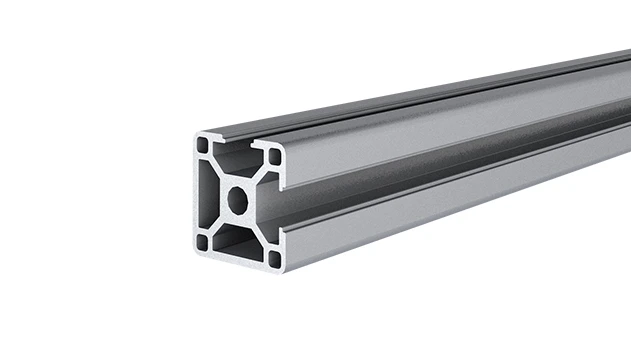
3030B EU Standard Aluminum Profile
3030 is a 3.00 x 3.00CM fractional 30 series square extrusion T-slot profile with two side open T-slots, each side with 3.00cm face, 2 side with open slot, 2 side with closed face. The profile has align-a-grooves to assist in aligning connecting profiles.
In the fast-paced world of warehouse management, every inch of space, every minute of workflow, and every dollar spent on infrastructure counts. Whether you're running a small distribution center or a large-scale manufacturing facility, the right storage and logistics solutions can turn chaos into order, delays into efficiency, and waste into productivity. Today, we're diving into a game-changer in this space: the 3030b EU Standard Aluminum Profile. This unassuming yet versatile material is redefining how warehouses design racks, shelving, and workspaces—offering a blend of flexibility, durability, and cost-effectiveness that traditional steel or wood simply can't match.
If you've ever struggled with rigid shelving that can't adapt to changing inventory sizes, or heavy steel racks that require a team of workers to reconfigure, you know the pain points all too well. The 3030b aluminum profile addresses these challenges head-on, and in this article, we'll explore how it's transforming warehouse logistics, with a focus on racks, shelving, and the accessories that make these systems truly customizable. We'll also touch on real-world applications, from workbenches that boost team productivity to flow racks that keep materials moving seamlessly through your facility.
What Makes 3030b EU Standard Aluminum Profile Stand Out?
First things first: let's break down what the 3030b EU Standard Aluminum Profile actually is. At its core, it's a lightweight, extruded aluminum bar with a standardized cross-section—30mm by 30mm, hence the "3030" in its name. The "b" denotes a specific design variant within the EU standard, characterized by its T-slot structure. These T-slots are the secret sauce: they run along the length of the profile, allowing for easy attachment of accessories like brackets, connectors, and panels without the need for welding or drilling. This modularity is what makes the 3030b profile so powerful.
But it's not just about flexibility. Aluminum, by nature, is corrosion-resistant, which means your racks and shelving will stand up to the humidity, temperature fluctuations, and occasional spills common in warehouse environments. Unlike steel, it won't rust, and unlike wood, it won't warp or rot. Yet despite being lightweight—about a third the weight of steel—it's surprisingly strong. The 3030b profile can support significant loads, making it suitable for everything from small parts storage to heavier equipment.
Another key advantage is compliance with EU standards. This means strict quality control, consistent dimensions, and compatibility with a wide range of accessories from different manufacturers. When you're building a warehouse system, knowing that your profiles and parts will fit together seamlessly is a huge relief—no more guessing if a bracket from Supplier A will work with a profile from Supplier B.
Racks & Shelving: Built for Adaptability
Racks and shelving are the backbone of any warehouse, and the 3030b aluminum profile is revolutionizing how these structures are designed and used. Traditional steel racks are sturdy but static; once installed, changing their height or configuration is a Herculean task involving cutting, welding, or specialized tools. With 3030b-based racks, reconfiguration is as simple as loosening a few screws, sliding a bracket, and tightening it back up. This adaptability is a game-changer for businesses with evolving inventory needs—think seasonal products, varying stock sizes, or shifting production lines.
Let's take adjustable shelving, for example. A 3030b aluminum shelving unit can be built to any height, with shelves spaced at intervals that match your products. Need to accommodate taller boxes next month? Just move the shelf brackets up the T-slots. Running low on space for small parts? Add extra shelves in between. This level of customization ensures you're never wasting vertical space—a critical factor in warehouses where square footage is at a premium.
| Feature | 3030b Aluminum Racks | Traditional Steel Racks |
|---|---|---|
| Weight | Lightweight (easy to install/move) | Heavy (requires machinery for setup) |
| Customization | Tool-free reconfiguration via T-slots | Fixed; requires welding/cutting for changes |
| Durability | Corrosion-resistant, no rust | Prone to rust without regular maintenance |
| Installation Time | 1-2 people can assemble a unit in hours | Often requires a crew and full day(s) of work |
| Cost Over Time | Lower long-term costs due to adaptability | Higher if frequent reconfigurations are needed |
Heavy-duty storage is another area where 3030b shines. While aluminum is lighter than steel, the 3030b profile's design—reinforced by internal ribs—gives it impressive load-bearing capacity. Many suppliers rate it for loads of up to 100kg per linear meter, which is more than enough for most warehouse applications, from electronics components to automotive parts. For even heavier items, you can combine multiple profiles or add support brackets—thanks to those T-slots, reinforcing the structure is straightforward.

Workbenches: Where Productivity Meets Comfort
A warehouse isn't just about storage—it's also about people. The workbenches where your team assembles products, picks orders, or inspects goods play a huge role in their efficiency and well-being. A poorly designed workbench can lead to fatigue, errors, and even injuries; a well-designed one can boost morale and output. This is where 3030b aluminum profiles come into play, enabling the creation of workbenches that are both functional and ergonomic.
Imagine a workbench tailored to your team's needs: height-adjustable to accommodate workers of different statures, with built-in tool holders, LED lighting, and even integrated power strips—all mounted via the T-slots in the 3030b frame. Add a caster wheel to the base, and suddenly that workbench can be moved to where it's needed most—whether that's next to a production line in the morning or a packing station in the afternoon. No more carrying heavy tools across the warehouse; bring the workspace to the work.
One popular configuration is the "Workbench E (single deck-without caster)" from many 3030b suppliers, which offers a sturdy, fixed workspace for tasks that don't require mobility. But for dynamic environments, adding caster wheels transforms it into a mobile hub. The aluminum frame keeps the bench lightweight enough to move easily, while still supporting the weight of tools, materials, and workers. And because the 3030b profile is compatible with a wide range of tabletop materials—from plywood to anti-static ESD panels—you can customize the surface to match your industry needs, whether you're handling sensitive electronics or rugged mechanical parts.
Flow Racks: Keeping Materials Moving
In lean manufacturing and just-in-time inventory systems, the goal is to minimize waste and keep materials flowing smoothly from receiving to shipping. This is where flow racks (also known as gravity-fed racks) excel, and 3030b aluminum profiles are the perfect building blocks for these systems. A flow rack uses inclined roller tracks to allow products to "flow" forward as items are picked from the front, ensuring first-in, first-out (FIFO) inventory rotation and reducing the need for manual restocking.
Building a flow rack with 3030b profiles is a breeze. The T-slots make it easy to mount roller tracks at the perfect angle—typically 5-10 degrees, depending on the product weight. You can adjust the width of the lanes to fit different box sizes, add dividers to separate SKUs, or even integrate sensors to alert staff when stock is low. Unlike traditional steel flow racks, which are often bulky and hard to modify, 3030b-based systems can be tweaked on the fly. If you start stocking larger items next quarter, simply reposition the tracks or add wider lanes—no welding, no cutting, just a few turns of a hex key.
For example, a "Material Rack B (3 row and 3 floor)" configuration, built with 3030b profiles, offers three levels of flow lanes, maximizing vertical space while keeping products accessible. Each level can be adjusted independently, allowing you to mix and match product sizes across rows. The aluminum frame ensures the rack is lightweight enough to install without heavy machinery, yet strong enough to support the constant movement of goods. And because the 3030b profile is compatible with roller track accessories like "Swivel Roller Balls 1 inch" or "Plastic Roller Track Guide Rail Yellow," you can fine-tune the flow rate to prevent jams or damage to delicate items.
Aluminum Profile Accessories: The Details That Make a Difference
A 3030b aluminum profile is only as good as the accessories that accompany it. Aluminum profile accessories are the unsung heroes of these systems, turning basic frames into fully functional, customized solutions. From connectors that join profiles at any angle to end caps that protect workers from sharp edges, these small parts make a big impact on usability and safety.
Let's start with connectors. The "90° Aluminum Profile Connector" is a staple, allowing you to join two 3030b profiles at a right angle—perfect for building the sides of a rack or the legs of a workbench. For more complex angles, there are 45°, 135°, and even 3-way connectors, giving you the freedom to design structures with corners, bends, and intersections. These connectors slide into the T-slots and are secured with bolts, creating a tight, rattle-free joint that's strong enough to support heavy loads but easy to disassemble if needed.
Then there are the little touches: rubber strips that line the T-slots to reduce noise and prevent debris buildup, end caps that cover the exposed ends of profiles to avoid snags on clothing or damage to products, and brackets that hold everything from tool hooks to label holders. Even something as simple as a "Nylon Handle" can make a mobile cart or workbench easier to maneuver, improving ergonomics for your team.
One accessory that deserves a special mention is the "Adjustable Leveling Foot." Warehouses rarely have perfectly flat floors, and uneven racks can lead to wobbling, product instability, or even safety hazards. These feet screw into the bottom of 3030b profile legs, allowing you to (fine-tune) the height of each corner until the rack or workbench is perfectly level. It's a small detail, but it makes a world of difference in stability and safety.
Real-World Impact: Why Warehouses Are Making the Switch
To put this all into perspective, let's look at a hypothetical example: a mid-sized electronics manufacturer that recently switched to 3030b aluminum profile racks, workbenches, and flow racks. Previously, they were using a mix of steel shelving and wooden workbenches. Their steel racks were hard to reconfigure, so they often had unused vertical space or struggled to fit larger components. The wooden workbenches were heavy, prone to splintering, and couldn't be moved, leading to workers wasting time walking between stations.
After transitioning to 3030b systems, they reported several key improvements: First, their storage density increased by 25% because they could adjust shelf heights to fit each product perfectly. Second, reconfiguring racks for new product lines now takes 2 hours instead of 2 days, reducing downtime. Third, mobile workbenches with caster wheels cut down on worker movement by 40%, freeing up time for more productive tasks. And finally, the corrosion-resistant aluminum has reduced maintenance costs—no more repainting steel racks or replacing warped wooden benches.
This isn't an isolated case. Warehouses in industries ranging from e-commerce to automotive are adopting 3030b profiles because they offer a rare combination of short-term flexibility and long-term durability. In a world where supply chains are constantly evolving, the ability to adapt quickly isn't just a nice-to-have—it's a competitive advantage.
Conclusion: Building a Warehouse That Grows With You
The 3030b EU Standard Aluminum Profile isn't just a material—it's a foundation for building smarter, more adaptable warehouses. Whether you're designing racks that can grow with your inventory, workbenches that move with your team, or flow racks that keep materials flowing efficiently, this modular system puts you in control. Its lightweight yet strong construction, corrosion resistance, and compatibility with endless accessories make it a cost-effective choice for businesses of all sizes.
If you're tired of one-size-fits-all storage solutions that hold your warehouse back, it might be time to explore the possibilities of 3030b aluminum profiles. From the T-slots that enable endless customization to the EU-standard quality that ensures reliability, this profile is redefining what's possible in warehouse logistics. And with a wide network of suppliers offering everything from basic profiles to specialized accessories like flow rack roller tracks and caster wheels, getting started is easier than ever.
In the end, the goal of any warehouse is to move products in, out, and through as efficiently as possible. With 3030b aluminum profile racks, shelving, and workspaces, you're not just storing goods—you're building a system that adapts, evolves, and grows with your business. And in today's fast-paced world, that's the key to staying ahead.