- Company Articles
- Products and Technology
- Product knowledge
- Warehouse Logistics: T-Groove Aluminum Pipe for Material Rack Construction

Warehouse Logistics: T-Groove Aluminum Pipe for Material Rack Construction
Related Product
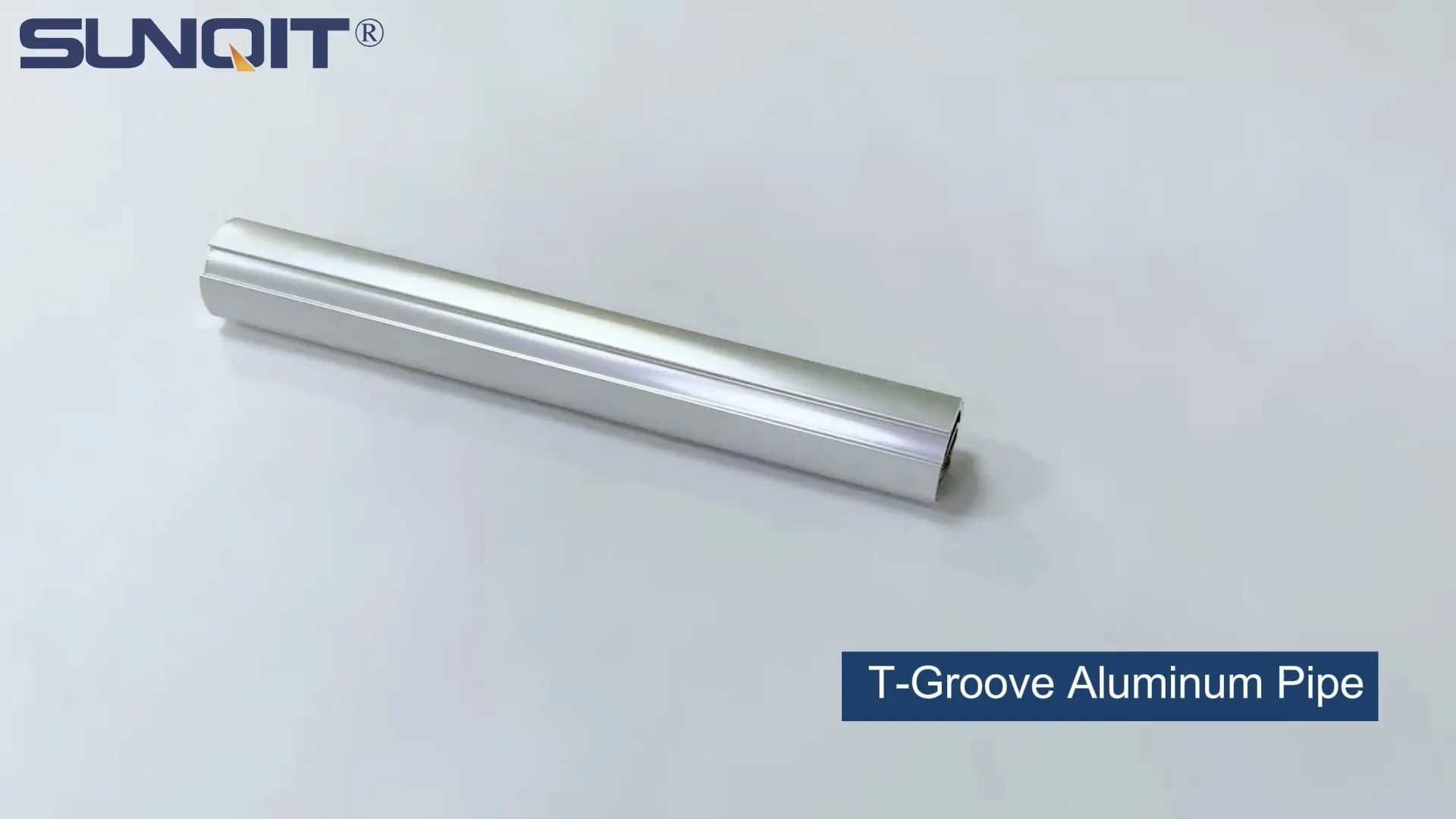
T-Groove Aluminum Pipe
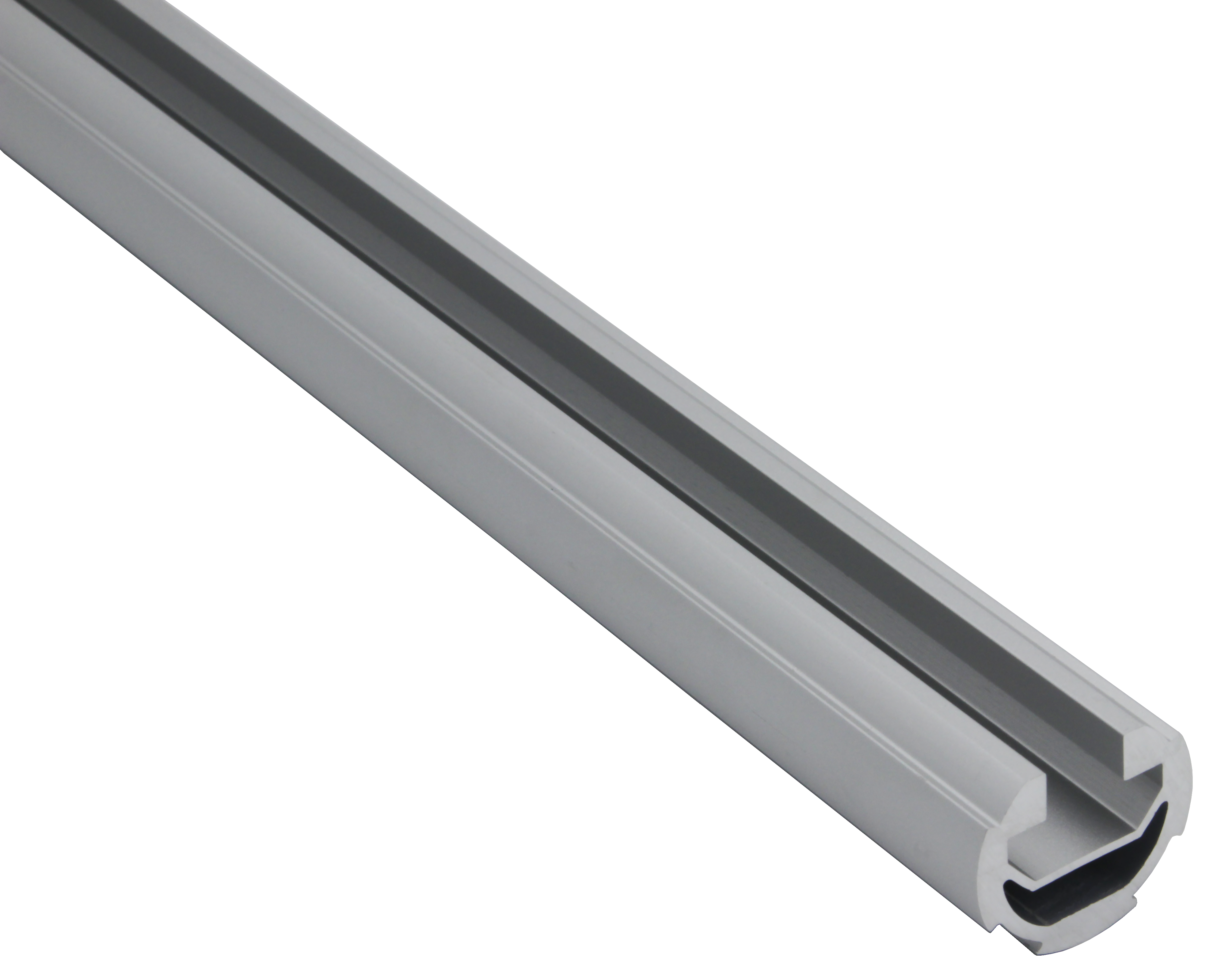
The aluminum pipe opening 10mm is installed into the T-shaped slider, which can be installed with casters or other matching functional parts. The groove can be used for positioning and is used for the track of the roller.
Walk into any modern warehouse, and you'll quickly realize that the backbone of its efficiency lies in how well it organizes and moves materials. From small parts bins to bulky pallets, every item needs a designated spot—one that's easy to access, adaptable to changing needs, and sturdy enough to handle daily wear and tear. For years, warehouse managers have grappled with material racks that feel like afterthoughts: too heavy to reconfigure, too flimsy to last, or too rigid to keep up with shifting inventory demands. But what if there was a solution that checks all these boxes? Enter T-groove aluminum pipe—a material that's quietly revolutionizing how we build material racks, one modular section at a time.
In this article, we'll dive into why T-groove aluminum pipe has become a go-to choice for warehouse logistics teams. We'll explore its unique design, the benefits it brings to material rack construction, and how it works hand-in-hand with aluminum profile accessories to create systems that grow with your business. Whether you're setting up a new warehouse or upgrading an existing one, understanding the potential of T-groove aluminum could be the key to unlocking smoother workflows, happier teams, and a bottom line that thanks you.
What Exactly Is T-Groove Aluminum Pipe?
Let's start with the basics: T-groove aluminum pipe, often called T-slot aluminum pipe, is a type of aluminum extrusion profile engineered with a continuous, T-shaped groove running along its length. This groove isn't just a design quirk—it's the secret to its versatility. Picture a standard aluminum pipe, but with a channel that lets you slide in bolts, brackets, or accessories without drilling holes or welding. That's the T-groove advantage in a nutshell.
Manufactured through a process called aluminum extrusion, T-groove pipes start as heated aluminum billets forced through a die to create their distinct shape. This method ensures consistency in every piece—whether you're ordering a 1-meter section or a 5-meter one, the dimensions and groove depth stay precise. Most T-groove pipes are made from alloys like 6061 or 6063, known for their excellent strength-to-weight ratio. This means you get a material that's lightweight enough for easy handling but tough enough to support heavy loads, making it ideal for material racks that need to balance portability and durability.
But what really sets T-groove aluminum apart from, say, steel pipes or wooden dowels is its focus on modularity. Traditional materials often require permanent fixes: steel racks need welding, wooden shelves need screws that leave holes when removed. T-groove aluminum? It's designed to be taken apart and reassembled as needed. The T-slot allows accessories—like brackets, connectors, or even caster wheels—to be attached anywhere along the pipe, then tightened securely with a hex key. No special tools, no permanent damage, and no downtime waiting for a welder to show up.
Why T-Groove Aluminum Pipe Stands Out for Material Racks
If you've ever managed a warehouse, you know that material racks aren't just about storing stuff—they're about solving problems. Maybe your team needs to rearrange shelves for a seasonal product surge. Or perhaps a new shipment of oversized items requires a taller rack than you originally planned. T-groove aluminum pipe addresses these challenges head-on, offering benefits that traditional materials simply can't match.
Lightweight Yet Surprisingly Strong
Let's talk about weight first. Steel racks are strong, but they're also heavy—so heavy that moving a single section often requires two people and a dolly. Wooden racks? They're lighter than steel but prone to warping or cracking under heavy loads. T-groove aluminum pipe hits the sweet spot: it's about 30% lighter than steel while maintaining comparable strength. A 40x40mm aluminum extrusion profile, for example, can easily support 100-150 kg per linear meter, depending on the alloy and wall thickness. This means your team can assemble or reposition racks without straining their backs, and you won't need to reinforce your warehouse floor to handle the weight.
Modularity That Keeps Up With Change
The average warehouse's inventory changes constantly—new products arrive, old ones phase out, and seasonal demands ebb and flow. Rigid racks lock you into a single layout, forcing you to either waste space or cram items where they don't belong. T-groove aluminum pipe, though, is modular by design. Need to add a shelf? Slide a bracket into the T-slot, tighten a bolt, and you're done. Want to raise a section by 10cm? Swap out the connectors for taller ones. Even entirely new configurations—like converting a static rack into a mobile trolley with caster wheels—are possible with minimal effort.
This flexibility isn't just convenient; it's cost-effective. Instead of buying new racks every time your needs change, you can repurpose the same T-groove sections. A 3-row, 3-floor material rack (like the aptly named "material rack b" from many suppliers) can be reconfigured into a single-row, 5-floor rack next month if that's what your inventory demands. Over time, this adaptability translates to significant savings on replacement costs.
Corrosion Resistance for Longevity
Warehouses are tough environments. Moisture from refrigerated sections, chemicals from cleaning supplies, or even just humidity in the air can take a toll on metal racks. Steel racks rust, wooden racks rot, but aluminum? It's naturally resistant to corrosion thanks to a thin oxide layer that forms on its surface. For extra protection, many T-groove pipes come with anodized or powder-coated finishes, which add another barrier against scratches and wear. This means your material racks will look better and last longer—even in damp or dusty conditions—reducing the need for frequent replacements.
Customization Without the Fuss
No two warehouses are identical, and neither are their material rack needs. One might require narrow shelves for small electronics components, another wide shelves for automotive parts. T-groove aluminum pipe plays well with customization. Since it's extruded, suppliers can create profiles in various sizes—from compact 20x20mm pipes for light-duty use to robust 80x80mm pipes for heavy loads. And because the T-slot is standardized, accessories from different manufacturers often work together. Need a shelf with a lip to prevent items from sliding off? Add an aluminum guide rail. Want to label sections clearly? Attach a sign holder directly to the T-slot. The possibilities are nearly endless, and you don't need an engineering degree to make them happen.
Aluminum Profile Accessories: The Unsung Heroes of Material Racks
A T-groove aluminum pipe is only as good as the accessories that bring it to life. Think of the pipe as the canvas; the accessories are the paintbrushes that let you create exactly what you need. From connectors that hold sections together to casters that make racks mobile, these small but mighty parts turn basic aluminum extrusion profiles into fully functional material handling systems.
Connectors: The Glue That Holds It All Together
Connectors are the backbone of any modular system, and T-groove aluminum offers a wide range to suit different angles and load requirements. Internal rotatary aluminum joints, for example, let you connect pipes at 90°, 45°, or even custom angles, then lock them in place with a set screw. These are perfect for building corner sections of a material rack or adding diagonal bracing for extra stability. For straight connections, external straight aluminum joints create seamless links between two pipes, while three-way or four-way connectors let you branch off in multiple directions—ideal for building multi-tiered racks like material rack b (3 row and 3 floor).
What's impressive about these connectors is their precision. Most are machined to fit snugly into the T-slot, ensuring a tight, wobble-free connection. And because they're made from the same aluminum alloy as the pipes, they match in strength and corrosion resistance, so you don't have weak points in your rack.
Casters and Leveling Feet: Mobility and Stability
Not all material racks need to stay in one place. Sometimes you need to roll a rack of parts directly to an assembly line, or move it out of the way for a forklift. That's where caster wheels come in. T-groove aluminum systems pair well with swivel casters that bolt directly into the T-slot, turning a static rack into a mobile trolley. Look for casters with brakes to lock the rack in place when needed, and heavy-duty options (rated for 100kg or more per wheel) if you're carrying large loads.
For racks that stay put, leveling feet are a must. These adjustable feet screw into the T-slot and let you fine-tune the height of each corner, ensuring the rack sits evenly on uneven warehouse floors. They also protect the floor from scratches and reduce noise when the rack is loaded or unloaded.
Shelving and Panel Mounts: Turning Pipes Into Racks
Once you've built the frame of your material rack with T-groove pipes and connectors, you need shelves to hold the goods. Aluminum profile accessories like placon mounts or bracket supports let you attach shelving materials—plywood, aluminum honeycomb panels, or even wire mesh—to the frame. Roller track placon mounts, for example, are designed to hold roller tracks, which are great for sliding bins or boxes along the shelf. For heavier items, gusset plates (like gusset alp 4040 for 40x40mm profiles) reinforce the connection between shelves and uprights, preventing sagging over time.
End caps are another small but essential accessory. These plastic or aluminum caps snap onto the ends of T-groove pipes, covering sharp edges and preventing dust, dirt, or small parts from getting stuck in the T-slot. They also give the rack a clean, finished look—because even functional equipment deserves to look professional.

Building a Material Rack with T-Groove Aluminum Pipe: A Step-by-Step Example
Let's put theory into practice. Imagine you need to build a 3-row, 3-floor material rack (material rack b) for a medium-sized warehouse storing electronics components. The rack needs to hold up to 80 kg per shelf, be easy to reconfigure, and fit into a 2m x 1m space. Here's how T-groove aluminum pipe and accessories would make this project straightforward:
Step 1: Choose the Right Aluminum Extrusion Profile
Start by selecting the main frame pipes. For a rack with 80 kg per shelf, a 30x30mm or 40x40mm EU standard aluminum profile works well. 40x40mm profiles (like 4040a EU standard) are slightly beefier and offer more T-slot space for accessories, so we'll go with those. You'll need four uprights (1.8m tall), six horizontal beams (2m long for the width), and six vertical supports (0.6m tall for the 3 floors). All should be cut to length by the supplier for accuracy.
Step 2: Gather Your Aluminum Profile Accessories
For this rack, you'll need: 12 internal rotatary aluminum joints (to connect uprights and horizontal beams at 90°), 6 three-way aluminum pipe joints (for the vertical supports between floors), 12 gusset alp 4040 plates (to reinforce shelf corners), 6 sets of aluminum profile end caps (for safety), and 4 leveling feet (to stabilize the rack on the warehouse floor). If you want the option to move the rack later, swap out two leveling feet for swivel caster wheels with brakes.
Step 3: Assemble the Frame
Lay out the four uprights on the floor, spaced 2m apart (width) and 1m apart (depth). Attach the horizontal beams to the top and bottom of the uprights using internal rotatary joints—these joints let you adjust the angle slightly to ensure the frame is square. Tighten the set screws with a hex key until the connections are firm but not over-tightened (you can always adjust later). Next, add the vertical supports between the horizontal beams to create three floors, using three-way joints to connect the supports to the uprights and horizontal beams.
Step 4: Add Shelves and Reinforcements
Cut 18mm plywood shelves to fit the 2m x 1m frame (3 shelves total). Attach them to the vertical supports using placon mount brackets, sliding the brackets into the T-slot of the supports and securing them with bolts. For extra strength, add gusset plates at each shelf corner—these triangular plates bolt into both the upright and the horizontal beam, preventing the shelf from sagging under load. Finally, snap on the end caps to cover the pipe ends and adjust the leveling feet until the rack stands perfectly straight.
Total assembly time? With two people, you could have this rack built in under 2 hours. No welding, no drilling, no mess. And if next month you need to add a fourth floor or widen the shelves, simply loosen the joints, add new pipes and accessories, and tighten everything back up. That's the power of T-groove aluminum.

T-Groove Aluminum vs. Traditional Materials: A Clear Winner
Still on the fence? Let's compare T-groove aluminum pipe to the two most common alternatives for material racks: steel and wood. The table below breaks down key factors like weight, installation time, and long-term cost to show why aluminum often comes out on top.
| Factor | Steel Racks | Wooden Racks | T-Groove Aluminum Racks |
|---|---|---|---|
| Weight (per 2m section) | 15-20 kg | 8-10 kg | 5-7 kg |
| Installation Time (3-row, 3-floor rack) | 4-6 hours (requires welding) | 3-4 hours (requires screws, pre-drilling) | 1-2 hours (tool-free assembly with hex key) |
| Flexibility | Low (welded joints are permanent) | Medium (screws leave holes; wood weakens when reused) | High (modular, reconfigurable in minutes) |
| Maintenance | High (prone to rust; requires painting every 2-3 years) | High (rot, warping, insect damage; needs sealing annually) | Low (corrosion-resistant; occasional cleaning) |
| Initial Cost | Medium ($$) | Low ($) | Medium-High ($$) |
| Long-Term Cost (5-year lifespan) | High (replacement, maintenance, labor) | Very High (frequent replacements, repairs) | Low (no replacements, minimal maintenance) |
The table tells the story: while T-groove aluminum might have a slightly higher initial cost than wood or steel, its low maintenance, quick installation, and reusability make it the most cost-effective choice over time. And when you factor in the labor savings from faster assembly and reconfiguration, the ROI becomes even clearer.
The Future of Warehouse Material Racks: T-Groove Aluminum Leads the Way
As warehouses evolve—adopting automation,, and focusing on sustainability—their material handling systems need to evolve too. T-groove aluminum pipe is uniquely positioned to meet these future needs. Its lightweight design works seamlessly with automated guided vehicles (AGVs), which can easily navigate around lighter racks. Its modularity supports the "just-in-time" inventory models that reduce waste and save space. And since aluminum is 100% recyclable, it aligns with the growing demand for eco-friendly warehouse solutions.
Looking ahead, we'll likely see even more innovation in T-groove aluminum accessories—think smart sensors that monitor shelf load in real-time, 3D-printed custom brackets for niche applications, or integrated cable management systems for warehouses with automated tools. But even today, the combination of T-groove aluminum pipe, aluminum extrusion profiles, and aluminum profile accessories offers a level of flexibility and durability that's hard to beat.
Final Thoughts: Your Warehouse Deserves Racks That Work as Hard as You Do
At the end of the day, material racks aren't just metal or wood—they're a reflection of how you value efficiency, adaptability, and your team. T-groove aluminum pipe isn't a magic solution, but it is a practical one. It's the difference between dreading a rack reconfiguration and looking forward to it, between replacing warped wooden shelves every year and using the same aluminum frame for a decade. It's about building a warehouse that doesn't just store materials, but empowers your team to do their best work.
So if you're tired of racks that hold you back, consider giving T-groove aluminum pipe a closer look. Pair it with the right aluminum profile accessories, and you'll have a material handling system that grows with your business, stands up to daily use, and makes every square foot of your warehouse count. After all, in logistics, the best systems are the ones you barely notice—because they're too busy making everything else run smoothly.