- Company Articles
- Products and Technology
- Solution
- Warehouse Optimization: 40 Steel Wheel Roller Track Layouts

Warehouse Optimization: 40 Steel Wheel Roller Track Layouts
Related Product
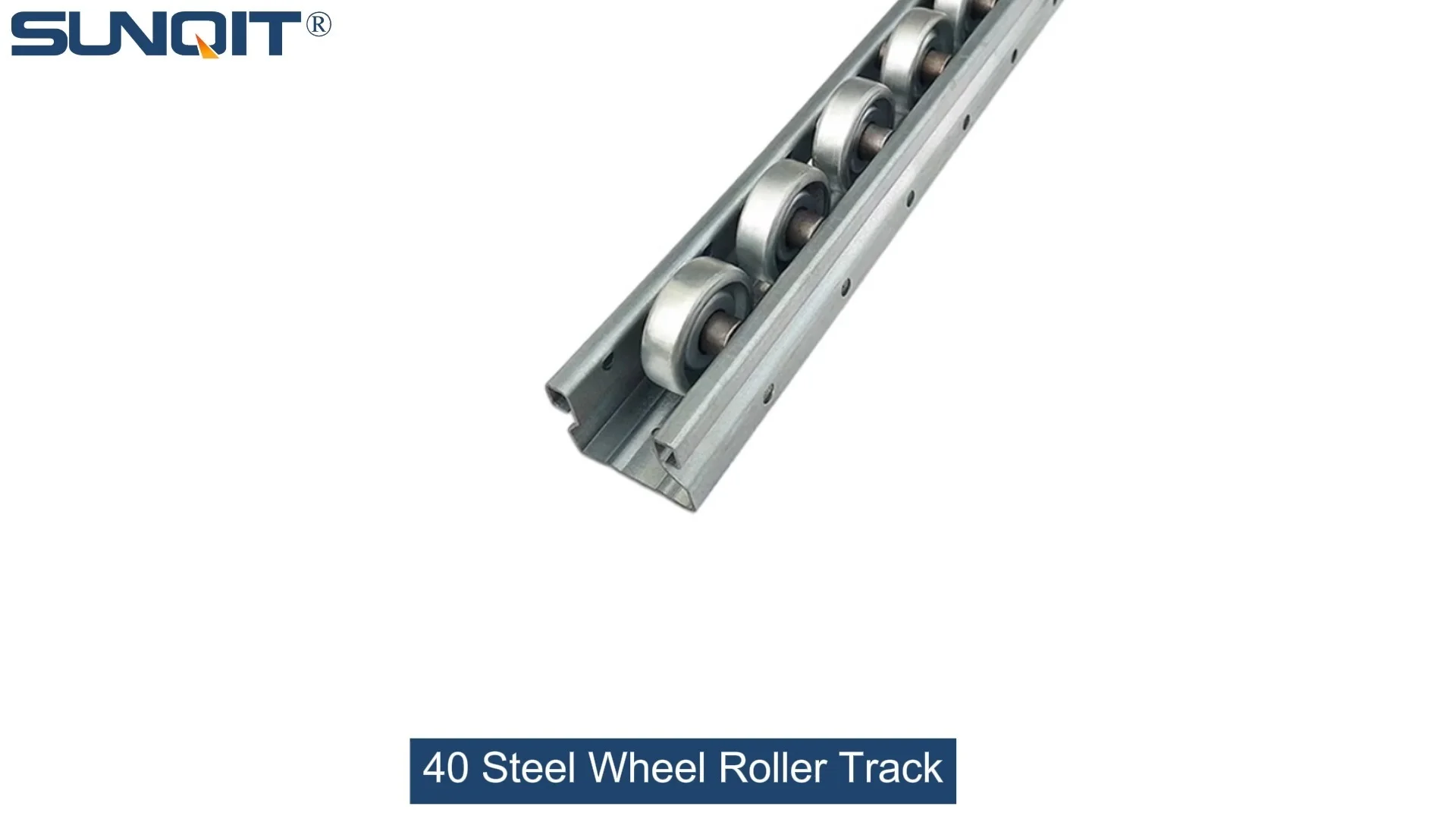
40 Steel Wheel Roller Track
Heavy duty steel wheel roller track with cylindrical steel rollers for use in processing, logistics and materials handling operations. Ideal for transporting goods quickly and easily as well as for installing on shelving to aid in picking operations.
How the Right Roller Track Design Transforms Efficiency, Reduces Waste, and Powers Lean Manufacturing
The Hidden Cost of Clunky Warehouse Flow (And How to Fix It)
:,,;, workers spend extra minutes retrieving items because the shelves are misaligned with the packing stations;, storage area, valuable tools get delayed because the material handling system can't keep up with sudden demand spikes.
These aren't just minor inconveniences. In manufacturing and logistics, every second wasted in material transfer, every instance of backtracking, or every unplanned pause in production adds up to thousands of dollars in lost productivity each year. For managers in industries like automotive, 3C assembly, or medical device manufacturing, the pressure to streamline operations isn't just about "efficiency"—it's about staying competitive in a market where speed and precision mean everything.
That's where the 40 steel wheel roller track comes in. More than just a piece of hardware, it's the backbone of a leaner, more responsive warehouse ecosystem. Let's dive into how this unassuming component—paired with smart layout design—can turn chaos into clarity, and wasted effort into tangible results.
What Makes 40 Steel Wheel Roller Tracks a Game-Changer?
Before we jump into layouts, let's talk about the star of the show: the 40 steel wheel roller track. Unlike flimsy plastic alternatives or rigid fixed conveyor systems, these tracks are built to balance durability, flexibility, and precision —three qualities that matter most in dynamic warehouse environments.
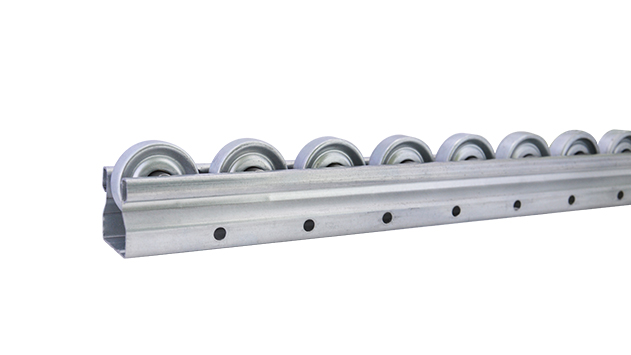
Picture this: a track made from high-grade steel, with 40mm diameter wheels spaced evenly to ensure smooth, consistent movement of materials. Each wheel is designed to reduce friction, so even heavy loads (up to 50kg per meter) glide with minimal effort. The steel construction resists wear and tear, standing up to the daily grind of manufacturing floors, while the modular design means you can adjust, extend, or reconfigure the track as your needs change. No more ripping out entire systems when your production line shifts—simply add a section, rearrange the path, or swap components. It's lean thinking in action : build for adaptability, not just today's needs.
But what truly sets 40 steel wheel roller tracks apart is their ability to integrate seamlessly with other lean tools. Pair them with flow racks for just-in-time picking, connect them to conveyors for automated transfer, or align them with lean pipe workbenches to create a continuous, ergonomic workflow. Whether you're moving circuit boards in a 3C assembly plant or sterile medical kits in a hospital warehouse, these tracks become the silent force that keeps materials flowing—without bottlenecks, without delays, without waste.
5 Layout Strategies for 40 Steel Wheel Roller Tracks (Proven in Real-World Factories)
There's no "one-size-fits-all" layout for roller tracks—what works for a sprawling automotive plant might fail miserably in a compact medical device warehouse. The key is to match the track design to your space, your materials, and your unique workflow. Below are five layouts field-tested by manufacturers worldwide, each solving specific pain points and delivering measurable results.
1. The Straight-Line Sprint: For Long-Distance, High-Volume Flow
Imagine a 300-meter stretch in an automotive parts warehouse, where engine components need to move from the receiving dock to the assembly line without stopping. A straight-line 40 steel wheel roller track layout turns this into a frictionless journey. By aligning the track parallel to the production line, materials glide directly to where they're needed, cutting transfer time by up to 40% compared to manual cart transport.
Why it works : Minimal turns mean fewer chances for jams or slowdowns. The steel wheels handle heavy loads (think 20kg car parts stacked on trays) with ease, and the track's low profile keeps workers from tripping over uneven surfaces. It's especially effective in industries like automotive or large appliance manufacturing, where bulk materials need to cover long distances quickly.
2. The U-Shaped Loop: Maximize Space, Minimize Travel
Not every warehouse has the luxury of endless square footage. In a 3C electronics plant outside Shenzhen, one manufacturer was struggling with a cramped space where workers had to walk 200 meters round-trip to fetch components. Their solution? A U-shaped 40 steel wheel roller track layout. By curving the track into a "U," they condensed the material flow into a tight loop: receiving at one end, picking in the middle, and shipping at the opposite end—all without overlapping paths.
The result : Travel distance dropped by 65%, and pickers could focus on packing instead of walking. The U-shape also made it easy to add a cross-connect track in the center, allowing for quick rerouting if a section needed maintenance. It's perfect for facilities under 5,000 square meters or those with mixed storage and production zones.
3. The Modular Maze: Adaptable to Changing Production Needs
In the fast-paced world of consumer electronics, production lines shift monthly—one week assembling smartphones, the next switching to tablets. A rigid track system would crumble under this volatility, but a modular 40 steel wheel layout thrives. By using detachable sections and flexible joints, you can reconfigure the track path in hours, not days. Add a branch for a new product line, extend a section to reach a new workbench, or even split the track into two separate flows during peak seasons.
A medical device manufacturer in Germany used this approach to handle seasonal demand for surgical tools. During the busy Q4 months, they expanded their modular track to include three picking zones; in slower quarters, they shrank it back to save space. No wasted materials, no idle equipment—just a system that grows and contracts with the business.
4. The Workbench Integration: From Track to Table, Seamless Workflow
What happens when materials reach the end of the track? If they're just dumped on a random cart, all your hard-won efficiency goes out the window. That's why forward-thinking manufacturers pair 40 steel wheel tracks directly with lean pipe workbenches. Imagine a 3C assembly station: circuit boards roll in on the track, stop at the workbench, and are immediately picked up by an operator. Once assembled, the finished unit slides onto another track segment leading to testing—no lifting, no carrying, no wasted motion.
This layout isn't just about speed; it's about ergonomics. By aligning the track height with the workbench surface, workers avoid bending or reaching, reducing strain and cutting down on errors. A case study in a Taiwanese electronics factory showed a 25% decrease in assembly mistakes after integrating tracks with workbenches—proof that small design choices have a big impact on quality.
5. The Flow Rack Hybrid: Just-In-Time Picking, Zero Overstock
For warehouses focused on lean principles like "just-in-time" (JIT), combining 40 steel wheel tracks with flow racks is a game-changer. Flow racks use gravity to feed materials forward, but adding a roller track at the front turns them into a dynamic picking station. As soon as a bin is emptied, the next one rolls into place—no need for workers to restock manually. Pair this with a U-shaped track layout, and you've got a closed-loop system: empty bins go back on the return track, full bins come forward on the main track, and inventory levels stay perfectly balanced.
A logistics provider for medical supplies in the U.S. implemented this hybrid layout and saw inventory holding costs drop by 30%. By ensuring only the necessary materials are on the rack (and the rest stay in bulk storage), they eliminated overstock and freed up valuable warehouse space.
| Layout Type | Ideal Scenario | Key Benefits | Typical Load Capacity | Top Industries |
|---|---|---|---|---|
| Straight-Line | Long, open spaces; high-volume, single-direction flow | Fast transfer; minimal jams; easy to scale | Up to 50kg/m | Automotive, Large Appliances |
| U-Shaped | Compact warehouses; circular workflows | Reduces travel distance; integrates receiving/shipping | Up to 40kg/m | 3C Electronics, Medical Devices |
| Modular | Dynamic production lines; seasonal demand shifts | Reconfigurable in hours; no system overhauls | Up to 45kg/m | Consumer Electronics, E-Commerce |
| Workbench Integration | Assembly stations; ergonomic workplaces | Reduces manual lifting; cuts errors by 25% | Up to 35kg/m | 3C Assembly, Precision Engineering |
| Flow Rack Hybrid | JIT inventory; lean warehouses | Eliminates overstock; auto-restocks picking bins | Up to 30kg/m | Medical Supplies, Retail Logistics |
Real Results: How a 40 Steel Wheel Track Layout Transformed a 3C Factory's Output
A leading 3C assembly plant in Dongguan was struggling with bottlenecks in their circuit board production. Workers were spending 2 hours daily just moving materials between the SMT (Surface Mount Technology) area and the manual assembly line, and frequent delays led to missed order deadlines. The factory manager turned to a modular 40 steel wheel roller track layout, integrating it with flow racks and lean pipe workbenches.
The outcome? Material transfer time dropped from 2 hours to 30 minutes per day. The assembly line, now fed by a continuous track flow, increased daily output by 18%. Most importantly, the plant could quickly reconfigure the track when shifting to new smartphone models—no downtime, no extra costs. As the manager put it: "We stopped fighting our space and started working with it. The roller track didn't just fix our workflow—it made us ready for whatever comes next."

Your 40 Steel Wheel Roller Track Questions, Answered
Q: How do I choose between steel wheel and plastic wheel roller tracks?
A: Steel wheels are ideal for heavy loads (over 20kg per meter) or high-traffic areas where durability matters most. Plastic wheels work well for lighter materials (like small electronic components) and environments where noise reduction is key. For most manufacturing and warehouse settings, 40 steel wheels offer the best balance of longevity and performance.
Q: Can these tracks handle ESD (electrostatic discharge) sensitive materials?
A: Absolutely. Many 40 steel wheel roller tracks are available with ESD-safe coatings or conductive wheels, making them suitable for 3C assembly or medical device production where static electricity could damage sensitive components. Pair them with an ESD workbench for a fully protected workflow.
Q: How easy is it to install and maintain the tracks?
A: Installation is designed to be simple—most systems use bolt-on or clamp-on connections, so you don't need specialized tools. Maintenance is equally straightforward: clean the tracks monthly to remove debris, lubricate the wheels quarterly, and replace worn components as needed. Many suppliers offer spare parts kits to minimize downtime.
Q: What if my warehouse has uneven floors? Will the track still work?
A: Modern 40 steel wheel tracks come with adjustable feet or leveling brackets to accommodate minor floor unevenness (up to 5mm variance). For severely uneven surfaces, consider a modular layout with flexible joints that can bend slightly without affecting material flow.

Beyond the Track: Building a Fully Lean Warehouse Ecosystem
40 steel wheel roller tracks are powerful, but they're just one piece of the lean warehouse puzzle. To truly transform your operations, think of them as part of a larger ecosystem—one that includes flow racks for smart storage, conveyors for automated transfer, lean pipe workbenches for efficient assembly, and custom solutions tailored to your industry's quirks. Whether you're in 3C assembly, medical logistics, or automotive manufacturing, the goal is the same: create a workflow where materials move only when needed, only where needed, and only with the least effort possible .
And remember, lean isn't a one-time project—it's a mindset. A well-designed roller track layout gives you the flexibility to continuously improve: add a section here, tweak a path there, or integrate new tools as your business evolves. In a world where manufacturing and logistics never stand still, adaptability isn't just an advantage—it's survival.
Ready to stop wasting time, space, and resources? Start with your material flow. Start with 40 steel wheel roller tracks. Your warehouse (and your bottom line) will thank you.