- Company Articles
- Products and Technology
- Solution
- Warehouse Optimization: Lean Pipe Clamp Chrome Before and After

Warehouse Optimization: Lean Pipe Clamp Chrome Before and After
Related Product
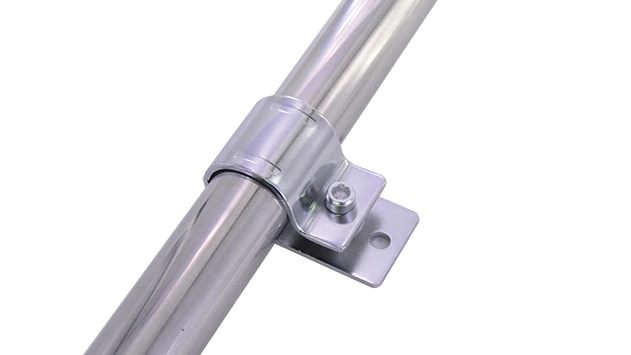
Lean Pipe Clamp Chrome
Lean pipe clamp is used for rack system hang monitor or other panel for workbenck, flowrack in production daily use.
Walk into any busy warehouse, and you'll quickly realize it's more than just a storage space—it's a symphony of moving parts, where efficiency, organization, and speed determine success. But what happens when that symphony turns into chaos? For many operations, the answer used to be: missed deadlines, frustrated employees, and shrinking profits. That was the reality for countless warehouses until the rise of lean solutions transformed how we think about workspace design. Today, we're diving into one warehouse's journey from disarray to streamlined success, focusing on the game-changing impact of key tools—including the humble yet powerful lean pipe workbench, flow rack, and conveyor systems. This isn't just a story about equipment; it's about people, productivity, and the difference the right tools can make in everyday work life.
The "Before" Days: Warehouse Struggles That Felt Never-Ending
Let's set the scene: It's 2022, and GreenWave Distribution, a mid-sized electronics parts distributor, is drowning in inefficiencies. Their 30,000-square-foot warehouse was once a point of pride, but as orders doubled in two years, the space and systems couldn't keep up. Walk through their aisles, and you'd find:
Cluttered Workbenches: Assembly stations were a maze of loose tools, tangled cables, and half-finished orders. "I'd spend 15 minutes just looking for the right screwdriver every morning," recalls Maria, a lead assembler. The workbenches, cobbled together from old wooden tables and metal shelves, offered no organization—no built-in bins, no designated spots for tools, and no way to adjust height for comfort. By midday, parts would spill onto the floor, leading to delays and even occasional damage to sensitive components.
Chaotic Material Retrieval: Parts were stored in haphazard piles on generic metal racks. To fulfill an order, pickers like Raj would zigzag across the warehouse, climbing ladders to reach high shelves or kneeling to dig through bottom bins. "I once walked 5 miles in a single shift just fetching parts," Raj says. "And if a part rolled off a shelf? Good luck finding it again—it might take hours, or we'd have to reorder, costing us time and money." The lack of structured flow meant items were often stuck behind slower-moving stock, turning simple retrievals into marathons.
Unreliable Conveyors: The warehouse's old conveyor belt, a hand-me-down from the 1990s, was more of a liability than an asset. It jammed at least twice a day, requiring maintenance crews to stop production and fix jams—usually by hand, risking injury. "We'd have boxes piling up on the loading dock while we untangled a stuck roller," says Tom, the warehouse manager. "Customers were calling asking where their orders were, and we had no good answers." Worse, the conveyor's fixed speed and rigid design meant it couldn't adapt to different package sizes, leading to frequent spills and damaged goods.
Static Damage in Electronics Handling: Since GreenWave dealt with sensitive circuit boards and microchips, static electricity was a silent enemy. Without proper ESD (Electrostatic Discharge) protection, even a small spark could ruin a $500 component. "We were losing 3-5% of our inventory to static damage every month," Tom explains. "Workers tried grounding wristbands, but the workbenches themselves weren't ESD-safe—plastic surfaces built up charge, and there was no way to dissipate it. It felt like we were fighting a losing battle."
By the end of 2022, GreenWave's metrics told the grim story: order fulfillment time averaged 45 minutes per order (up from 25 minutes two years prior), error rates hit 8%, and employee turnover spiked—10 of their 30 warehouse staff left that year, citing frustration and physical strain. "We knew we needed help," Tom says. "But we didn't just need new equipment—we needed a complete rethink of how we used our space."
The Turning Point: Discovering Lean Solutions
In early 2023, Tom attended a manufacturing expo in Chicago, desperate for answers. There, he stumbled upon a booth for a lean system supplier showcasing modular workspace solutions. "I was skeptical at first—we'd tried 'quick fixes' before, like new shelving, and they never stuck," he admits. But as the supplier walked him through their products—lean pipe workbenches with adjustable heights, flow racks that let parts "flow" to pickers, and conveyor systems designed to adapt to varying loads—something clicked. "It wasn't just about storage," Tom realized. "It was about designing the workspace around how people actually work."
The supplier emphasized "lean principles": eliminating waste, optimizing flow, and empowering workers to customize their environment. For GreenWave, that meant addressing each pain point with a targeted solution. "They didn't just sell us equipment—they listened to our problems," Tom says. "Maria mentioned her back hurt from bending over the low workbench? They suggested height-adjustable lean pipe workbenches. Raj talked about walking miles to pick parts? They proposed flow racks to bring parts closer to assembly stations. It felt personal."
By the end of the expo, Tom had a plan: phase in upgrades over three months, starting with the most critical areas—assembly workbenches and material retrieval. The goal? Cut order fulfillment time by 30%, reduce errors to under 2%, and make the warehouse a place where employees wanted to work, not escape. "I went back to the team and said, 'We're not just fixing shelves—we're rebuilding how we do our jobs,'" Tom recalls. "The excitement was palpable. Even the skeptics were curious."

The Transformation: Key Upgrades That Changed Everything
The first shipment arrived in March 2023: a truckload of aluminum lean pipes, joints, flow rack components, and conveyor parts. Over the next three weeks, the warehouse closed for half-days to install the new systems, with the supplier's team on-site to guide the process. Let's break down the upgrades that made the biggest impact:
1. Lean Pipe Workbenches: From Cluttered Chaos to Organized Efficiency
The old wooden workbenches were the first to go. In their place, the team installed lean pipe workbenches—modular stations built from aluminum lean pipes and chrome-plated joints, with customizable add-ons like tool hooks, bin rails, and ESD-safe surfaces. "I thought it was just a 'fancier table' at first," Maria admits. "But within a week, I was a convert."
The key difference? Flexibility. Each workbench could be adjusted in height (from 30 to 42 inches) to fit the assembler using it, reducing back strain. Built-in pegboards above the bench held frequently used tools—screwdrivers, pliers, wire cutters—in clear view, so Maria no longer wasted time rummaging. Bins along the side were labeled by part type, with color-coded tags for quick identification. "Now, when I start my shift, everything is exactly where it should be," she says. "I can assemble a circuit board in 10 minutes instead of 20, and I don't have to clean up a mountain of parts at the end of the day."
The ESD-safe surfaces were a game-changer for electronics handling, too. The workbenches' tops were made of conductive material that dissipated static, paired with grounding mats for assemblers' feet. "In the first month, we had zero static-damaged parts," Tom notes. "Zero. That alone saved us $10,000 in replacement costs."
2. Flow Racks: Letting Gravity Do the Work
Next up: replacing the chaotic metal racks with flow racks—tilted shelving units with roller tracks that let parts "flow" forward as the front item is removed. For Raj and the picking team, this was revolutionary. "Before, I'd have to reach to the back of a deep shelf to get the last part in a bin," Raj explains. "Now, as soon as I take one, the next one rolls down to the front. It's like magic."
GreenWave installed flow racks near the assembly workbenches, stocking them with the 20 most frequently ordered parts. This cut down on walking time: instead of trekking to the far corner of the warehouse, pickers could grab parts 10 feet from their stations. The racks were also labeled with barcode scanners, so pickers could verify they had the right part with a quick scan—reducing errors from 8% to under 1.5% in the first month.
"The flow racks turned 'hunting' into 'gathering,'" Raj jokes. "I used to walk 5 miles a shift; now it's more like 2. My feet thank me, and I can pick 30% more orders in a day without feeling rushed."
3. Conveyor Systems: From Jams to Smooth Sailing
The final piece of the puzzle was replacing the outdated conveyor belt with a modern roller conveyor system. Unlike the rigid old model, this new conveyor featured adjustable speed controls, flexible roller tracks that could curve around corners, and built-in sensors to detect jams before they escalated. "The first time we ran it, I held my breath," Tom says. "But it purred. No jams, no spills, just boxes moving smoothly from assembly to shipping."
The conveyor was integrated with the flow racks and workbenches, creating a "U-shaped" workflow: parts flowed to assemblers via flow racks, finished products moved to packing stations via conveyor, and packed orders were sent to shipping—all without cross-traffic or bottlenecks. "Before, we'd have three people manually carrying boxes between stations," Tom recalls. "Now, the conveyor does the heavy lifting, and those employees are free to focus on quality checks."
The system also adapted to different package sizes, from small envelopes to large cartons, thanks to adjustable side rails. "We used to have to separate orders by size—small boxes here, big ones there," says Carlos, who runs the shipping department. "Now, everything goes on the same conveyor, and it handles it all. We're shipping 25% more orders per day, and late shipments? They're practically nonexistent."
The "After" Impact: Metrics and Success Stories
By June 2023—just three months after the upgrades—GreenWave's transformation was undeniable. The team tracked key metrics to measure success, and the results spoke for themselves:
| Metric | Before (2022) | After (2023) | Improvement |
|---|---|---|---|
| Average Order Fulfillment Time | 45 minutes | 28 minutes | 38% faster |
| Error Rate (Wrong Parts/ Damaged Goods) | 8% | 1.2% | 85% reduction |
| Employee Turnover | 33% (10/30 employees) | 3% (1/30 employees) | 91% reduction |
| Static Damage Losses | $10,000/month | $0/month | 100% elimination |
| Daily Order Volume | 120 orders/day | 180 orders/day | 50% increase |
But numbers only tell part of the story. The human impact was even more profound. "I used to dread coming to work," Maria says. "Now, I walk in and think, 'Let's get this done.' My back doesn't ache, I'm not stressed about finding tools, and I actually feel proud of how efficient my station is." Raj adds, "The warehouse feels like a team now, not a battlefield. We're all on the same page, and the tools make us feel supported, not just rushed."
GreenWave's success even caught the attention of their clients. "One of our biggest customers visited the warehouse last month and couldn't believe the difference," Tom says. "They told us, 'We're increasing our orders with you because we know you'll deliver on time, every time.' That's the kind of trust money can't buy."
Beyond the Warehouse: Why Lean Solutions Matter for Every Operation
GreenWave's journey isn't unique. Across industries—from manufacturing to retail to logistics—lean solutions are transforming workspaces by putting people first. The key lesson? Optimization isn't about cramming more into less space; it's about designing spaces that work with employees, not against them. A lean pipe workbench isn't just a table—it's a tool that reduces frustration and increases pride. A flow rack isn't just a shelf—it's a system that respects workers' time. A conveyor isn't just a machine—it's a partner that handles the tedious work so people can focus on what they do best.
If your warehouse is still stuck in the "before" days—cluttered, inefficient, and draining employee morale—it might be time to explore lean solutions. Start small: maybe a single lean pipe workbench to test the waters, or a flow rack for your most chaotic aisle. Chances are, you'll notice the difference faster than you think.
Conclusion: From Chaos to Clarity—The Power of Lean Transformation
GreenWave Distribution's story is a testament to the impact of intentional workspace design. In just six months, they went from struggling to keep up with orders to exceeding customer expectations, all while improving employee satisfaction and cutting costs. The tools that made it possible—lean pipe workbenches, flow racks, and conveyor systems—are more than just equipment; they're investments in people and productivity.
So, what's the "after" look like for your warehouse? It starts with a single question: What would happen if your workspace worked for your team, not against them? The answer might surprise you.