- Company Articles
- Products and Technology
- Solution
- Warehouse Racking Solutions Using 3030a EU Standard Aluminum Profile

Warehouse Racking Solutions Using 3030a EU Standard Aluminum Profile
Related Product
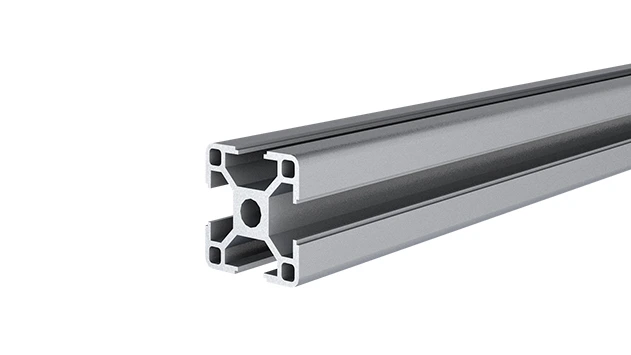
3030A EU Standard Aluminum Profile
3030 is a 3.00 x 3.00CM fractional 30 series square extrusion T-slot profile with four open T-slots, each side with 3.00cm face. The profile has align-a-grooves to assist in aligning connecting profiles.
In the fast-paced world of logistics and manufacturing, a warehouse isn't just a storage space—it's the heartbeat of your operations. Every square foot, every shelf, and every workflow decision impacts productivity, accuracy, and ultimately, your bottom line. Yet, many warehouses still grapple with disorganized storage, inefficient material flow, and rigid systems that can't keep up with changing needs. If you've ever walked through a warehouse where boxes are stacked haphazardly, tools are scattered, or employees spend precious minutes searching for parts, you know the frustration of a system that's not working for you. The good news? There's a solution that combines strength, flexibility, and simplicity: warehouse racking built with 3030a EU Standard Aluminum Profile .
This unassuming yet powerful material has quietly revolutionized how modern warehouses operate. Unlike traditional steel racks that are heavy, hard to modify, and prone to rust, 3030a aluminum profiles offer a lightweight yet durable alternative that adapts to your needs. Whether you're looking to organize small parts, streamline assembly lines, or create custom workstations, this profile—paired with the right aluminum profile accessories —can transform your space from chaotic to cohesive. In this article, we'll dive deep into how 3030a aluminum profile solutions, including workbenches, material racks, and roller tracks, can elevate your warehouse efficiency. We'll break down the "why" behind this material, walk through real-world applications, and show you how to build systems that grow with your business. Let's start by understanding what makes 3030a aluminum profile so special.
What Is 3030a EU Standard Aluminum Profile—and Why Does It Matter?
At first glance, 3030a aluminum profile might look like just another metal bar, but its design and engineering make it a game-changer for warehouse setups. Let's start with the basics: the "3030a" refers to its dimensions—30mm in width and 30mm in height—with "a" indicating a specific groove design that aligns with EU standards. This standardized groove (typically 6mm wide) is key to its versatility, as it allows for easy attachment of accessories without welding or drilling. Made from high-grade aluminum alloy, it strikes the perfect balance between strength and weight: strong enough to support heavy loads, yet light enough to be maneuvered by a small team during installation.
But why choose aluminum over steel, the traditional go-to for racking? For starters, aluminum is naturally corrosion-resistant. Unlike steel, which requires painting or coating to prevent rust (especially in humid warehouse environments), 3030a profiles hold up to moisture, spills, and temperature fluctuations without losing their integrity. This means less maintenance and a longer lifespan—critical factors for warehouses looking to minimize downtime.
Another standout feature is modularity. Traditional steel racks are often "set it and forget it"—once welded or bolted into place, reconfiguring them means cutting, welding, or even replacing entire sections. With 3030a profiles, though, you can disassemble, rearrange, and rebuild components in hours, not days. Need to add a shelf to a rack? Swap out a workbench top? Extend a roller track? The system adapts with you, making it ideal for businesses that experience seasonal demand shifts or evolving product lines.
Cost is another factor. While aluminum profiles may have a slightly higher upfront cost than basic steel, their long-term savings are undeniable. Reduced maintenance, faster installation (no need for specialized welders), and the ability to repurpose components over time mean you're not just buying a rack—you're investing in a system that grows with your warehouse. Plus, aluminum is 100% recyclable, making it a sustainable choice for eco-conscious operations.
To put it simply: 3030a EU Standard Aluminum Profile is the backbone of a warehouse that's built to perform. It's not just about storage—it's about creating a space where every tool, part, and process has a purpose. And to bring this vision to life, you'll need more than just the profiles themselves. Let's talk about the unsung heroes that make customization possible: aluminum profile accessories.
The Building Blocks: 3030a Aluminum Profile and Accessories
Imagine building a puzzle with only one type of piece—it might hold together, but it won't be pretty or functional. The same goes for warehouse racking: 3030a profiles are strong on their own, but it's the aluminum profile accessories that turn them into tailored solutions. From connectors that lock profiles together to end caps that add safety, these small components make a big difference in how your system performs. Let's break down the essentials you'll need to create a robust, flexible racking setup.
Connectors: The Glue That Holds It All Together
If profiles are the bones of your system, connectors are the joints. They determine how your racks, workbenches, and tracks hold their shape and withstand daily use. For 3030a profiles, the most common connectors include:
- 90° Aluminum Profile Connectors : These right-angle brackets are the workhorses of any setup, joining profiles at corners (think the vertical and horizontal beams of a rack). They slide into the profile grooves and secure with bolts, creating a tight, wobble-free connection.
- 135° Aluminum Profile Connectors : Perfect for angled structures, like sloped shelving or corner workstations, these connectors add versatility when a straight 90° angle isn't enough.
- 3030 Aluminum Profile End Caps : While not a "connector" in the traditional sense, these plastic or metal caps are critical. They cover the exposed ends of profiles, preventing snags on clothing or damage to products, and add a clean, finished look to your setup.
What makes these accessories so valuable is their simplicity. Unlike welding, which requires skill and equipment, connectors let anyone with a hex key assemble sturdy structures. Need to adjust a shelf height? Loosen the bolts, slide the connector, and retighten. It's that easy.
Gussets and Brackets: Adding Strength Where It Counts
For racks that need to support heavy loads—think stacks of metal parts or bulky tools—standard connectors might not be enough. That's where gusset alp 3030 comes in. These triangular brackets attach to the inside or outside of joints, reinforcing connections to handle extra weight. A material rack holding 50kg per shelf? A workbench with a vice and power tools? Gussets ensure your structure doesn't flex or warp over time.
Another essential accessory is the flat bracket, which connects parallel profiles (like the sides of a workbench) to add stability. These brackets are especially useful for long spans, preventing sagging and ensuring your setup stays level—even after years of use.
| Accessory | Function | Common Use Case |
|---|---|---|
| 90° Aluminum Connector | Joins profiles at right angles | Vertical and horizontal beams of a material rack |
| 3030 Aluminum End Cap | Covers exposed profile ends | Workbench edges, shelf corners |
| Gusset Alp 3030 | Reinforces joints for heavy loads | Upper shelves of a material rack b (3 row and 3 floor) |
| Flat Bracket | Connects parallel profiles | Sides of a workbench or trolley |
With these accessories in hand, you have the flexibility to build almost anything. Need a tall rack for bulky items? Stack profiles vertically with 90° connectors and gussets. Want a low, wide shelf for boxes? Use flat brackets to span profiles horizontally. The possibilities are limited only by your needs. And speaking of needs, let's look at how these components come together in real-world warehouse setups—starting with a staple of any productive workspace: the workbench.

From Chaos to Order: Workbenches Built for Productivity
A workbench is more than just a table—it's where ideas become products, where assemblies take shape, and where your team spends hours of their day. A poorly designed workbench can slow down tasks, cause strain, and even lead to errors. But a workbench built with 3030a aluminum profile? It's a productivity powerhouse. Let's walk through how to create a custom workbench that fits your team's needs, from assembly stations to packing areas.
Designing Your Workbench: Start with the Basics
The beauty of 3030a profiles is that you're not stuck with one-size-fits-all workbenches. Instead, you can design around your tasks. For example, an electronics assembly station might need a flat, static surface with built-in tool storage, while a packing bench could benefit from a sloped top to let boxes slide easily. Let's focus on a common setup: a single-deck workbench without casters (similar to the "workbench e (single deck-without caster)" design), ideal for tasks that require stability, like manual assembly or quality control.
Start by determining the dimensions. Standard workbench height is around 800mm, but adjust based on your team's average height to reduce back strain. Width? 600-1200mm is typical, but if you're working with large parts, go wider. Length depends on how many people will use the bench—aim for 1500-2000mm per person to avoid crowding.
Next, the frame: Use 3030a profiles for the legs, front, and back rails. Connect the legs to the rails with 90° connectors, and add gusset alp 3030 at each corner for stability. For the top, choose a material that suits your tasks: plywood for general use, anti-static laminate for electronics (to protect sensitive components), or a metal surface for heavy-duty work. Secure the top to the frame using flat brackets—this ensures it won't shift during use.
Real-World Example: The Electronics Assembly Bench
A local electronics manufacturer was struggling with disorganized assembly stations. Their old wooden workbenches had no storage, so tools were scattered, and small parts often rolled off the edges. They switched to 3030a aluminum profile workbenches with the following tweaks:
- Tool Rails : Added horizontal 3030a profiles above the bench, fitted with hooks for screwdrivers, pliers, and wire cutters—everything within arm's reach.
- Bin Storage : Used vertical profiles on the sides to mount small plastic bins for resistors, capacitors, and other tiny parts. No more digging through drawers!
- Anti-Static Surface : To protect circuit boards, they added an ESD (electrostatic discharge) laminate top, grounded via a wire connected to the aluminum frame.
The result? A 25% reduction in time spent searching for tools and a 15% increase in assembly speed. "It's like night and day," said one technician. "I can focus on the work, not on finding my next part."
Adding Storage: Keep Tools and Parts Within Reach
A workbench isn't complete without storage. Cluttered surfaces kill productivity, so use aluminum profile accessories to add shelves, drawers, or tool holders. For example:
- Under-Bench Shelves : Mount horizontal 3030a profiles between the legs to create shelves for larger tools or bins. Use 90° connectors and gussets to ensure they can hold weight (aim for at least 50kg per shelf).
- Overhead Racks : Install vertical profiles on the back of the bench, topped with horizontal rails, to hang bins or small parts organizers. This keeps frequently used items visible and accessible without taking up table space.
- Tool Pegboards : Attach a pegboard panel to a 3030a frame and mount it above the bench. Use hooks for tools, and label each spot to ensure everything gets put back—no more missing screwdrivers!
The best part? If your tasks change, you can reconfigure the storage. Need more shelves? Add them. Switching to a new tool? Move the hooks. Your workbench evolves with your workflow.
Material Racks: Organize Inventory with Material Rack B (3 Row and 3 Floor)
If workbenches are where the magic happens, material racks are where the ingredients are stored. A well-organized material rack turns "I can't find that part" into "It's right where it should be." And when it comes to racks that balance capacity, accessibility, and flexibility, few options compare to the material rack b (3 row and 3 floor) design—especially when built with 3030a aluminum profile. Let's explore how this rack solves common inventory management headaches and how to customize it for your needs.
Why Material Rack B? The 3x3 Advantage
Material Rack B is designed with three rows (width) and three floors (height), creating nine separate compartments—perfect for categorizing parts by type, size, or project. For example, in an auto parts warehouse, you could use one floor for small hardware (nuts, bolts), another for electrical components (wires, fuses), and the third for larger parts (gaskets, hoses). Within each floor, rows can separate parts by vehicle model. This level of organization cuts down on search time and reduces errors—no more grabbing the wrong bolt because it was in the wrong bin.
But what makes this rack shine is its adaptability. Unlike fixed steel racks, which often have preset shelf heights, Material Rack B lets you adjust each floor to fit your inventory. Need to store taller bins? Raise a shelf. Have smaller parts? Lower it. This flexibility is a game-changer for warehouses with diverse inventory—no more wasting space or cramming items into shelves that are too small.
Building Material Rack B: Step-by-Step
Ready to build your own Material Rack B? Here's how to do it with 3030a profiles and accessories:
- Frame Construction : Start with four vertical 3030a profiles for the corners (height depends on your ceiling—aim for 1800-2000mm for three floors). Connect these with horizontal profiles at the top, bottom, and between each floor using 90° connectors. Add gusset alp 3030 at the bottom corners to prevent tipping—safety first!
- Shelf Supports : Install horizontal "support rails" between the vertical posts at each floor level. These will hold the shelf boards. Use adjustable brackets (another handy aluminum profile accessory) so you can move shelves up or down later.
- Shelf Inserts : Cut plywood or metal sheets to fit the width and depth of each shelf. For added durability, edge the shelves with aluminum angle profiles (using flat brackets) to prevent warping. If you're storing small parts, add dividers—simply cut 3030a profiles to length and attach them to the shelf supports with connectors.
- Labeling : Don't skip this step! Use magnetic labels or adhesive tags on each compartment to identify contents. For extra efficiency, color-code bins by category (e.g., red for urgent parts, blue for standard inventory).
Pro tip: If you're storing heavy items on the bottom floor (to reduce strain when lifting), reinforce those shelves with extra gussets. For lighter items, like small plastic bins, standard supports will do.
Beyond Storage: Integrating Material Rack B into Your Workflow
A material rack shouldn't exist in isolation—it should connect to your workbenches and assembly lines to create a seamless flow. For example, place Material Rack B near your assembly workbench so parts are steps away, not across the warehouse. If you're using a roller track (more on that next!), position the rack at the end of the track so bins can slide directly from storage to the bench.
Another trick: Use clear plastic bins with lids to protect parts from dust and make contents visible at a glance. Attach bin labels to both the bin and the rack—this ensures bins go back to the correct spot, even during busy shifts. Over time, this level of organization reduces inventory shrinkage and makes stock checks a breeze.
Whether you're managing a small parts room or a large warehouse, Material Rack B built with 3030a aluminum profile is a workhorse that keeps your inventory organized, accessible, and adaptable. And when paired with roller tracks, it becomes part of a system that moves materials as efficiently as your team does.
Smooth Flow: Roller Tracks for Seamless Material Movement
Even the most organized warehouse can grind to a halt if materials aren't moving smoothly. Imagine an employee pushing a heavy cart across a rough concrete floor, or manually lifting bins from a rack to a workbench—these small inefficiencies add up to hours of lost time each week. That's where roller track systems come in. When integrated with 3030a aluminum profile racking, roller tracks turn static storage into dynamic flow, letting gravity (or gentle pushes) move materials from point A to point B with minimal effort. Let's explore how to design and install roller tracks that transform your workflow.
Why Roller Tracks? The Case for Effortless Movement
Roller tracks are simple in concept: a series of wheels mounted on a track, allowing bins, cartons, or even small trolleys to slide smoothly. But their impact is huge. Here's why they're a must for modern warehouses:
- Reduced Physical Strain : Pushing a bin along a roller track requires a fraction of the force needed to lift or drag it. This lowers the risk of workplace injuries and keeps your team fresh throughout the day.
- Faster Material Flow : From receiving to shipping, or from storage to assembly, roller tracks cut down on transit time. For example, a packing station can receive boxes directly from a roller track connected to a Material Rack B, eliminating the need for employees to fetch items.
- Space Savings : Unlike conveyor belts, roller tracks are low-profile and can be mounted directly to racks or workbenches, freeing up floor space for other equipment.
When paired with 3030a aluminum profiles, roller tracks become even more versatile. The profiles provide a sturdy, lightweight frame to mount the tracks, and aluminum profile accessories like "roller track placon mount for aluminum profile flat" make installation a snap.
Choosing the Right Roller Track for Your Needs
Not all roller tracks are created equal. The type you choose depends on what you're moving and how far. Here are the most common options for 3030a profile systems:
- Plastic Roller Tracks : Lightweight and affordable, these are ideal for small, lightweight bins (up to 10kg per item). Look for "plastic roller track guide rail yellow" or grey options—they're easy to spot and resistant to scratches. Best for short distances, like from a rack to a nearby workbench.
- Aluminum Roller Tracks : Sturdier than plastic, aluminum tracks (like "aluminum guide rail a" or "aluminum guide rail b") can handle heavier loads (up to 30kg per item). They're also more durable, making them suitable for high-traffic areas.
- Steel Wheel Roller Tracks : For the heaviest loads (50kg+), go with steel wheels. Options like "40 steel roller track yellow wheel" or black ESD wheels (anti-static for electronics) are built to last, even with daily use.
Pro tip: If you're moving items downhill (e.g., from a higher shelf to a lower bench), add a brake or speed controller to prevent bins from sliding too fast. Safety first—no one wants a bin crashing into a workbench!
Case Study: From Manual to Automated Flow
A furniture manufacturer was struggling with slow production times. Their assembly line required workers to carry wooden parts from a storage rack to the workbench—over 20 trips per hour, per worker. This led to fatigue and frequent delays. They installed aluminum roller tracks (using 3030a profiles as supports) from their Material Rack B to each workbench. Now, parts slide directly to the bench, and workers spend less time walking and more time assembling. The result? A 35% increase in daily production and fewer complaints of tiredness. "It's like giving our team an extra hour in the day," said the production manager.
Installing Your Roller Track System
Installing a roller track with 3030a profiles is simpler than you might think. Here's a quick guide:
- Plan the Path : Map out where the track will go—measure the distance between the start (e.g., Material Rack B) and end (e.g., workbench). Ensure the track has a slight slope (1-2°) for gravity flow; if it's flat, you'll need to push items, which still saves effort compared to carrying.
- Mount the Track Supports : Use 3030a profiles to build a frame along the path. Attach "roller track placon mount for aluminum profile flat" brackets to the profiles—these will hold the track in place. Space the brackets every 500mm to prevent sagging.
- Install the Track : Snap or bolt the roller track onto the brackets. For longer tracks, connect sections using "roller track placon mount for rail connection" accessories to ensure a smooth transition between pieces.
- Test and Adjust : Place a bin on the track and see how it moves. If it's too slow, increase the slope slightly; if it's too fast, add a friction pad (a simple rubber strip) to slow it down. Make sure the track is level from side to side to prevent bins from tipping.
With your roller track in place, you've created a silent helper that moves materials 24/7—no electricity, no maintenance, just smooth, consistent flow.
Customization: Building a System That Grows with You
One of the biggest frustrations with traditional warehouse systems is their rigidity. You buy a steel rack, and a year later, your inventory changes—suddenly, you need taller shelves, or narrower compartments, or a completely different layout. With 3030a aluminum profile solutions, you never have to start over. Customization isn't just a feature; it's the whole point. Let's explore how to adapt your 3030a setup as your business evolves, from small tweaks to major overhauls.
Adapting to New Inventory: From Small Parts to Large Equipment
Suppose your warehouse starts storing small electronic components, so you build a Material Rack B with narrow shelves. A year later, you expand into larger items—say, power tools. Instead of buying a new rack, you can:
- Remove shelves : Take out every other shelf in Material Rack B to create taller compartments for larger boxes.
- Add vertical supports : Install extra 3030a profiles in the middle of the rack to support heavier loads (use 90° connectors to attach them to the top and bottom rails).
- Swap accessories : replace plastic roller tracks with steel wheel tracks to handle the heavier tools.
This flexibility is why 3030a systems are popular with growing businesses—you're not throwing away money on equipment that becomes obsolete. You're investing in a foundation that adapts.
Seasonal Shifts: Scaling Up and Down
Many warehouses face seasonal demand—think holiday rushes for retailers or peak production months for manufacturers. During busy times, you need extra storage; during slow times, that space could be better used for other tasks. With 3030a profiles, you can:
- Add temporary racks : Build lightweight, portable racks using 3030a profiles and casters (yes, there are "caster and accessories" designed for aluminum profiles!). Wheel them into place during peak season, then store them when not needed.
- Reconfigure workbenches : Combine two single workbenches into a larger assembly line during busy periods, then split them back into individual stations when demand drops.
- Expand roller tracks : Add extra track sections to reach temporary storage areas, then disassemble and store them later. Since the tracks are lightweight, two people can set them up in minutes.
A local toy manufacturer does this every year: In Q4, they add 10 temporary 3030a racks and extend their roller tracks to handle holiday inventory. In Q1, they break down the racks and use the space for product development workshops. It's a system that works year-round.
Future-Proofing: Investing in a System That Lasts
Warehouse needs change—new equipment, new products, new processes. 3030a aluminum profile systems are built to keep up. For example, if you adopt automation later (like robots to move bins), you can modify your racks to include robot-accessible shelves by adjusting heights and adding clear paths. If you switch to lean manufacturing principles, you can reconfigure workbenches and roller tracks to create a continuous flow line.
Even better, aluminum profiles are recyclable. If you ever need to scrap a component, you can sell the aluminum for a return on your initial investment—unlike steel, which often ends up in landfills.
Maintenance and Care: Keeping Your System Strong for Years
A 3030a aluminum profile system is built to last, but like any equipment, it needs a little care to stay in top shape. The good news? Maintenance is minimal compared to steel racks—no painting, no rust removal, just simple checks and tweaks. Let's go over how to keep your workbenches, Material Rack B, and roller tracks performing at their best for years to come.
Regular Inspections: Catch Issues Early
Set a schedule—monthly for high-traffic areas, quarterly for less-used systems—to inspect your 3030a setup. Look for:
- Loose connectors : Tighten any bolts that have worked loose (use a hex key—no special tools needed). Loose connectors can cause wobbling, which leads to wear over time.
- Damaged accessories : Check end caps for cracks, gussets for bending, and roller track wheels for wear. replace any damaged parts immediately—most aluminum profile accessories are affordable and easy to swap.
- Shelf warping : If plywood shelves are bending, add extra supports or switch to metal shelves for heavier loads.
Pro tip: Assign a "rack champion" on your team to handle inspections—someone who knows the system well and can spot issues early. A 10-minute check each month can prevent costly repairs later.
Cleaning: Simple Steps for a Fresh System
Aluminum profiles are resistant to dirt and grime, but regular cleaning keeps them looking good and functioning smoothly. For most cases, a damp cloth or mild soap and water will do—avoid harsh chemicals, which can damage the profile's finish. For roller tracks, wipe down the wheels and rails to remove dust and debris that could slow movement. A small brush (like a toothbrush) works great for cleaning out the grooves in profiles where accessories attach.
In dusty environments (like woodworking shops), use a vacuum with a brush attachment to clean shelves and tracks weekly. For warehouses with oil or grease (like auto repair), wipe down profiles with a degreaser monthly to prevent buildup.
Handling Wear and Tear: When to replace Parts
Even with care, some parts will wear out over time. Here's when to replace common components:
- Roller track wheels : If wheels start sticking or making noise, replace them. Most wheels pop out easily and can be swapped in minutes.
- Connectors : If a connector is bent or stripped (from over-tightening), replace it. Damaged connectors compromise stability, so don't delay.
- End caps : Cracked or missing end caps leave sharp edges—replace them to keep your team safe.
The good news is that aluminum profile accessories are inexpensive and widely available. A quick order from your supplier, and you'll have replacement parts in days.
Conclusion: Transform Your Warehouse with 3030a Aluminum Profile
Warehouse efficiency isn't about working harder—it's about working smarter. And working smarter starts with the right tools. 3030a EU Standard Aluminum Profile, paired with aluminum profile accessories, workbenches, material racks like Material Rack B, and roller tracks, offers a solution that's strong enough to handle your inventory, flexible enough to adapt to change, and simple enough to build and maintain.
Imagine walking into your warehouse tomorrow: Racks are organized, parts are easy to find, and materials flow smoothly from storage to workbench. Your team spends less time searching and more time creating. Your space feels larger, cleaner, and more purposeful. This isn't a dream—it's achievable with 3030a aluminum profile solutions.
Whether you're a small workshop or a large distribution center, the principles are the same: start with a clear vision of your needs, build with flexibility in mind, and invest in a system that grows with you. The 3030a aluminum profile isn't just a material—it's a tool to create a warehouse that works for you, not against you.
So, what are you waiting for? Grab a 3030a profile, a few connectors, and start building. Your future self (and your team) will thank you.