- Company Articles
- Products and Technology
- Application Cases
- Warehouse Renovation: Upgrading to Single Side Aluminum Pipe Systems for Improved Flow

Warehouse Renovation: Upgrading to Single Side Aluminum Pipe Systems for Improved Flow
Related Product
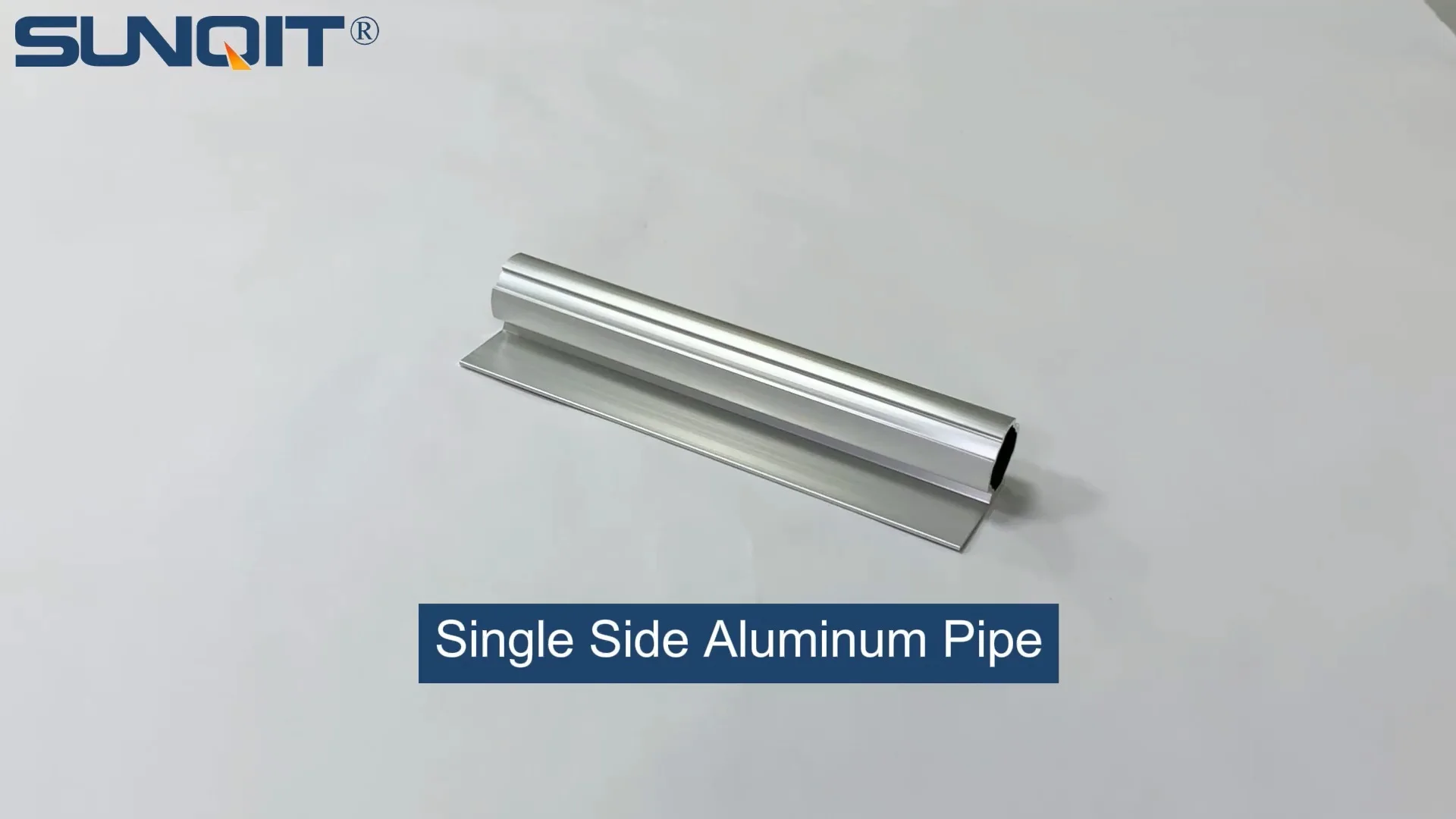
Single Side Aluminum Pipe
The single-sided plane can be installed with a back-mounted material box, and can also be used as a sidewall or partition.
Walk into any busy warehouse, and you'll likely spot the same silent struggles: shelves that sag under weight, workbenches that can't adapt to new tasks, and material flow that feels more like a stop-and-go traffic jam than a streamlined process. For Mark, operations manager at a mid-sized electronics distribution center, these weren't just observations—they were daily hurdles. Last year, his team hit a breaking point. Orders were piling up, employee morale was dipping, and the warehouse's outdated metal shelving and rigid workstations felt like anchors holding them back. That's when they turned to a solution that would transform their space from chaotic to cohesive: single side aluminum pipe systems.
At first glance, "aluminum pipe" might sound like just another industrial material. But for Mark's team, it represented something bigger: flexibility. Unlike the fixed steel structures they'd relied on for years, aluminum lean pipe systems offered a modular, adaptable framework that could grow and change with their needs. What followed was a renovation that didn't just upgrade their warehouse—it redefined how they worked. In this article, we'll dive into their journey, exploring why aluminum lean pipe systems are becoming a game-changer for modern warehouses, the key components that make them tick, and the real-world impact they had on Mark's team.
The Problem: When Your Warehouse Works Against You
Before the renovation, Mark's warehouse was a study in inefficiency. Let's paint the picture: 15,000 square feet of space filled with steel shelving units bolted to the floor, custom-built wooden workbenches that hadn't been updated in a decade, and a hodgepodge of flow racks—some metal, some plastic, none of which quite matched the inventory. When the company expanded its product line to include smaller, high-volume items like smartphone accessories, the existing setup crumbled.
"Our old steel shelves were built for bulkier goods—think 20-pound boxes of circuit boards," Mark explains. "Suddenly, we were dealing with thousands of tiny items: screen protectors, charging cables, earbuds. The shelves had fixed dividers, so we'd have half a shelf empty and the other half overflowing. We tried adding plastic bins, but they slid around, and employees wasted time digging through them to find what they needed."
The workbenches were another pain point. Bolted to the concrete floor, they stood at a one-size-fits-all height of 36 inches. "We have employees ranging from 5'2" to 6'4"," Mark says. "The shorter folks were straining to reach tools on the upper shelves, and the taller ones were hunching over to pack orders. By the end of the day, everyone was complaining about backaches. We even had a few workers take medical leave for strains—it was costing us in both morale and productivity."
Then there were the flow racks. Made of particleboard with metal rollers, they'd started to warp after years of use, creating uneven surfaces where products would get stuck. "I'd walk through the packing area and see someone kicking a flow rack to dislodge a box," Mark recalls. "It was like something out of a cartoon, but it wasn't funny. Every jam meant delays, and delays meant missed shipping deadlines."
The final straw came during peak season. A last-minute order for 10,000 charging cables came in, and the team had 48 hours to fulfill it. The existing flow racks couldn't handle the volume, so they resorted to stacking boxes on the floor—creating tripping hazards and slowing down pickers. "That night, I stayed late after everyone left, staring at the chaos," Mark says. "I thought, 'There has to be a better way.'"
Discovering Aluminum Lean Pipe: A Lightbulb Moment
Mark's search for a solution led him to a manufacturing trade show in Chicago. Among the booths showcasing automated robots and fancy software, one display caught his eye: a simple setup of silver pipes and colorful joints, with a sign that read, "Build, Rebuild, Repeat: The Aluminum Lean Pipe Revolution."
The sales rep, a former warehouse manager named Lisa, demonstrated how the system worked. She picked up a 6-foot aluminum pipe, attached it to a joint with a quick twist of a hex key, and within minutes, had built a small flow rack. Then, she reconfigured it—adding a tier, adjusting the angle of the rollers—all without tools beyond that hex key. "I kept waiting for the catch," Mark says. "Steel racks take two people and a drill to put together. This felt like playing with Tinkertoys, but for adults."
Lisa explained that modern aluminum lean pipe systems are engineered for industrial use. The pipes—officially called aluminum extrusion profiles—are heat-treated to strengthen them, and the joints are reinforced with steel cores. "We load-test these systems with 1,000 pounds or more," she told him. "And because they're modular, you never have to tear down and rebuild. Need a taller shelf? Add a pipe. Need to move a workbench? Just unlock the casters and roll it."
Mark was skeptical, but he took home a sample kit: a few aluminum pipes, joints, and a small roller track section. Back at the warehouse, he and Sarah, his lead designer, spent an afternoon experimenting. "We built a mini workbench, then took it apart and built a flow rack. Then we turned that flow rack into a trolley," Sarah laughs. "By the end, we were like kids with a new Lego set. Mark kept saying, 'Why didn't we think of this sooner?'"
The decision to renovate wasn't made lightly. The team researched aluminum lean pipe suppliers, compared costs, and even visited a nearby warehouse that had made the switch. "That visit sealed the deal," Mark says. "Their space was bright, organized, and the workers were actually smiling. One guy showed me how he'd adjusted his workbench height in two minutes to fit a new task. I left thinking, 'This isn't just about pipes—it's about respecting your team enough to give them tools that work for them.'"

Why Aluminum Lean Pipe? The Benefits That Sold the Team
Aluminum lean pipe systems offer more than just flexibility—they solve the core problems that plague traditional warehouses. Here's why Mark's team chose them:
1. Adaptability: Your Warehouse Grows with You
The biggest selling point? Modularity. Unlike fixed steel or wooden structures, aluminum lean pipe systems use components that snap together and come apart with minimal effort. "We're a small company, so our needs change fast," Sarah explains. "One month, we're storing large electronics; the next, we're handling small parts. With aluminum lean pipe, we don't have to buy new racks every time. We just reconfigure what we have."
For example, when the team needed to add a new line of wireless headphones, they took a section of an old flow rack, removed a few pipes, and added aluminum guide rail A to create slots for the headphone boxes. "It took two people 30 minutes," Sarah says. "With the old steel racks, we would've had to order a custom shelf and wait two weeks for delivery."
2. Durability: Stronger Than It Looks
At first, Mark worried aluminum would be too flimsy. "Steel feels solid, right? Aluminum feels lightweight, so you assume it's weaker," he admits. "But Lisa, the sales rep, showed us test results: their aluminum extrusion profiles can hold up to 800 pounds per linear foot. We tested it ourselves with a sample pipe—we stood on it, jumped on it, and it didn't budge."
Modern aluminum lean pipe is made from high-grade aluminum alloy, often heat-treated to increase strength. The joints, too, are reinforced—many use steel cores or internal rotary aluminum joints that lock securely in place. "We've had a workbench loaded with 500 pounds of inventory for six months, and it hasn't sagged an inch," Mark says. "The steel workbenches we had would've started to warp by now."
Aluminum also resists rust and corrosion, a big plus in Mark's climate-controlled but occasionally humid warehouse. "Our old steel shelves had rust spots, especially near the floor," he notes. "Aluminum stays shiny and clean—no more scrubbing rust off with steel wool."
3. Ergonomics: Putting People First
Employee well-being was a non-negotiable. With adjustable components like aluminum foot bases and caster wheels, aluminum lean pipe workbenches and trolleys can be tailored to each worker's needs. "We measured every employee's ideal work height and set their benches accordingly," Mark says. "For the packing stations, we added anti-fatigue mats and adjustable monitor arms—all attached using T-slot aluminum pipe accessories. The difference in morale was immediate."
Jose, a 15-year veteran of the warehouse, sums it up: "I used to go home with a stiff neck from leaning over the old workbench. Now, I can adjust my bench to exactly where I need it. My back pain? Gone. It sounds small, but when you're doing this 8 hours a day, small changes make a big difference."
4. Cost-Effectiveness: Investing in the Future
At $30,000, the initial cost of the aluminum lean pipe system was higher than buying new steel shelving ($20,000). But Mark's team calculated the long-term savings: "The old steel setup needed repairs every year—welding broken joints, replacing warped shelves. We spent $8,000 on fixes in five years. With aluminum, there's almost no maintenance. The joints don't rust, the pipes don't warp, and if a roller track guide rail breaks, we just swap it out for a new one—no welding required."
Plus, the system's adaptability means they won't need to buy new equipment as needs change. "We estimate we'll save $15,000 over the next five years just by reusing components," Mark says. "And the time saved from faster order processing? That's worth even more."

The Building Blocks: Key Components of the System
Aluminum lean pipe systems are more than just pipes—they're ecosystems of components designed to work together. Here are the key parts that transformed Mark's warehouse:
Aluminum Extrusion Profiles: The Backbone
These are the foundation of the system. Aluminum extrusion profiles are long, hollow pipes with T-slots running along their length—think of them as industrial Legos with built-in attachment points. Mark's team chose 4040 EU standard aluminum profiles for most applications. "They're the Swiss Army knife of profiles—strong enough for shelves, lightweight enough for trolleys," Sarah explains. "The T-slots mean we can attach accessories without drilling holes, which is a game-changer."
Aluminum Profile Accessories: The Glue That Holds It All Together
From joints to casters, these small parts make the system versatile:
- Internal Rotary Aluminum Joints: These allow pipes to pivot 360 degrees, making it easy to adjust angles. "We used these on the flow racks so we could tilt the rollers slightly for gravity feeding," Sarah says.
- Caster Wheels and Accessories: Flat swivel castor wheels with brakes turned static workbenches into mobile stations. "Now, if we need extra space in the packing area, we just roll a workbench out of the way," Mark notes.
- Aluminum Guide Rails: Used on flow racks to guide products and prevent jams. The team chose plastic roller track guide rail yellow for high-traffic areas (it's more visible) and grey for standard zones.
- Adjustable Leveling Feet: These small, threaded feet stabilize workbenches and racks on uneven floors. "Our warehouse has a few dips in the concrete," Sarah says. "With leveling feet, we can make sure everything stays straight."
Flow Racks and Roller Tracks: Keeping Products Moving
To eliminate manual lifting, the team installed aluminum roller track systems. Using roller track placon mounts for rail connection and end supports with stops, they created gravity-fed flow racks where products glide from receiving to packing. "Before, a worker might carry 50 boxes a day from the shelf to the packing station," Mark says. "Now, the boxes roll down the track—saving energy and reducing injuries."
They also added swivel roller balls (1 inch) to workbench surfaces, making it easy to slide heavy items. "Packing a 20-pound box? Just push it across the roller balls—it moves like it's on ice," Jose grins.
Workbenches: The Heart of the Operation
The workbench E (single deck-without caster) became the star of the packing area. Customized with aluminum honeycomb panels for a lightweight, sturdy surface, and T-slot aluminum pipe with board holders for tools, it transformed how the team worked. "Every tool has a spot now—no more searching through drawers," Sarah says. "We even added small shelves above using aluminum profile accessories, so frequently used items are within arm's reach."
Best of all, the workbenches are adjustable. Using aluminum foot bases and a hex key, employees can raise or lower the height in minutes. "I'm 5'4", and I set mine to 34 inches," says Maria, a packer. "Jose, who's 6'2", has his at 40 inches. No more bending—my back thanks me."

From Chaos to Cohesion: The Renovation Process
Renovating a warehouse while keeping operations running is tricky, but the modularity of aluminum lean pipe made it manageable. Here's how Mark's team pulled it off:
Phase 1: Planning (Weeks 1-2)
The team started by mapping the warehouse with CAD software, identifying high-traffic areas, and determining which zones could be renovated first without disrupting workflows. They also ordered all components from their chosen aluminum lean pipe supplier, ensuring everything arrived before the renovation began. "We made a checklist of every pipe, joint, and caster we needed—no last-minute runs to the hardware store," Sarah says.
Phase 2: Pilot Zone (Weeks 3-4)
To test the system, they renovated a small section of the packing area: two workbenches and a flow rack. "We wanted to see how it worked in real life," Mark explains. "Turns out, we needed to adjust the angle of the flow rack rollers—they were too steep, and boxes were sliding too fast. We fixed it in 10 minutes with a few extra joints."
Employees were trained on reconfiguration basics, too. "We held a 'pipe party'—pizza, soda, and a tutorial on how to use the hex key," Sarah laughs. "By the end, everyone was reconfiguring the pilot workbench just for fun. It broke down the 'this is new and scary' barrier."
Phase 3: Full Renovation (Weeks 5-8)
Working in shifts, the team renovated one zone at a time. "We'd do receiving on Monday, packing on Tuesday, storage on Wednesday—always leaving half the warehouse operational," Mark says. "The aluminum lean pipe was so quick to assemble: a two-person team could build a flow rack in an hour, compared to four hours for a steel one."
Challenges arose—like a section of floor that was uneven, requiring extra adjustable leveling feet—but the team adapted. "That's the beauty of this system," Sarah says. "If something doesn't fit, you just tweak it. No need to call in a contractor."
Phase 4: Fine-Tuning (Weeks 9-10)
After the main installation, the team gathered feedback. "Employees suggested adding more roller balls to workbenches, and one person wanted a small shelf under their workbench for personal items," Mark says. "We made those changes in a day. It showed the team we were listening—and that made them more invested in the new system."
The Results: Numbers and Stories That Matter
Six months later, the transformation is undeniable. Here's how the warehouse changed:
| Metric | Before Renovation | After Renovation | Improvement |
|---|---|---|---|
| Order Processing Time | 45 minutes per order | 32 minutes per order | 28% faster |
| Employee Strains/Injuries | 8 reported per month | 3 reported per month | 63% reduction |
| Space Utilization | 65% of warehouse used | 88% of warehouse used | 35% better |
| On-Time Shipments | 85% on time | 98% on time | 13% improvement |
| Employee Satisfaction (Survey) | 6/10 | 9/10 | 50% happier |
But numbers only tell part of the story. "The warehouse feels alive now," Mark says. "People laugh more. They're not stressed about jams or searching for tools. Last week, we had a new hire start—she walked in and said, 'Wow, this place is nice!' That never happened before."
Maria, who's worked in the warehouse for eight years, sums it up: "It's not just the pipes. It's knowing the company cares enough to give us a space that works for us. When you're not fighting your tools, you can actually enjoy your job. And when you enjoy your job, you do it better."
Is Aluminum Lean Pipe Right for Your Warehouse?
Mark's team isn't alone. Aluminum lean pipe systems are gaining popularity in warehouses, factories, and distribution centers of all sizes. They're ideal if:
- Your inventory or processes change frequently
- Employee ergonomics and well-being are priorities
- You want to reduce long-term maintenance costs
- You need to maximize space utilization
"If you're still using fixed steel or wooden structures, ask yourself: Are they working for your team, or against them?" Mark says. "For us, aluminum lean pipe wasn't just a renovation—it was a reset. It reminded us that the best warehouses aren't just about storing products; they're about empowering people."
Final Thoughts: More Than Pipes—A Culture of Improvement
Walking through Mark's warehouse today, it's hard to imagine the chaos of a year ago. Rows of aluminum flow racks glisten under LED lights, workbenches stand at custom heights, and employees move with purpose, not frustration. "We didn't just upgrade our infrastructure—we upgraded our mindset," Mark says. "Aluminum lean pipe taught us that change doesn't have to be scary. It can be exciting, even fun."
As for the future? The team is already planning their next project: adding conveyor systems to connect the receiving and shipping zones, using the same modular aluminum components. "Why stop now?" Sarah smiles. "This system grows with us, and so do we."
For any warehouse stuck in the past, Mark has a simple message: "Your team deserves better than wobbly shelves and one-size-fits-all workbenches. Invest in tools that adapt to them, and watch what they can achieve. Trust me—they'll surprise you."