- Company Articles
- Products and Technology
- Product knowledge
- Warehouse Storage Optimization: 4040E EU Standard Aluminum Profile for Adjustable Racks

Warehouse Storage Optimization: 4040E EU Standard Aluminum Profile for Adjustable Racks
Related Product
4040E EU Standard Aluminum Profile
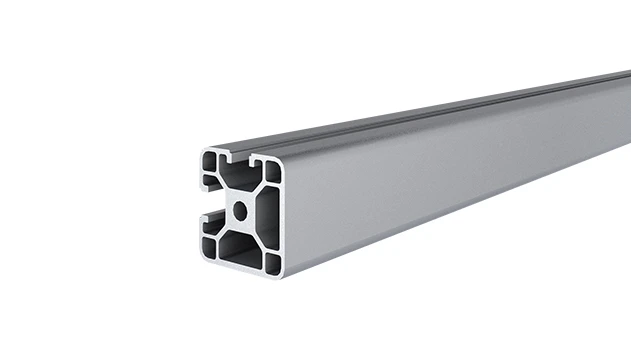
4040E is a 4.00x4.00 CM fractional 40 series square extrusion T-slot profile with two side open T-slots, two side with closed face, each side with 4.00cm face. The profile has align-a-grooves to assist in aligning connecting profiles.
Walk into any busy warehouse, and you'll likely see the same challenge playing out: rows of rigid, metal racks that once fit the space perfectly now feel like obstacles. A new product line requires taller shelves? Too bad—the racks are welded in place. Seasonal demand spikes need extra storage? The fixed layouts leave gaps that waste valuable square footage. For decades, warehouses have been stuck in this cycle of "one-size-fits-all" storage, but there's a smarter way. Enter the 4040E EU Standard Aluminum Profile —a versatile, adaptable solution that's redefining how teams build, adjust, and optimize their storage systems. Let's dive into how this unassuming aluminum extrusion is transforming warehouse efficiency, one adjustable rack at a time.
The Problem with "Set It and Forget It" Storage
Traditional warehouse racks are built to last, but "last" often translates to "never change." Steel racks, wooden shelving, or even early plastic systems are designed with permanence in mind. They're welded, bolted, or glued into place, assuming that your storage needs today will be the same tomorrow. But in reality, warehouses are dynamic spaces: product sizes evolve, order volumes fluctuate, and workflows shift as teams adopt leaner processes. A 2023 study by the Warehousing Education and Research Council (WERC) found that 68% of warehouses report reconfiguring their storage layouts at least twice a year—but with rigid systems, each reconfiguration means downtime, labor costs, and sometimes even replacing entire rack units.
Worse, fixed racks often lead to wasted space. Maybe you have a section of shelves that's 18 inches deep, but your new product boxes are only 12 inches—suddenly, 6 inches per shelf is lost. Or a rack designed for 50kg loads is now holding 30kg items, overengineering that could have been avoided with a more flexible system. These inefficiencies add up: WERC estimates that poor space utilization costs warehouses an average of 15-20% in unnecessary overhead annually.
Meet the 4040E: More Than Just a Piece of Aluminum
At first glance, the 4040E EU Standard Aluminum Profile looks simple: a 40mm x 40mm square tube with a smooth, silver finish. But its true power lies in two key features: its aluminum extrusion profile design and the T-slots running along its length. Let's break it down.
What Makes It "EU Standard"?
The "EU Standard" label isn't just a marketing term. To earn this certification, the 4040E must meet strict criteria for material quality, dimensional accuracy, and safety. It's made from 6063-T5 aluminum alloy—a blend prized for its strength-to-weight ratio (it's 30% lighter than steel but can still support heavy loads) and corrosion resistance. The extrusion process ensures consistent wall thickness (typically 2.0mm) and precise T-slot dimensions, so accessories from different manufacturers fit seamlessly. For warehouses in the EU or those exporting to European markets, this standardization eliminates compatibility headaches and ensures compliance with workplace safety regulations.
The T-Slot Advantage: Why Holes and Slots Matter
Look closely at the 4040E, and you'll notice long, narrow slots running along each of its four sides. These are T-slots, and they're the profile's secret weapon. Unlike traditional racks that require drilling holes or welding brackets, T-slots let you attach aluminum profile accessories (like brackets, shelves, or casters) using simple bolts and nuts. Slide a nut into the slot, position your accessory, tighten the bolt, and you're done—no special tools, no permanent modifications, and no waiting for a welder. This might sound small, but it's a game-changer for adaptability. Need to raise a shelf by 5cm? Loosen the bolts, slide the bracket up, and retighten. Adding a side rail to prevent items from falling? Snap on a connector and secure it in seconds.

Building Adjustable Racks: 4040E in Action
Let's say you run a mid-sized electronics warehouse and need a new storage system for circuit board components—some small (like resistors in tiny boxes) and some bulkier (power supply units). With the 4040E, here's how you'd build a rack that grows with you:
Step 1: Start with the Frame
Cut 4040E profiles to your desired height (say, 2 meters) for the vertical posts. Attach base plates to the bottom using T-slot bolts to anchor the rack to the floor (no concrete drilling needed—rubberized base plates prevent slipping). For stability, add horizontal cross-braces halfway up the posts using 90° aluminum profile connectors —these clip into the T-slots and lock in place with a hex key. In 20 minutes, you've got a sturdy frame that can support up to 200kg per linear meter (tested under EU standard EN 15635, if you're curious).
Step 2: Add Shelves (That Actually Fit)
Now for the shelves. Instead of buying pre-cut wooden boards that might warp or metal sheets that are too heavy, use lightweight aluminum panels or even plastic bins—both of which attach directly to the 4040E frame via shelf brackets. For the small resistor boxes, you can space shelves 15cm apart; for the power supplies, leave 30cm gaps. And if next month you start stocking larger components? Simply slide the brackets up or down—no need to disassemble the entire rack.
Step 3: Level Up with Accessories
Here's where the 4040E really shines: aluminum profile accessories turn a basic rack into a customized storage solution. Add label holders to each shelf for quick inventory checks. Attach LED strip lights along the T-slots to brighten dark corners. Even add casters to the base if you need a mobile rack for picking stations. The EU standard ensures that accessories from different suppliers (like end caps, angle brackets, or cable management clips) work together, so you're never locked into one brand.
4040E vs. Other Profiles: Which Fits Your Needs?
| Profile Type | Dimensions (mm) | Max Load Capacity (per linear meter) | Ideal Applications | Accessory Compatibility |
|---|---|---|---|---|
| 4040E EU Standard | 40x40 | 200-250kg | Heavy-duty racks, workbenches, material handling systems | All EU-standard T-slot accessories (brackets, connectors, casters) |
| 3030 EU Standard | 30x30 | 100-150kg | Light shelving, small parts storage | Limited to smaller accessories; not all 4040E parts fit |
| 2020 EU Standard | 20x20 | 50-80kg | Desktop organizers, display racks | Specialized micro-accessories only |
Beyond Racks: 4040E in Workstations and Material Flow
The 4040E isn't just for storage—it's a building block for entire warehouse ecosystems. Take workbench setups, for example. Many warehouses use separate workstations and storage racks, but with 4040E, you can integrate them into one cohesive unit. Imagine a picking workbench where the top is a 4040E frame with a wooden or aluminum surface, and the sides have built-in shelves for tools and boxes. Need to adjust the height for ergonomics? Swap out the legs for taller profiles. Adding a conveyor belt to move picked items? Attach it directly to the workbench's T-slots. It's lean manufacturing in action—eliminating gaps between storage and workflow.
Material flow is another area where 4040E excels. Pair the profile with roller tracks (a common accessory) to create gravity-fed racks, where items slide down to the picking end, reducing the need for manual lifting. Or build a mobile material rack on casters for line-side storage in production areas. Since the 4040E is lightweight (about 1.8kg per meter), even large structures are easy to move with a few people, cutting down on forklift traffic and improving safety.
Cost-Effectiveness: Investing in Adaptability
At this point, you might be thinking: "Aluminum sounds expensive compared to steel or wood." It's true that 4040E has a higher upfront cost than basic steel racks, but its long-term savings tell a different story. Let's crunch the numbers: A traditional steel rack system costs around €80-€120 per linear meter, but if you need to reconfigure it, you're looking at €50-€100 per hour for labor (plus new parts). The 4040E starts at €100-€150 per linear meter, but reconfigurations take minutes, not hours, and you can reuse 90% of the parts. Over 5 years, WERC data shows that warehouses using modular aluminum systems save 35-40% on storage-related costs compared to fixed steel setups.
There's also the "no waste" factor. With traditional racks, if you outgrow them, you either sell them for a fraction of their cost or send them to the scrapyard. 4040E profiles, on the other hand, are infinitely reusable. A rack that once held small parts can be disassembled and rebuilt as a taller rack for bulk items, or even repurposed as a packing station. This circularity aligns with sustainability goals too—aluminum is 100% recyclable, and its longevity reduces the need for frequent replacements.
Real-World Success: How One Warehouse Cut Costs by 28%
Let's look at a case study to bring this to life. A mid-sized food distribution warehouse in Germany was struggling with seasonal demand for frozen goods. Each winter, they needed 30% more storage space for holiday products, but their fixed steel racks couldn't expand. They were renting extra warehouse space at €2,500 per month—costing them €30,000 annually. In 2022, they switched to 4040E adjustable racks. Here's what happened:
- Space optimization: By reconfiguring their existing 4040E racks seasonally, they eliminated the need for extra warehouse space, saving €30,000/year.
- Labor savings: Reconfiguring racks went from 8 hours (with steel) to 2 hours (with 4040E), cutting maintenance labor costs by €12,000/year.
- Reduced damage: The 4040E's smooth edges and adjustable shelves reduced product damage from 5% to 1.5%, saving €8,000/year in losses.
Total annual savings? €50,000—more than enough to offset the initial investment in the 4040E system within the first year. "We used to see our racks as a necessary expense," said the warehouse manager. "Now, they're a tool that adapts with us. It's like having a storage system that grows with your business."
Installation and Maintenance: Simple, Even for Non-Experts
You don't need to be a metalworker to build with 4040E. Most systems come with basic tools (a hex key set, a tape measure, and a rubber mallet), and the T-slot design makes assembly intuitive. Many suppliers offer online tutorials or templates for common setups (like a 3-row, 3-floor material rack), so even first-timers can get started quickly. Maintenance is equally straightforward: wipe down the profiles with a damp cloth to prevent dust buildup in the T-slots, and check bolts quarterly for tightness. Unlike steel, aluminum doesn't rust, so it holds up well in humid or cold environments (like the frozen food warehouse we mentioned earlier).
Choosing the Right Supplier: What to Look For
Not all 4040E profiles are created equal. To ensure you're getting a quality product, look for suppliers that:
- Certify compliance with EU standards (ask for EN 15635 or ISO 9001 certificates).
- Offer a range of aluminum profile accessories (so you don't have to source parts from multiple places).
- Provide samples or small test kits (to check fit and finish before ordering in bulk).
- Have responsive customer support (in case you need help designing a custom rack).
Reputable suppliers will also share load capacity charts and design guidelines, helping you avoid overloading the profile. Remember: the 4040E is strong, but it's not indestructible—following weight recommendations ensures safety and longevity.
Conclusion: Racks That Adapt to Your Warehouse, Not the Other Way Around
Warehouse storage shouldn't be a one-time decision—it should be an ongoing process of optimization. The 4040E EU Standard Aluminum Profile makes that process possible by blending durability, flexibility, and cost-effectiveness into a single solution. Whether you're building adjustable racks, integrating workstations, or streamlining material flow, this aluminum extrusion puts control back in your hands. No more wasting space on rigid systems. No more dreading reconfigurations. Just a storage solution that adapts as quickly as your business does.
So, the next time you look at your warehouse racks, ask yourself: Are they holding your business back, or growing with it? With 4040E, the answer can finally be the latter.