- Company Articles
- Products and Technology
- Product knowledge
- Warehouse Storage Racks: Stability with Three Way Aluminum Pipe Joints

Warehouse Storage Racks: Stability with Three Way Aluminum Pipe Joints
Related Product
Three Way Aluminum Pipe Joint
Aluminum 3 way pipe joint for 28mm aluminum pipe connection in 3 direction.
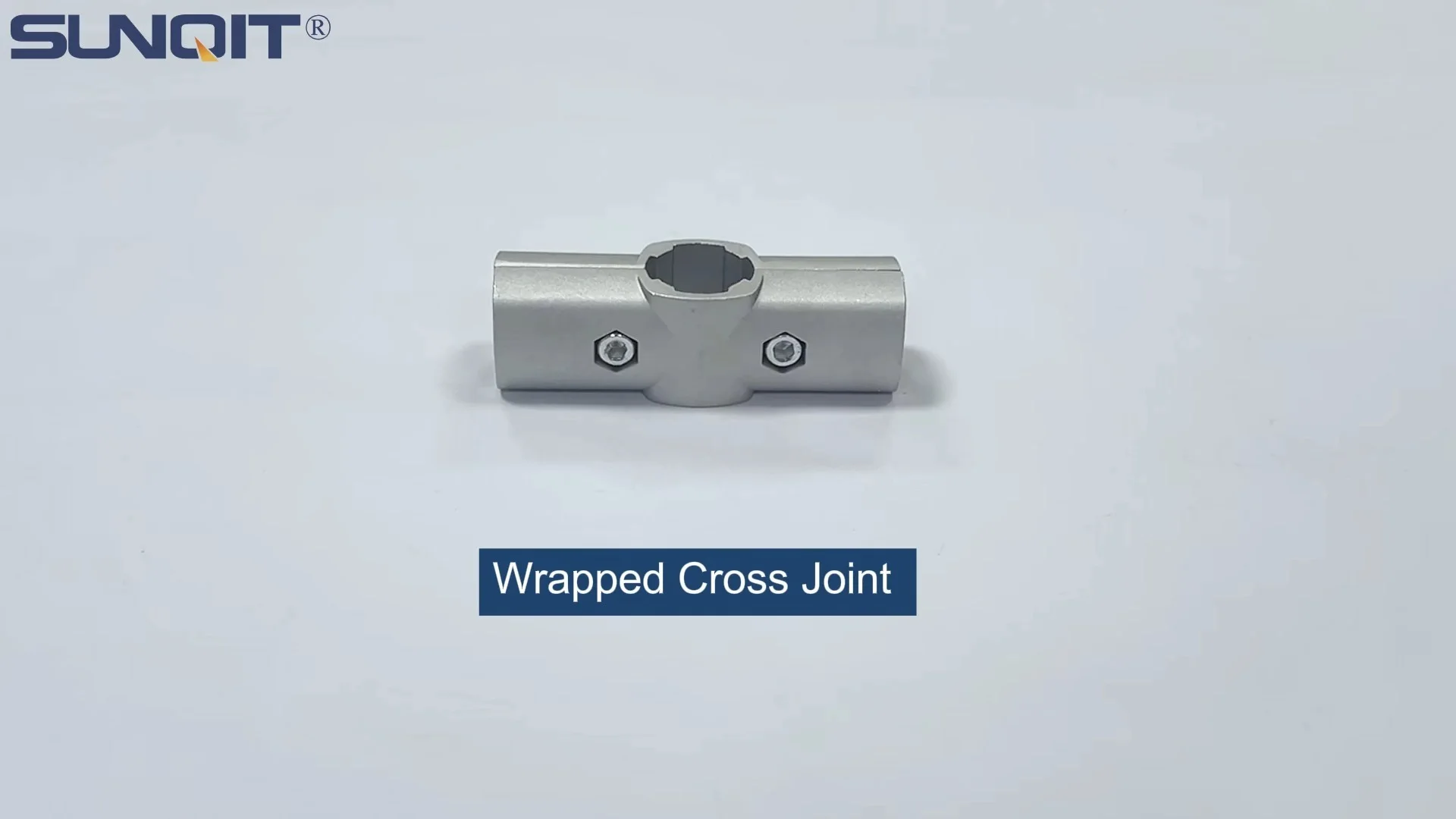
Walk into any busy warehouse, and you'll immediately sense the rhythm: forklifts gliding between aisles, workers loading and unloading pallets, and the steady hum of productivity that keeps supply chains moving. At the center of this organized chaos stand the unsung heroes of warehousing—storage racks. These structures aren't just metal (or in this case, aluminum) frames; they're the backbone that holds inventory, protects goods, and ensures every square foot of space is used efficiently. But here's the truth: not all storage racks are created equal. The difference between a rack that wobbles at the first bump and one that stands firm, even under heavy loads, often comes down to a tiny but critical component: the joints that hold it all together. Today, we're shining a light on one such component that's revolutionizing stability in modern warehouses: the three way aluminum pipe joint .
The Foundation: Why Aluminum Matters in Modern Warehousing
Before we dive into the specifics of joints, let's talk about the material that makes these innovations possible: aluminum. For decades, steel dominated warehousing—its strength was unmatched, but so was its weight and susceptibility to rust. Then came aluminum, and suddenly, warehouses had a new ally. Aluminum profiles, in particular, changed the game. Unlike steel, aluminum is lightweight, making it easier to transport, install, and reconfigure. It's naturally resistant to corrosion, a boon for warehouses in humid climates or those storing moisture-sensitive goods. And perhaps most importantly, it offers an impressive strength-to-weight ratio, meaning it can support heavy loads without adding unnecessary bulk to the structure.
Take aluminum profile systems, for example. These extruded aluminum beams come with T-slots running along their length, allowing for easy attachment of accessories like brackets, shelves, and—you guessed it—joints. This modularity is key in today's fast-paced warehousing environment, where needs change overnight. A warehouse that stored small electronics last year might need to accommodate larger appliances this year, and aluminum profiles make it possible to adapt without tearing down and rebuilding from scratch. But even the best aluminum profiles are only as strong as the joints that connect them. Which brings us to the star of the show: the three way aluminum pipe joint.
The Unsung Hero: Three Way Aluminum Pipe Joints
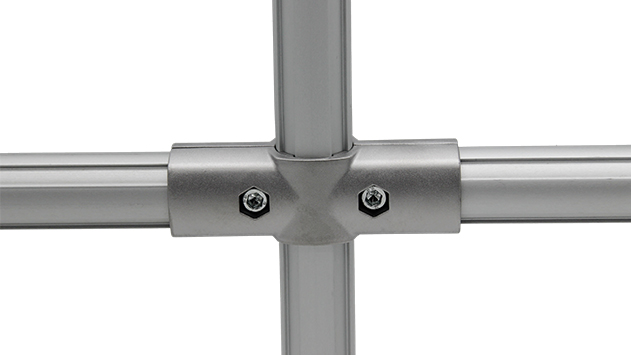
Imagine building a house with only nails that can connect two pieces of wood at a time. You could frame walls, but corners and intersections would be weak points, prone to shifting over time. Now, imagine having a nail that can connect three pieces at once, creating a triangular support system that distributes weight evenly. That's essentially what a three way aluminum pipe joint does for storage racks. These small, often overlooked components are designed to connect three aluminum pipes (or profiles) at a single point, whether at 90-degree angles, 45 degrees, or even custom configurations, depending on the design.
What makes three way joints so effective? Let's break down their design. Most are made from high-grade aluminum alloy, heat-treated for extra strength. They feature precision-machined sockets that fit snugly over the ends of aluminum pipes, with set screws or cam locks to secure the connection. Unlike welded joints, which are permanent and prone to cracking under stress, these mechanical joints allow for a tight, adjustable fit. This adjustability is crucial because it lets installers fine-tune the alignment of pipes, ensuring the entire structure is plumb and level—two factors that directly impact stability.
Another key feature is their ability to distribute load across three directions. When you stack a pallet of heavy goods on a rack, the weight doesn't just push downward; it creates lateral forces as well. A two-way joint (which connects only two pipes) can handle vertical weight, but lateral stress can cause it to twist or loosen over time. A three way joint, by contrast, creates a triangulated support system. Triangles are inherently stable shapes—think of a pyramid or a bridge truss—so adding a third connection point reduces the risk of flexing or warping. This is why warehouses that use three way joints report fewer incidents of rack collapse or deformation, even under consistent heavy use.
Beyond the Joint: Aluminum Pipe Accessories That Enhance Stability
A three way aluminum pipe joint is powerful on its own, but its effectiveness multiplies when paired with the right aluminum pipe accessories . These small add-ons might seem trivial, but they play a big role in reinforcing the joint's stability and extending the life of the entire rack system. Let's take a closer look at a few must-have accessories:
Aluminum Profile End Caps: These simple plastic or rubber caps fit over the exposed ends of aluminum pipes, preventing dust, debris, and moisture from entering the T-slots. While they might seem like a minor detail, they actually protect the structural integrity of the pipes. Debris in the T-slots can interfere with the fit of joints, causing them to loosen over time. End caps also add a safety bonus by eliminating sharp edges, reducing the risk of cuts during installation or maintenance.
T-Slot Rubber Strips: These flexible strips slide into the T-slots of aluminum profiles, creating a tight seal between the profile and any accessories (like joints or brackets) attached to it. They reduce vibration, which can loosen joints over time, and act as a buffer against metal-on-metal contact, preventing wear and tear. Plus, they come in colors like black or gray, adding a clean, finished look to the rack system.
Aluminum Pipe Clamps: For racks that need extra reinforcement—say, those holding extremely heavy loads—clamps are a game-changer. These devices wrap around the connection point of a joint and pipe, adding an extra layer of security. Some clamps are designed to lock into the T-slots of aluminum profiles, creating a secondary anchor that prevents the joint from rotating or slipping. They're especially useful in high-traffic areas where forklifts or pallet jacks might accidentally bump the rack, jostling the joints.
Together, these accessories work with three way joints to create a system that's greater than the sum of its parts. It's like building a house with high-quality nails, but also adding insulation, drywall, and roofing to make it weatherproof. Each component has a specific job, and when they work in harmony, the result is a storage rack that's not just stable, but built to last.

Real-World Applications: From Workbenches to Flow Racks
To truly understand the impact of three way aluminum pipe joints, let's look at how they're used in real warehouse setups. Take workbenches , for example. A typical warehouse workbench needs to support tools, parts bins, and sometimes even heavy machinery like drills or assembly equipment. A wobbly workbench isn't just annoying—it's dangerous. Workers might misalign parts, or tools could slide off, causing injuries. By using three way joints at the corners of the workbench frame, manufacturers create a stable base that doesn't shift, even when someone leans on it or drops a heavy tool. The joints connect the legs, the crossbars, and the shelf supports, distributing weight evenly across the entire structure. Add an aluminum honeycomb panel top, and you've got a workbench that's both sturdy and lightweight enough to move if needed.
Then there are flow racks , a staple in order-picking operations. Flow racks use gravity to move products from the back (where they're loaded) to the front (where they're picked), reducing the need for workers to reach or bend. The key here is maintaining a consistent slope in the roller tracks—if the rack frame is uneven, products might get stuck or slide too quickly, leading to jams or damaged goods. Three way joints are used to build the side frames of flow racks, ensuring the vertical supports and horizontal crossbars are perfectly aligned. They also connect the roller track supports to the frame, keeping the tracks level and stable even as boxes slide over them. In one case study, a distribution center reported a 30% reduction in product jams after switching to aluminum flow racks with three way joints, simply because the structure no longer flexed under the weight of stacked inventory.
Even specialized setups like turnover trolleys and material racks benefit from these joints. Turnover trolleys are used to transport goods between workstations, and they need to handle rough terrain (like uneven warehouse floors) without tipping. Three way joints at the base of the trolley connect the legs and the caster mounts, creating a wide, stable footprint. Material racks, which store everything from raw materials to finished products, often have multiple levels. Three way joints at each level connect the vertical posts, horizontal beams, and diagonal braces, ensuring the rack doesn't sway when pallets are loaded or unloaded.

A Closer Look: Comparing Joint Types for Stability
Not all joints are designed for stability, so how does the three way aluminum pipe joint stack up against other common types? Let's compare:
| Joint Type | Stability Rating (1-5) | Max Load Capacity (per joint) | Ease of Assembly | Best For |
|---|---|---|---|---|
| Three Way Aluminum Pipe Joint | 5 | Up to 500 lbs (depending on pipe size) | Easy (tool-free cam locks or simple set screws) | Multi-directional structures (racks, workbenches, trolleys) |
| Two Way Aluminum Pipe Joint | 3 | Up to 400 lbs | Very Easy (only two connections) | Linear structures (shelving units, straight conveyors) |
| 90-Degree Steel Welded Joint | 4 | Up to 600 lbs | Difficult (requires welding equipment and expertise) | Permanent, heavy-duty racks (rarely reconfigured) |
| Plastic Snap-Fit Joint | 2 | Up to 150 lbs | Very Easy (snap together by hand) | Light-duty storage (retail shelves, temporary setups) |
As the table shows, three way aluminum pipe joints lead the pack in stability, thanks to their multi-directional support. While welded steel joints can handle higher loads, they lack the flexibility of aluminum—once welded, they can't be adjusted or reconfigured, making them impractical for warehouses that need to adapt to changing inventory. Plastic joints, on the other hand, are cheap and easy to assemble but fail miserably under heavy loads, making them a liability in industrial settings. For most warehouses, the three way aluminum joint hits the sweet spot: strong enough for heavy loads, flexible enough for reconfiguration, and easy enough to install without specialized tools.
Installation Insights: Tips for Maximizing Stability
Even the best three way aluminum pipe joints won't perform well if installed incorrectly. Here are some pro tips to ensure your rack system is as stable as possible:
1. Start with a Level Surface: This might seem obvious, but uneven floors are a common culprit behind wobbly racks. Use a laser level to check the installation area, and add shims under the base feet if needed. A level foundation ensures weight is distributed evenly across all joints.
2. Torque Set Screws Properly: Over-tightening set screws can strip the threads or warp the aluminum pipe, while under-tightening leads to loose connections. Most manufacturers provide torque specs (usually between 15-25 in-lbs for aluminum joints). Invest in a small torque wrench to get this right.
3. Use Diagonal Braces: Even with three way joints, adding diagonal braces (connected with, you guessed it, three way joints) creates additional triangulation. Braces are especially important for tall racks, which are more prone to swaying.
4. Inspect Regularly: Warehouses are busy places, and joints can loosen over time due to vibration or impact. Schedule monthly inspections to check for loose set screws, bent pipes, or cracked joints. Tighten or replace components as needed—preventive maintenance is always cheaper than repairing a collapsed rack.
Future-Proofing Warehouses: Adaptability of Aluminum Systems
In today's e-commerce-driven world, warehouse needs are constantly evolving. A product that's in high demand this month might be obsolete next month, and storage requirements can change overnight. This is where the modularity of aluminum systems with three way joints truly shines. Unlike fixed steel racks, which are difficult to modify, aluminum systems can be taken apart and reconfigured in hours. Need to add a shelf to a rack? Simply loosen the three way joints, insert a new aluminum pipe, and tighten the screws. Want to convert a workbench into a trolley? Swap out the fixed feet for casters (using—you guessed it—three way joints to connect the caster mounts). This adaptability not only saves money on new equipment but also reduces downtime, keeping warehouses agile and responsive.
Sustainability is another factor. Aluminum is 100% recyclable, and because these systems are modular, components can be reused or repurposed instead of ending up in landfills. A warehouse that invests in aluminum racks with three way joints isn't just investing in stability today—it's investing in a greener, more flexible future tomorrow.
Conclusion: The Impact of Quality Joints on Warehouse Efficiency
At the end of the day, a warehouse's success hinges on efficiency: how quickly goods can be stored, retrieved, and shipped. Instability in storage racks undermines that efficiency. It leads to damaged goods, safety incidents, and wasted time spent on repairs or reconfigurations. The three way aluminum pipe joint might be small, but its impact is huge. By providing multi-directional support, distributing loads evenly, and enabling modular adaptability, it transforms storage racks from simple structures into reliable, long-lasting assets.
So the next time you walk through a warehouse, take a moment to look at the racks. Chances are, the ones that stand straight, hold heavy loads with ease, and adapt to changing needs are held together by three way aluminum pipe joints. They're not just connecting pipes—they're connecting warehouses to greater efficiency, safety, and success. And in the world of supply chains, that's a connection worth investing in.