- Company Articles
- Products and Technology
- Solution
- Warehouse Storage Solutions: Lean Pipe Fixed Clamps for Custom Racks

Warehouse Storage Solutions: Lean Pipe Fixed Clamps for Custom Racks
Related Product
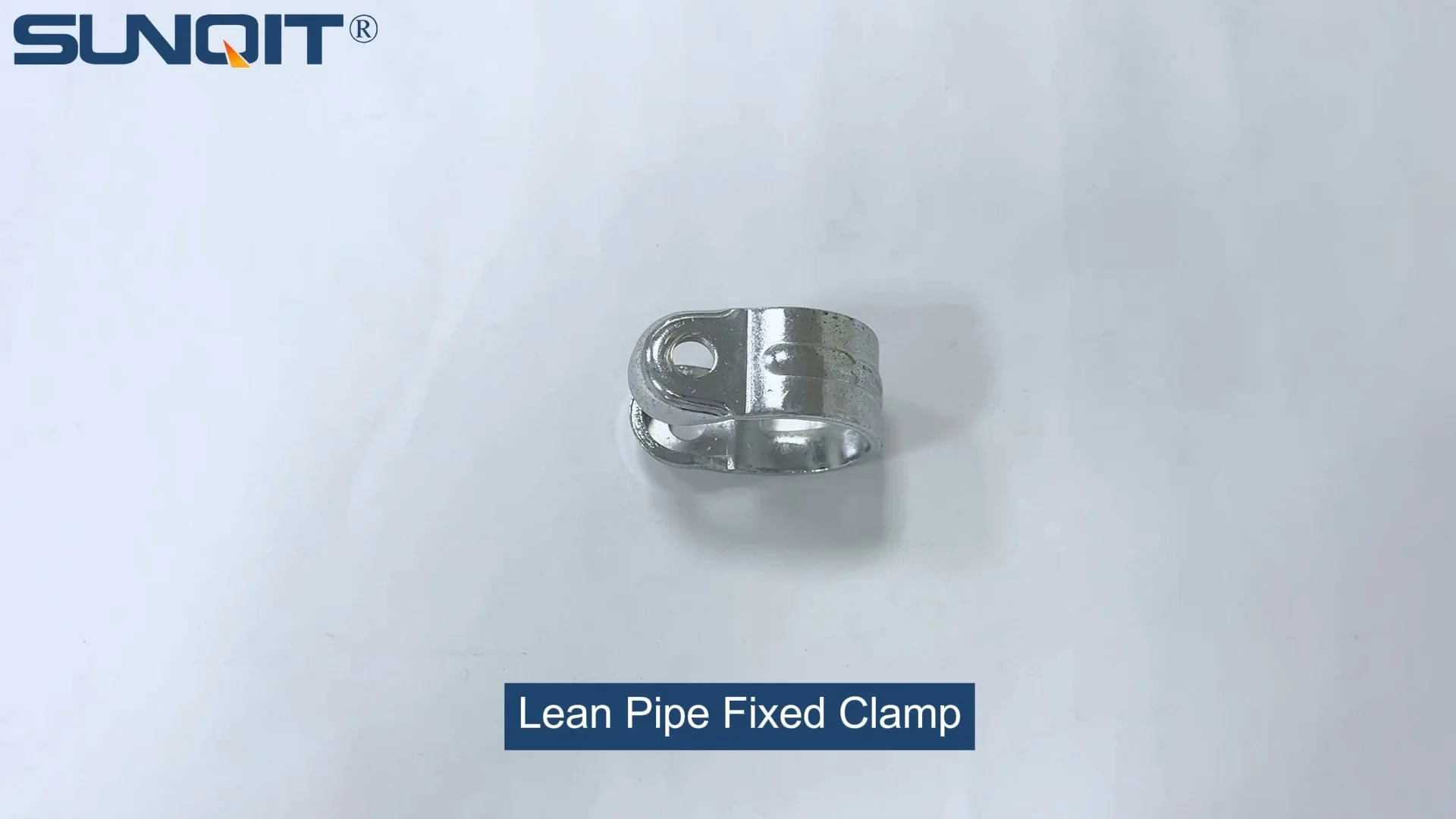
Lean Pipe Fixed Clamp
Lean pipe fixed clamp is used for pipe connector fixing the correct position during workbench flow rack hand trolley assemble work.
Walk into any busy warehouse, and you'll quickly spot the unsung heroes of operations: the storage racks, workbenches, and material handling systems that keep products moving. But for many warehouse managers, these "heroes" often feel more like obstacles. Rigid metal racks that can't adjust to new product sizes, workbenches that cause back strain, and flow systems that slow down during peak seasons—these are the daily headaches that eat into efficiency and morale. The good news? There's a solution that's been quietly transforming warehouses of all sizes: lean pipe fixed clamps. These unassuming connectors are the building blocks of flexible, custom storage systems that adapt to your needs, not the other way around.
The Problem with "One-Size-Fits-All" Storage
Traditional warehouse storage systems are built for permanence. Heavy steel racks bolted to the floor, fixed-height workbenches, and inflexible material flow paths—they're designed to last decades, but that rigidity comes at a cost. When your business grows, launches a new product line, or shifts to seasonal demand, these systems become liabilities.
Consider Maria, a warehouse manager at a mid-sized e-commerce fulfillment center. Last year, her team added a line of oversized pet supplies—think large dog beds and kennels. Their existing metal racks, built for standard-sized boxes, were too short and narrow. "We had two options," she recalls. "Either invest in all-new custom racks, which would take 6 weeks to deliver and cost $25,000, or cram the new products into existing space, slowing down pickers and risking damage." They chose the latter, and for months, pick times spiked by 18%, and employee frustration grew.
Maria's story isn't unique. Traditional racks force businesses into a cycle of "rip and replace" whenever needs change. They're expensive to customize, time-consuming to install, and often lead to downtime. And it's not just about space—ergonomics suffer too. Fixed workbenches that are too low for tall workers or too high for shorter ones lead to repetitive strain injuries. Static flow systems that require manual lifting of heavy items day in and day out leave teams exhausted by lunch.
"We had to replace half our racks last year because we launched a new product line—cost us a fortune and weeks of downtime." — A warehouse manager at a consumer goods company
Lean Pipe Fixed Clamps: Small Parts, Big Flexibility
Enter lean pipe fixed clamps: the unsung heroes of modular storage. These simple, sturdy connectors are designed to secure lean pipes (hollow tubes made of aluminum, steel, or stainless steel) into stable, adjustable structures. Think of them as the "Lego bricks" of warehouse design—strong enough to hold heavy loads, yet easy to take apart and reconfigure.
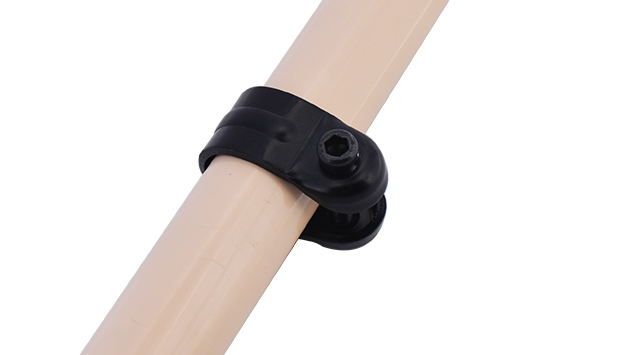
At first glance, a lean pipe fixed clamp might look like just another metal bracket, but its design is clever. Most clamps feature a two-piece construction: a base that attaches to a pipe and a top that secures another pipe at a 90°, 45°, or 180° angle. Tighten a few bolts, and the connection is rock-solid; loosen them, and you can reposition the pipes in minutes. No welding, no cutting, no specialized tools—just a wrench and a little know-how.
What makes these clamps game-changing is their compatibility with lean pipe joints. Together, they form the backbone of customizable systems. Want a 6-foot-tall rack today? Use clamps and joints to connect aluminum lean pipes. Need it to be 8 feet tall next month? Loosen the clamps, add extension pipes, and retighten. It's that simple. And because lean pipes are lightweight (aluminum models weigh 30% less than steel), even a single worker can adjust a section without heavy lifting.
Take the example of a small electronics manufacturer in Texas. They use lean pipe fixed clamps to build workbenches for assembling circuit boards. Each bench is customized with shelves, tool holders, and cable management—all attached via clamps. When a new batch of larger circuit boards came in, the team simply loosened the clamps, raised the shelf height by 6 inches, and added a wider top board. Total time? 45 minutes. "We used to have to order a whole new bench," says the production supervisor. "Now, we just tweak what we have. It's saved us at least $10,000 in the last year alone."
Building Custom Racks: Workbenches, Flow Racks, and Roller Track
Lean pipe fixed clamps aren't just for racks—they're the foundation for a whole ecosystem of warehouse tools. Let's break down three of the most impactful applications:
1. Adjustable Workbenches: Comfort Meets Productivity
A workbench isn't just a table—it's where your team spends 8+ hours a day. An uncomfortable workbench leads to slowdowns, errors, and even injuries. Lean pipe fixed clamps solve this by letting you build workbenches that adapt to your workers, not the other way around.
Imagine a warehouse where assemblers range in height from 5'2" to 6'4". With a traditional fixed workbench, the shorter workers strain their shoulders reaching up, while the taller ones hunch over, straining their backs. A lean pipe workbench built with fixed clamps changes that. Adjust the leg height in 2-inch increments using clamps, add a footrest for shorter workers, or install a tilting top for better visibility. One automotive parts plant in Ohio did just that and saw a 22% reduction in reported back pain within 3 months.
2. Flow Racks with Roller Track: Let Gravity Do the Work
Flow racks are a game-changer for picking and sorting—they use gravity to move products from the loading end to the picking end, eliminating manual lifting. And lean pipe fixed clamps are the secret to making them flexible. Here's how it works: Use clamps to secure roller track (a series of small wheels or balls) to a lean pipe frame. Tilt the frame slightly, and products glide smoothly to the front, ready for picking.
A food distribution warehouse in Florida uses this setup for canned goods. Their flow racks, built with lean pipe fixed clamps and plastic roller track guide rails (grey and yellow, to color-code product types), let workers load cases from the back and pick from the front without bending or stretching. "Before, we had workers carrying cases from the top shelf to the picking bin—now, the cases come to them," says the warehouse manager. "We've cut down on lifting injuries by 50%, and pick times are 30% faster."
The best part? If you start stocking taller cans, you don't need a new rack. Just loosen the clamps, adjust the roller track angle, and add a taller side rail. It's adaptability that traditional metal flow racks can't match.
3. Turnover Trolleys: Mobile Storage That Moves with You
Not everything in a warehouse stays put. Turnover trolleys—used to transport materials from receiving to production lines, or from packing to shipping—need to be durable and nimble. Lean pipe fixed clamps shine here too. Build a trolley frame with aluminum lean pipes, secure shelves with clamps, and add caster wheels (another component compatible with clamps), and you've got a mobile unit that can be reconfigured on the fly.
A furniture manufacturer in North Carolina uses such trolleys to move upholstery materials. Some days, they need to carry large rolls of fabric; other days, small boxes of buttons and zippers. With clamps, they can remove shelves for the rolls or add dividers for the small parts. "We used to have 10 different trolleys for different jobs," says the logistics coordinator. "Now, we have 3, and we reconfigure them as needed. It's freed up 200 square feet of floor space—space we're now using for a new packing station."

Why Lean Pipe Fixed Clamps Outperform Traditional Solutions
Still on the fence? Let's break down the benefits with hard numbers and real-world results:
| Feature | Traditional Metal Racks | Lean Pipe Fixed Clamp Systems |
|---|---|---|
| Flexibility | Fixed design; cannot be reconfigured without cutting/welding | 100% adjustable; reconfigure in minutes with basic tools |
| Assembly Time | 4–8 hours for a standard rack (requires professionals) | 30–60 minutes for a similar rack (can be done by warehouse staff) |
| Cost to Customize | $1,000–$5,000+ for custom modifications | $50–$200 for additional pipes/clamps |
| Weight Capacity | High (500–2,000 lbs per shelf) | High (300–1,500 lbs per shelf, depending on pipe material) |
| Adaptability to Change | Poor; requires full replacement for new product sizes | Excellent; adjust heights, widths, and layouts as needed |
1. Cost Savings: Reuse, Don't replace
The average warehouse replaces 20% of its storage systems every 5 years due to changing needs. With lean pipe fixed clamps, you reuse 80% of components. A study by the Material Handling Industry (MHI) found that companies using modular lean systems save 40–60% on storage costs over 10 years compared to traditional racks.
2. Faster ROI
Traditional racks take 2–3 years to pay off. Lean pipe systems? Often less than 1 year. A beverage distributor in California reported recouping their $15,000 investment in lean pipe flow racks (built with fixed clamps and roller track) in 8 months, thanks to faster picking times and reduced labor costs.
3. Happier, Healthier Teams
Ergonomic workspaces reduce injuries and boost morale. A manufacturing plant in Michigan that switched to adjustable lean pipe workbenches saw a 35% drop in workers' compensation claims related to back and shoulder strain. "Our team used to dread Monday mornings," says the HR manager. "Now, they come in excited to tweak their workstations—some even decorated them with plants! Productivity is up 12% because they're more engaged."

Real-World Success: How a Bakery Transformed Its Warehouse
Let's wrap up with a full case study. Sweet Delights, a family-owned bakery in Illinois, produces artisanal cookies and cakes for grocery stores across the Midwest. Their 10,000 sq. ft. warehouse was struggling with two big issues: seasonal demand spikes (holiday orders doubled their usual volume) and frequent product size changes (new cake boxes, larger cookie tins).
Before lean pipe fixed clamps, their setup was a mess. They had static metal racks that couldn't expand, fixed workbenches that caused bakers to hunch, and no dedicated flow system for ingredients. During peak seasons, they rented temporary racks (costing $2,000/month) and brought in extra staff to handle the chaos. Employee turnover was high—30% annually—due to the physical strain.
In 2023, they invested $22,000 in lean pipe fixed clamps, aluminum lean pipes, roller track, and workbench components. Here's what changed:
- Adjustable Racks: They built 12 modular racks that expand from 4 ft to 8 ft wide using clamps. During holidays, they add extension pipes; in slow months, they collapse the racks to free up space.
- Flow Racks for Ingredients: A roller track flow rack (secured with clamps) now delivers flour, sugar, and chocolate chips directly to the mixing stations. Workers no longer carry 50-lb bags—ingredients glide to them.
- Custom Workbenches: Bakers adjusted their workbenches to elbow height, reducing back strain. They even added clamp-on tool holders for mixers and scrapers, cutting down on time spent searching for tools.
The results? Seasonal temporary rack rentals are gone (saving $12,000/year). Employee turnover dropped to 8%. And production output increased by 25% during peak season—without adding extra staff. "We're a small business, so every dollar counts," says the owner. "The lean pipe system paid for itself in under a year, and now we're expanding our product line because we have the space and efficiency to handle it."
Getting Started: Tips for Choosing the Right Lean Pipe Fixed Clamps
Ready to dive in? Here's how to pick the right clamps and components for your needs:
1. Consider Your Load: Heavier items (500+ lbs) need steel clamps and thick-walled pipes. Lighter loads (under 300 lbs) can use aluminum clamps for weight savings.
2. Think About Environment: Wet or corrosive environments (like food processing) need stainless steel clamps to prevent rust. Dry warehouses can use standard steel or aluminum.
3. Start Small: You don't need to overhaul your entire warehouse at once. Start with a single workbench or flow rack section to test the system. Most suppliers offer starter kits with pipes, clamps, and joints.
4. Train Your Team: Hold a 30-minute workshop on how to use clamps and joints. Once your team sees how easy it is to reconfigure, they'll start suggesting improvements you never thought of.
Final Thoughts: The Future of Warehousing is Flexible
Warehouses aren't just storage spaces—they're engines of growth. In a world where customer demands, product sizes, and business needs change overnight, rigidity is a death sentence. Lean pipe fixed clamps offer something better: a storage system that grows with you, adapts with you, and empowers your team to work smarter, not harder.
Whether you're a small bakery or a large e-commerce giant, these simple clamps can transform your operations. They're not just tools—they're a mindset shift: stop building warehouses around fixed systems, and start building systems around your warehouse's needs.
So, what are you waiting for? Grab a wrench, a few lean pipes, and a handful of fixed clamps—and start building a warehouse that works for you.